By Chris Walker
This article was originally published by Truthout
There is no significant relationship between immigration rates and rising housing costs in the US, experts have said.
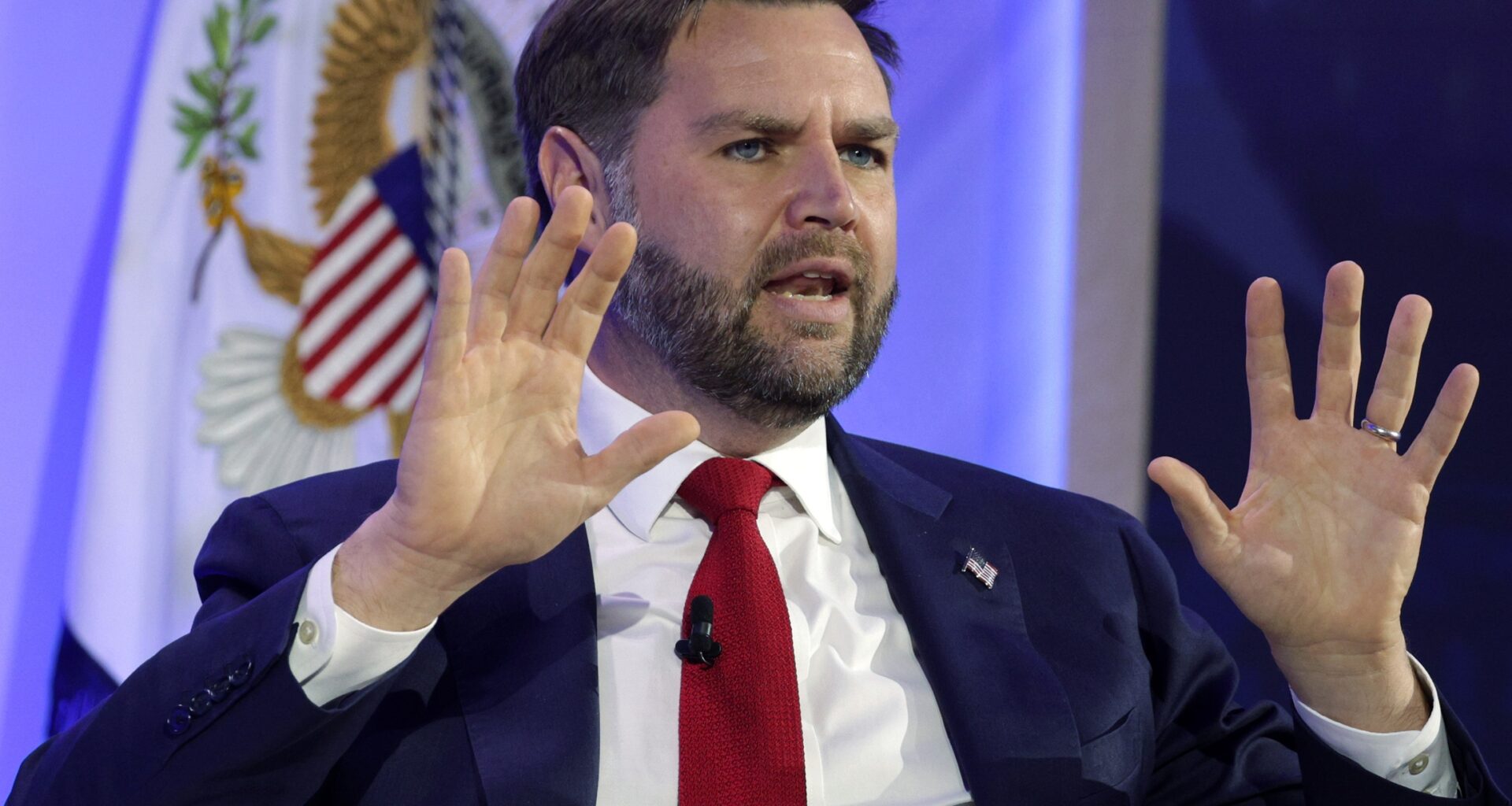
In an interview with Fox News last week, Vice President JD Vance downplayed the significance of rising inflation and costs for consumer goods in the U.S., claiming that any price increases are not due to Trump administration policies.
Unlike President Donald Trump, Vance recognized that costs were up compared to last year. But he blamed former President Joe Biden for the increases.
The Trump White House “inherited this terrible inflation crisis from the Biden administration,” Vance said.
The vice president then blamed immigrants for the administration’s lack of action to make housing more affordable. (A new report from the National Association of Realtors, published earlier this month, notes that the median age of homebuyers in the U.S. is now 40 years old — the highest age ever recorded by the organization.)
“A lot of young people are saying, ‘Housing is way too expensive.’ Why is that? Because we flooded the country with 30 million illegal immigrants who are taking houses that ought, by right, go to American citizens,” Vance said.
This claim — frequently peddled by Vance and Trump to deflect blame for the state of the economy — is blatantly false, housing and immigration experts say.
There is “no significant relationship between unauthorized immigrants and general house price growth for each state in the U.S.,” said a joint study from researchers at Texas A&M and the University of Maine published earlier this year.
The National Immigration Forum similarly blasted such reasoning in an explainer on the subject last month, stating:
While immigrants do contribute to rising housing demand, they are not the primary drivers of increasing housing costs. Instead, factors such as housing shortages, restrictive zoning laws, and shifts in housing preferences in the wake of the pandemic are the more dominant forces behind rising prices. Furthermore, immigrant workers are essential to the housing supply, making up a crucial segment of the construction workforce that can address shortages and improving housing stock.
Christopher J. Calton, a research fellow at a nonpartisan think tank called The Independent, condemned the administration in May for blaming immigrants for rising prices.
“The simple truth is that we would have a severe housing shortage even if President Trump were to deport every undocumented immigrant tomorrow,” Calton said, adding that, “the longer we scapegoat immigrants for America’s self-imposed housing shortage, the longer it will take us to solve it.”
Beyond his bigoted remarks about immigrants, Vance’s other claim in the interview — that inflation is the fault of the previous administration — is also flawed.
While inflation was high under the Biden administration, most economists attributed it at the time to the reopening of the economy following the COVID pandemic, as demand for products went up and disruption in supply chains affected prices. “Greedflation” — when corporations use the effects of inflation to justify increasing prices higher than is necessary in order to make higher profits — also played a role in costs going up.
Even so, year-over-year inflation shrank slightly from 3.0 percent in 2023 to 2.9 percent in 2024. So far in 2025, it appears that inflation is on track to rise by 3.0 percent again.
While not a significantly huge increase, the rate change suggests that Vance’s arguments about an “inherited” inflation problem are false — if prices were getting better under Trump’s watch, that number would be lessening, not growing.
What’s more, studies demonstrate that Trump’s various tariffs have indeed contributed to a rise in retail prices for consumers, amounting to an effective tax rate of about 18 percent on American shoppers, the highest level since 1934.
Trump repeatedly promised to lower prices on the campaign trail last year, vowing to do so “on day one” of taking office. However, just weeks after he won his second term, Trump admitted he might not be able to keep his pledge.
“I’d like to bring them down. It’s hard to bring things down once they’re up. You know, it’s very hard,” Trump said.
Presently, Trump is deflecting from concerns about affordability. In response to off-year elections earlier this month that saw huge wins for Democrats across the country, Trump insisted that voters were not casting their ballots based on concerns about affordability, describing the concept as a “con job” by Democrats. Instead, Trump said he and Republicans “are the ones that have done great on affordability.”
“Our groceries are way down. Everything is way down, and the press doesn’t report it,” Trump during a White House event nearly two weeks ago.
But that claim is false: Grocery store prices, similar to inflation overall, have increased by 2.7 percent since Trump won the 2024 presidential election.
Trump also disregarded rising prices in a lengthy Truth Social post over the weekend, writing that he and Republicans “are winning BIG” on “the Economy” and “Affordability.”
Voters, however, do not appear to agree: A Quinnipiac University poll published in mid-October shows that only 38 percent of Americans give the president positive marks on his handling of the economy, while 57 percent said they disapproved of his job performance on the issue.
This article was originally published by Truthout and is licensed under Creative Commons (CC BY-NC-ND 4.0). Please maintain all links and credits in accordance with our republishing guidelines.