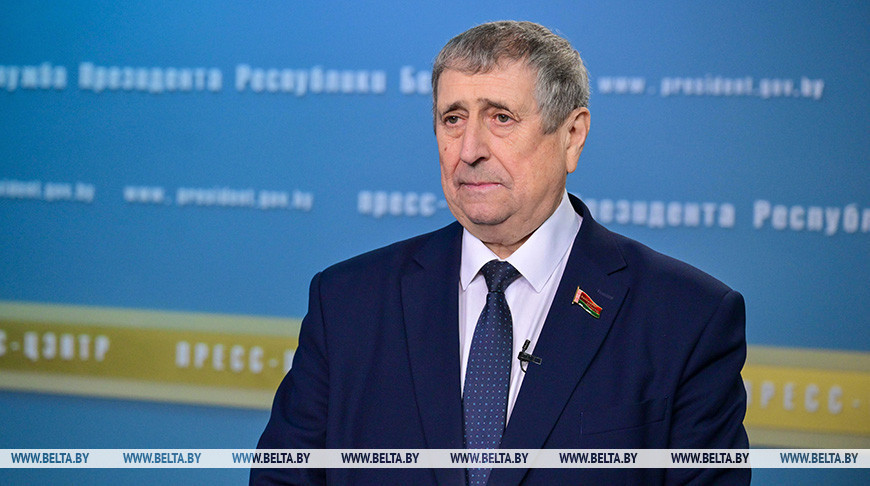
“I might have broken the usual protocol at the meeting with the head of state. Given his natural modesty, he always asks us to tell him only what is wrong, implying that what is good is already good enough. As a result, we sometimes fail to fully report the tremendous results of the work done by the head of state,” Mikhail Rusy explained his position.
He emphasized that Aleksandr Lukashenko has always placed special emphasis on the development of Polesie. “The current program [through 2030] is a continuation of that conversation the president started back in 1996,” the parliamentarian noted. He was referring to the head of state’s trip to the Polesie region, Lyaskovichi, and the iconic photo that later became widely known, showing Aleksandr Lukashenko talking with locals near a large oak tree. “I remember he looked and said that the people of Polesie were the salt of the Belarusian land, people capable of great deeds, and this region must be brought into perfect order and become a real jewel,” Mikhail Rusy recounted.
The first program for the development of Polesie was implemented in 2010-2015. The region was transformed, the parliamentarian stressed. For example, in Gomel Oblast, revenue from sales of products, goods, and services increased 7 times in 2016 compared to 2009, profit from sales increased 5 times, retail trade increased 7 times, and service exports doubled. Many enterprises established efficient operations. Among them is Turov Dairy Plant, which previously processed 140 tonnes of milk per day and now processes about 700 tonnes. This is not to mention the construction of social facilities, roads, the revival of the national park, and gasification.
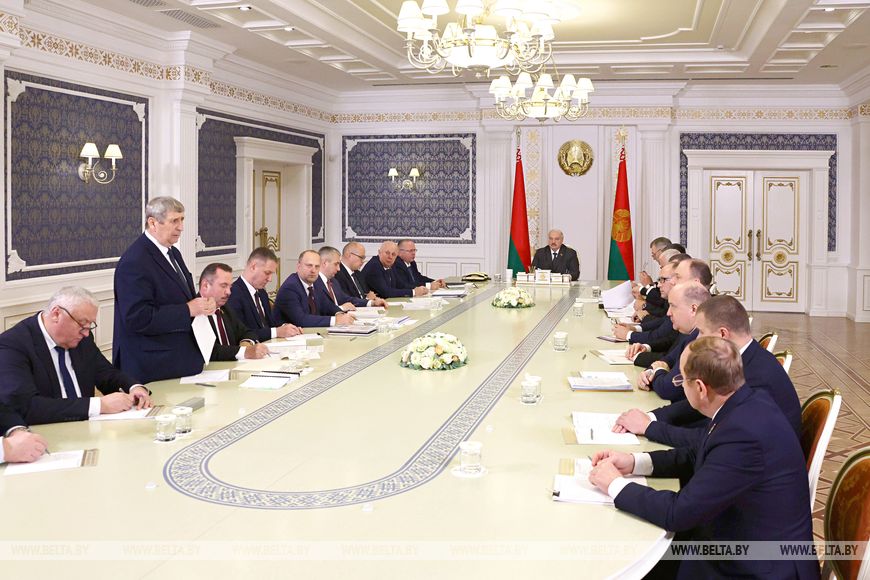
As a result, the six Polesie districts included in the first program now contain the highest concentration of communities with a population of more than 1,000 residents. “We have preserved the resources: that is the most important thing,” Mikhail Rusy is convinced.
But of course, the work cannot stop here. “And during another trip to the Polesie regions, the president set the task: we need to continue work in Polesie, as there is still very great potential,” the parliamentarian said. In accordance with the president’s instruction, the next program for the further development of the Pripyat Polesie regions through 2030 was approved. It was subsequently refined considering the head of state’s requirements. The geography was expanded by adding three districts: Gantsevichi District in Brest Oblast, Lelchitsy District and Yelsk District in Gomel Oblast, now totaling 9 districts. The volume and sources of funding were also thoroughly calculated, and all activities were specified as much as possible.
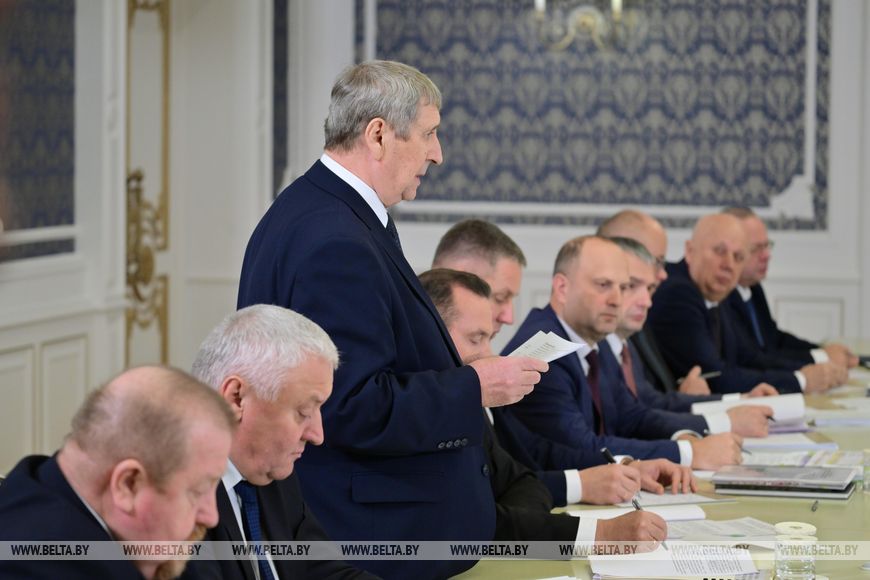
“Behind the word ‘activity’ is a specific facility to be worked on. It could be a dairy farm, a kindergarten, a school, or a land reclamation facility. We have calculated all this, looked at each district to see what we need to do first so that people can earn money, so that the districts produce goods, and budgets receive revenues and develop the social welfare,” Mikhail Rusy emphasized.
“The head of state immediately told us that there would be no extra money. There are development programs [in various industries], funding sources, and state support. We need to sum it all up, review it, and determine the main areas,” he added. “All existing programs regarding roads, social welfare, and One District-One Project are analyzed. It is such a comprehensive, specific program. I believe it will bring tangible results.”
And this result is also quite specific: to obtain 1 million tonnes of milk and 1 million tonnes of grain, ensure a significant increase in export potential, and reach an average salary of nearly Br3,300. One agricultural enterprise has been identified in each of the 9 districts, which should soon reach the economic performance level of the successful agricultural company in Parakhonsk, which the head of state visited a year ago and set as an example.
Along with the development of state agricultural enterprises, the president instructed to pay no less attention to farm enterprises, which have significantly strengthened in the region in recent years. “They even ask: give us land, and we will put it in order. But for a specific project. If there will be 500 cows there, here is the land for you. We can even help with land reclamation,” Mikhail Rusy said.
According to him, the head of state also raised the issue at the meeting that through common efforts and all enterprises, the country should finally meet its own needs for cucumbers, tomatoes, and other vegetables during the cold season. “This is possible, and it has been calculated. But there was a lack of coordination between different organizations,” he explained. “The government is taking control, and I believe we will quickly get things in order.”
In addition to developing the production base and the agro-industrial sector, an important area in the Pripyat Polesie program is creating good living conditions for people, providing social infrastructure, including solving urgent issues of transport connectivity in the region.