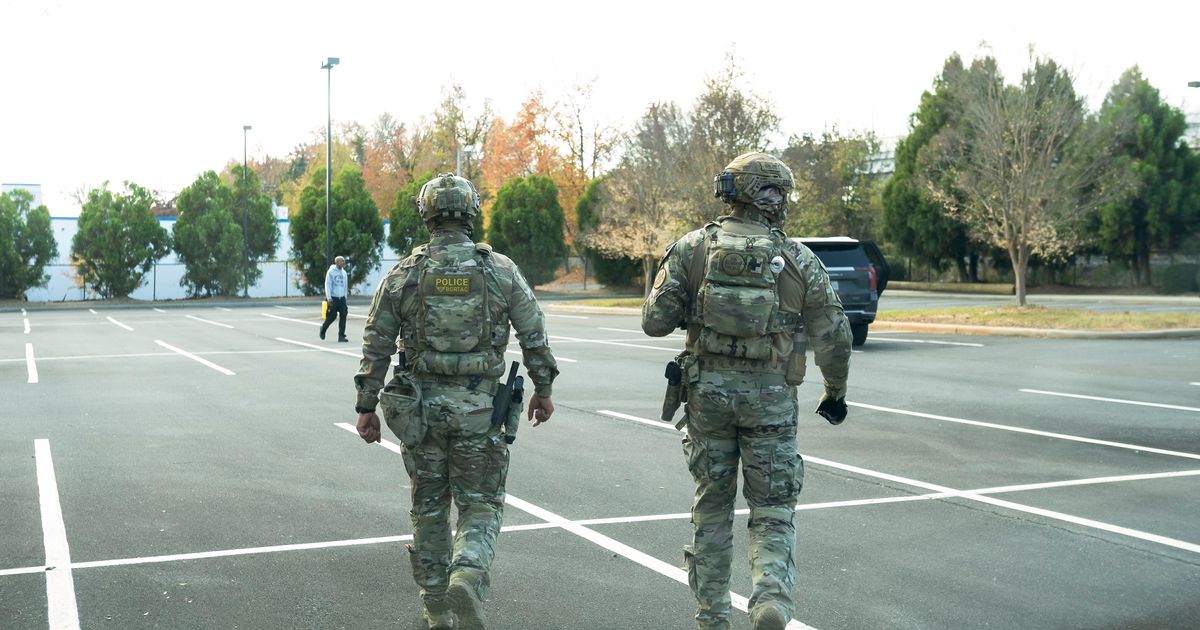
Federal immigration agents are on the ground Tuesday in Raleigh and plan to conduct operations, Mayor Janet Cowell said.
With the possibility of agents throughout the Triangle and with more than 300 immigrants arrested in Charlotte, WRAL News spoke with Chapel Hill-based immigration attorney Chris Barnes.
WRAL News asked Barnes who specifically agents can detain.
“Anyone that’s willing to speak to them, if they’re asking questions and you’re answering questions, then they can speak with you,” Barnes said. “Hopefully, they are concentrating their efforts on people who they deem to be threats to public safety and national security, in that case, you would think they’d have a target or a certain person that they feel may be working at this job site, may be shopping at this place [or] may be living at this place.”
Barnes mentioned how agents might have the person’s name or a photograph of who they’re looking to detain.
“They’re not constitutionally supposed to just look at a person or look at a group of people and assume by the way they look that they don’t have any lawful status in the United States and engage them in an attempt to determine their lawful status just based on what they look like,” Barnes said.
The National Immigrant Justice Center published a list of things people can do to protect themselves and defend their rights if approached by an immigration agent. It includes:
Create a safety plan
Identify emergency contacts and memorize their phone numbers.Protect your child’s school or day care with an emergency contact to pick up your child.Provide authorization in writing for your emergency contact to make medical and legal decisions for your child.People looking for someone detained by ICE can use the agency’s online detainee locator.Learn about guardianship considerations
Defend your rights
All people in the United States have constitutional protections, including the right to remain silent when questioned or arrested by immigration officers.
The National Immigrant Justice Center urges anyone stopped by law enforcement to stay calm and don’t argue, resist or fight the officer. The center urges people to keep their hands where police can see them and tell the officer if you need to reach into a glove compartment or for a wallet to show papers.
The center also urges people not to lie about their status or provide false documents.
Barnes said if a U.S. citizen is detained with no documentation on them, they would have to remain silent or get ahold of an attorney.
“If an immigrant or someone is detained and immigration makes the decision to keep that person in custody, then that person is first likely going to go to a local jail,” Barnes said. “They’re typically moved from either directly to Georgia or to different detention facilities or local jails until they get to their ultimate destination, which is typically the Stewart Detention Center in Lumpkin, Georgia. There’s an immigration court there.”
Barnes said if someone already has a removal order, then that person has already had a chance for a judge to hear the case. IT means the person didn’t show up for court or a judge determined removal was necessary.
“It’s a scary time because our office right now is flooded with calls with hypotheticals in terms of, ‘What we do in this situation?’” Barnes said. “My advice to my clients is to use the protections they’ve worked so hard to obtain, and hopefully, those protections, those work permits, those deferred actions, receipts will serve to defend them.”
Eisha Jain, an immigration professor at the UNC School of Law. Jain shared her concerns about the Charlotte arrests.
WRAL News asked Jain about what people need to know as the enforcement operations come to the Triangle area
“I think it’s an open question as to where this might go in the future,” Jain said. “My advice would be to try to know your rights,” Jain said. “The rights that everybody, citizens and non-citizens alike, [has] to understand what the basis is for a government official who is stopping and detaining anyone, like, what is their basis for doing that?”
If you are pulled over at a traffic stop
The National Immigrant Justice Center said to ask if the officer is from the police department or immigration.
Immigration officers often identify themselves as “police,” but they are not police.
Ask if they are from Immigration and Customs Enforcement (ICE) or Customs and Border Protection (CBP). If they are immigration officers, follow these guidelines about what information to provide.
If you are a U.S. citizen or have lawful immigration status: Show your passport, legal permanent resident card, work permit, or other documentation of your status. If you are 18 or older, you should carry your papers with you at all times.If you are undocumented: You have the right to remain silent and do not have to discuss your immigration or citizenship status with the police, immigration agents or other officials. Anything you tell an officer can later be used against you in immigration court.
If an officer knocks on your door
National Immigrant Justice Center urges people not to open their doors if an officer knocks on it.
Officers must have a warrant signed by a judge to enter your home.
ICE “warrants” are not signed by judges. They are ICE forms signed by ICE officers and they do not grant authority to enter a home without the consent of the occupant.