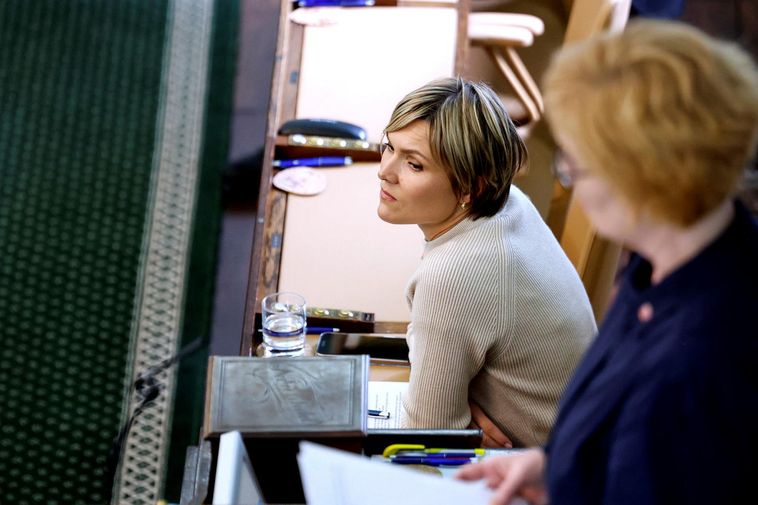
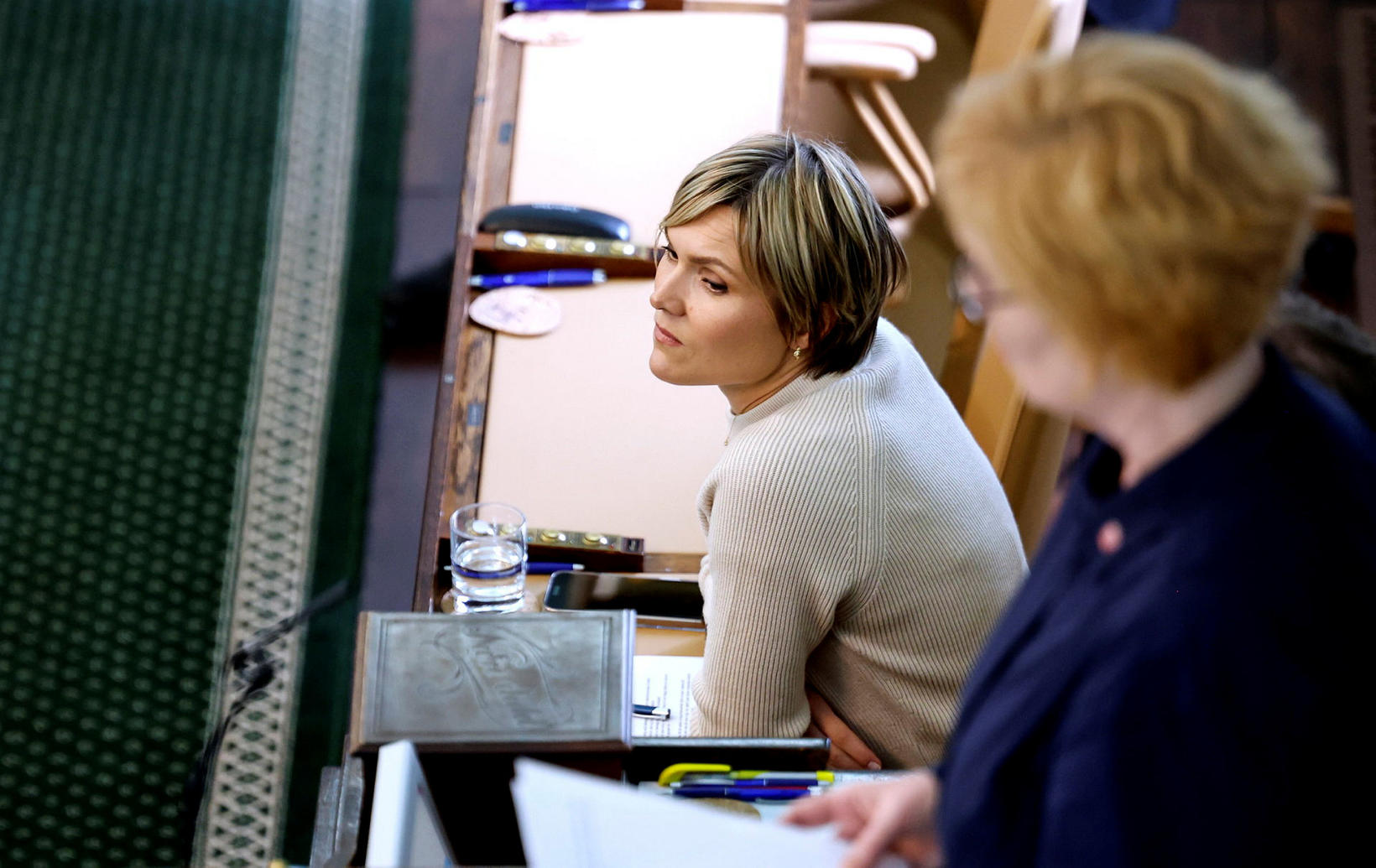
“To be perfectly honest, I haven’t heard a single word from either the prime minister or the foreign minister about this in recent days,” says Sigurður Ingi Jóhannsson, chairman of the Progressive Party.
mbl.is/Eggert Jóhannesson
The leaders of the government parties have had no discussions with the opposition regarding the situation created by the European Union’s decision to impose safeguard tariffs on EEA/EFTA states for ferrosilicon.
This is what SigurðurIngi Jóhannsson, chairman of the Progressive Party, and Guðrún Hafsteinsdóttir, chair of the Independence Party, tell mbl.is.
Hafsteinsdóttir called yesterday for Prime Minister KristrúnFrostadóttir to take the initiative to convene the leaders of all parliamentary parties to discuss the situation that has now arisen following the EU’s decision.
“Haven’t heard a single word”
“To be perfectly honest, I have not heard a single word from either the prime minister or the foreign minister about this in recent days,” Jóhannsson says.
Hafsteinsdóttir agrees, saying this is a familiar pattern from the government.
“There is no dialogue between the government and us in the opposition. This is an issue of such magnitude, and so serious, that it concerns the entire country’s interests. So I am surprised the government doesn’t want to work on this matter on a broad basis. It is clearly not the government’s intention,” she says.
“It indicates that they are simply on their own path—and that path is toward joining the European Union.”
“This is not how you treat close partners”
The EU’s decision has prompted strong criticism. Experts say it is a blatant breach of the EEA Agreement and that the EU has shot itself in the foot with this choice.
“This is not how you treat your closest partners. EU leaders have repeatedly said that the EEA countries are almost like member states, yet they suddenly kick their partner countries in this unfair manner,” said the former president of the EFTA Court and Swiss lawyer Dr. Carl Baudenbacher in an interview with Morgunblaðið today.
“I believe it is important that we maintain some level of political unity in defending Iceland’s interests when the European Union so clearly acts against an agreement that both sides have signed. One step in that direction would, of course, be for the government to take the initiative and hold discussions with all parties represented in Parliament,” Jóhannsson says.