When Paul Martin, president and CEO of Nighthawk Flight Systems, and his wife visited Amsterdam, they came home with more than memories. They came home with the idea for a new avionics system.
Riding in a taxi from the airport to the hotel, Martin noticed the Tesla Model S’s dashboard with the iPad front and center. When he arrived at the hotel, he told the concierge he needed a car and driver for the next day and it had to be a Tesla Model S. That day he sat in the front seat and the first thing he did was “rip that center display off.”
“The driver went crazy,” he recalls. “But I’m just looking at it and realizing there’s one cable coming out of the back of that display. It’s easy to replace.”
That spurred the idea for the Guardian avionics system, which was introduced at EAA AirVenture Oshkosh 2025.
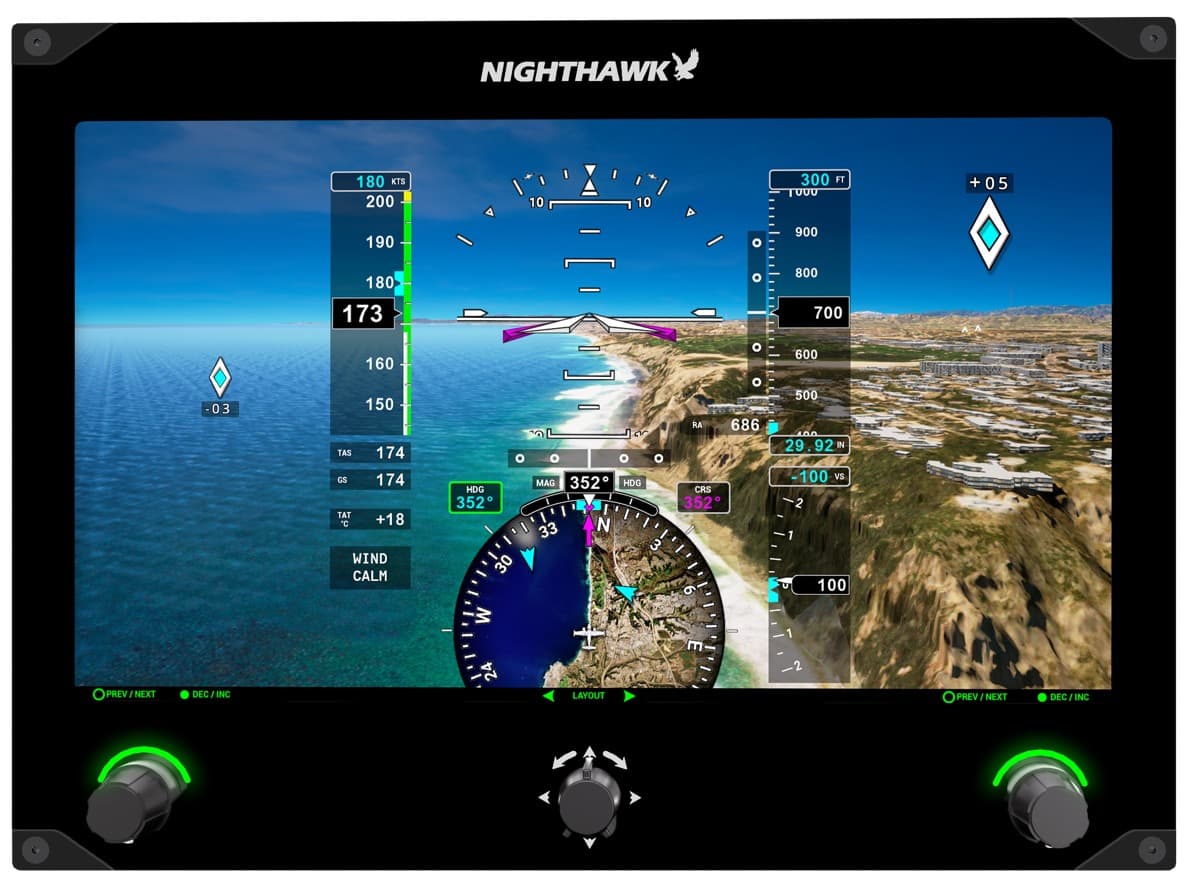
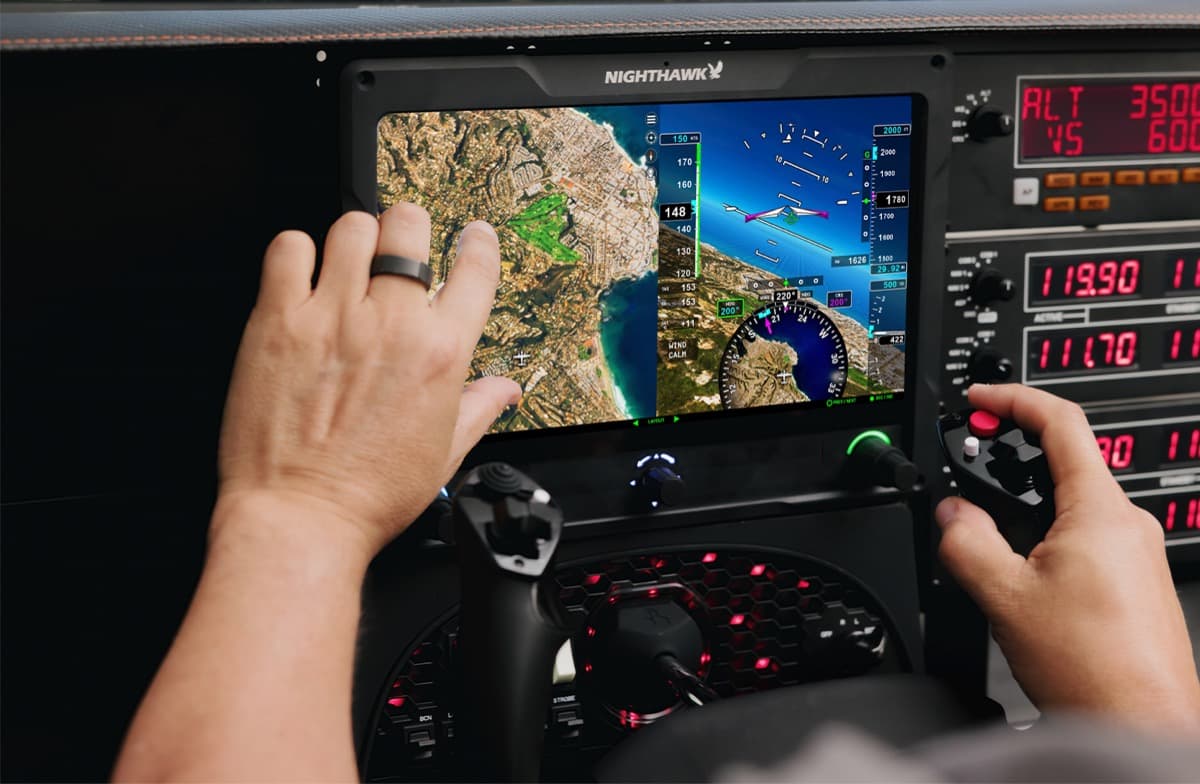
The customizable and expandable avionics system consolidates multiple sources of flight data, such as obstacles, flight environment, traffic, weather, terrain, satellite imagery, and more, displaying it in a high-resolution 3D view on programmable touchscreen displays.
The Guardian system’s compact computing center, called the NEST, can be installed anywhere in the aircraft, connected to the panel display through a single cable.
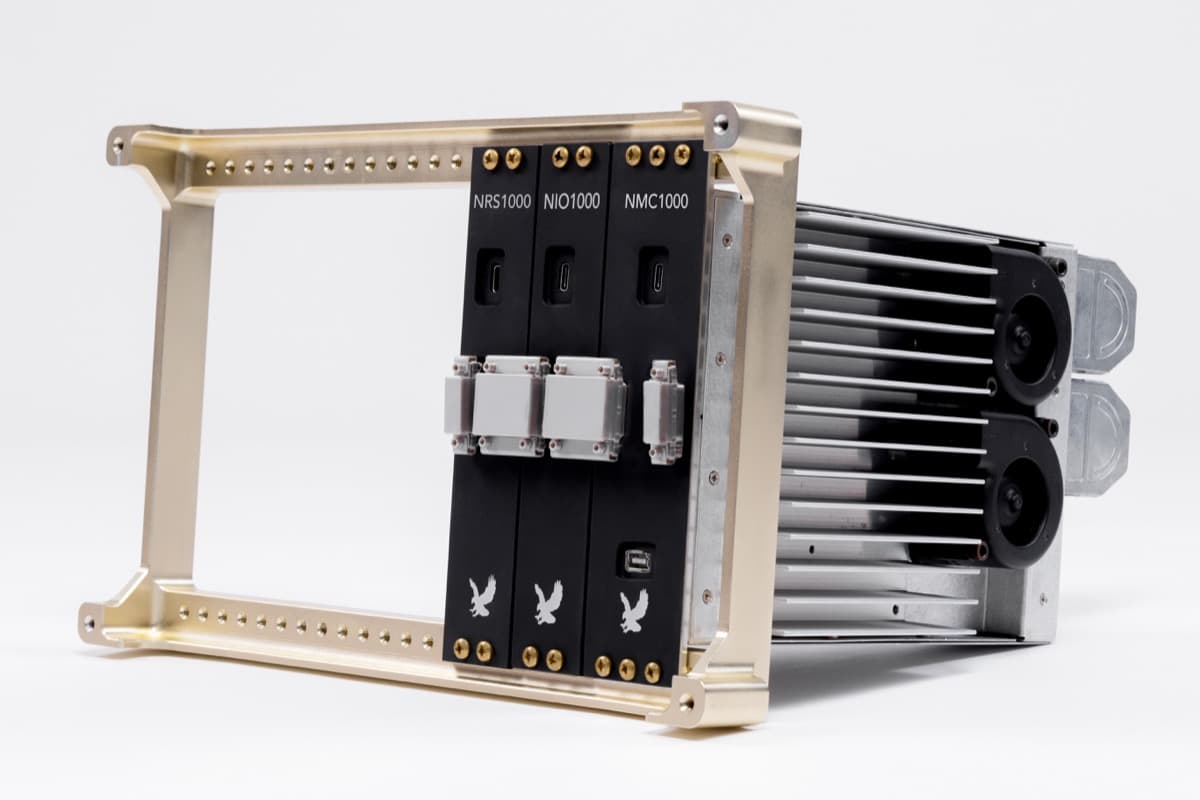 Guardian’s NEST.
That was another idea borrowed from Tesla, Martin notes.
“I wanted the display separate from everything else,” he said. “I wanted everything to be individual in a NEST and I wanted to be able to separate them by up to 25 feet, which is the standard length of an IEF cable. So everything we have is now connected by one cable to the display. We can support two displays with one of our NEST systems.”
The NEST houses individual “blades” that provide mission computing (the MCU), air data/attitude/heading reference system (ADAHRS), and smart I/O, which is programmable input/output to connect to existing avionics. The MCU contains all computational and graphical information for display. The smart I/O pulls together information from existing onboard avionics, including autopilot, GPS, radios, navigation aids, weather, ADS-B-In, and more for access on the displays.
The NEST can be fitted with additional blades for added capabilities not currently installed in the aircraft or to replace existing avionics such as radios, navigation, ADS-B, transponder, GPS, and more.
The foundation of the system was the purchase of Sandel Avionics in 2022, which built the first EFIS display for general aviation.
“That gave us a base of technology, including a product line in the legacy programs they had developed, particularly their terrain avoidance systems,” Martin says.
He notes that many of the products developed by Sandel are integrated into the Guardian system.
When the Guardian system was unveiled at Oshkosh, it was a surprise to most in the industry. According to Martin, that was because he “did not want to make another promise in aviation, particularly avionics, that just couldn’t be kept.”
“We were working hard to develop something that I don’t think anybody has ever developed or paid attention to in the general aviation market — the graphics, the miniaturization, the disconnection of the display from the rest of computing. All of us believed that we were not going to announce that until we knew that we could deliver it certified for the right price.”
Reaction has been positive, according to Martin, especially to the graphics.
“We take layer upon layer of information that is available to us and we create a digital twin of the earth and then we layer it with pertinent information, such as obstacles, as well as roads, rivers, and terrain,” he says, explaining that information is in the avionics memory so there is no streaming involved.
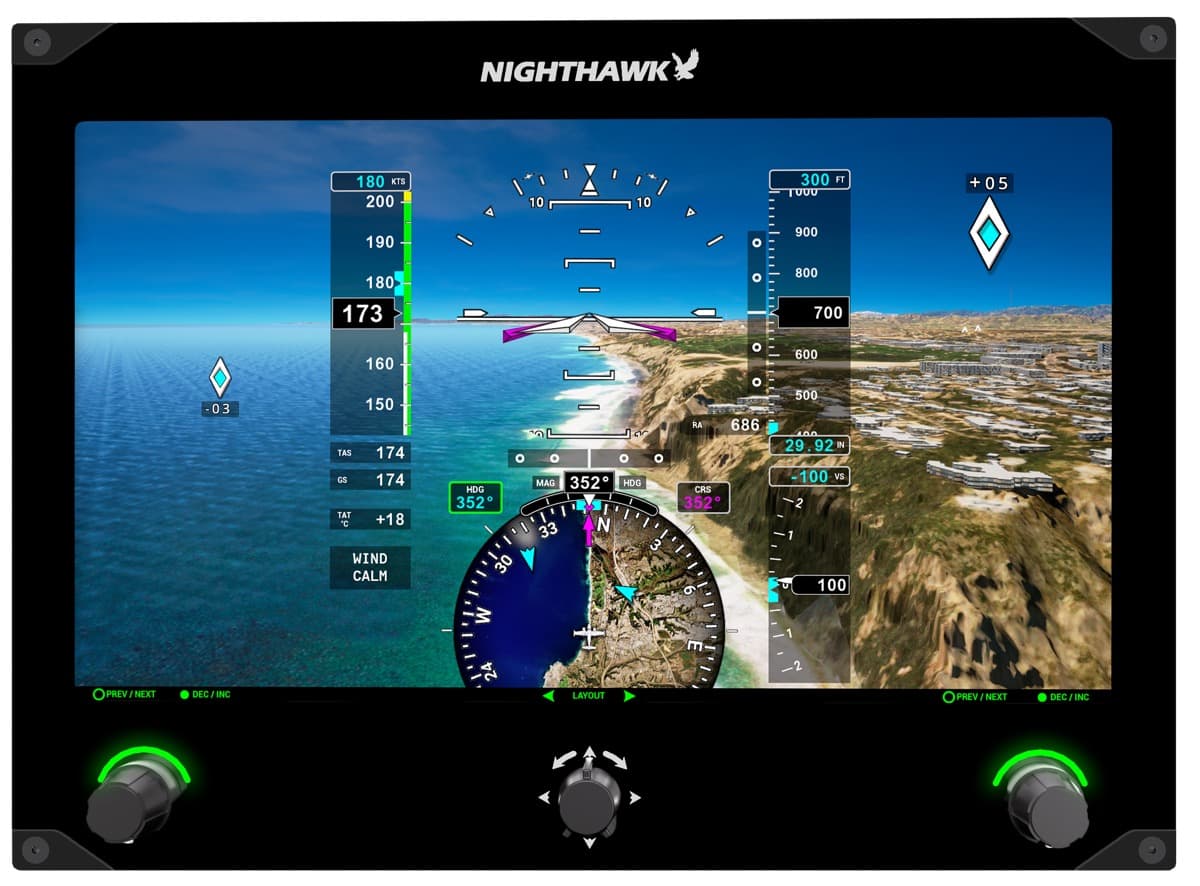
It’s like the pilot is flying Google Earth, he adds.
“We give him the real world. From a situational awareness point of view, we want him to know exactly where he is. That’s not so important if you’re flying 18,000 feet in general aviation, but it’s pretty important if you’re a helicopter pilot who spends your entire life at 500 feet. So that real world vision was dramatic and it took a lot of work.”
Affordability and ease of maintenance were key in developing the Guardian system.
“In my experience, when anything breaks in an airplane, you put it out to pasture until something comes back from the supplier and it’s repaired,” he says. “I wanted to break everything into individual pieces so if something breaks, you can simply remove it, have a new one delivered the next day, and go fly.”
That also translates to initially buying the system and eventually upgrading it.
Part of that affordability, he explains, is that a pilot gets to decide what his cockpit looks like.
For instance, if the airplane is already outfitted with “a perfectly good GPS navigator,” he doesn’t need to buy a new one from Guardian, he explains.
The pilot can work with the avionics shop to decide which capabilities he wants in his airplane, and those separate blades are installed.
“He doesn’t need to buy everything on day one, just what he needs,” he says.
When he’s ready to upgrade, it’s just a matter of adding more blades to the NEST.
“He can buy a single blade, insert it into the NEST he bought five years earlier and he hasn’t wasted a penny of his investment,” Martin explains.
Debut customer for the Guardian system is Comp Air, with the company expecting to get an Approved Model List (AML) and STCs for approximately 200 general aviation models, ranging from Cessnas to Pipers to Mooneys by December 2025.
And development work is ongoing, with Martin promising that “you can expect to see new features and functions being released by us on an almost monthly basis.”
With deliveries expected to begin in December 2025, prices start at $33,200 for a single display and $39,900 for a dual display system.
The order book is filling up, but Martin acknowledges that the government shutdown has impacted plans for first deliveries.
“We’re already doing everything it takes to be in production, so deliveries will immediately follow certification,” he says.
For more information: NighthawkFS.com