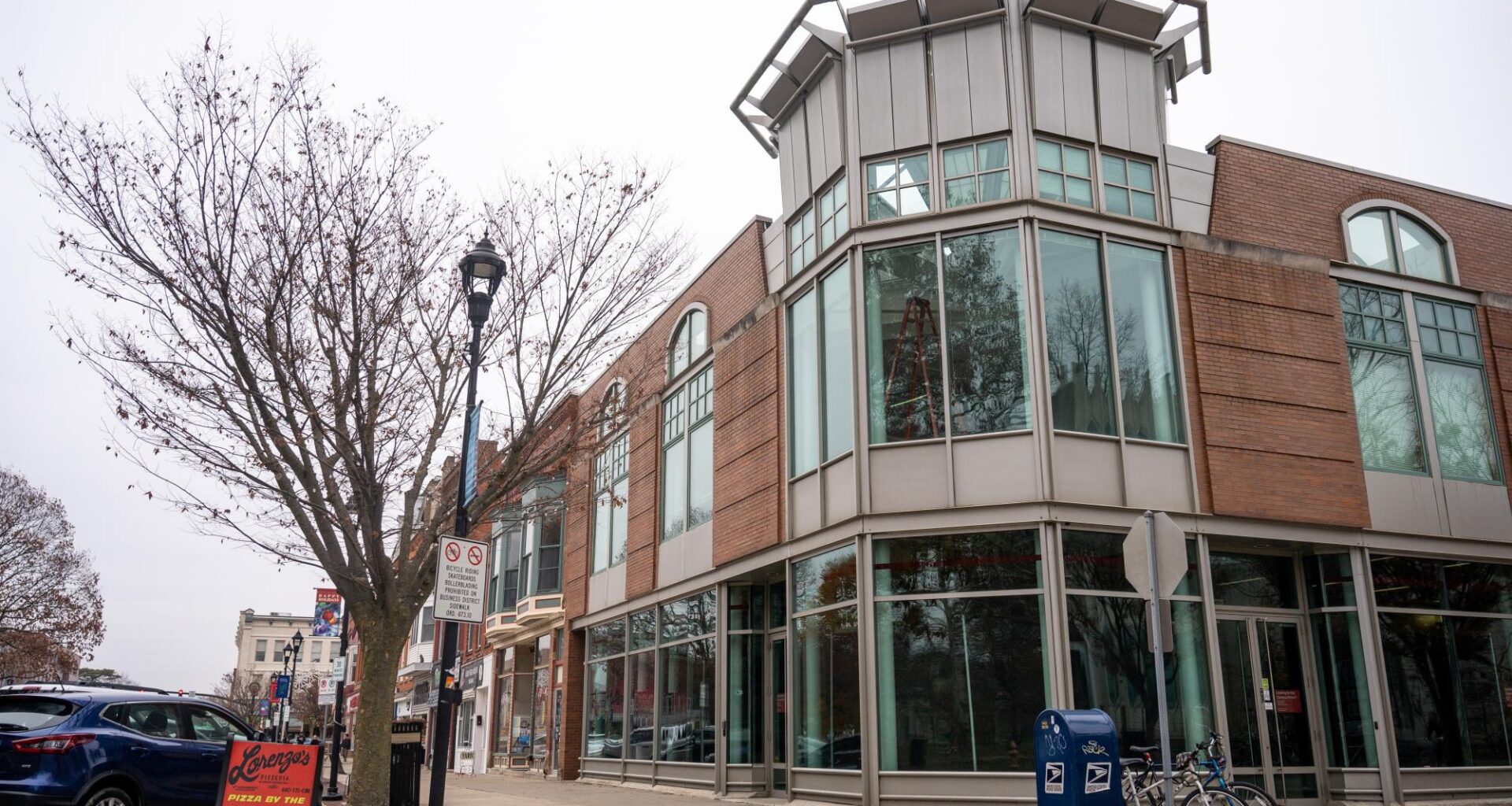
Oberlin College’s expansion into downtown retail space has raised concerns for many Oberlin residents who suggest that the College’s presence may diminish the town’s vitality. This semester, the building that formerly housed the campus bookstore is now being used for academic programming, and Oberlin Hillel recently opened its new space in a former hair salon. The ground floor of The Hotel at Oberlin, which was intended to be developed as retail space, is now home to the Conservatory East Studios, which houses the new Music Theater and Recording Arts and Production Programs. Additionally, this September, the College purchased an art gallery space at 65 East College St. for use by the fine arts program. These changes have made business and civic leaders worry that the College is crowding out local businesses from limited retail space.
“When the College goes to possess those spaces for College-only programs, it certainly makes an impact,” Jessa New, OC ’01, city councilmember and small business owner said. “Whether that impact is positive or negative or neutral, it’s hard for anyone to know at the time. It’s something we just kind of have to wait and see [about]. But it does cause concern to see the space that’s devoted to retail start to shrink.”
Executive Director of the Oberlin Business Partnership Abbie Fox echoed New’s concerns about College expansion. She said retail spaces and local businesses are essential to the character of downtown Oberlin.
“There [are] a lot of offices and things in Oberlin, and I would just love to see a more creative side in Oberlin: more art galleries, more places to purchase clothing, shoes, accessories,” Fox said.
The Oberlin Business Partnership acts as an advocate for local businesses within the town and works to strengthen its economic base through promotions, marketing, connections, and resources. Fox, who became the director last year, emphasized that limited real estate is a problem for people seeking to start businesses in town.
“There just is no real estate opportunity for any of these business owners that are coming in looking,” Fox said. “We would love to have them here. We just don’t have the space.”
Councilmember Joe Waltzer, OC ’98, who has run small businesses since he graduated from the College, said that limited real estate drives up the price of rent for business owners.
“Our downtown is shrinking, which means there’s less opportunity for new businesses, less opportunity to create a nice business mix,” Waltzer said. “There’s also more pressure on rent and availability downtown. When the College takes up retail space and turns it into academic space … more people [are] vying for the same number of spots. So, [expansion] can create rent pressures.”
However, this expansion can also bring about some benefits, according to College Director of Media Relations Andrea Simakis. Expanded academic spaces will benefit local businesses by bringing more faculty and students downtown regularly, Simakis said. She also said that Chief of Staff David Hertz and Manager for Administrative and Civic Engagement Emily Casey have worked with organizations, including the Oberlin Business Partnership, to address retail space concerns.
“We are sympathetic to the concerns and are in discussions with Oberlin Business Partnership and local officials on strategies that will help support the downtown business district,” Hertz wrote in a statement to the Review. “A vibrant downtown is critical to the College and Conservatory’s long-term success. And we believe a thriving College and Conservatory is equally important to the long-term future of downtown.”
Waltzer said he feels that the College could do more to minimize their impact on downtown Oberlin.
“I think they’re trying to figure out how to engage with the downtown and support [it] in ways that help us,” he said. “That’s certainly appreciated. I have a lot of great relationships in the College and people I work with regularly, but on a macro level, I don’t think anything is going to make up for the loss of an anchor space or the kind of businesses that would help us grow as a downtown. Honestly, I really hope that the College, in a more long term or strategic way, will look at moving out of some of these spaces and returning them to retail downtown.”
Oberlin is currently in the process of updating their zoning code. Waltzer said that while there are no specific plans, there have been conversations about prohibiting institutions from using space downtown in the code.
New said she hopes spaces could be created that could be beneficial to both the College and community.
“I don’t think it’s necessarily that the College can’t possess certain spaces or occupy them, but it would be a good show of faith and collaboration to try and make those spaces forward facing and welcoming,” she said. “You know, having programming in there that invites the public in from time to time so that it doesn’t appear as though our downtown is shrinking.”
Waltzer said the College serves to benefit from a healthy downtown.
“Long-term, I think a vibrant downtown really helps make Oberlin attractive to students [and] … faculty,” he said.