Semira Abbas Shalan
Sunday, 23 November 2025, 07:30
Last update: about 9 hours ago
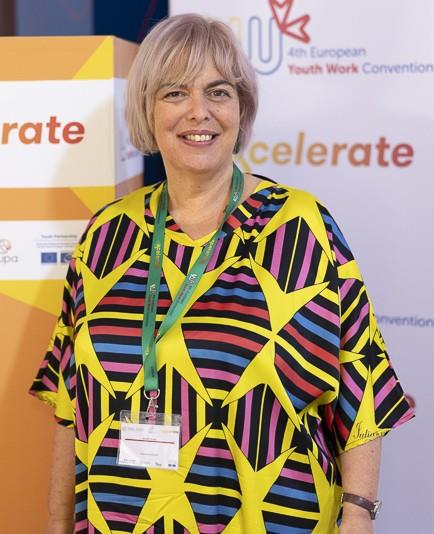
From mental health to housing pressures and digital overload, Malta’s young people face a complex world, yet Aġenzija Żgħażagħ CEO Miriam Teuma said that this is also a generation that is more engaged, self-aware, and ambitious than ever before, and one that deserves to be listened to.
In a society where young people are often accused of being disengaged or indifferent, Teuma spoke to The Malta Independent on Sunday and said that she sees a different picture, one of quiet but determined participation.
“When you look at the whole of our population, it’s a very small sector of society who really participate in policy and politics. That is normal. Sometimes it is a myth that everyone should be part of this,” Teuma said.
Teuma said she believes the idea that young Maltese people are politically detached is mistaken.
“Many do take part in organisations, sports, and cultural activities. Even participation in local committees and youth groups has increased compared to 20 years ago. If you look at band clubs today, you’ll find more young people in the committees than before, and when they’re part of those committees, they’re already part of decision-making,” Teuma said.
Though the agency doesn’t measure electoral participation directly, as statistics are not available by the Electoral Commission, Teuma pointed to Eurobarometer surveys showing that a large number of Maltese youths do vote.
“At least they go out and vote. In many countries, people do not even bother,” she said.
Teuma said that Aġenzija Żgħażagħ plays a key role in connecting young voices to national policymaking.
When ministries open public consultations, the agency is often asked to gather young participants, she said.
“We don’t run after them, they come to us. They know us and trust us, and that makes a big difference,” Teuma said.
Recently, a consultation on Vision 2050 for youths drew 50 young participants despite being organised at short notice.
“You might say 50 is small compared to the 100,000 youth population, but it is still meaningful. Young people are getting more interested, especially when they are invited properly and see their input is valued,” Teuma said.
Social media has added stress
Teuma said that social media has added another layer of strain, as it either portrays the ideal or the negative, and navigating between them is hard, even for adults, let alone for young people who spend a lot of time on it.
The post-pandemic years have seen a clear rise in anxiety among youths, Teuma said.
“Many feel they are not able to cope. We have done a lot of information campaigns to say it is okay to be anxious and to seek help,” Teuma explained.
She said that Aġenzija Żgħażagħ’s online youth worker platform offers a first point of contact for those reluctant or unable to see a mental-health professional.
“It is less intimidating and helps us assess their needs and guide them,” she said.
Teuma said that the agency has even begun introducing mindfulness programmes for adolescents.
“I would have never thought 10 years ago that we would be doing mindfulness, but last year, we held mindfulness sessions at Dingli, and this summer we expanded them to schools,” Teuma said.
Together with the Richmond Foundation, the agency has also trained all its youth workers in mental-health first aid.
“One thing we feel is missing today is quiet space. Many parents fill their children’s schedules completely with sports, music, lessons, and there is no time left to think. That leads to burnout, so we’re promoting mindfulness, sensory walks, dance, and creative reflection,” Teuma said.
Employers often lament a lack of critical thinking among new graduates, something Teuma traced to cultural habits rather than systemic failure.
“We are a small country, and certificates are important, but employers have fallen into the trap of hiring based on degrees instead of real skills.”
Aġenzija Żgħażagħ’s programmes focus on life skills: self-esteem, confidence, resilience, teamwork, and the ability to learn from failure, Teuma said.
“These are what most of our programmes consist of, especially in summer,” she added.
Skills and experience
To bridge the gap between qualifications and practical ability, the agency is working with the National Skills Council to recognise experiential learning, from volunteering to youth exchanges abroad.
“Skills can be acquired through experience. Sometimes the system works against the current: employers say they want skilled people, but still prioritise certificates. That mindset needs to change,” Teuma said.
Teuma also said she believes a deep cultural shift is needed in how Malta views learning.
“It is not just the education system, it is our mentality. When I was a teacher, parents would ask why I hadn’t given their children homework, because they didn’t believe that reading was homework,” Teuma said.
The agency’s philosophy is for a more human-centred approach, Teuma said, adding that the young person always comes first, which is why the agency focuses on life skills, to help youths believe in themselves.
Asked whether Malta is doing enough to prepare young people for the digital world, Teuma replied that it is never enough, because the digital world is so uncontrolled and changes every minute.
She said she supported some level of regulation but warned that restrictions alone are not enough.
“Of course, restrictions help, but only for a short time. The digital world changes too fast. If we stop innovation, we would be doing a disservice to young people,” she said.
Instead, Teuma said she believes in education and resilience.
“We have to make young people understand how to cope with it. Even adults struggle to keep up, and sometimes youths understand it better. The way forward is to involve them more in this digital revolution,” she said.
Cyberbullying legislation has helped, but harmful content remains rampant, Teuma said.
“We cannot stop it completely, so we need to educate people on how to live with it, interpret it, and be aware of the risks,” Teuma said.
On artificial intelligence, Teuma said that, “this is our new revolution”.
“Throughout history, people never knew how to deal with revolutions. They learned by living through them. The same applies now, we must experience it and adapt, not jump to snap solutions,” Teuma said.
AI should be viewed as part of society’s evolution rather than a threat, as Teuma described it as a learning process.
Study on well-being
Among the agency’s most ambitious projects is a national study on youth well-being, announced in the 2026 Budget.
“This is something we’ve never done before. We have been working on it for months across entities, asking what they want to know about young people to improve their policies,” Teuma said.
She said that every ministry involved was asked to propose two or three indicators, from health and mental well-being to education, housing, volunteering, and leisure.
“It is the first scientific study on the state of young people. The results will feed directly into ministries’ next programmes and budgets,” Teuma said.
Past surveys have suggested that many young Maltese want to leave the country, a claim Teuma disputed.
“That study was not done scientifically well. It targeted certain schools, not a representative sample,” she said. In reality, Teuma argued that many young people prefer to stay.
“A lot do not even want to travel abroad. Some are afraid to. Malta is isolated, and family connections are strong. That bond often brings them back,” Teuma said.
Those who do go abroad, through programmes like Erasmus+, often return with new skills and perspectives.
“It is healthy for Malta. Young people go abroad, come back, and bring fresh ideas. That is how our society evolves,” Teuma said.
“Our philosophy is to build on the positive and make it stronger. The limitations will always be there,” she said.
As Malta prepares for a new youth policy cycle, Teuma said that young people are not disengaged, they are simply expressing themselves differently.
“They are reacting, participating, shaping ideas. They are the present as much as the future, and we must keep giving them the space to be heard,” Teuma said.