Slovenia is launching a new Digital Nomad Visa on 21 November 2025, allowing remote workers to live and work in the country for up to 1 year. The scheme targets location-independent professionals seeking a base in Europe, combining residency permission with access to the country’s digital infrastructure. The Slovenian Tourist Board has created a dedicated online information page for prospective applicants.
The government positions the visa as a way to attract international talent to a small, highly connected country that promotes itself as “Europe’s green heart.” Slovenia highlights its mix of natural landscapes, compact size and high quality of life as key draws for digital nomads, alongside its status as one of the world’s safer destinations according to the Global Peace Index.
Visa Promotes Nature, Safety and Connectivity
Slovenia emphasizes that nature is accessible from cities and towns across the country, noting that about two-thirds of its territory is covered by forests and around one-third is protected. Within short distances, residents can reach Alpine peaks, lakes, vineyards, Mediterranean coastline and rolling hills, a variety that officials say supports a balanced lifestyle for remote workers. The visa launch is presented as a gateway for digital nomads to experience this landscape over an extended stay rather than a short visit.
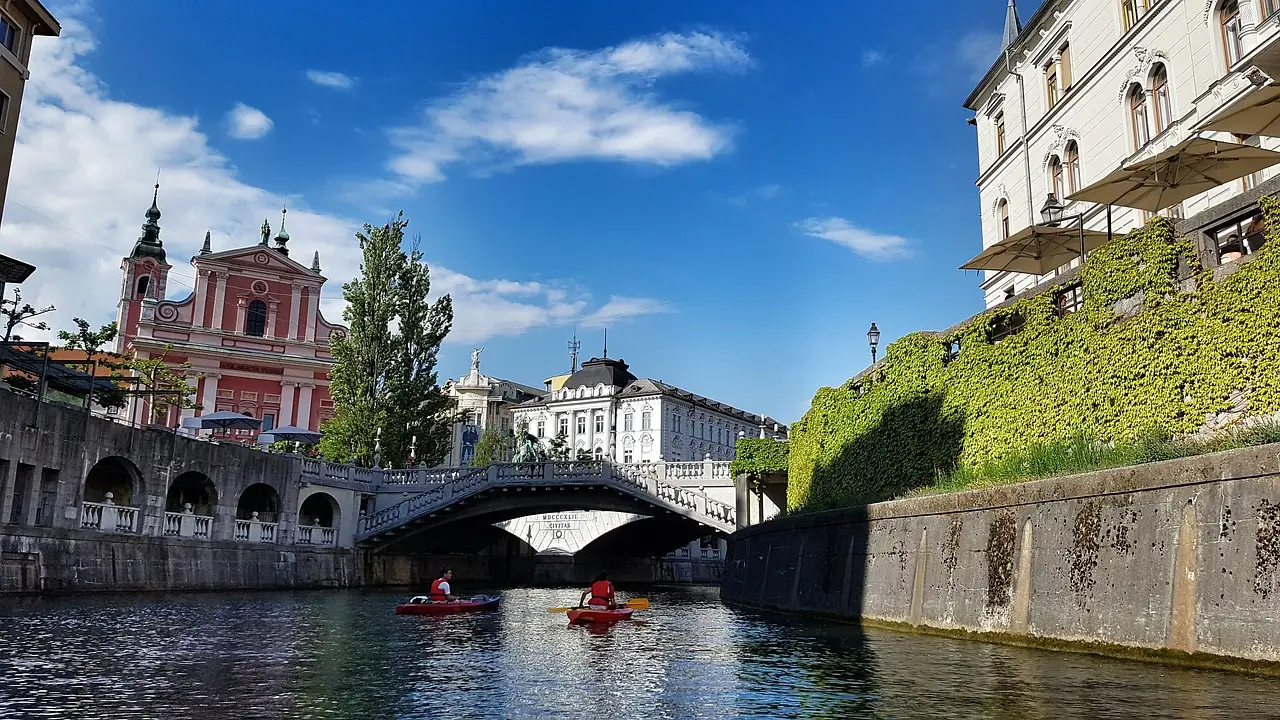
Cities including Ljubljana, Maribor, Koper and Celje are promoted as combining historical architecture with contemporary culture and services. Ljubljana, which has held the title of European Green Capital, markets itself with pedestrian zones, riverside public spaces and extensive parks. National tourism authorities also draw attention to Slovenia’s food culture, describing a culinary scene shaped by Alpine, Mediterranean and Pannonian influences, from local markets to higher-end restaurants.
To support long-stay remote workers, Slovenia points to widespread high-speed internet coverage as well as coworking spaces, technology parks and start-up hubs. Officials say these facilities help digital professionals maintain their careers while based in the country. According to the Global Peace Index, Slovenia has remained among the world’s safer countries in recent years and ranks 9th in 2025, a factor the authorities frame as an advantage for solo travelers and international workers.
Compact Geography and Innovation Ecosystem
The government also promotes Slovenia’s small size as a practical benefit for digital nomads who want easy access to varied environments during their stay. Tourism officials note that travelers can go from the capital’s urban streets to Alpine hiking areas or the Adriatic coast in about 1 hour, and reach eastern wine regions in around 2 hours. This compact geography is presented as enabling short leisure trips without disrupting work routines.
Slovenia also underscores its record of homegrown innovation as part of the Digital Nomad Visa message. The country is home to internationally active companies and start-ups such as Outfit7, Celtra, Dewesoft, GenePlanet, Mediately and Juicy Marbles, which authorities cite as examples of a broader innovation-driven economy. The visa is intended to position Slovenia as an appealing base within the European Union for remote workers who value both natural surroundings and access to a growing technology ecosystem.
The launch of the Digital Nomad Visa forms part of a wider effort to promote Slovenia as a destination where nature, culture and innovation align. Remote workers interested in eligibility criteria and application steps are directed to a dedicated English-language landing page at www.slovenia.info, which centralizes official information related to the new scheme.