Editor’s note: Abulfaz Babazadeh is a scientist, Japanese scholar, and political observer, as well as a member of the Union of Journalists of Azerbaijan. The views expressed in this article are the author’s own and may not reflect the position of News.Az.
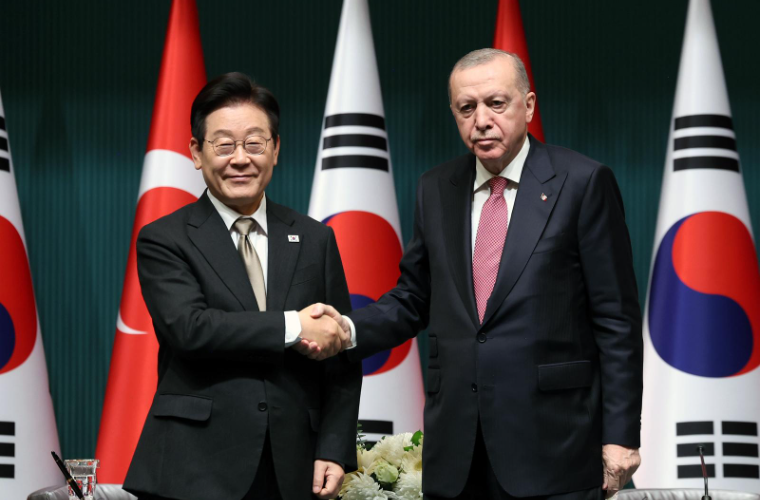
South Korean President Lee Jae-myung made a landmark official visit to Türkiye on November 24–25, marking the first trip by a South Korean leader to the country in several years. The visit, hailed as historic, drew widespread attention and underscored the growing strategic ties between the two nations.
In Ankara, Lee held comprehensive talks with Turkish officials, addressing the full spectrum of bilateral relations, including defense and energy cooperation. Turkish media reported that the South Korean president praised Türkiye’s defense-industrial capabilities, describing the two countries’ military strengths as “solid structures that complement each other.”
He expressed particular admiration for Turkish drones, noting that South Korea is closely monitoring Türkiye’s developments in unmanned aerial vehicles, radar systems, electronic warfare systems, and missile technologies in recent years.
In turn, South Korea has extensive technological expertise in tanks, artillery systems, and naval platforms. “At a time when both countries are striving to strengthen their positions in the defense industry, we are determined to continue our defense cooperation based on mutual trust, including joint production, technological collaboration, and training,” Anadolu Agency quoted the Korean leader as saying.
Source: Turkishminute
During the visit, three important agreements were signed, the most notable being a Memorandum of Understanding on nuclear energy cooperation between the Turkish Nuclear Energy Corporation (TÜNAŞ) and the Korea Electric Power Corporation (KEPCO).
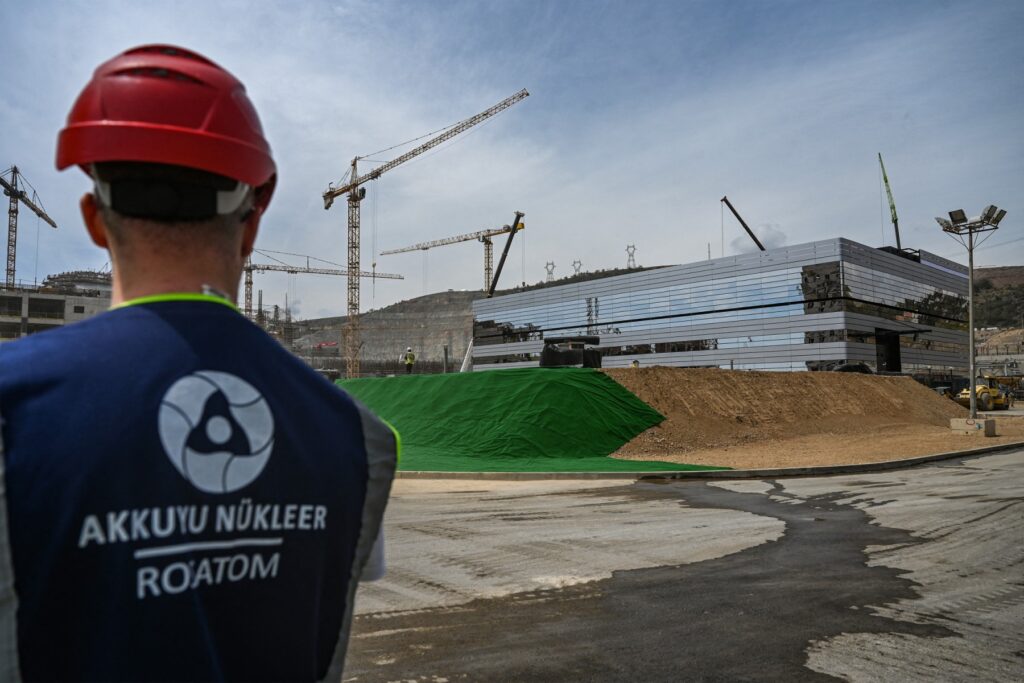
The Republic of Korea has long expressed interest in building nuclear reactors in Türkiye. Talks have been ongoing for three years, and according to Turkish media, negotiations are still continuing. Discussions focused on Seoul’s potential participation in the construction of Türkiye’s second nuclear power plant in Sinop. For reference, Russia is currently constructing Türkiye’s first nuclear power plant in Akkuyu, with Rosatom completing delivery of all four reactors in mid-November.
South Korea expressed interest in the Sinop NPP project at the end of 2022. KEPCO had been negotiating a contract to build four nuclear reactors in Türkiye, valued at $30.7 billion, each with a capacity of 1,400 MW, according to South Korean media. Work on a feasibility study was expected to begin in 2023. In February 2023, KEPCO CEO Jeong Seung-il submitted a preliminary application to Turkish Minister of Energy and Natural Resources Fatih Dönmez, outlining a detailed project plan.
Source: AA
Originally, Türkiye had planned to build the second NPP with Japan’s Mitsubishi Heavy Industries. However, Mitsubishi withdrew from the project in 2018. Subsequently, Türkiye held talks with Russia’s Rosatom to construct a Sinop nuclear plant similar to Akkuyu.
South Korea possesses considerable experience in the nuclear sector, even though the number of domestic nuclear plants is relatively small. In the early years of Korea’s nuclear program, foreign contractors built the plants, but since 1995, Korean NPPs have been constructed almost entirely with domestic technologies and adhere to high safety standards.
Moreover, fuel costs for Korea’s APR-1400 reactor are 23% lower than for the French EPR reactor from Areva, considered one of the most advanced reactors in the world. Since 2010, Korea has also constructed reactors abroad, and Korean scientists have made significant contributions to global nuclear technology.
Experts believe Korea is a suitable partner for Türkiye’s second NPP. During his meetings in Ankara, President Lee said that Korea’s high potential and reliability in advanced nuclear technologies would substantially contribute to Türkiye’s nuclear energy development.
Source: Daily Sabah
According to Anadolu, Türkiye’s Minister of Energy and Natural Resources Alparslan Bayraktar said the memorandum signed between TÜNAŞ and KEPCO envisions collaboration across multiple areas. In a social media post, Minister Bayraktar stated: “We took part in intergovernmental talks chaired by President Recep Tayyip Erdoğan and South Korean President Lee Jae-myung. Following the talks, TÜNAŞ and KEPCO signed a ‘Cooperation Agreement in the Field of Nuclear Energy’ in the presence of both leaders. Under this agreement, we intend to work together in many areas — from nuclear power plant project development to technology and know-how exchange, from site evaluation to financing and human resource development. I hope this agreement, which elevates our long-standing friendship to a strategic partnership in nuclear energy, will be beneficial for our countries.”
Türkiye is actively developing its nuclear energy sector, planning to launch all four units of the Akkuyu NPP by 2028. The country also intends to build two additional nuclear power plants: the second in Sinop Province and the third in the Thrace region.
Türkiye is simultaneously investing in the development of domestic nuclear reactors to enhance technological independence, with Turkish institutes, universities, and companies participating in the program.
Nuclear energy is a central element of Türkiye’s long-term energy strategy, which aims to reach 20 GW of nuclear capacity by 2050 and achieve net-zero emissions by 2053. South Korea’s experience is expected to play a significant role in supporting these ambitions.
(If you possess specialized knowledge and wish to contribute, please reach out to us at opinions@news.az).