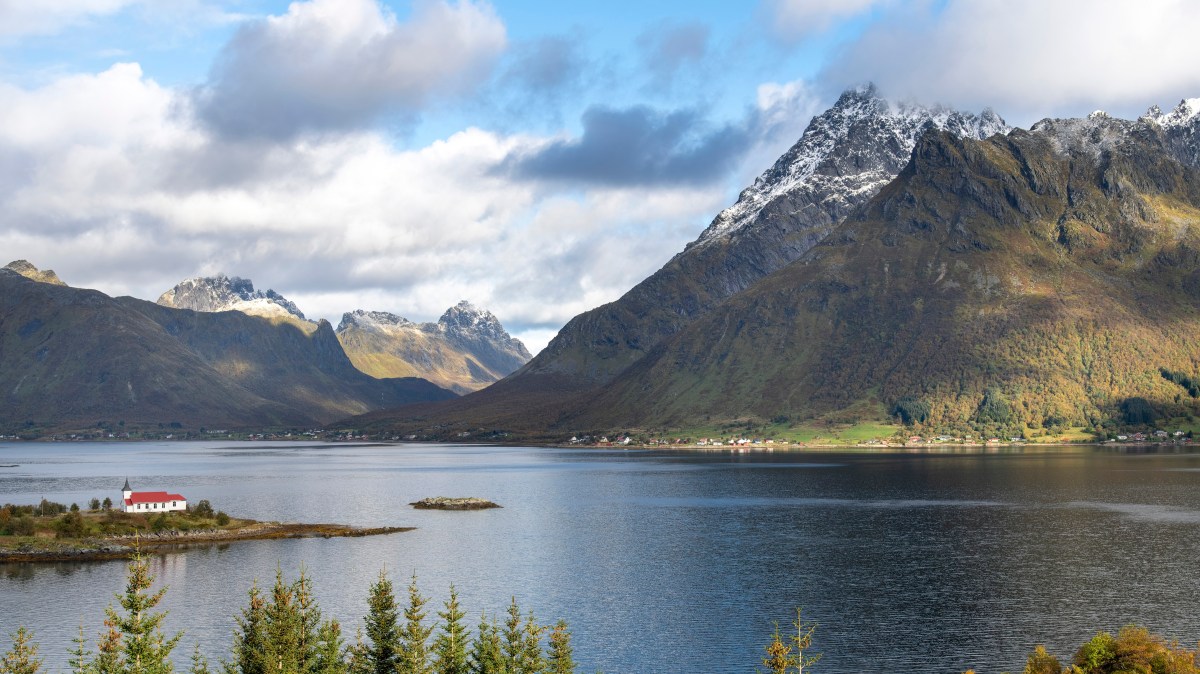
It was a strange feeling, standing alone on a quayside, way north of the Arctic Circle, while a shiny 500-passenger ship docked just for me.
The gangway came down, a flood of people came off to stretch their legs, and then it was time for this single-to-Bergen ticket holder to venture aboard.
I was at the port of Stokmarknes, a town in the Vesteralen Islands, the next archipelago north of the better-known Lofotens on Norway’s northwestern tip. The ship was the Havila Capella, two thirds of its way around the 12-day circuit known as the Hurtigruten (confusingly also the name of the other longstanding operator on this route).
Most of the passengers were on board for the duration, from Bergen to Kirkenes and back. But I was using this coastal service as it was originally intended, as hop-on hop-off public transport. It may be better known internationally as a spectacular cruise, but it still has the contract to deliver post and the Hurtigruten carries a small amount of freight too. On some legs more than half of its passengers are locals.
Doing the “whole Hurti” as a cruise starts at £1,638pp, but the three-night part that I had in mind was priced at from £328, all meals included. That’s a saving of more than £1,300, while seeing Norway at its best. And by hopping on just for Stokmarknes to Bergen, I aimed to cherry-pick its most spectacular bit.

The Havila Capella covers a 12-day circuit
An easy DIY Arctic adventure
A few years ago tourists travelling independently were rare in Arctic Scandinavia, particularly in winter. The region was the preserve of specialist operators, which charged high prices to grant access to pristine, snow-covered wildernesses.
The catalyst for change has been the advent of low-cost airlines like easyJet, Norwegian and Wizz Air, now offering direct flights to Tromso, the tourist hub of northern Norway. Combine that with efficient local buses and daily Hurtigruten sailings and Arctic travel becomes a do-it-yourself adventure.
I could have gone on board the Havila in Tromso after one of those low-cost flights, but I wanted to see the Lofoten Islands first. This seven-island archipelago is known for its traditional fishing communities and for craggy peaks that rise straight from the sea.
• Explore our full guide to Norway
So from Tromso I connected with the local airline Wideroe for the short hop to Bodo, the main hub hereabouts. I wanted to experience the four-hour catamaran ferry that weaves through a constellation of smaller islands to the Lofoten capital, Svolvaer (£36; reise.reisnordland.no).
In summer the crossing would have been spectacular, but in winter the 6pm departure meant it was dark all the way, so all I saw was a series of lonely ice-covered jetties. A novice mistake.

Take in the northern lights above the Lofotens
GETTY IMAGES
Exploring the island capital of Svolvaer
I thought I was being enterprising, coming to the Lofotens at this time of year, but I was far from alone. Svolvaer turned out to be busy with tourists keen to see the islands at their most pristine and dramatically austere — and of course the northern lights.
These days the island capital has new big-brand hotels, but I opted to stay old-style, in a rorbu on one of the city islands, Svinoya. These former fishermen’s huts are all over the Lofotens, many of them pleasingly converted for tourism. But they still have a foot in the past, and Svinoya’s reception, in a former warehouse on the wharf, was a recreation of an island store from years gone by, selling survival essentials, from fish hooks to hurricane lamps (B&B doubles from £165; svinoya.no).
From the town the Lofotens extend southwestwards like a string of Alpine peaks that have been decapitated by a thunder-footed Norse god and replanted in plankton-rich waters. It’s unforgiving land, so for centuries the main mode of transport here has been boat, particularly for the winter cod fishing season, unchanged for centuries.

Spot eagles above the water
ALAMY
I’d come here expecting extreme cold, but thanks to the Gulf Stream the Lofotens are warmer than the mainland. There was snow, of course. Diggers were clearing Svolvaer’s streets, and the mountains were impassable, but there were other options. Tourists in survival suits were setting off in rigid inflatable boats to see the fish eagles and orcas, while others were boarding more sedentary glass-walled boats to see the Trollfjord, a famously spectacular blade of water.
I didn’t sign up for either, knowing that I would be stopping off in the Trollfjord later, courtesy of the Havila Capella. Instead I opted to take the local bus down the island’s spectacular arterial route, often used by carmakers for TV adverts. I would never have dared drive that road in those conditions, but the bus driver was clearly accustomed and had proper winter tyres.
My destination was Henningsvaer, a pretty fishing port on a spangle of islands that hang off the main archipelago, reached over arched bridges that leap athletically from islet to islet. The port was a place of leggy wooden jetties dotted with blood-red wooden fishermen’s houses and fish factories. Clusters of brightly painted boats dotted both the water and the canvases in the town’s art galleries. The air was lacquered with the smell of cod, drying on huge cathedral-like racks, just as they have done for the past thousand years.

Henningsvaer is a pretty fishing port
GETTY IMAGES
Life on board the ship
After a couple of days exploring the Lofotens I took the bus to the adjoining Vesteralen archipelago via another ferry crossing, in time to intercept the Havila Capella at Stokmarknes as it made its way south.
The Hurtigruten may have a 130-year tradition, but Havila is the new eco-friendly kid on the block, and my cabin was like something out of a boutique hotel, with a giant flat-screen TV connected to a webcam on the bow.
• 16 of the best Norwegian fjords cruises for 2025 and beyond
But I wasn’t going to stay in my cabin to see the majestic Raftsundet, a 16-mile mountain-sided strait that runs between the Vesteralens and the Lofotens. Halfway down, the captain glided into the Trollfjord, that mirror-calm finger of water that lies between 1,000m-high walls. A hushed silence fell upon those of us on deck, as sea eagles wheeled overhead and a lemon-yellow sun glared balefully at us through the mist. We wouldn’t be going in any deeper, we were told, because unusually warm conditions meant there was a danger of an avalanche.

The archipelago is stunning
GETTY IMAGES
Then it was dinner time. In keeping with its sustainability ethos, Havila has foresworn wasteful buffets and instead offers a menu of small plates, served by waiters, where you can order as much as you like of the likes of scallops and Norwegian fish stew.
It was easy to relax into shipboard life. The Hurtigruten route dodges through straits and behind islands, which ensures calm passages and also guarantees dramatic scenery on either side, all of it draped with fine white snow at this time of year.
There’s little in the way of normal cruise ship entertainment on board. The only cinema is the unrolling of the magnificent coastal scenery outside the window, but nature certainly puts on a show, and the crew let us know when there were orcas in the vicinity, and when the northern lights were ribbing the sky with faint smudges after dark.
And then, of course, there were the regular stops for passengers to get on or off, usually at least three or four in a day, with excursion opportunities built in. In this way I was able to explore the likes of Trondheim, Alesund and Kristiansund, all with their own stories to tell.
And then finally on the fourth morning we turned the corner and there was Bergen, Norway’s second city, surrounded by hills.
I had a moment of sadness, relinquishing my comfortable cabin, but I had a flight to catch. And I consoled myself with the thought that I’d had a taster of one of the world’s great journeys, for a fraction of the price.
Andrew Eames was a guest of Havila, which has three nights’ full board from £328pp (havilavoyages.com). Fly to Bodo