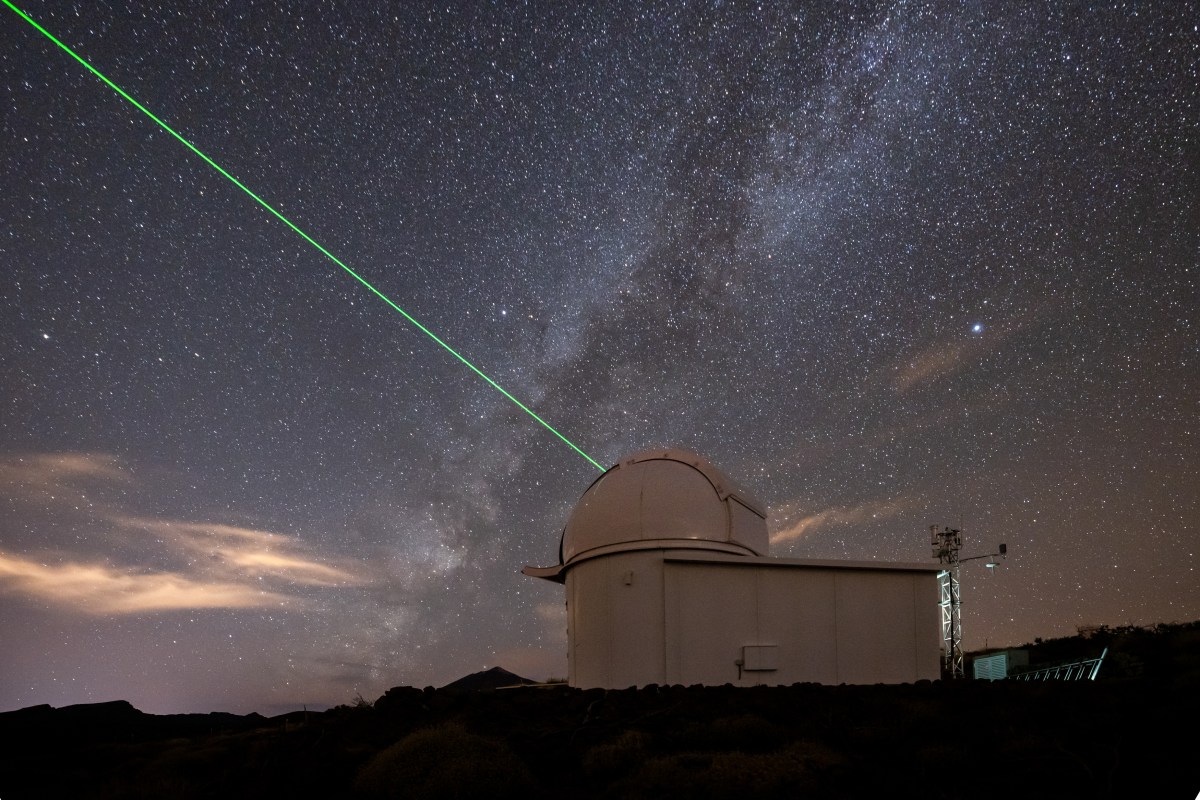
A new base being built by NATO countries in Greenland will use incredibly narrow laser beams to ensure fast and voluminous data download from satellites, as Western nations move to secure communications from disruption by adversaries such as Russia or China, the company behind the project told Newsweek.
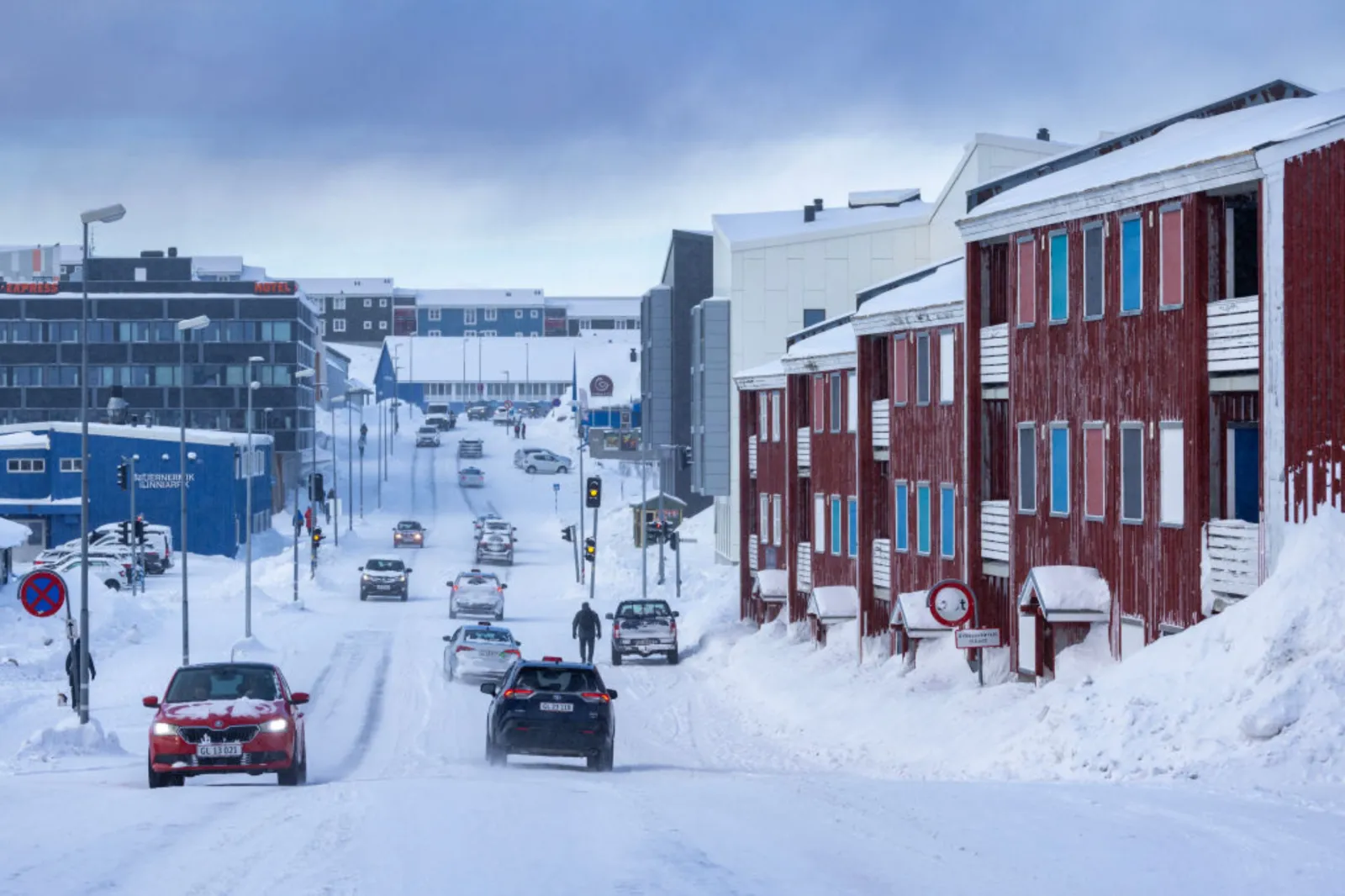
The planned new Optical Ground Station in Kangerlussuaq in western Greenland, north of the capital Nuuk, is going up in a former U.S. military base and will use technology developed by Astrolight, a company from the Baltic nation of Lithuania, with support from the European Space Agency. Newsweek sought comment from the Greenlandic government and from the Danish foreign ministry.
Russia increasingly is challenging NATO states in the Arctic and the Baltic with “hybrid warfare” including jamming communications and cutting undersea cables that carry data from ground stations that use more traditional methods such as radio frequencies and fiber-optic lines. Lasers offer a powerful alternative as well as a backup.
Russia regards the Arctic as integral to its national defense and within its political influence zone, while China says it is a “near-Arctic state” and that Arctic security is part of its state security. Beijing has an intense scientific interest in the region where it carries out extensive “dual-use,” or mixed military and civilian, activities.
Ranged against those two powers, which the United States has defined as adversaries, are the United States—with its Arctic territory of Alaska—Canada, and European Nordic nations such as Norway. Denmark, too, is an Arctic nation by virtue of its ownership of Greenland. While Nuuk exercises extensive self-government over the vast, mostly frozen island, Denmark controls its foreign and defense policy.
The advances of Russia and China and the challenges those bring to the region have contributed to calls by President Donald Trump for the U.S. to acquire Greenland in the name of ensuring the security of the American homeland. Trump has castigated European allies, particularly Denmark, for doing too little to protect the region.
The new laser base is the brainchild of a team from Denmark and NATO ally Lithuania. Astrolight has also set up a subsidiary in Denmark that is involved in the project.
Astrolight says its technology offers 10 times higher throughput than traditional satellite download technologies and 10,000 times more bandwidth.
“The reason why we decided to go to Greenland is, first, we need to have backups,” the company’s co-founder Laurynas Mačiulis said in an interview.
“Seabed cables can be damaged, and also might be vulnerable to interference coming from other countries…. China, Russia…have access to that area. So we need to have a backup solution which is more resilient to interference and has a higher capacity and more secure way of communicating with the satellites,” said Mačiulis who is also the company’s CEO.
Lasers have other advantages, such as against electronic warfare, according to Mačiulis.
“We are talking about a 1,000th of a degree width in a laser. So it’s very narrow…. Imagine you have a laser, a pointed laser pointer, which is super sharp, and it’s invisible from the side, so meaning the enemy cannot even see where the laser is. It can only detect it once it’s in the line of sight, which in space with satellites moving in different directions at eight kilometers per second—it’s almost impossible to stay in that beam physically. So yes, it’s very resilient. It’s almost unjammable,” Mačiulis said.

In addition, optical communications via laser do not require a license to operate, unlike radio frequencies. “Some countries might be trying to, let’s say, block your license, so you could use optical in that case,” Mačiulis said, without specifying which countries.
But the laser would have no military function, he said: “The laser is very faint. So you cannot use this as a weapon. It’s designed to be very low power because you need to conserve the limited energy resources on a satellite, and want to be as efficient as possible, and as undetectable as possible. So we’re not talking here about a laser weapon with these systems.”
Lasers require clear skies to operate—a reason why the new base will be in Kangerlussuaq, which has more stable weather conditions than Nuuk and some other locations in Greenland. Astrolight says it hopes to build at least three bases to offer alternatives—or “redundancy”—in case of cloudy skies.
Currently, much of the data obtained from orbiting polar satellites is downloaded to a giant ground station in the Norwegian Arctic archipelago of Svalbard that mainly uses radio frequencies, from where it reaches other locations via an undersea fibre-optic cable.
But that cable was damaged in 2022 under conditions that have never been fully explained by the Norwegian authorities. In a study published this year titled Underwater Mayhem, Benjamin Schmitt of the University of Pennsylvania’s Kleinman Center for Energy Policy and two authors assessed that it was “highly probable” that the cable was cut by a Russian commercial fishing trawler, the Melkart-5. The Russian authorities have denied involvement.
Authorities in several Western nations suspect Russia may have used commercial vessels to cut cables in the region and in the Baltic Sea more than half a dozen times in recent years. Suspicion has also fallen on China in some of the incidents in the Baltic, although there has been no official attribution. China and Russia both deny their involvement.