Key Points and Summary – Doug Bandow argues the Trump administration’s initial 28-point Ukraine peace plan, while painful for Kyiv, was at least grounded in battlefield reality and offered a path to stop the war.
-European leaders, he says, sabotaged it with maximalist demands, hollowing out any deal Moscow might accept while still expecting U.S. money and protection.
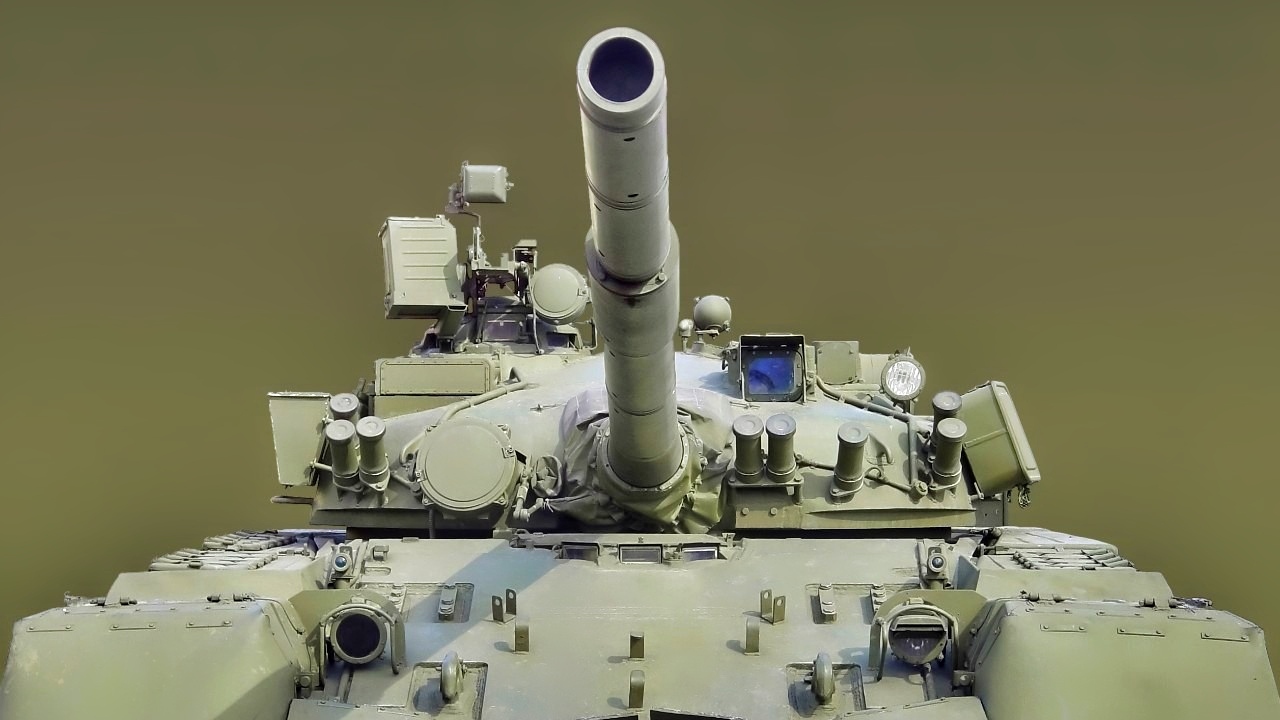
T-64 Tank. Image Credit: Creative Commons.
-With Europe unwilling to rearm or fight itself, Bandow contends Brussels prefers an open-ended proxy war that devastates Ukraine but weakens Russia.
-He concludes Trump should drop the latest, doomed peace proposal, end U.S. support, and force Europe and Kyiv to own the consequences.
Trump’s First Ukraine Peace Plan Was Ugly – and Europe Killed It
The best that one can say about the Trump administration’s diplomacy is that it is active. Unfortunately, no foreign country can treat Washington’s entreaties seriously, as the president’s latest efforts to negotiate peace in Europe show.
The original 28-point plan from the administration proposed recognizing Russia’s battlefield advantages. It was an ugly plan from Kyiv’s perspective, but it was realistic—a serious effort to end the conflict. The proposal offered a chance to halt Ukraine’s destruction. An unnamed Trump official explained: “The ultimate goal is peace. That’s the most important thing that can be achieved here. Stop the fighting, stop the killing.� That will happen only if Moscow believes that it is meeting its essential objectives.
However, the reaction of official Europe was predictable: hysterical opposition.
European leaders launched yet another lobbying campaign to keep American dollars and weapons flowing both to Ukraine and Europe. No one offered a realistic program to sustain Kyiv. Nor did anyone suggest an accelerated continental defense program.
Countries once known for their tough, even ruthless leaders—Otto von Bismarck, Georges Clemenceau, Winston Churchill, Charles de Gaulle, Margaret Thatcher—were reduced to whiny sanctimony from the European Union’s quasi-foreign minister, Lithuanian Kaja Kallas.
Kallas, whose nation is unable to protect itself, let alone Ukraine, piously repeated her usual talking points: “The pressure must be on the aggressor, not on the victim. Rewarding aggression will only invite more of it.� Of course, the lion should lie down with the lamb.
It would be lovely if the world were so ordered. Alas, reality is far different. As Kallas and other European leaders pontificate, Ukraine is likely to continue losing ground, with a collapse in the front increasingly possible. Other than Hungary, no European government appears to be serious about restoring peace.
Still, Kallas sounded tough: “For any peace plan to succeed, it has to be supported by Ukraine and it has to be supported by Europe.� Realistically, however, Kyiv’s best hope is a miraculous Deus Ex Machina. After all, despite the tsunami of rhetorical platitudes bestowed by Kallas and other leading Europeans on Ukraine, they won’t be fighting for Ukraine. Observed The Telegraph’s Owen Matthews:
Donald Trump refuses to fund Ukraine’s war effort, so Europe must do so on its own—that is the basic financial and military reality of this final phase of the conflict. European leaders have lavished Ukraine with promises of support, drafted gigantic defense-spending proposals and even formulated plans to put European boots on the ground.
But what has been conspicuously lacking are actual transfers of sufficient hard cash and weaponry to plug Kyiv’s estimated $60bn budget gap, pay for a comprehensive defense against Russia or even less mount any kind of pushback.
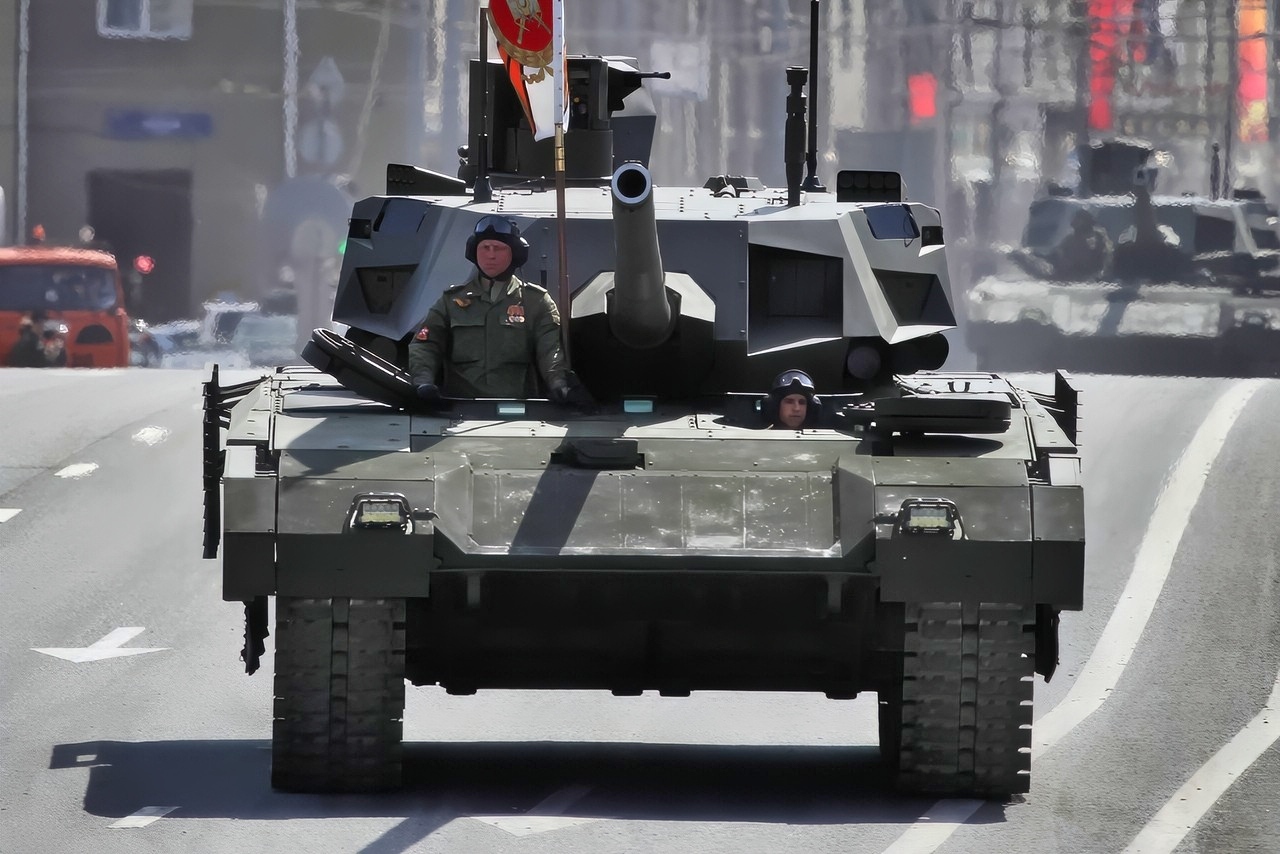
T-14 Armata Tank from Russia. Image Credit: Creative Commons.
Current continental leaders—in contrast to their publics, as well as governments-in-waiting on the populist right—simply want to keep the war going, irrespective of the cost to the Ukrainian people, apparently to weaken Russia.
Observed the Quincy Institute’s Eldar Mamedov: “Their goal appears not to be to negotiate a better peace, but to hollow out the American proposal until it becomes unacceptable to Moscow. That would ensure a return to the default setting of a protracted, endless war.�
In this they appear to have succeeded. In the latest of many arbitrary U-turns, the administration responded by dumping its initial offering and signing onto a 19-point European program with no chance of acceptance by Moscow, since it fails to reflect the latter’s current dominance on the battlefield. Surely even Secretary of State Marco Rubio, the only slightly reformed neocon most responsible for the administration’s many hawkish lurches, doesn’t believe Russian President Vladimir Putin will accept Europe’s invitation to surrender its gains and goals. Why is President Donald Trump willing tosacrifice a realistic hope of ending the war by proposing a dead-on-arrival plan?
No doubt, Ukraine wants—and deserves—victory. However, the latest DOA measure doesn’t serve that purpose. Kyiv must simply fight on despite the odds, even though defeat currently grows ever more likely. If European governments are truly committed to a Ukrainian victory, then they should enter the war. Of course, that would require them to fulfill their past military spending promises today, rather than wait for the loophole-filled deadline set a decade hence, conveniently long after Trump’s departure from office.
At least a few continental commentators are urging Europe to do more. Editorialized The Times:
“It is Europe’s hour: Britain, France and Germany must assume responsibility for the defense of the continent, shielding Ukraine from Mr. Putin’s unsated adventurism. A new, hard-edged European diplomacy is needed, one that keeps the US on side and Russia at bay.�
Similarly, The Telegraph’s Hamish de Bretton-Gordon wrote: “Ultimately, the responsibility falls on us in Europe. We are the ones advocating for a just peace for Ukraine, while both Putin and potentially Trump appear ready to endorse a deal that favors Moscow, allowing the US president to claim he has stopped yet another war, just so he can pin his most coveted Nobel medal to his own chest. But those of us who have earned our own medals on the battlefield know that it’s not the medal itself that matters; it’s how you earned it. Now is the time for European leaders to step up and shoulder the burden.�
Yet even he is not prepared to leave Washington’s defense dole. He concluded with a plea to not offend the continent’s preferred guardian: “But we must not throw the ‘Trump baby’ out with the bath water, because we may well need him or rather America in future.�
Greg Swenson, who chairs Republicans Overseas in the UK, was blunt: “The only way to beat Putin is to fight,� something the Europeans are not willing to do. “So it’s all talk. It all sounds great when you talk about democracy and defending Ukraine, but they’re just not willing to do it.�
Indeed, this refusal to act independently caused continental leaders to surrender to Washington on trade, harming Americans and Europeans alike. No matter. The continent’s leading Eurocrats realize that there is a trade-off between butter and guns, and they continue to choose the former. Lamented Financial Times columnist Janan Ganesh: “How, if not through a smaller welfare state, is a better-armed continent to be funded?�
Europeans decided that the answer was to pay Washington indirectly, essentially hiring U.S. military personnel as mercenaries. The continent had to sacrifice the “ultimately not existential matter of trade,� admitted Ganesh.
Carnegie Europe’s Stefan Lehne explanation was similar: “Faced with the double threat of a trade war and of the United States abandoning Ukraine, European leaders decided to bow to the wishes of the Trump administration.�
Analysts debated whether EU governments were being strategic or engaging in appeasement. However, most continental leaders remained unabashed. And so far the tactic appears to have worked, at least in the sense that the American president has dropped his threats to withdraw U.S. troops, happy to turn them into rent-a-cops, in a slightly upscale variant of North Korea’s deal with Russia. However, Europe has still lost respect in Washington. One unnamed senior European official wailed: “How do Europeans have so little agency here even when we’re now paying the entire bill [for aid to Ukraine]?�
With no one willing to fight for Kyiv, the latest peace initiative, shaped more by European fantasies than Russian realities, will almost certainly come to naught. The brutal conflict will continue, wrecking Ukraine, undermining Europe, costing the United States, and weakening Russia. More broadly, the war will continue to strengthen European populist movements, now leading the polls in France, Germany, and Great Britain, and accelerate the global redistribution of power that is pushing Moscow closer to Beijing and away from Washington. Today’s maladroit policy will also make an even more dramatic mockery of the president’s oft-expressed desire for the Nobel Peace Prize.
Unwilling or unable to stick with a realistic peace plan, the president should act on his earlier instincts and walk away from the conflict. The Russo-Ukraine war is a tragedy but poses no threat to America, let alone one warranting a commitment to go to war against nuclear-armed Russia should hostilities revive.
Sympathy for Ukraine is justified, but nearly four years of U.S. support for Kyiv is enough. Instead of embarrassing Uncle Sam by offering another botched peace plan, the Trump administration should turn the issue over to Ukraine and Europe. Then they can decide on their futures. And bear the full cost of doing so.
About the Author: Doug BandowÂ
Doug Bandow is a senior fellow at the Cato Institute, specializing in foreign policy and civil liberties. He worked as special assistant to President Ronald Reagan and editor of the political magazine Inquiry. He writes regularly for leading publications such as Fortune magazine, National Interest, the Wall Street Journal, and the Washington Times. Bandow speaks frequently at academic conferences, on college campuses, and to business groups. Bandow has been a regular commentator on ABC, CBS, NBC, CNN, Fox News, and MSNBC. He holds a JD from Stanford University.
More MilitaryÂ
The Army’s AH-64E Apache Helicopter Can Destroy Drones with Missiles
U.S. Navy Iowa-Class Battleship USS New Jersey’s ‘Comeback’ Is Now Complete
Blaze of Glory: The SR-71 Blackbird Retired Hitting Mach 3.21