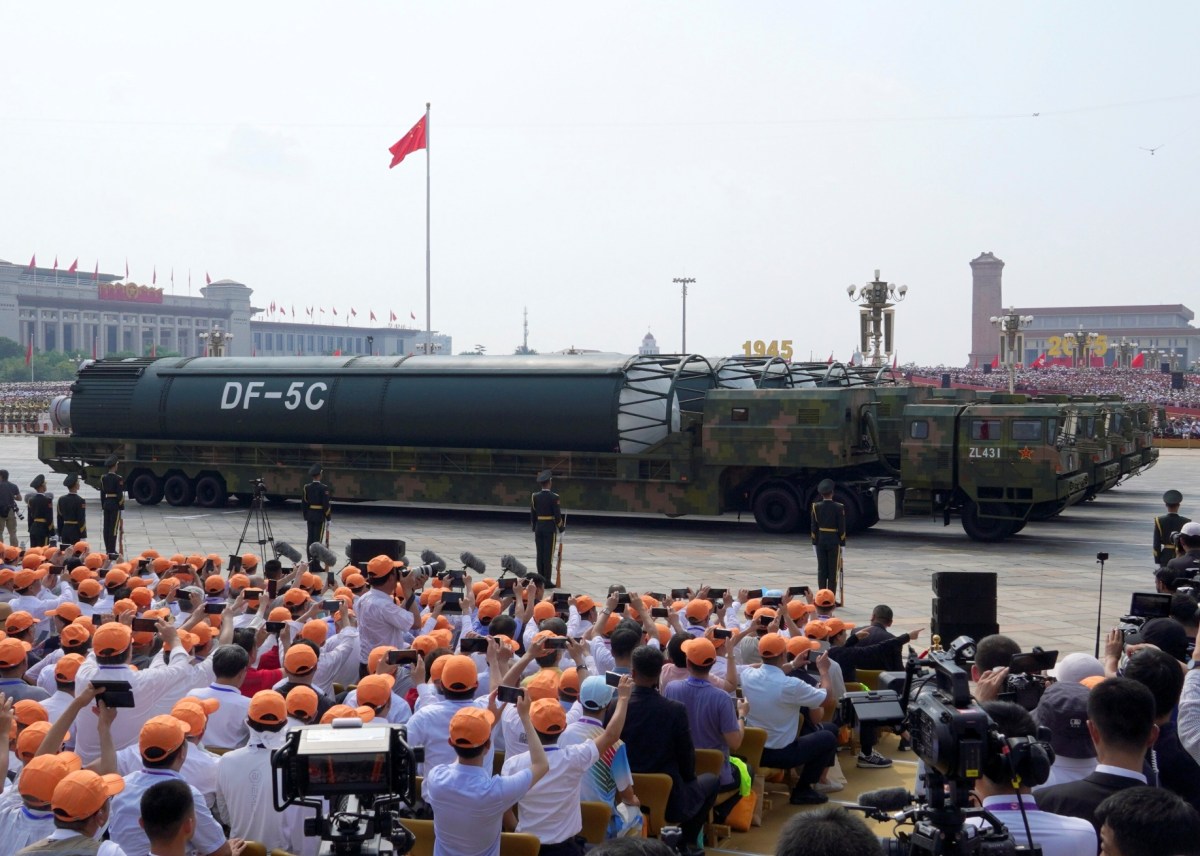
China has revealed how it is improving its nuclear forces to ensure the reliability and effectiveness in deterring adversaries, as major nuclear powers—including the United States and Russia—race to modernize their arsenals and field new weapons.
The disclosure was made on Thursday in a Chinese white paper released by the State Council, which addresses the East Asian power’s policy on arms control, disarmament and nonproliferation, including nuclear weapons testing and missile defense systems.
Newsweek has contacted the Pentagon for comment on China‘s white paper by email. The Russian Defense Ministry did not immediately respond to a request for comment.
Why It Matters
China is undergoing rapid military modernization and is estimated to possess around 600 nuclear warheads, making it the world’s third-largest nuclear arsenal, behind Russia and the U.S., the Stockholm International Peace Research Institute reported.
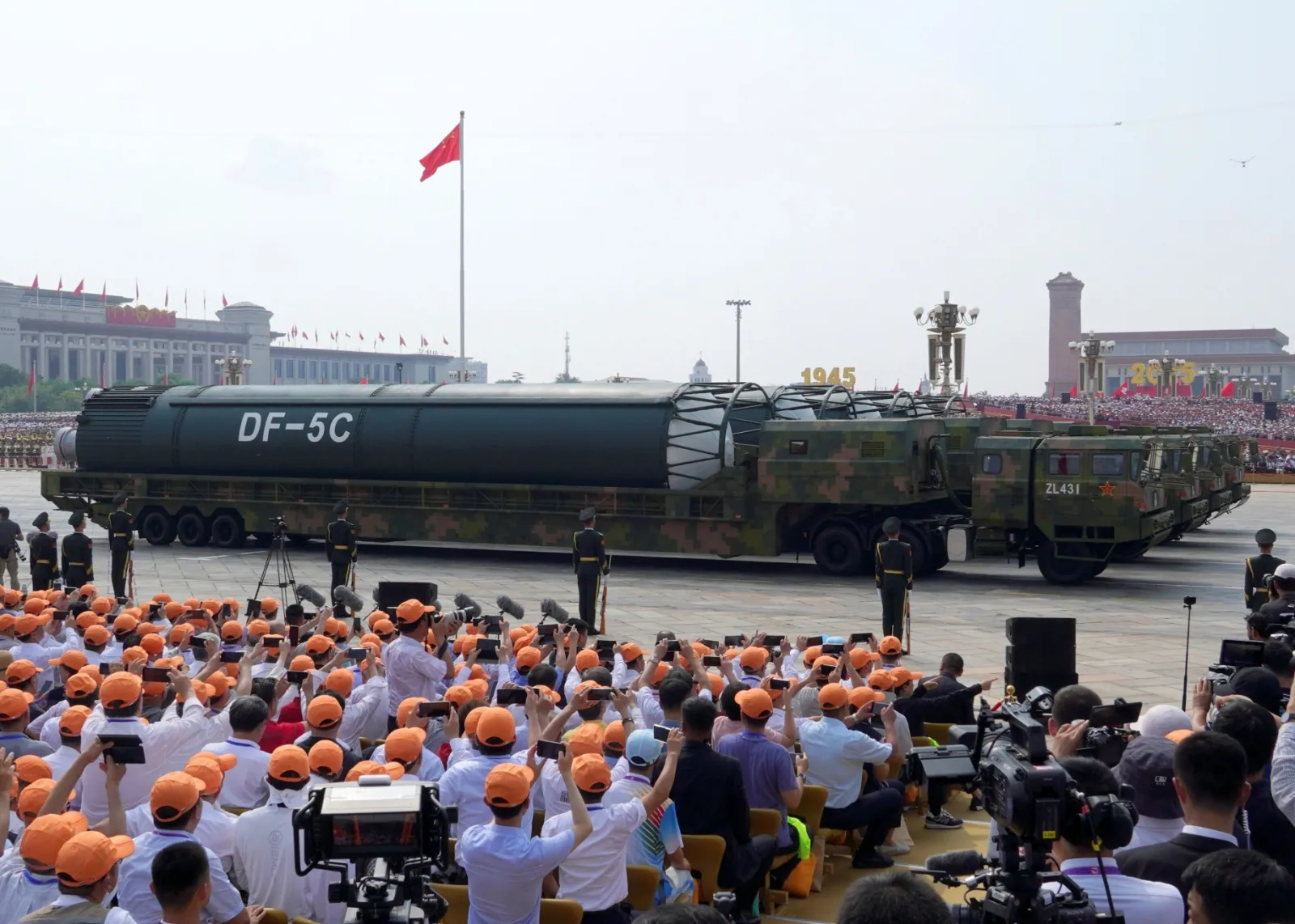
During a high-profile military parade in September, the Chinese military unveiled its newest nuclear weapons, which are believed to have a global range and the capability to penetrate defenses amid U.S. efforts to strengthen its homeland anti-missile system.
Meanwhile, Russia has tested novel nuclear weapons, and the U.S. is overhauling its air-, land- and sea-based strategic forces, which make up the nuclear triad. France, one of two nuclear-armed European countries along with the U.K., recently deployed a new type of missile.
What To Know
In the white paper, the Chinese government said it aimed to build a “lean and effective” nuclear force system that ensures safety, security, reliability and effectiveness, while deters others from using—or threatening to use—nuclear weapons against China.
“China is improving its capabilities in strategic early warning, command and control, missile penetration, and rapid response, as well as its survivability,” the document said.
In its report on Chinese military power last year, the Pentagon said China was working to implement a nuclear posture known as “launch on warning,” in which warning of a nuclear strike would trigger a counterstrike before an enemy’s first strike detonates.
The report noted that China had made progress in building an early warning network necessary to support such a posture, including the operation of several ground-based radars to detect and track missiles, as well as the development of space-based systems.
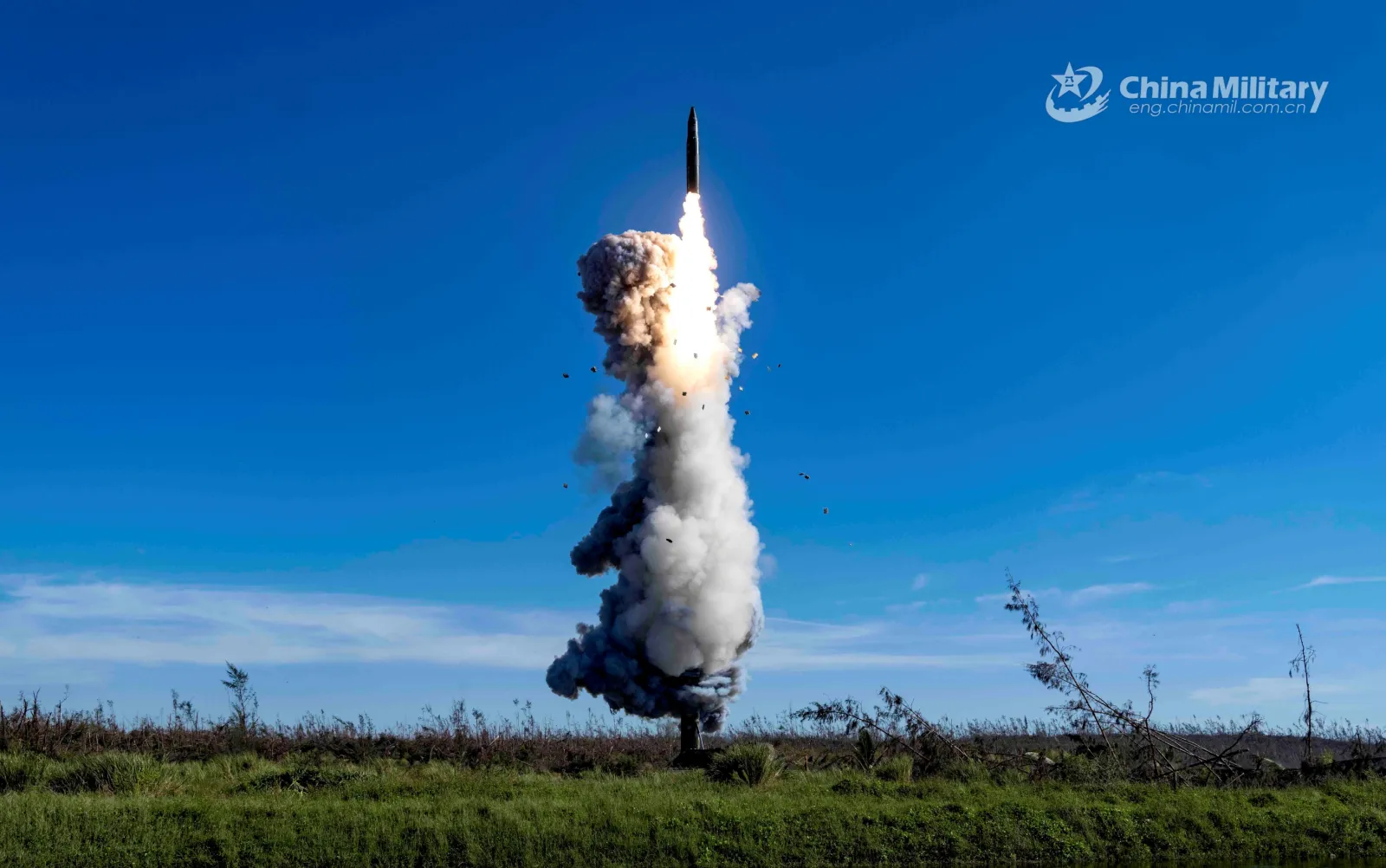
In addition to silo-launched missiles, China has deployed road-mobile missiles, which are harder for adversaries to track, enhancing the survivability of its nuclear forces.
The white paper reiterates that China adopts a self-defense nuclear strategy, saying it maintains its nuclear forces at the “minimum level” required for national security and upholds what it calls “a firm commitment” to a no-first-use policy for nuclear weapons.
China also called on countries possessing the largest nuclear arsenals—which it did not name—to fulfill their “special and primary responsibilities” by reducing nuclear arms drastically and substantively in a verifiable, irreversible and legally binding manner.
This would create the conditions for “complete and thorough” nuclear disarmament, and when conditions are ripe, the remaining nuclear-weapon countries should join a multilateral negotiation process to achieve it, according to the Chinese government.
“Nuclear disarmament should be a just and reasonable process of gradual reduction toward a downward balance that maintains global strategic stability and undiminished security for all, and should be proceeded in a step-by-step manner,” the document said.
What People Are Saying
China’s Arms Control, Disarmament and Nonproliferation in the New Era white paper said: “Nuclear arms control is an important guarantee of global strategic stability and is integral to the security and development interests of all. Currently, nuclear arms control is facing challenges, as global nuclear strategic rivalries are becoming more intense and complex, and the risk of a nuclear arms race is growing.”
The Pentagon’s Chinese military power report 2024 said: “Over the next decade, the [People’s Republic of China] probably will continue to modernize, diversify, and expand its nuclear forces rapidly. The [People’s Liberation Army] seeks a larger and more diverse nuclear force, comprised of systems ranging from low-yield precision strike missiles to [intercontinental ballistic missiles] with multimegaton yields to provide it multiple options on the escalation ladder.”
What Happens Next
China is expected to continue expanding its nuclear forces as it seeks to close the capability gap with the U.S. and Russia. It remains to be seen how sincere these three major nuclear powers are about pursuing arms control to reduce the risk of conflict.