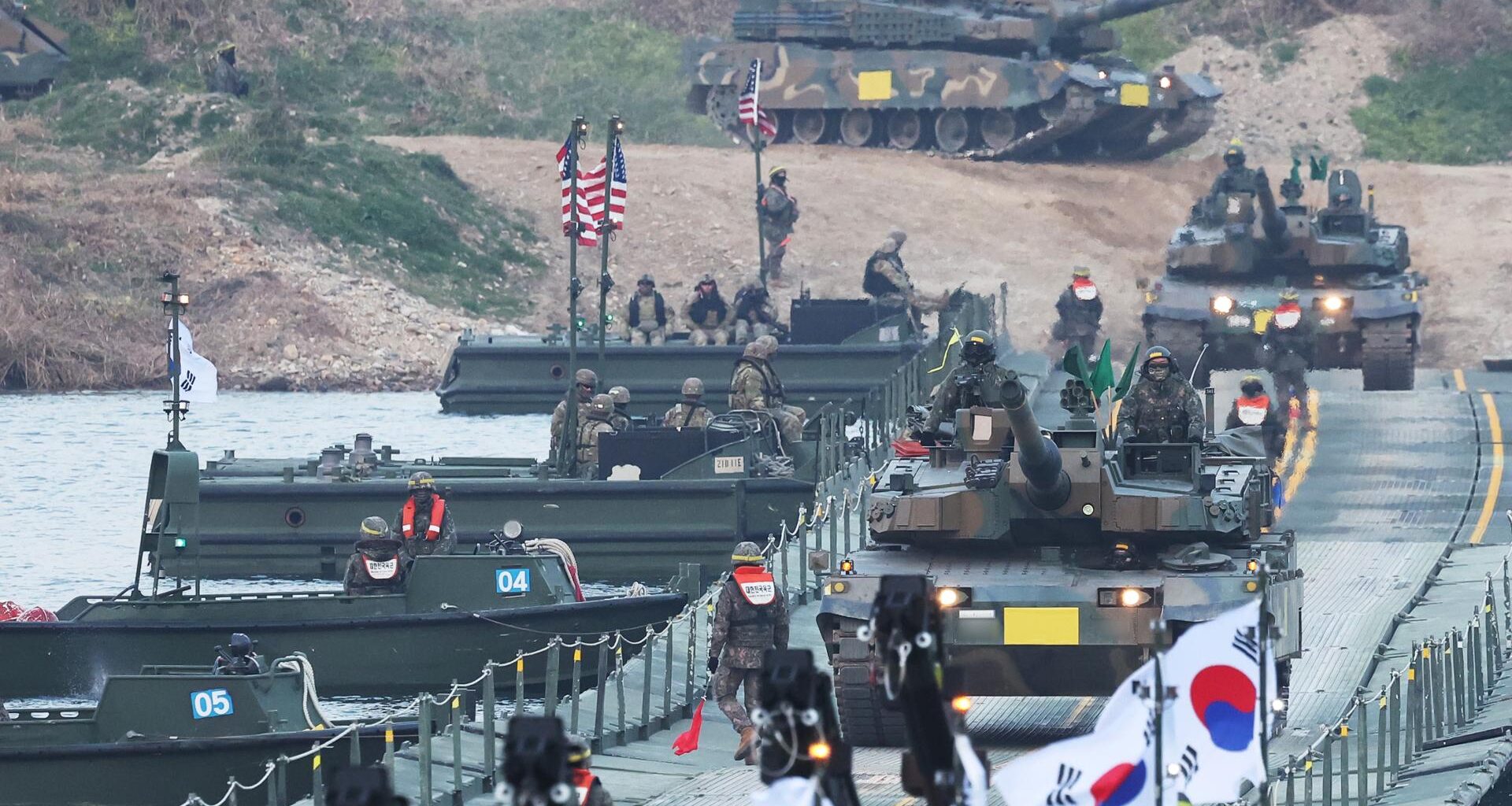
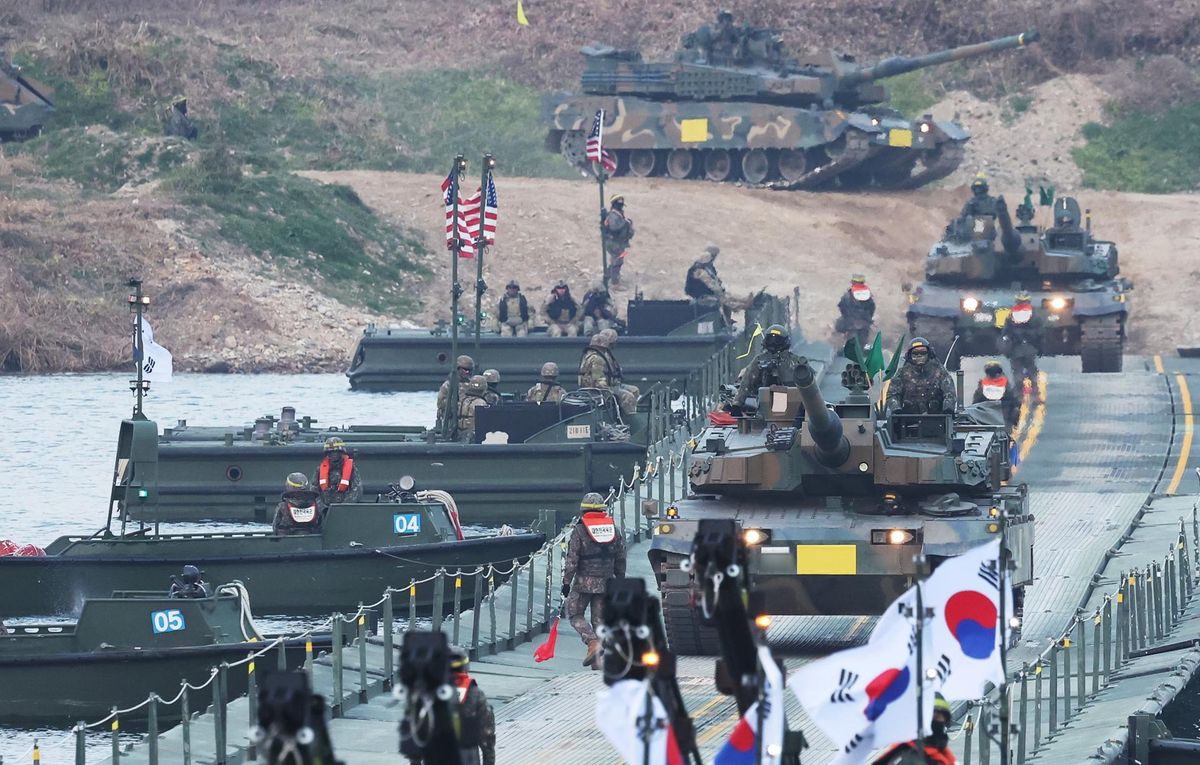
This photo shows South Korean and U.S. troops conducting combined river-crossing drills as part of the South Korean military’s annual Hoguk exercise, Nov. 20. Yonhap
The U.S. Forces Korea (USFK) said Friday its combined drills with the South Korean military are “strictly defensive” in nature after North Korea accused the allies’ exercises as being aimed at deterring the North.
The statement by the USFK came hours after Pyongyang condemned a series of combined military drills between the allies, including the Silent Shark anti-submarine warfare drills and the recent U.S. forward deployment of F-16 fighter jets to Osan Air Base in South Korea.
“Our training events are transparent and focused on deterrence, defense, and the maintenance of peace and stability on the Korean Peninsula and across the region,” the USFK said. “We maintain a strictly defensive posture, and our exercises are designed to prevent conflict, not provoke it.”
The USFK said the defensive training exercises, held in a routine and long-planned manner, are aimed at defending the allies as well as upholding its “ironclad commitment” to South Korea.
The North has often strongly protested against the deployment of U.S. strategic assets to South Korea and implementation of large-scale joint drills between the allies.
In the latest statement, it said the North will be prepared to counter “the confrontation-oriented moves of the enemy states,” adding that “all threats encroaching upon our sphere of security will become direct targets of the DPRK and be managed in a necessary way.” DPRK stands for the official name of North Korea, the Democratic People’s Republic of Korea.
The North’s commentary, released through its state-run Korean Central News Agency, appeared to highlight Pyongyang’s shared interests with China, which has accused the United States of attempting unilateral changes to the status quo in the Taiwan Strait and the broader region, blaming recent U.S. military actions.