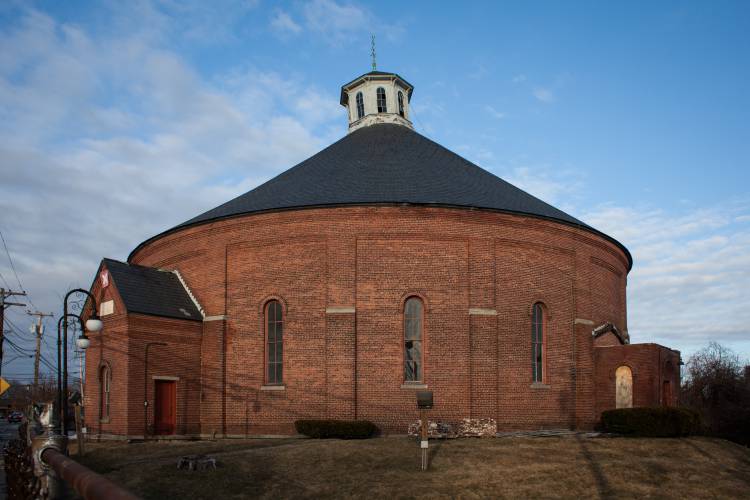
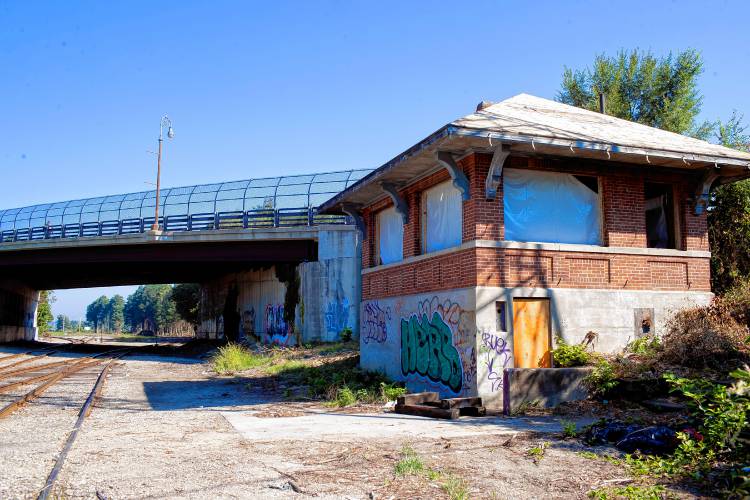
Concord’s railroad signal tower might have succumbed to vandalism and decay, but rest assured, the nearby gasholder is alive and well.
That’s the message from the New Hampshire Preservation Alliance now that emergency stabilization of the iconic gasholder is complete.
“We’re finalizing next-phase preparatory work, including final engineering and hope to conduct restoration work for this last-of-its-kind landmark in 2026,” said Jennifer Goodman, executive director of the New Hampshire Preservation Alliance.
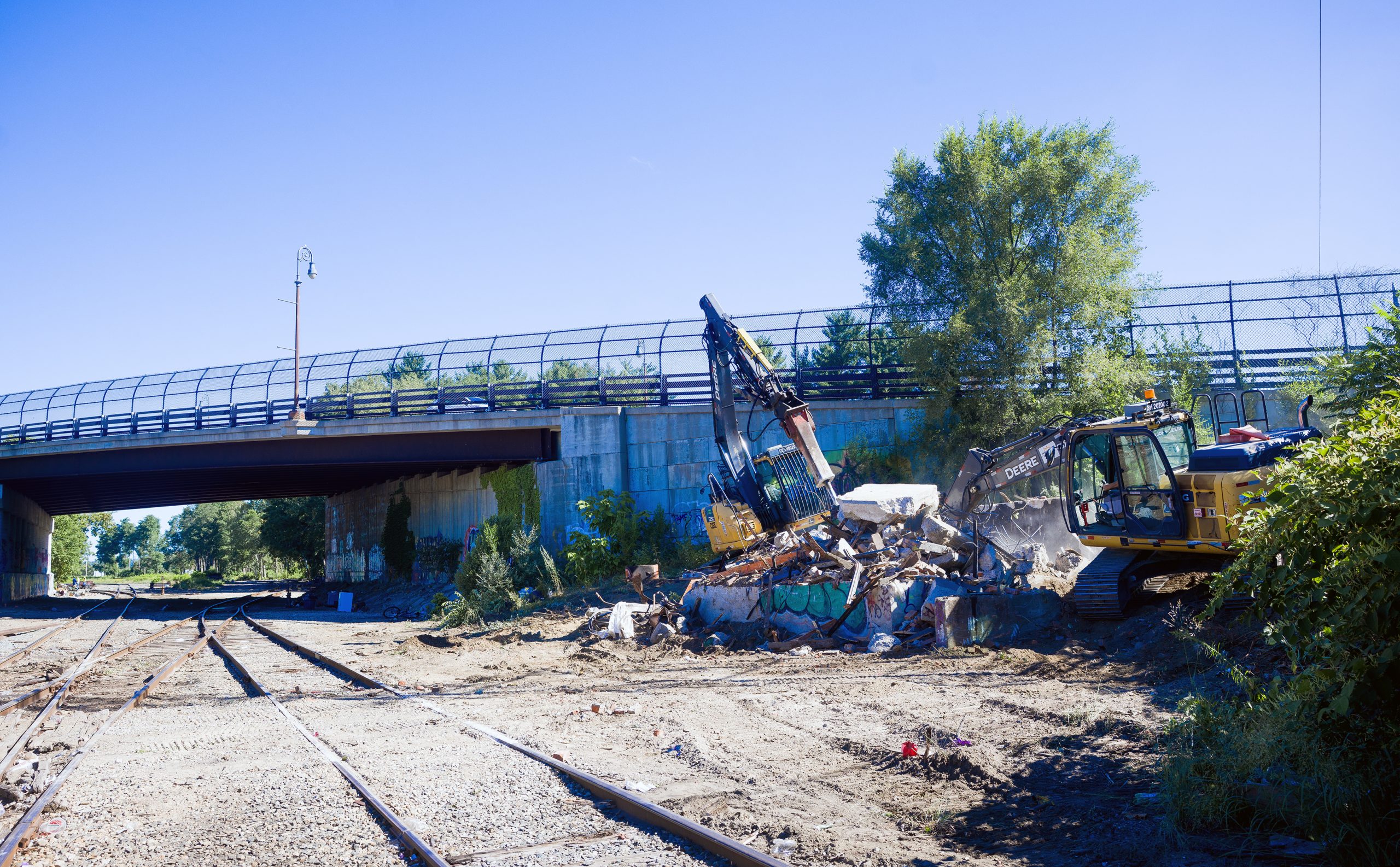
That’s good news for the round brick building on South Main Street that has drawn the focus of industrial preservationists from as far away as Sweden. To see what might have happened, gaze a few hundred feet east to where the former Boston & Maine Signal Tower stood until it was torn down in August.
The two brick buildings were both remnants of bygone technologies: The signal tower from pre-digital days of controlling train traffic, the gasholder from pre-natural-gas days of heating homes and illuminating street lights. Neither has been used for decades, and both had problems, from the tower’s broken windows to the gasholder’s collapsing roof.
The gasholder’s deterioration had been halted, thanks to a $600,000 project that included patching the roof. Meanwhile, the signal tower decayed past the point of no return until it was torn down.
The difference between the fate of the two buildings comes down to history.
The signal tower was unusual but not unique enough to draw the support it needed, despite its landing on the annual Seven to Save list. Its location tucked up against the Water Street bridge and near a homeless camp didn’t help, nor did a fire that further damaged it in the summer. Its owner, railroad company CSX, demolished it due to safety concerns.
The gasholder, by contrast, is unique in the country because it still contains all the complex machinery that was used to contain and release what was known as “manufactured gas,” made from coal brought to the site in railcars. A number of gasholder buildings still exist, including a smaller one at St. Paul’s School, but all have had their internal machinery removed. That novelty is why Concord’s building has drawn attention from people interested in preserving industrial history and why owner Liberty, formerly Liberty Utilities, has contributed more than $2 million in ratepayer funds to its preservation after one warning that it might tear down the building because of the cost of maintenance
The future of the gasholder and the two-acre property on which it sits is still uncertain. Lots of ideas have been floated using it as a sort of anchor for the city’s south end, but as always, money remains the main obstacle.