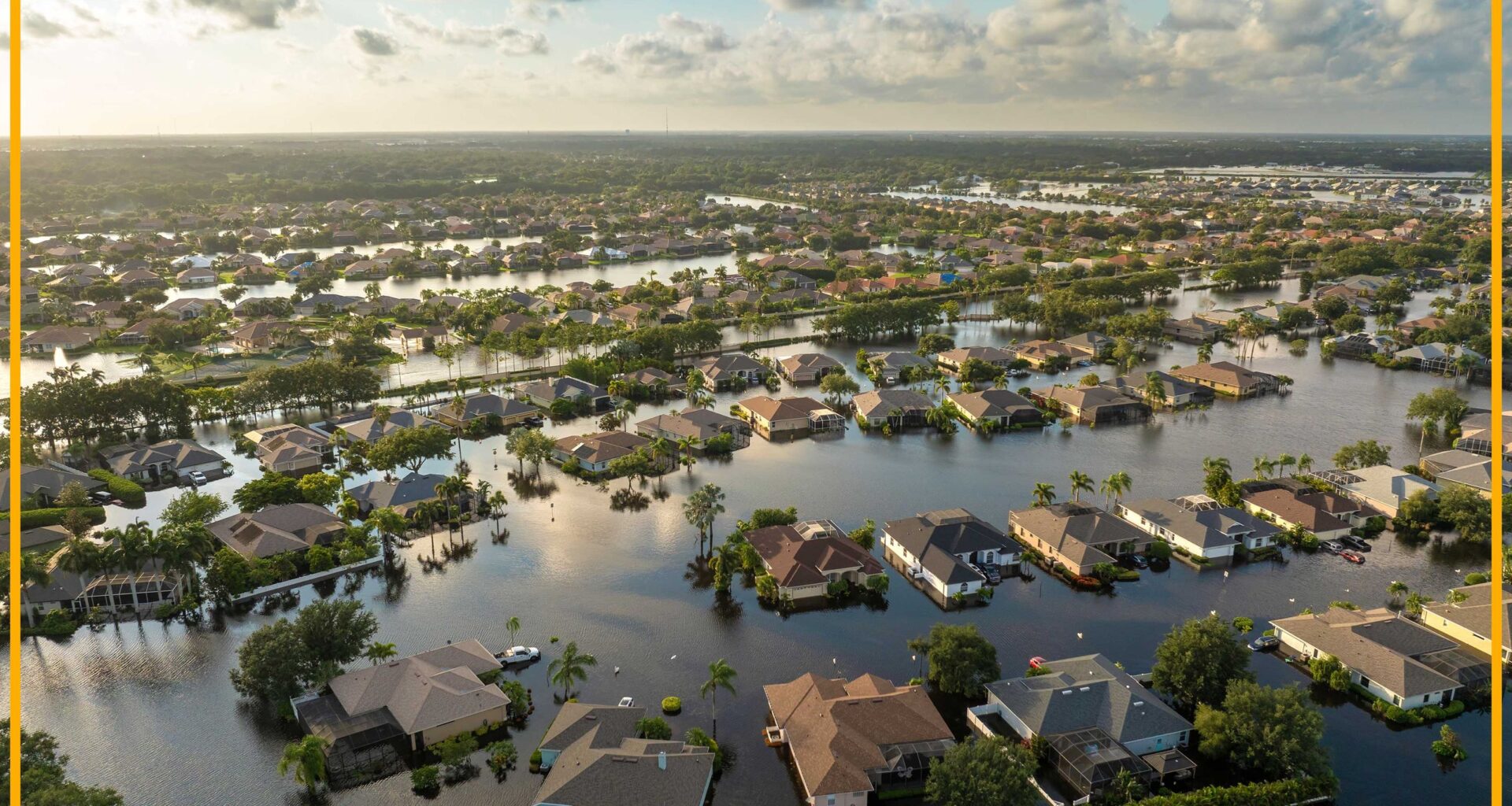
Climate change is real. It’s happening. Now. Here. Wherever you are.
Recognizing that climate change is immediate, close, and affecting people’s way of life is one of the key messages we need to communicate to spur them to act.
You may like
And this needs to begin with individual action — getting people to care enough to alter their behavior around climate change. If enough people realize that climate change will affect them personally and start engaging on an individual level, we might see a turn in the political tide that ends with the real, large-scale changes needed to limit rising global temperatures.

Dr Jo Cutler is a Wellcome Trust Early Career Research Fellow in the Centre for Human Brain Health at the University of Birmingham. Her research uses computational modelling, neuroimaging, and big data to understand how we make choices that involve other people.

Professor Patricia Lockwood is a cognitive and social neuroscientist at the University of Birmingham. Her work focuses on the neurocognitive foundations of social learning and decision-making across the lifespan and in psychiatric and neurological disorders.
In the social satire fiction film Don’t Look Up, two astronomers are tasked with telling the world that a comet twice the size of the dinosaur-ending meteor was imminently going to hit Earth. In a tense exchange, a morning talk show host seeks to minimize the risk:
Kate Dibiasky: I’m sorry… Are we not being clear? We’re trying to tell you that the entire planet is about to be destroyed.
Brie Evantee: Well it’s uh, you know, it’s something we do around here. We just keep the bad news light.
The film was widely praised for satirizing responses to the global climate crisis, including from climate scientist Peter Kalmus. We wanted to find out if there are ways we can present information about climate change that lifts people into action, rather than keeping the “bad news” at arms length.
Getting people to act
We recruited more than 3,000 participants across six countries to see what would make them more or less motivated to help climate causes. Pro-environmental actions are often costly — incurring financial, time and physical effort. We wanted to find out how people weigh up these costs with the benefits for the planet and whether we can use psychology to spur the meaningful behavior shifts needed.
We did this by creating a physically demanding task that earned donations to a climate action charity, and compared that with a non-environmental, food cause: ending world hunger. Before doing the task, some participants saw different messages and pictures designed by psychology experts to try and boost their motivation to take climate action. One group of participants didn’t see any of these messages to give us a baseline measure.
You may like
Interestingly, the participants who didn’t see any of the pro-environment messages were more likely to make an effort for the food cause than the climate. This finding was relatively consistent across the six countries we worked with: Bulgaria, Greece, Nigeria, Sweden, the U.K., and the U.S..
We then tested which of the messages promoted pro-climate behaviors.
What worked well:
Psychological distance: Climate change was presented as an immediate, local threat, and participants reflected on how it affects them personally.
System justification: Climate change was presented as a threat to participants’ way of life and encouraged pro-environmental behaviour as patriotic.
What didn’t work so well:
Scientific consensus: Participants saw a message and graphic emphasizing that 99% of climate scientists agree climate change is real and caused by humans.
Binding moral foundations: Participants read a message invoking national pride, loyalty, and authority to support clean energy and climate action.
It’s personal
The findings confirm some things that we know to be true about human behavior. It’s the same reason why people have a greater connection to news that is local to their area, or to their interests. When it’s personal, when it’s close, when it affects our usual way of life, it lands.
To better motivate people to take climate action now, our new study suggests that closing the psychological distance between individuals and the generalized, vague threat of climate change affecting the world at large is among the most motivating factors we need to employ.
When rising water levels affect another country, the uncomfortable truth is that our brains are wired to take the threat less seriously because it affects another group of people that we aren’t as well connected to. However, if it affects people or places that we know and love, it makes it personal and closer to home.
People are also motivated to protect their status quo and current way of life. Sometimes this can be a barrier against changing our behavior. But we found flipping this psychology can motivate action. When rising water levels increase the risk that our property is going to be flooded — because events that were previously likely to happen once in 100 years are increasingly common — to protect our way of life requires us to take action, rather than do nothing.
When the once in 100-year flood has happened for the third time in as many years and water is pouring under the door, it is personal and it’s at home.
We know addressing climate change will require systemic change from governments and business. But we need to start somewhere, and getting people to see the changes happening around them may just be a small step that leads to major shifts. Our homes are all at risk if we don’t try.
Opinion on Live Science gives you insight on the most important issues in science that affect you and the world around you today, written by experts and leading scientists in their field.