Updated 2025 Version of a TPJ Post Originally Published September 26, 2015
“Why would anyone be morally bound or wish to be morally bound to a civil society that does not share the goal that it’s citizens deserve a fair distribution of wealth, income and power? If the civil society is not dedicated to that end what else could it possibly be dedicated to? What is freedom, to those without wealth, income or power?â€�
        Trenz Pruca
I. Original Reflection (2015)
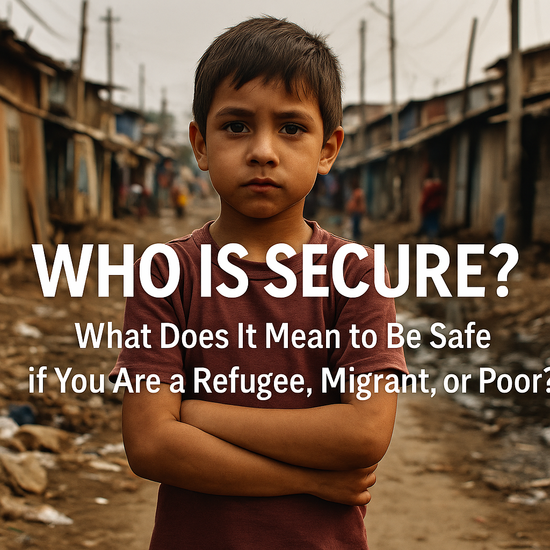
One question that can always be asked when analyzing the nature and extent of security available to the poor and the destitute living in the slums of most large cities is: from whom are they to be secure—other residents, outsiders, or those ostensibly entrusted with providing that security?
Perhaps even more fundamental is the issue of security from what: violence, hopelessness, sickness, fear, or something else? In many, if not all, cases, these questions are answered best not by which physical security system the community adopts but rather by its ability to grasp control of the means to secure its own protection.
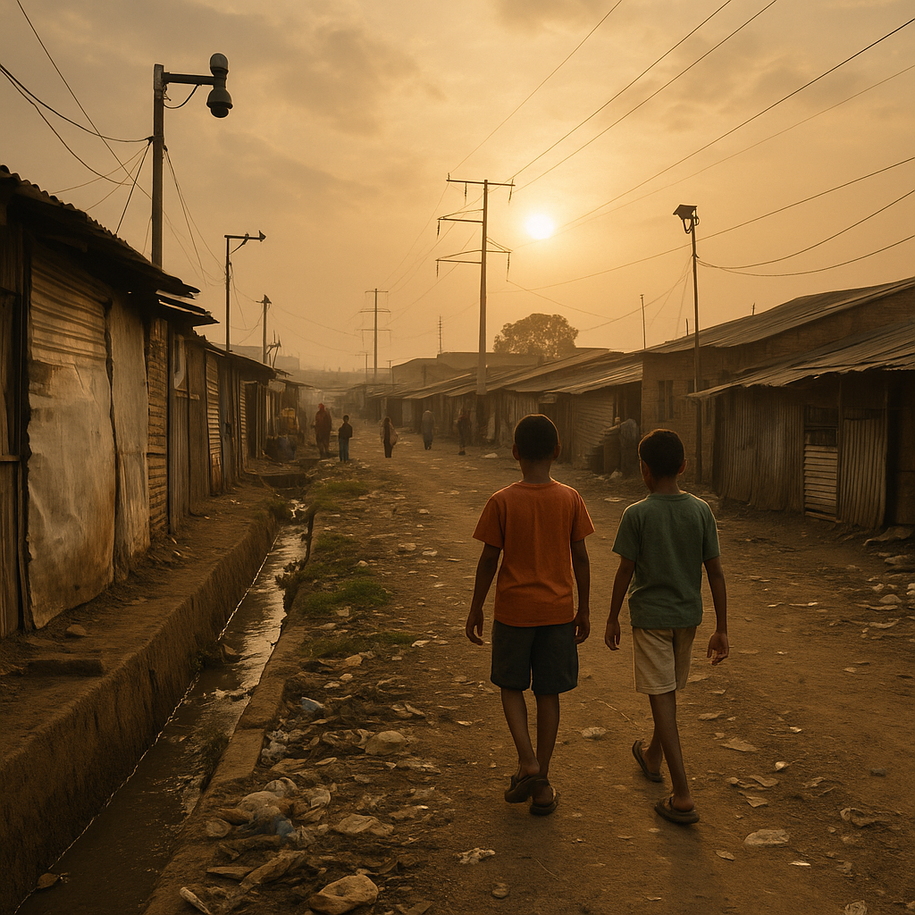
In many urban areas, this high level of violence, drugs, and crime falls most heavily upon the poor. The overcrowding and social dislocation experienced in these impoverished communities are a catalyst for their most common difficulties. Poor housing, inadequate infrastructure, improper waste removal, insufficient drainage, lack of clean water, and recurring diseases all deepen the plight of the residents. These conditions intensify feelings of hopelessness and contribute greatly to the vulnerability of these communities to crime and violence.
The United Nations Seventh Congress on Criminal Justice in a Changing World indicated that there is a statistical relationship between crime rates and migration of the poor into urban areas where the exigencies of survival in their new environment shred whatever sense of community they once belonged to.
There are many proposed solutions to the lack of security experienced by members of migrant, refugee, or poor settlements. Most attempt to help individuals gain the resources needed to escape these environments. Organizations such as Urban Neighbors of Hope (UNOH) focus on children—hoping that through education and support, some will rise above their circumstances and take their place in the wider world.
Others argue that crime in these communities can be improved with more and better policing, a strategy heavily favored by most governments.
Still others advocate for improved infrastructure and health programs—cleaner water, better drainage, clinics, sanitation—believing that these might turn the tide of despair and violence.
Each approach has its place. Nevertheless, without community building, including improved housing and resident-designed public spaces, it remains clear that settlements of refugees, migrants, and the poor will continue to be breeding grounds for crime, and security for the residents will remain deficient.
While many community-building organizations now operate in urban centers around the world, few have crime reduction as a primary goal. This may reflect the ubiquity of national police systems. More likely, it reflects the persistent absence of the most basic elements of a healthy community—trust, cooperation, and a shared stake in the future.
II. Security in 2025: A Familiar Landscape, Intensified
Although much has changed since 2015, many of the same forces continue to shape the security of the poor, the migrant, and the refugee. What differs now is the scale. What policymakers have begun calling a “polycrisis�—climate disruption, pandemics, economic instability, and increased global displacement—falls most directly on communities that were already barely holding on.
In the slums of Nairobi, Lagos, Manila, Rio de Janeiro, and even parts of Los Angeles or Miami, the same difficult conditions persist:
• overcrowding
• informal or precarious housing
• failing or makeshift infrastructure
• unreliable water and sanitation
• recurring disease
• police corruption or absence
• crime, and fear of crime
Studies by UN-HABITAT and the World Bank confirm what residents have long known: these conditions erode trust, the foundation of any real sense of safety (UN-HABITAT 2023).
This does not mean poor communities are inherently dangerous. Rather, they remain routinely deprived of the tools of collective agency that produce stability—secure housing, predictable services, neighborhood identity, and the ability to solve problems together.
III. Approaches to Security: What Has and Has Not Changed
The world continues to rely on three familiar strategies:
1. The Exit Strategy
Programs aimed at helping a small number of residents—usually children—gain the skills necessary to leave the slum behind. These efforts matter greatly but do not improve the security of those who remain.
2. The Policing Strategy
Governments continue to default to expanded policing and surveillance, especially during the 2020–2025 period. Without community trust, these efforts often bring short-term results but long-term resentment (World Bank 2022).
3. The Infrastructure Strategy
Clean water, clinics, drainage, electricity, and green public spaces unmistakably improve health and reduce despair. Yet even these do not, on their own, create a functioning community. They are necessary, but not sufficient.
IV. What Works: Community Control and Shared Responsibility
What has become unmistakably clear is that long-term security depends on community control—the ability of residents to design, manage, and govern their own surroundings.
Examples in MedellÃn, Bangkok, and Nairobi demonstrate that when people participate directly in improving their neighborhoods, violence and insecurity decline. When they are treated as problems to manage or as objects of state intervention, little changes.
Security is not merely the absence of crime. It arises from:
• shared norms
• predictable routines
• mutual aid
• neighborhood identity
• a sense of belonging
These are things only a community itself can build.
V. Refugees and Migrants in 2025: Precarious Legality
As of 2025, more than 114 million people have been forcibly displaced, the largest number ever recorded. Most now live in cities, not camps. Their day-to-day security is shaped by:
• uncertain legal status
• language barriers
• predatory employers
• criminal groups stepping into governance gaps
• police harassment
• exclusion from health and housing systems
Recent “fortress� policies in Europe, shifting asylum rules in the United States, and similar measures elsewhere leave millions caught between state scrutiny and state neglect. A person without recognized rights cannot easily feel safe.
VI. Conclusion: What We Knew in 2015 Is Still True in 2025
So after ten years, the lesson remains much the same as it was when this essay was first written: security grows from within a community or not at all.
Policing can suppress violence for a time. Infrastructure can reduce disease. Migration programs can help a few escape. But lasting safety comes only when residents have the power to shape the places where they live.
Without that power, slums—whether in 2015 or 2025—remain vulnerable.
With it, even the poorest neighborhood can become a genuine community.
Sources & Citations
United Nations Office on Drugs and Crime (UNODC).
Seventh United Nations Congress on the Prevention of Crime and the Treatment of Offenders (1985).
https://www.unodc.org/unodc/en/congress/previous-congresses.html
UN-HABITAT.
World Cities Report 2022 and 2023.
https://unhabitat.orgUnited Nations DESA.
World Urbanization Prospects 2018–2024.
https://population.un.org/wup/World Bank.
Violence in the City: Understanding and Supporting Community Responses to Urban Violence (2022).
https://www.worldbank.orgUrban Neighbors of Hope (UNOH).
Program descriptions and annual reports.
https://www.unoh.org/Case Studies:
• MedellÃn Library Parks — https://www.medellin.gov.co
• Bangkok Baan Mankong Program — https://www.codi.or.th
• Nairobi Mukuru Special Planning Area — https://muunganishi.org