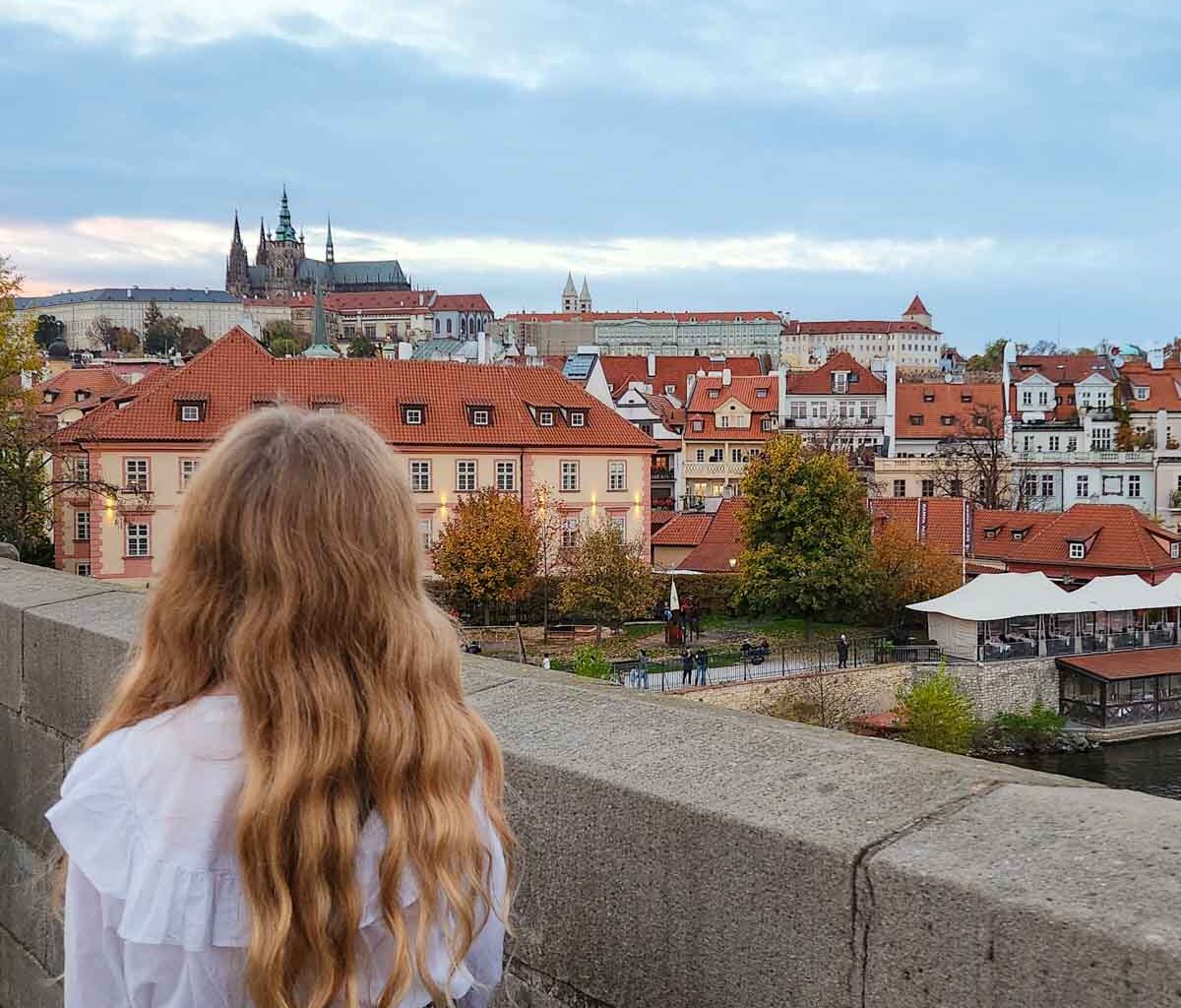
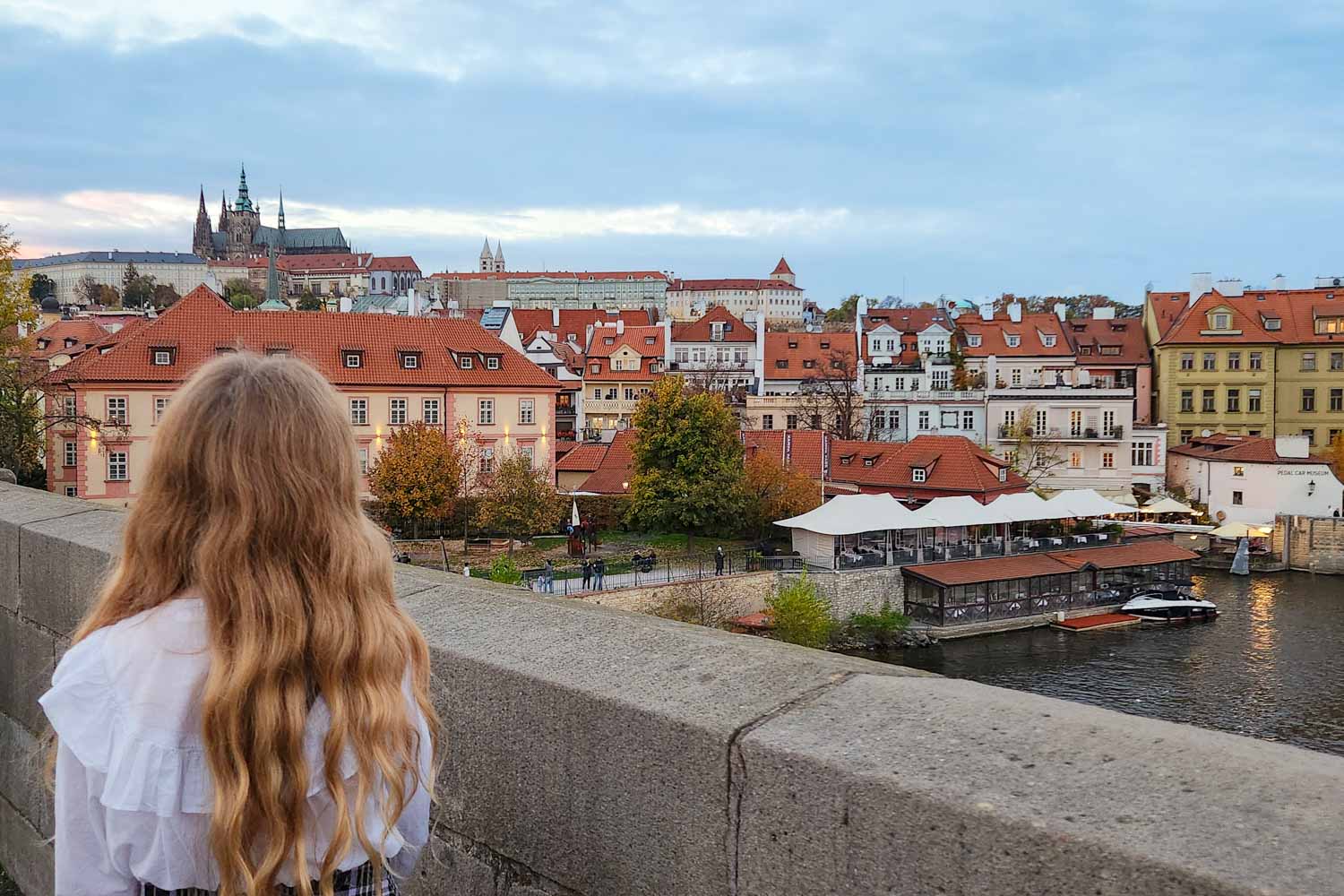
There are few cities prettier than Prague – I’ve visited it several times over the decades and couldn’t wait to introduce my daughter to the Czech capital, with plenty of things to do in Prague with kids alongside the history.
contains affiliate links*
Unsurprisingly popular, you’ll need to be braced for crowds of tourists, even if you visit outside peak season in October like we did but despite the numbers, Prague still has a fairytale feel all of its own (and it’s hard to be too cross about the number of tourists when you’re among them!)
We stayed in the Old Town (Staré Město) which includes the old Jewish Quarter, Josefov, so you could choose a quieter alternative in the New Town (Nove Mesto) – the other main districts are the Lesser town (Mala Strana) and Castle Quarter (Hradcany). But wherever you choose, you’re rarely too far from the main attractions – here’s my pick of the best things to do in Prague with kids.
Is the country called Czechia or the Czech Republic? Either is correct!
After Czechoslovakia split into two nations in 1993, the country’s official name became the Czech Republic. Czechia is the short or more informal version of the name, adopted by various official bodies over the past 10 years – the equivalent of saying Britain instead of Great Britain
Prague Castle
The largest castle in the world, occupying an area of almost 70,000 square metres, Prague Castle isn’t just a single building, but a string of them within the castle grounds, including the cathedral (scroll down for more) and Golden Lane, with its row of colourful, historic houses.
So a visit here isn’t just unmissable, but a chance to pack in several highlights of Prague with kids. With the old royal palace, churches, museums and more, you’ll need at least half a day to explore properly, although you could easily spend longer if you want to visit everything.
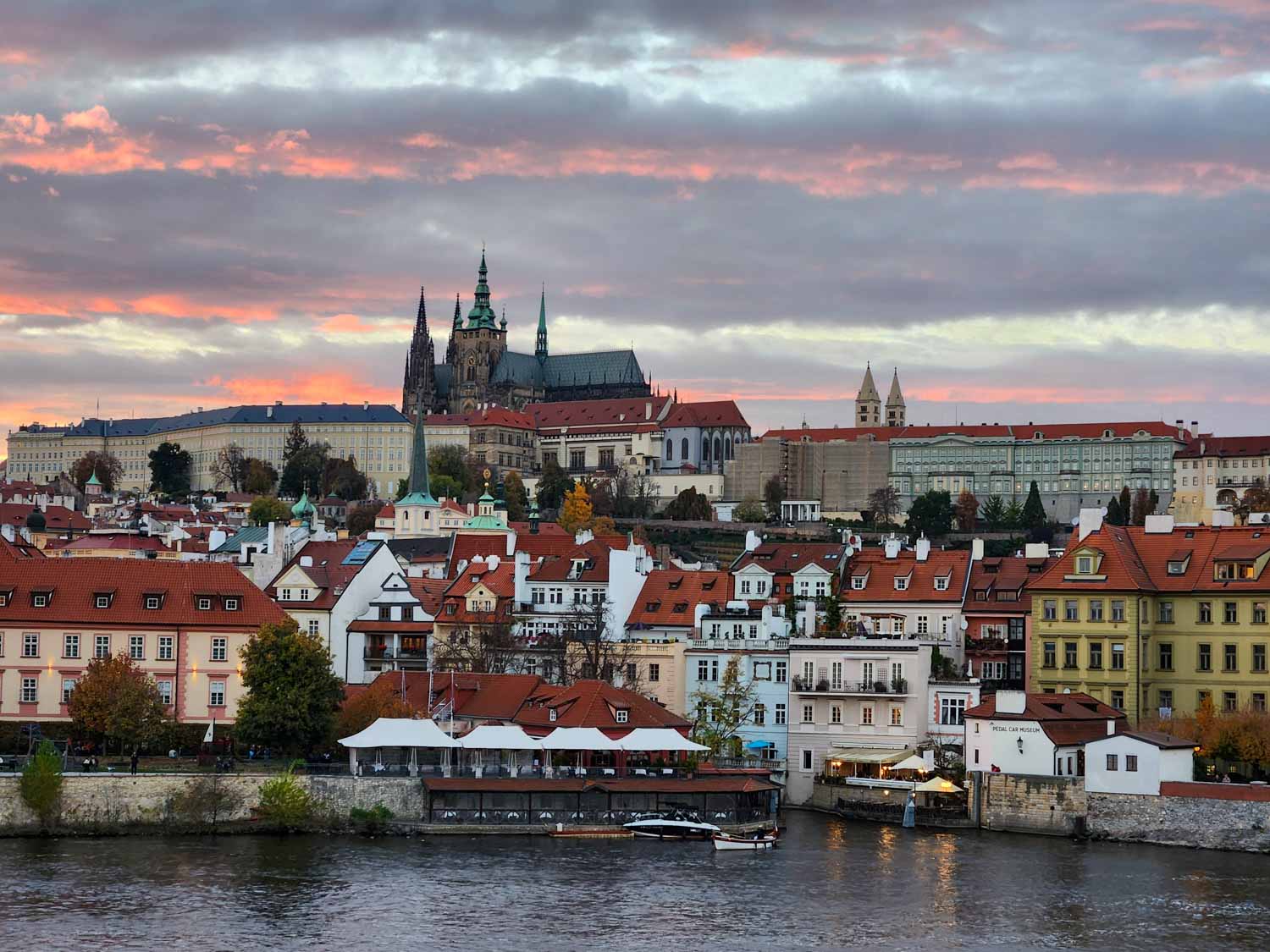
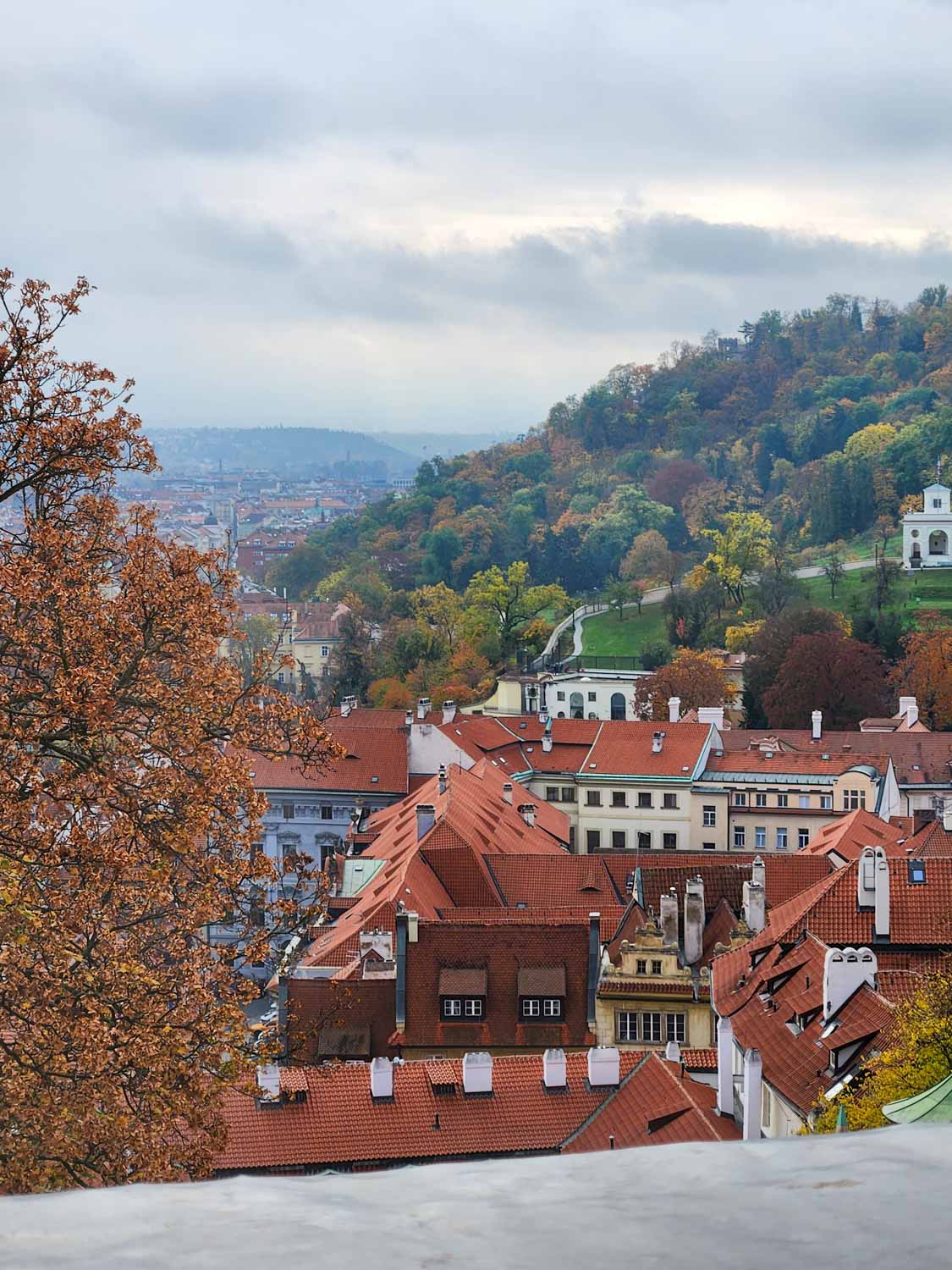
Perched high above the Vltava River, the castle has been the seat of Czech rulers since the 9th century, and it’s still the official residence of the Czech president today. The views alone are worth the climb (or tram ride if you prefer to save your energy/legs).
Wandering through the courtyards feels like stepping back through centuries of European history, with Romanesque, Gothic, Renaissance and Baroque architecture all jostling for attention. If you time your visit for noon, you can see the ceremonial changing of the guard in the first courtyard (plus a smaller ceremony on the hour as the sentries change).
It’s free to enter the castle grounds, but you’ll need (paid) tickets to enter the buildings inside.
The main combined ticket gives entrance to the Old Royal Palace, St Vitus Cathedral, Golden Lane and St George’s Basilica, but you’ll need a separate combined ticket to enter the Story of Prague Castle (which also allows access to several other exhibitions). The toy museum is also within the castle complex; you need a separate ticket and the toys are on display in glass cases, not to be played with.
You can buy tickets when you arrive, but even in October shortly after opening time, the queues were long, so buying in advance is a very good plan.
You can also get audioguides, which I do regret not buying – I often find them less useful with kids, but there isn’t always much information as you explore. Another alternative is to buy tickets including audioguide for your phone while this option has a brief guided introduction and optional audioguide for your phone.
The Old Royal Palace
There’s been a royal palace on this site since the first wooden building was constructed around the end of the 9th century, before a stone palace followed in the 12th century, which was then extended in the 14th and late 15th century.
With a mix of formal halls and everyday offices, the Old Royal Palace is a little different than your average palace and won’t take long to explore, but still well worth a visit while you’re exploring the castle complex.
The Vladislav Hall is one of the most impressive rooms, used for state purposes including coronations and banquets, while the stairs were wide enough for knights to ride up on horseback.
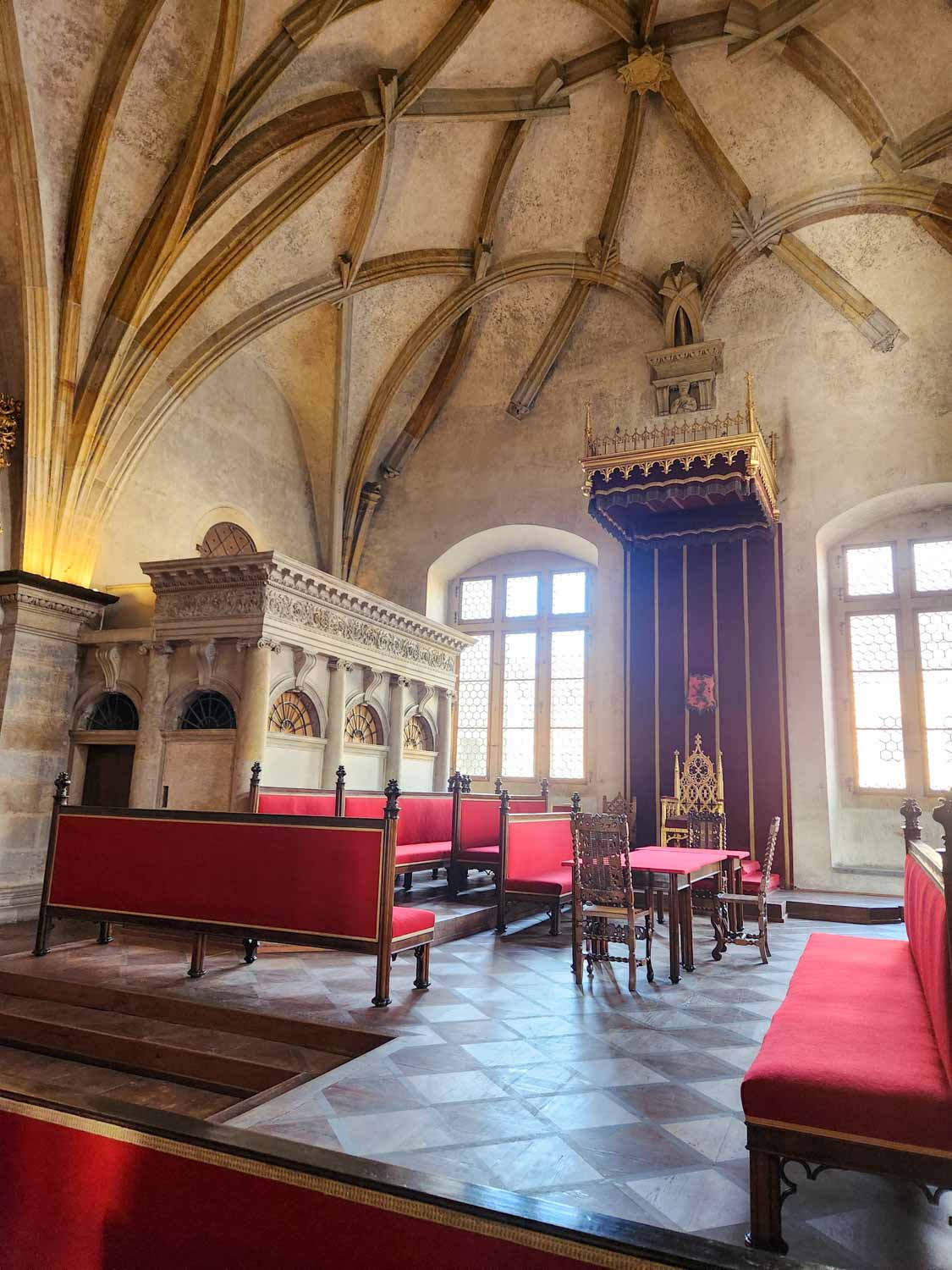
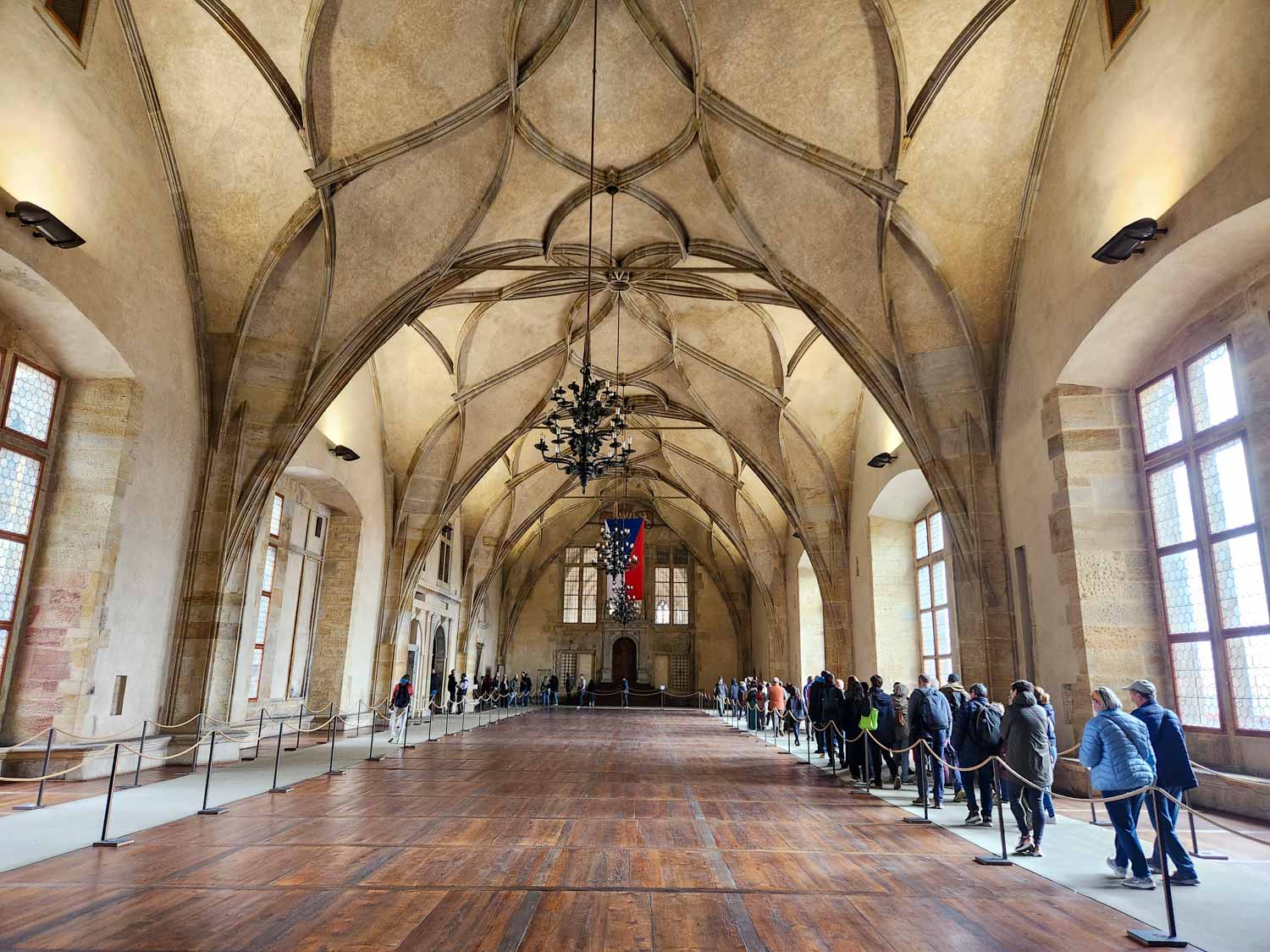
In a side room, you can see where the governing took place in the Diet Hall, home to the country’s parliament, while another side room saw the start of the Thirty Years War when two Protestant nobles threw two Catholic regents from the window – which, incidentally, is where we get the word defenestration from.
The two survived thanks to a soft landing in some manure, although they were far from the last casualties of the Thirty Years War, which killed at least five million (potentially over 10 million) people, although today there’s a rather lovely view out across the grounds.
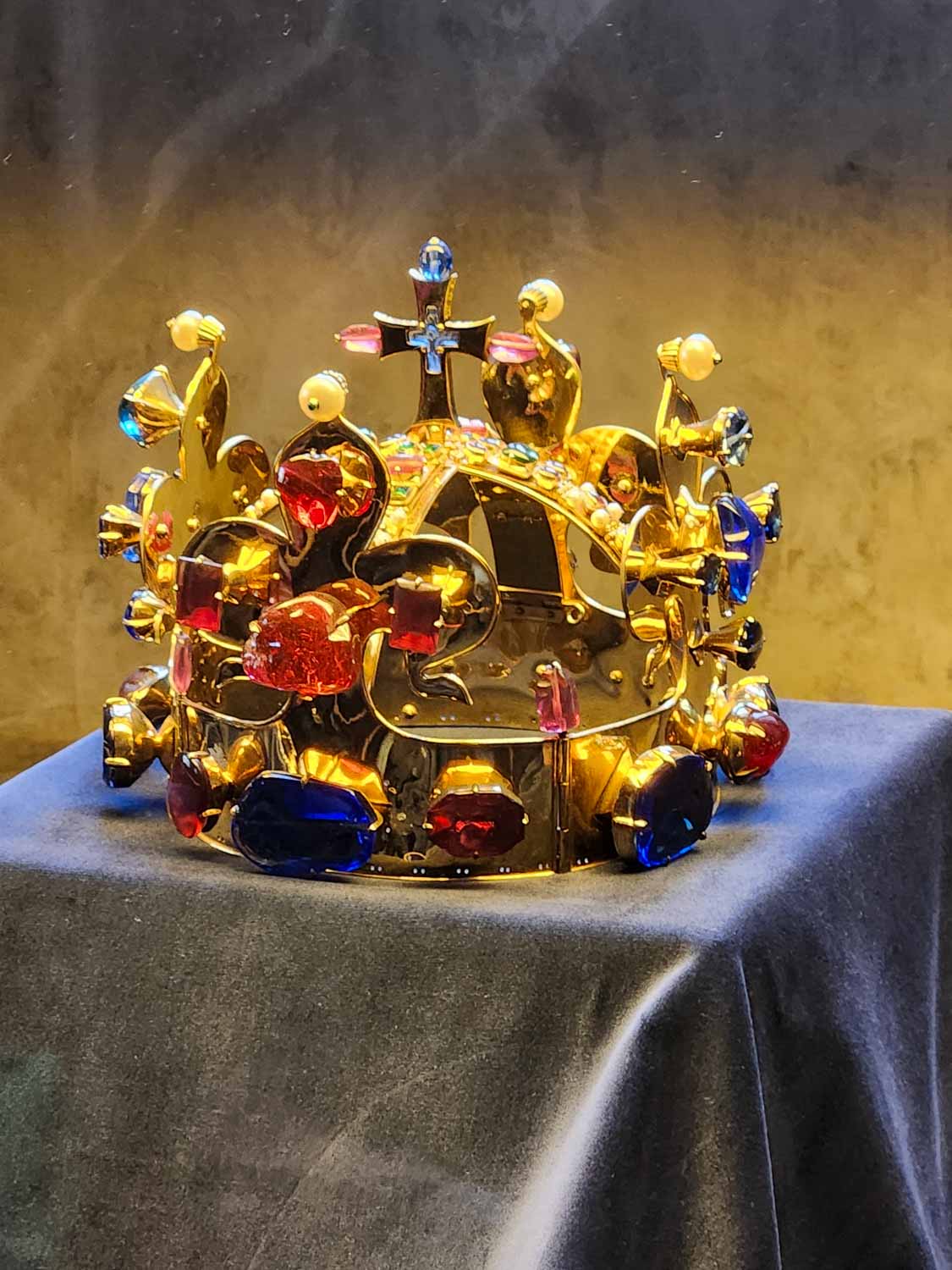
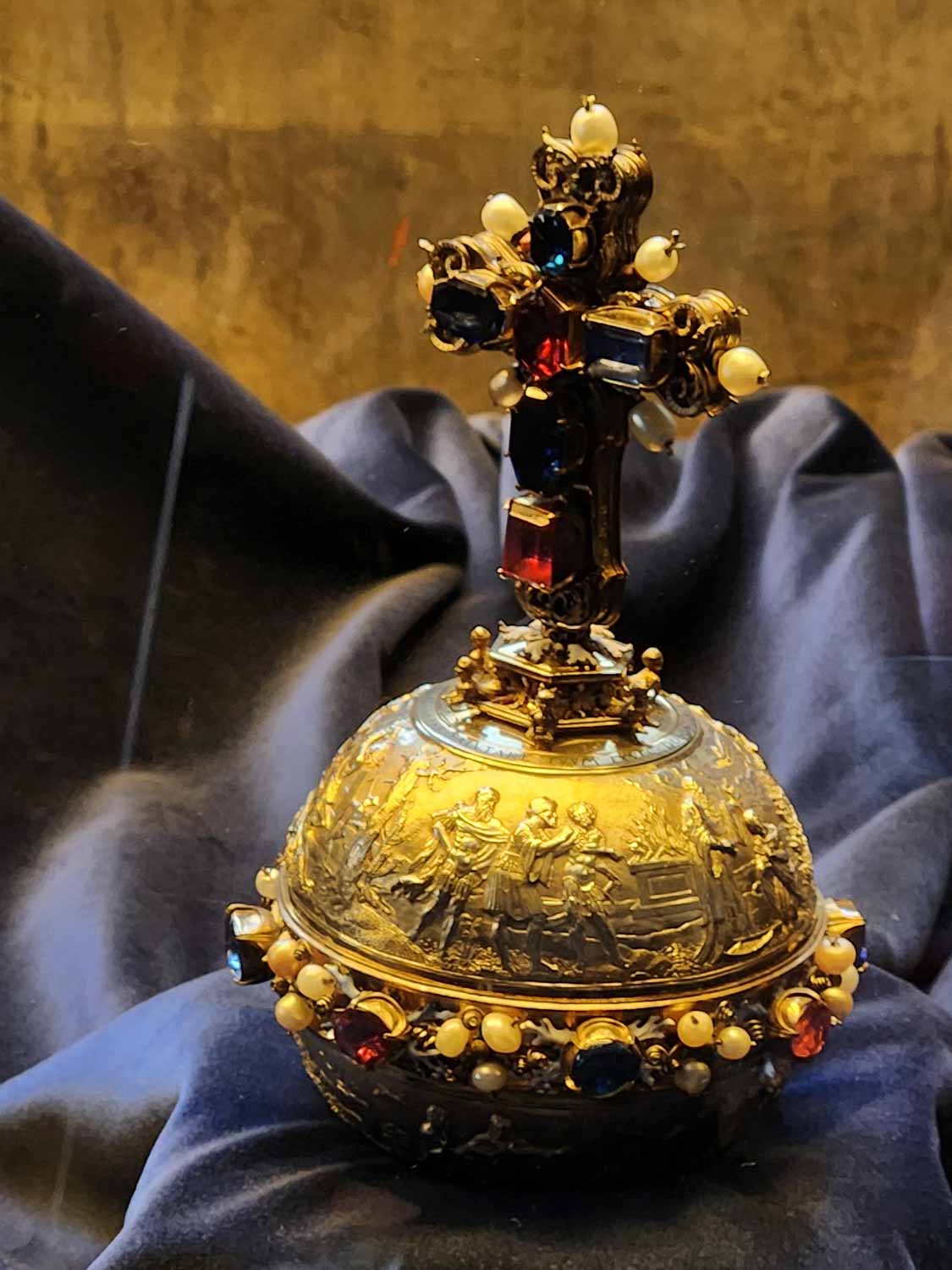
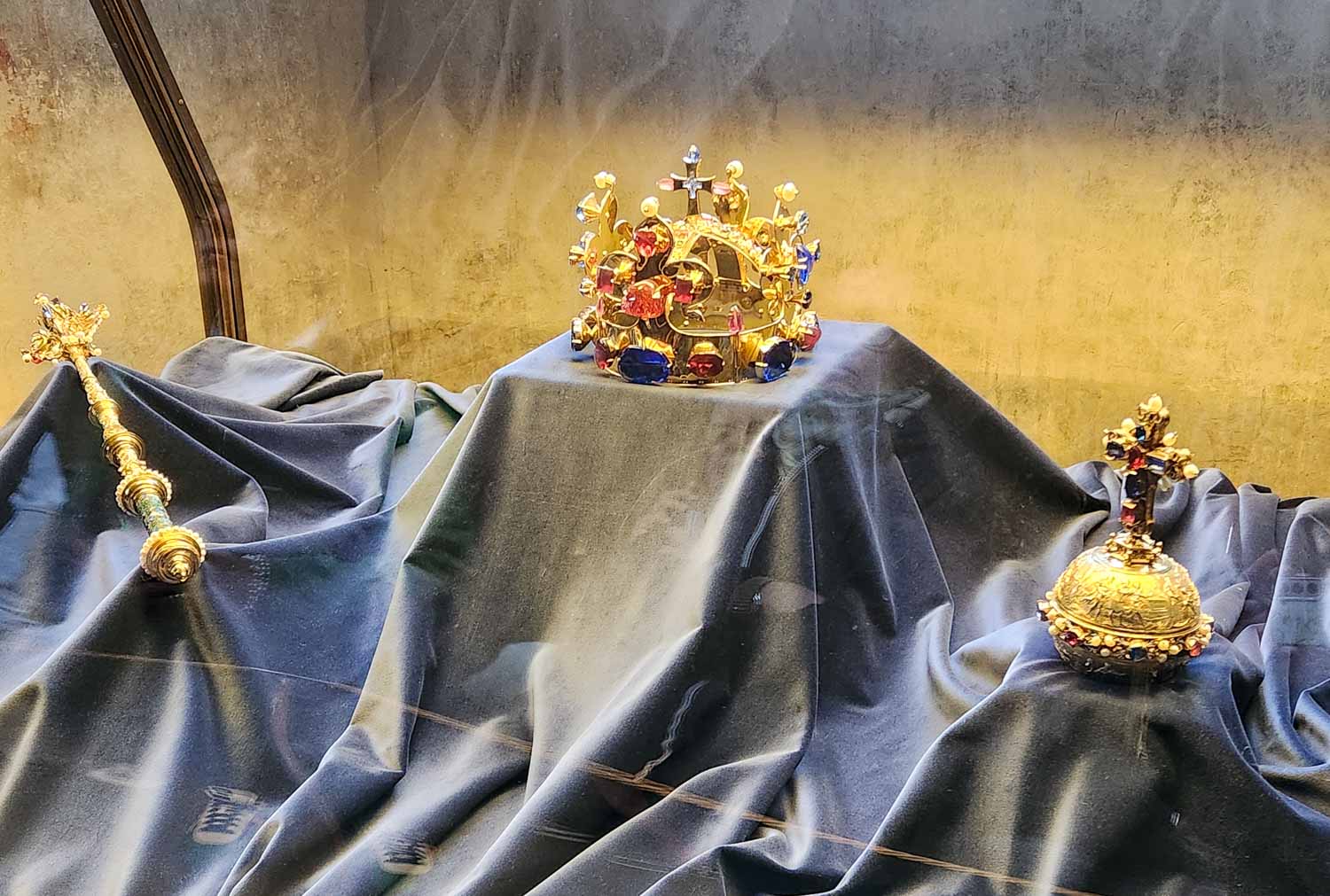
There are also regular exhibitions in the remaining rooms, along with copies of the crown jewels (usually the closest you can get to seeing the real thing, which is kept in St Vitus Cathedral).
St Vitus Cathedral
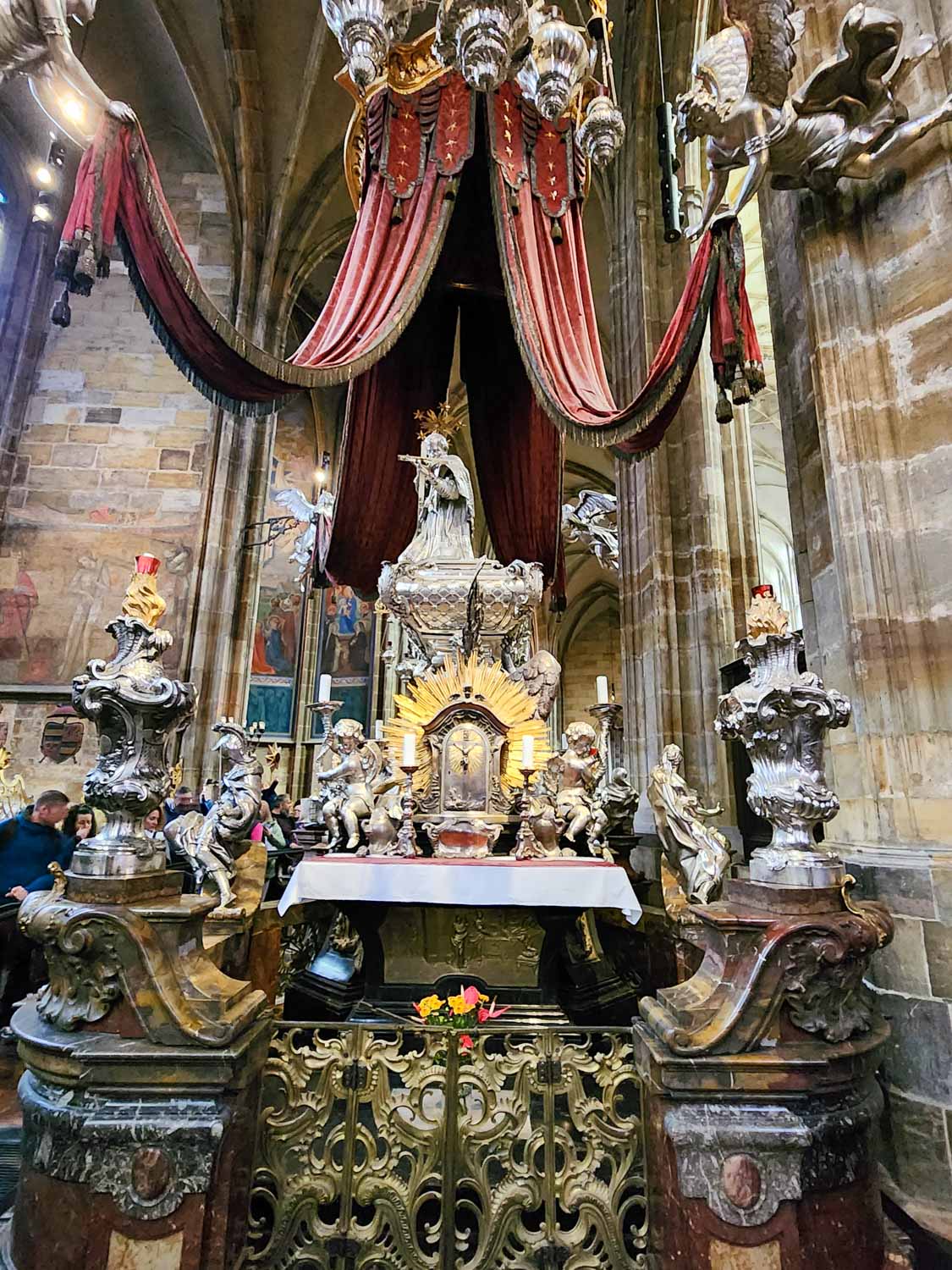
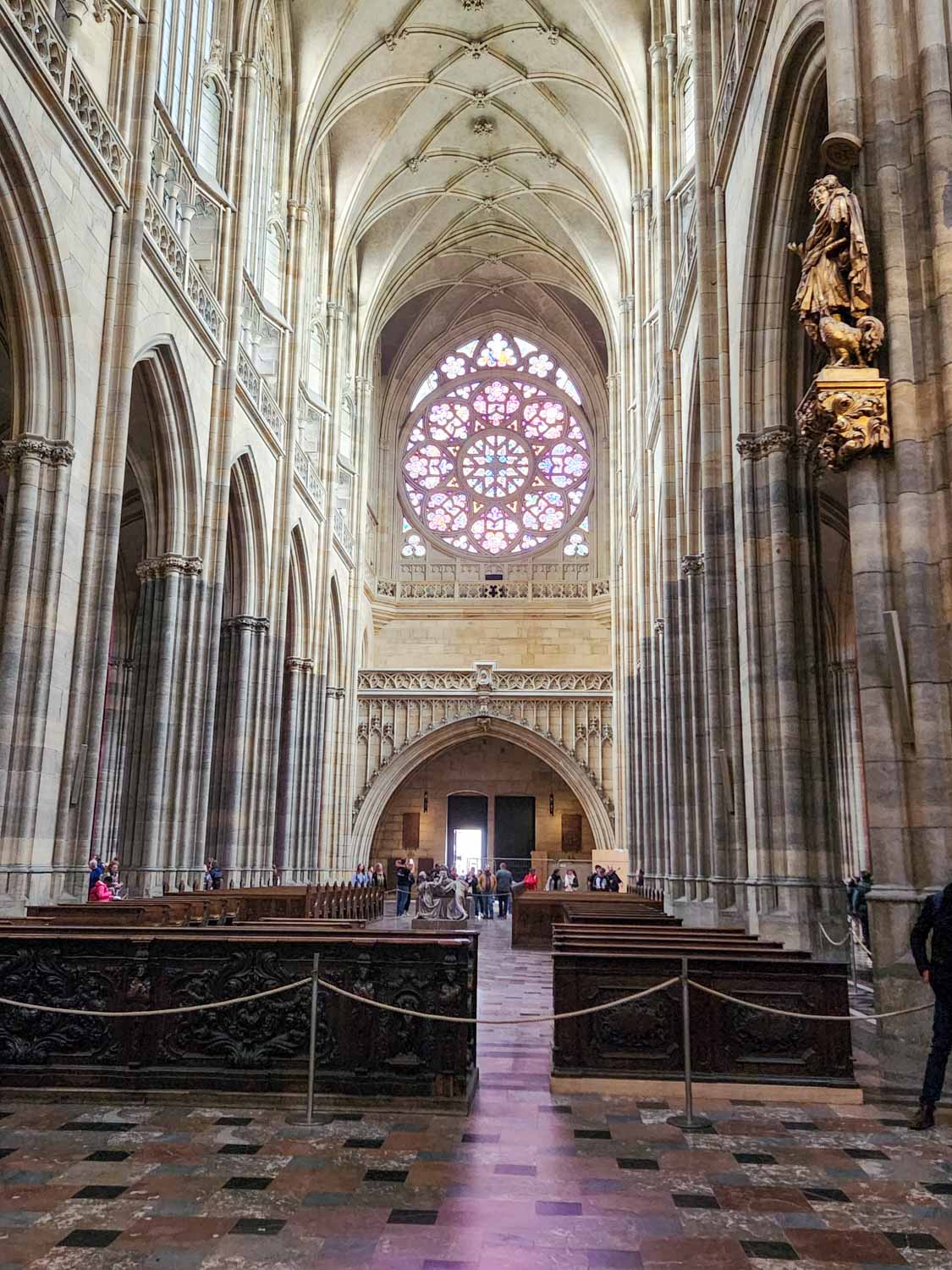
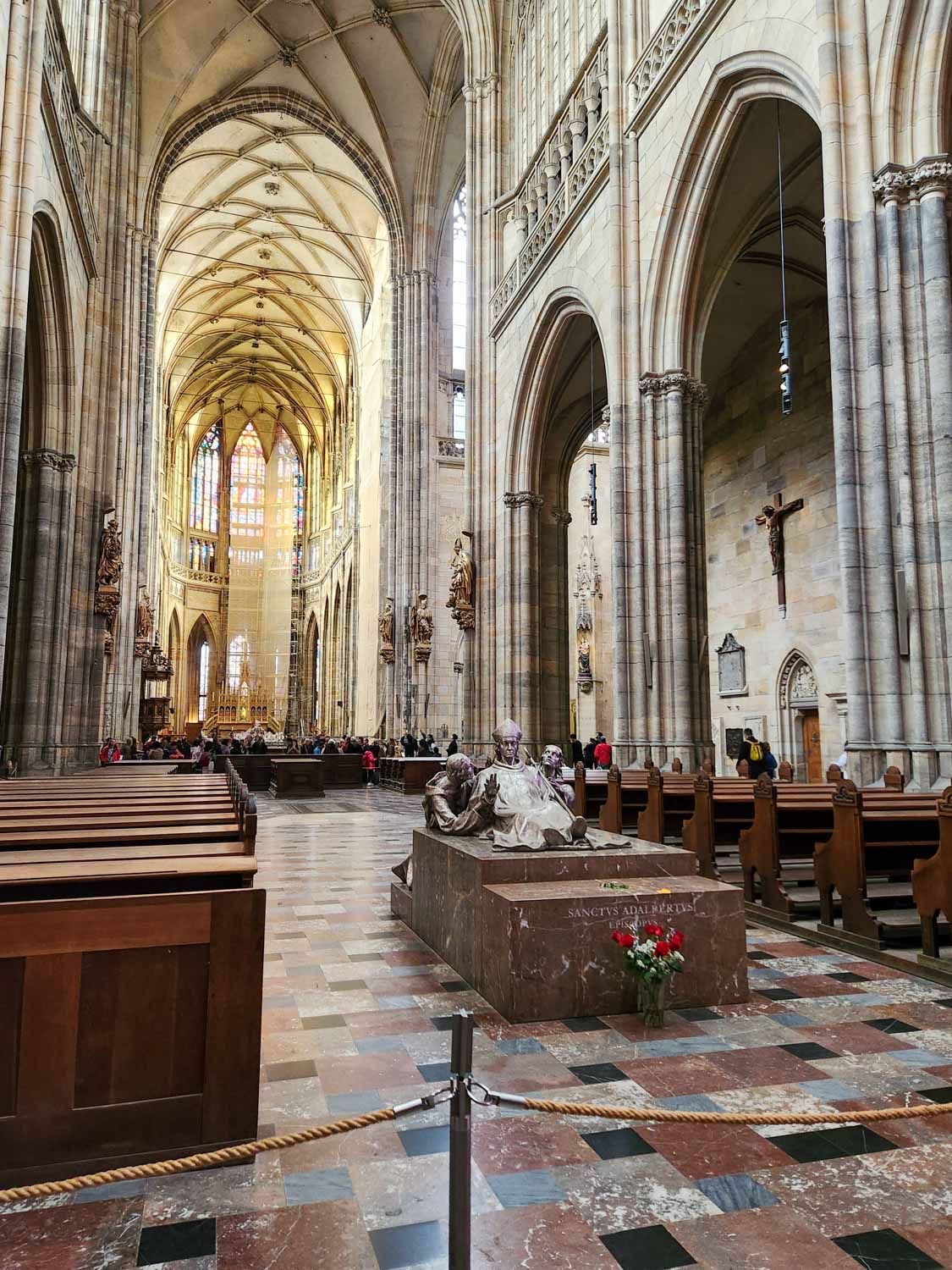
The striking Gothic cathedral sits at the heart of the castle complex and dominates Prague Castle – rightly so, it’s one of the most spectacular churches in Europe, although it was one place where I really regretted a lack of audioguide (or guide) as limited information meant I felt I missed knowing the details of what I was seeing.
St Vitus cathedral was started in the 14th century, in 1344, although it wasn’t actually finished until 1929 so like much of the rest of the castle buildings, there’s a mix of architectural styles.
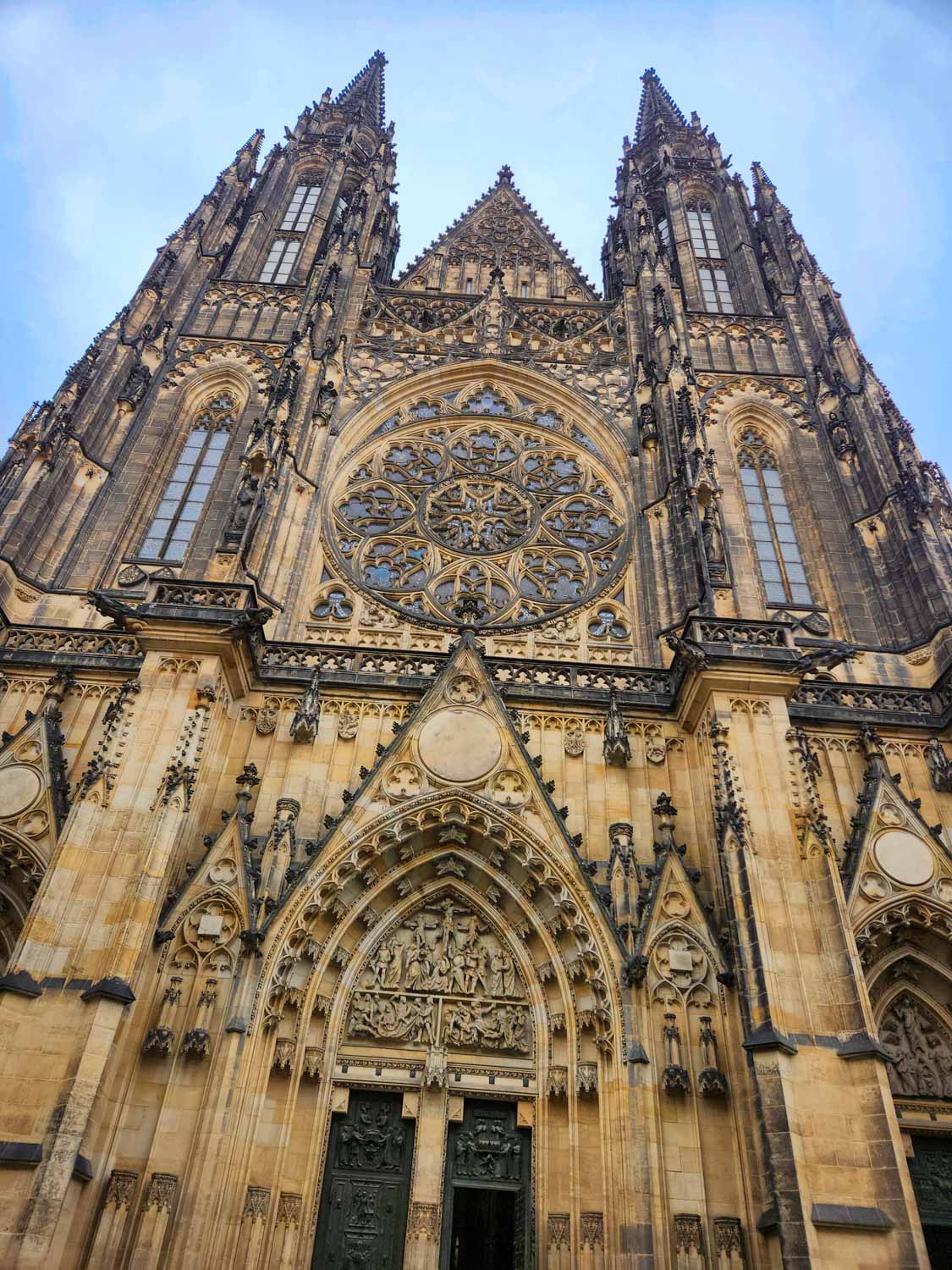
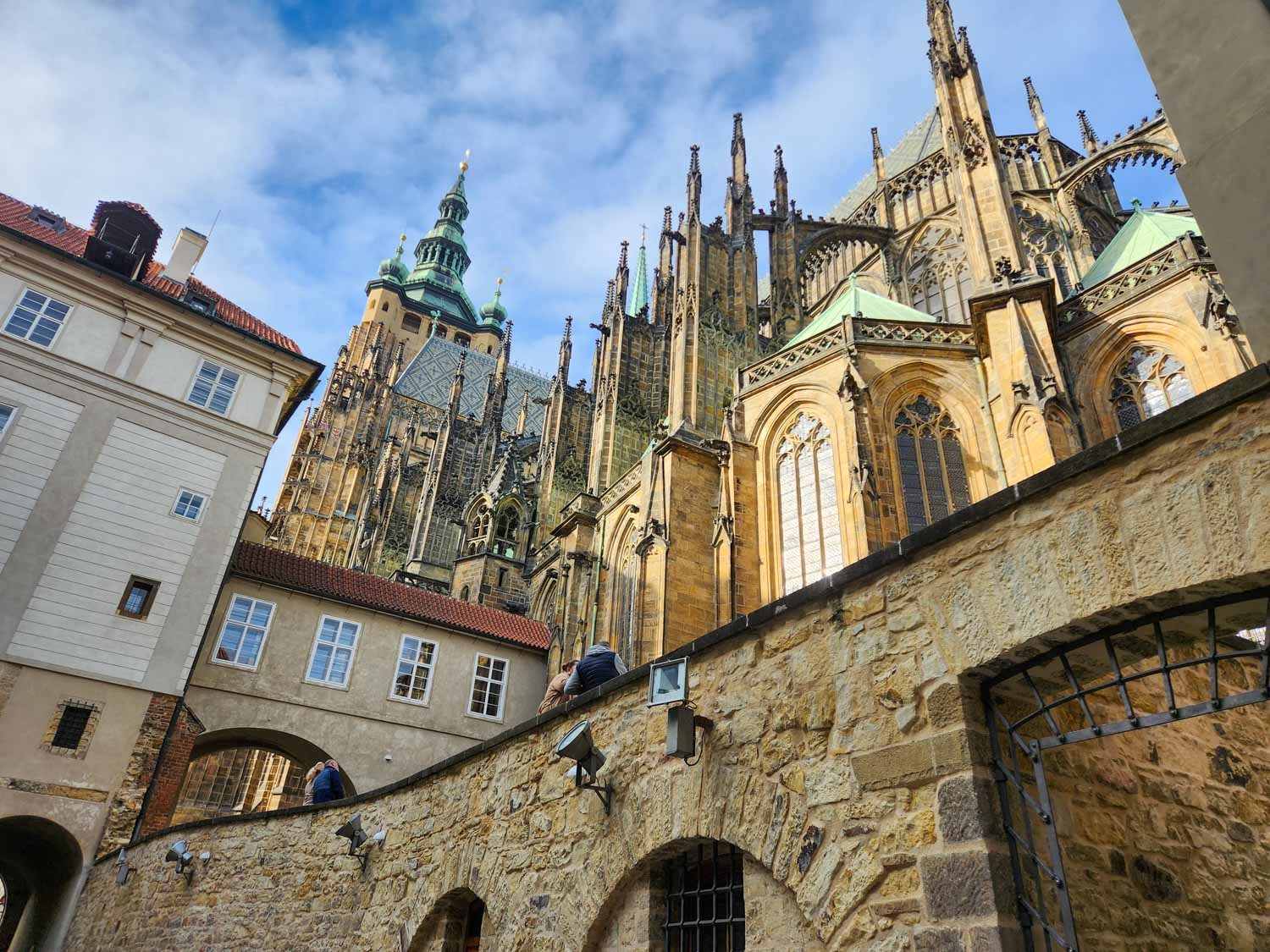
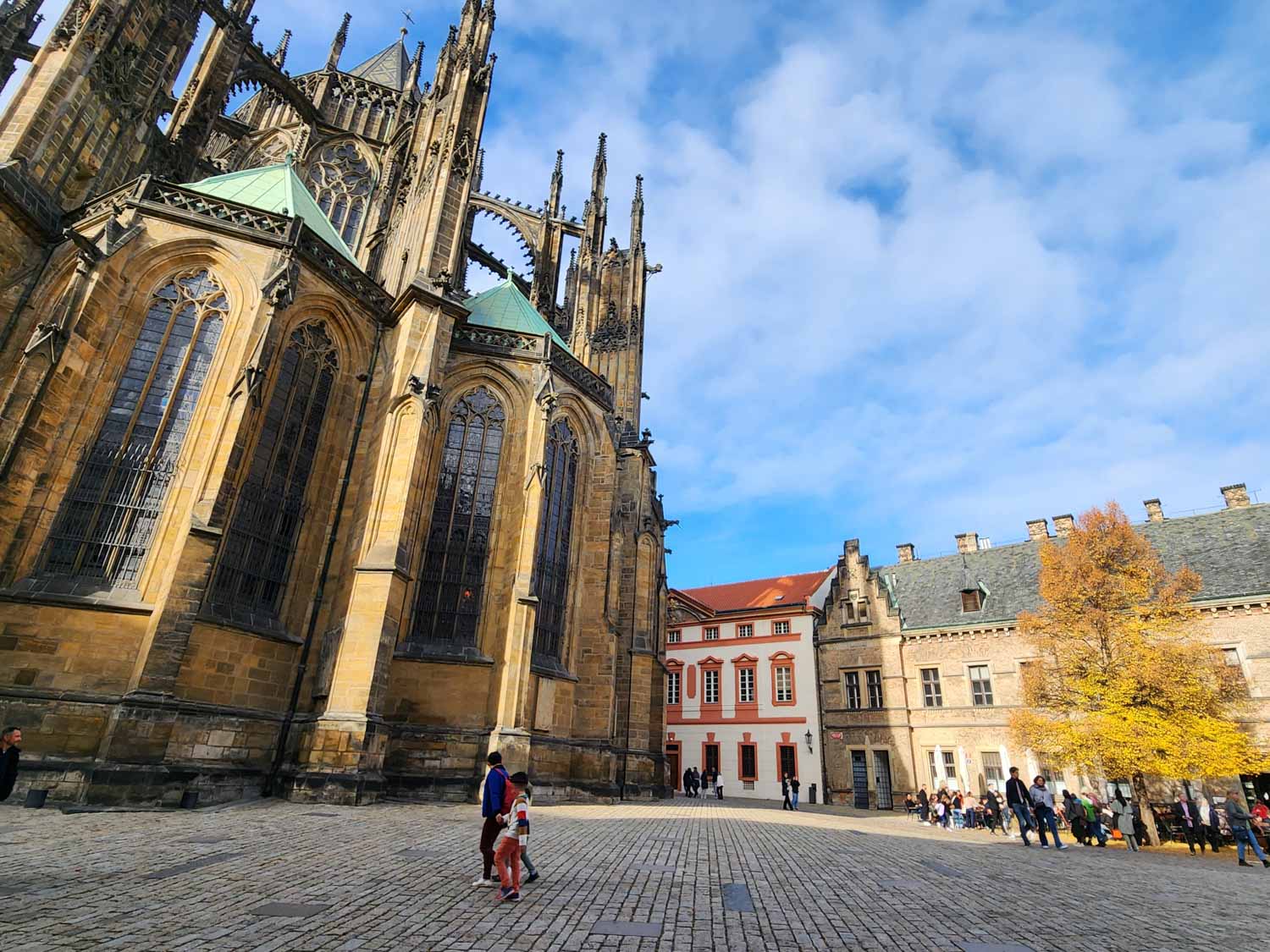
Even if you’re not an expert, the result is spectacular, with soaring vaulted ceilings, intricate stained glass windows, and enough ornate detail to keep you gazing upwards for ages. Early morning or late afternoon often has the best light streaming through the stained glass.
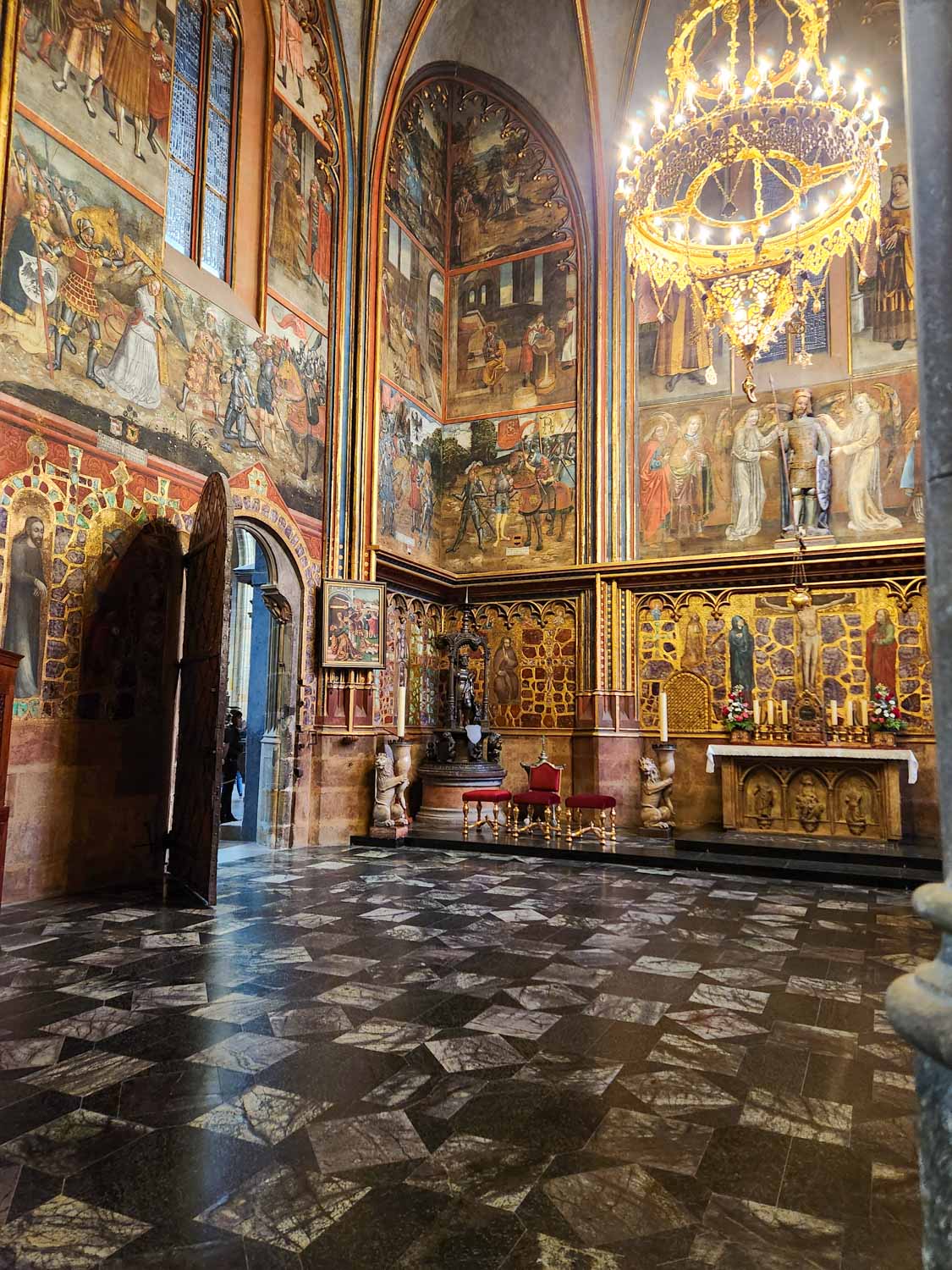
Coronations of Czech kings and queens once took place here, and you’ll also find the tombs of Bohemian kings and Holy Roman emperors, along with the stunning Chapel of St Wenceslas decorated with semi-precious stones and frescoes depicting the saint’s life. The chapel houses the Czech crown jewels, though these are only displayed on very rare occasions.
If you’re up for it, you can climb the cathedral’s Great South Tower – it’s 287 steps to the top (and you’ll need a separate ticket), but the panoramic views across Prague are unbeatable. The bells up there are impressively enormous too.
Ordinarily, you can visit the nave for free if you don’t want to buy the main cathedral ticket, but ongoing work means that isn’t currently accessible, so you can only enter with the main Prague Castle ticket. Like much of Prague, the cathedral does gets incredibly busy, especially around midday when tour groups descend, so try to visit early morning or later in the afternoon for a more peaceful experience.
Golden Lane
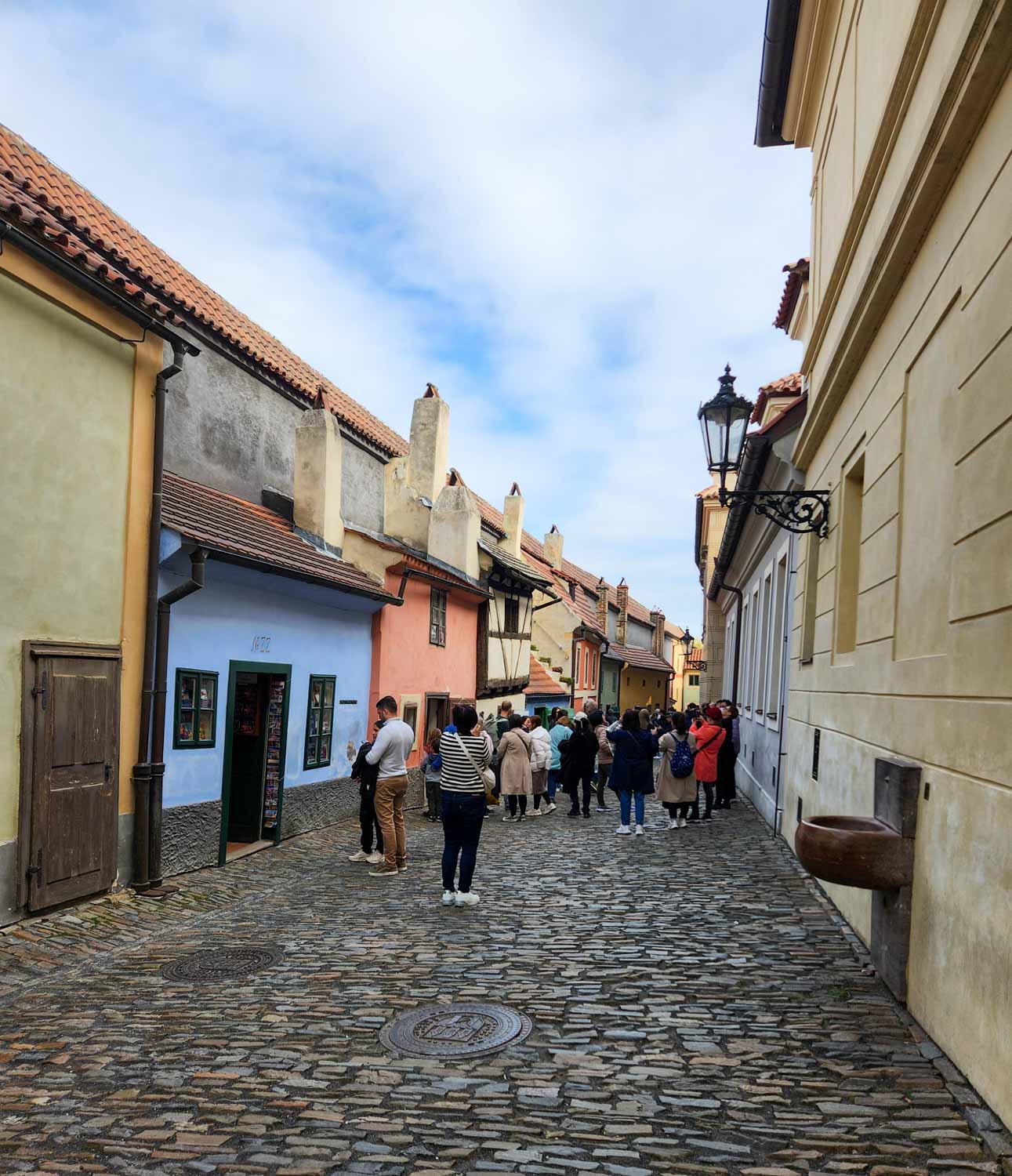
Golden Lane is small but still one of the best corners of Prague Castle with kids. Created at the end of the 15th century, this tiny street of colourful houses once housed castle guards and goldsmiths, and you can peek inside the recreated workshops and homes.
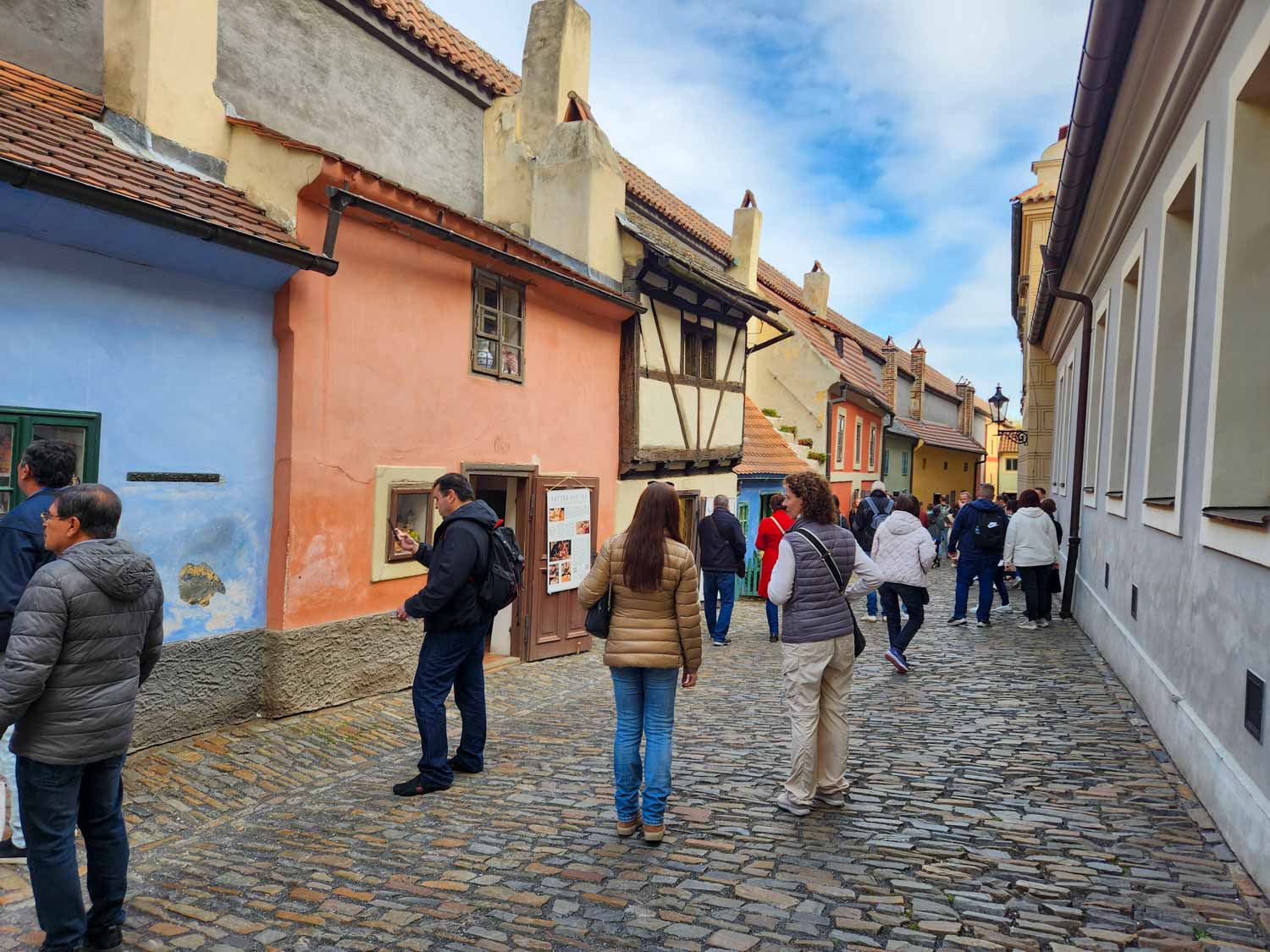
There’s actually quite a lot to see, even though the street isn’t long, with various houses linked to everyday life, specific crafts, such as a goldsmith’s workshop and tavern, and people who lived here. It does get busy, not least with people trying to snap the picturesque alley.
Franz Kafka lived at number 22 for a while, which adds an extra layer of literary history, with the last residents only finally moving out in 1953.
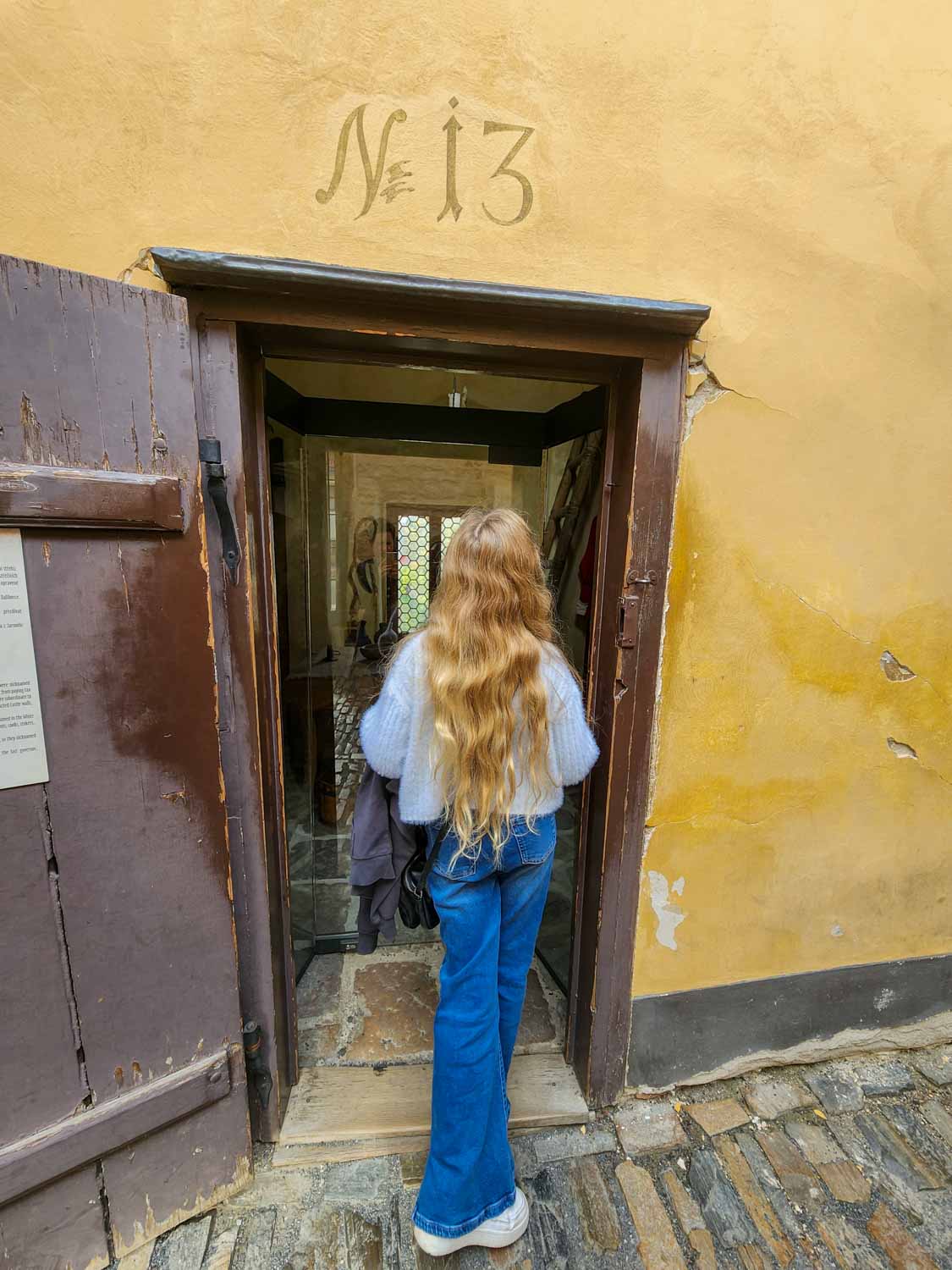
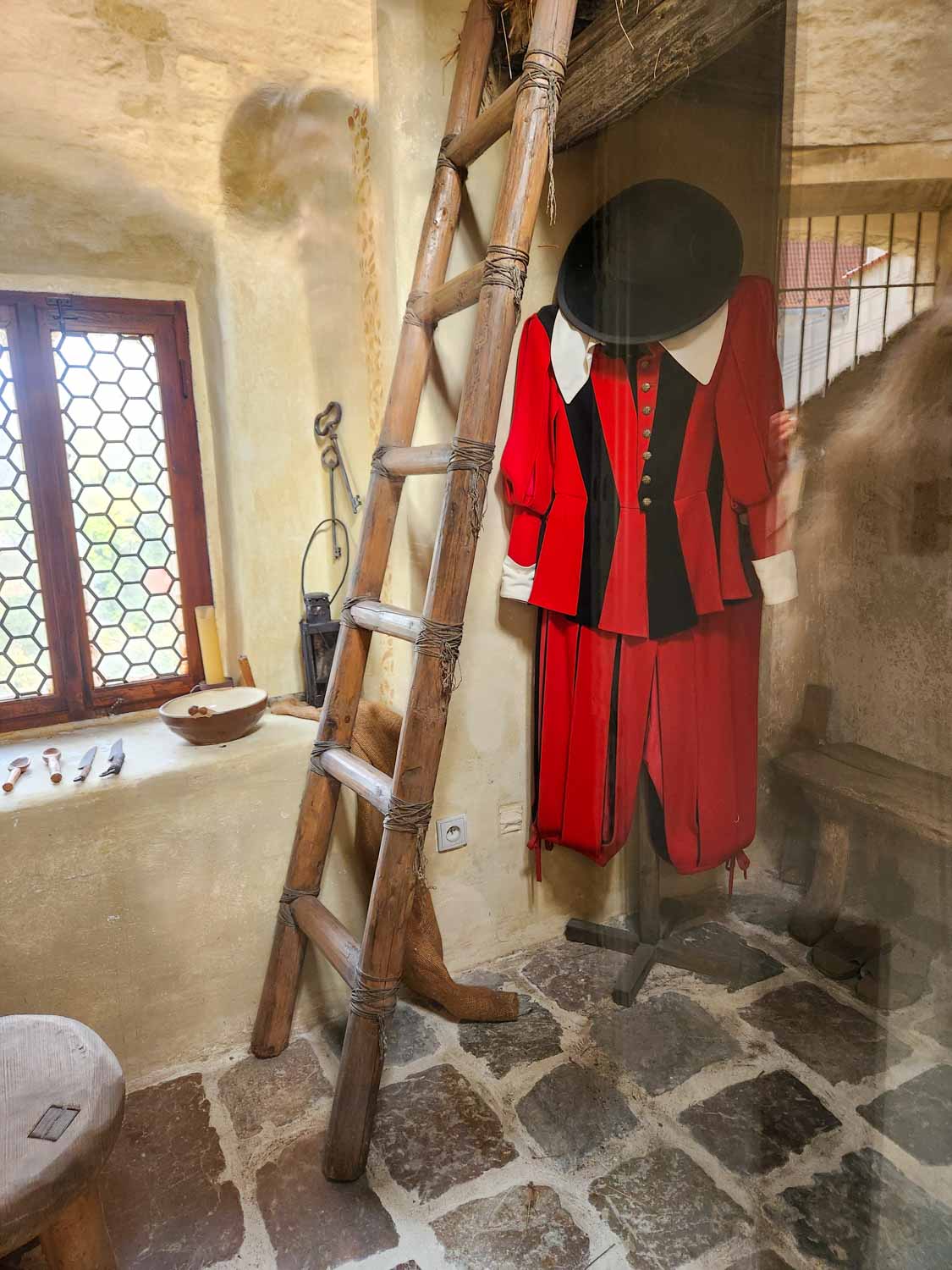
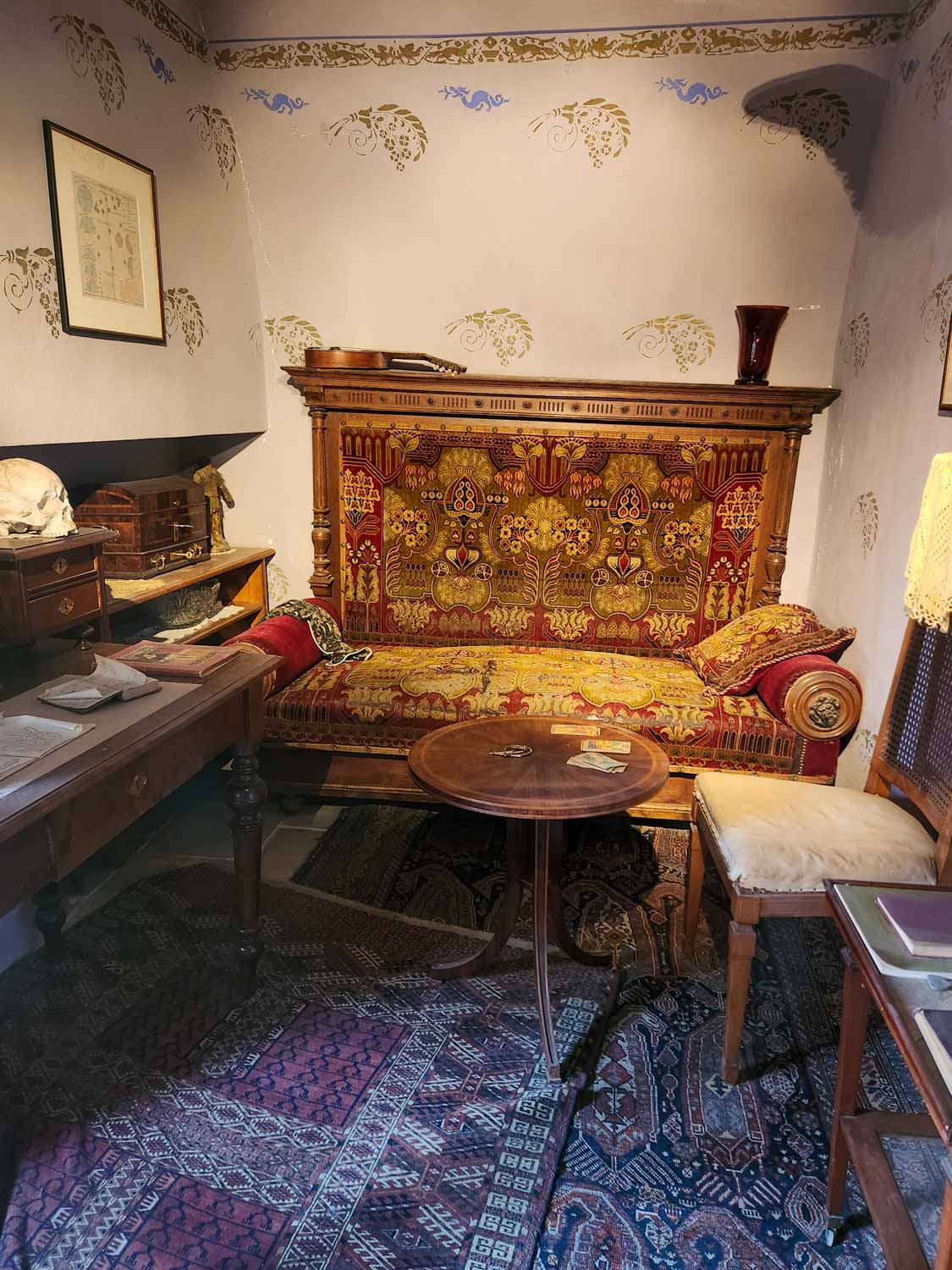
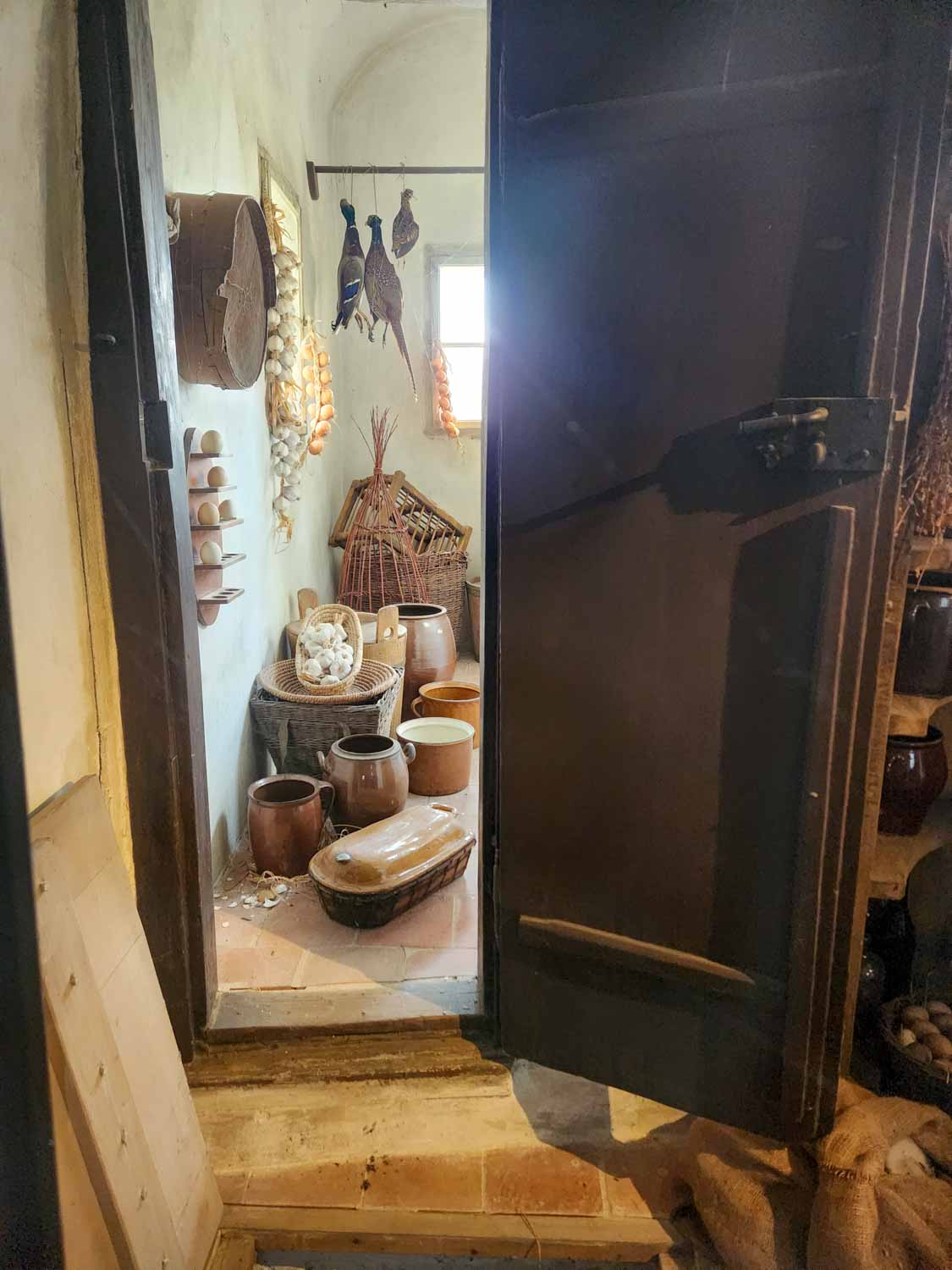
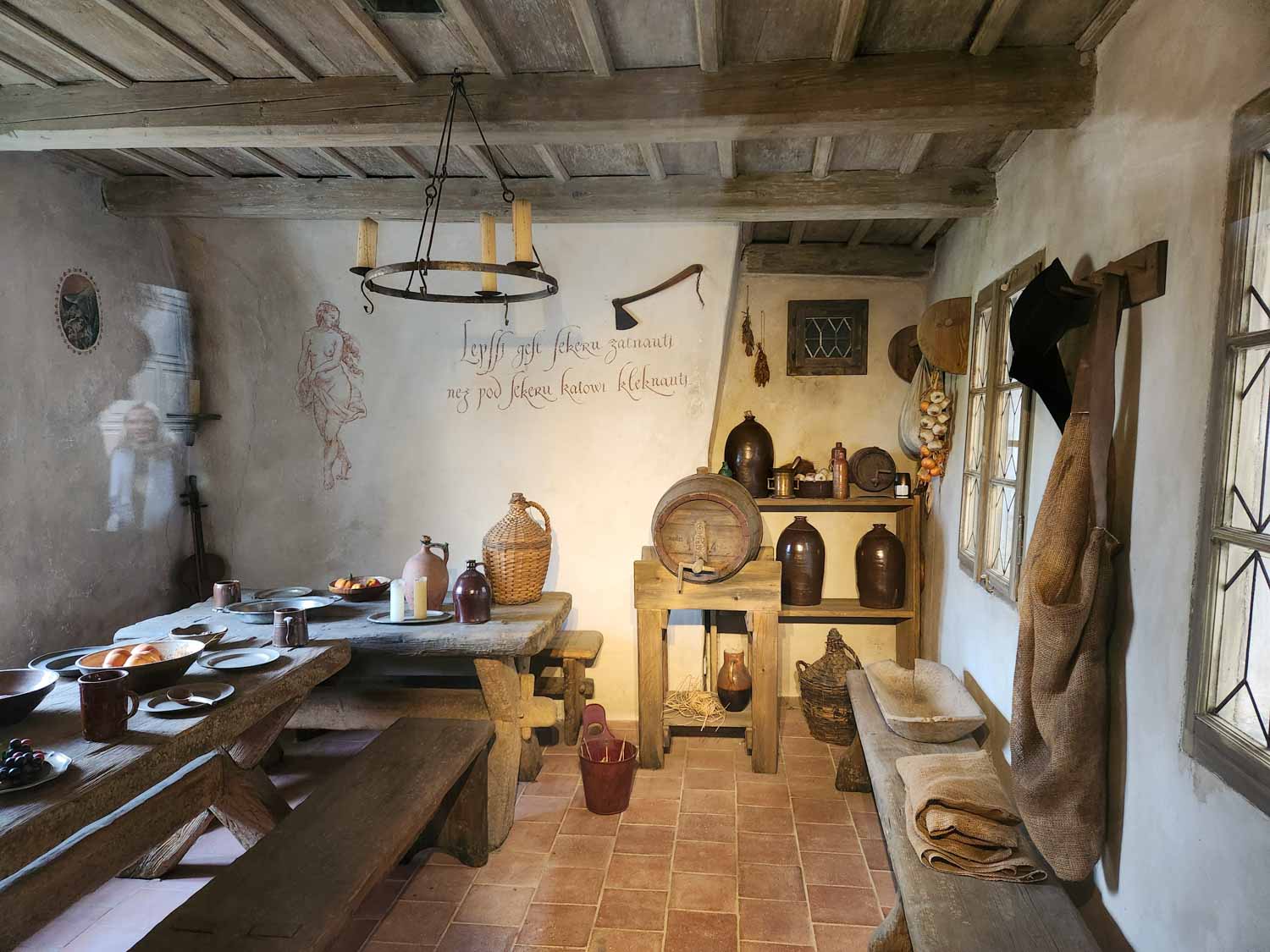
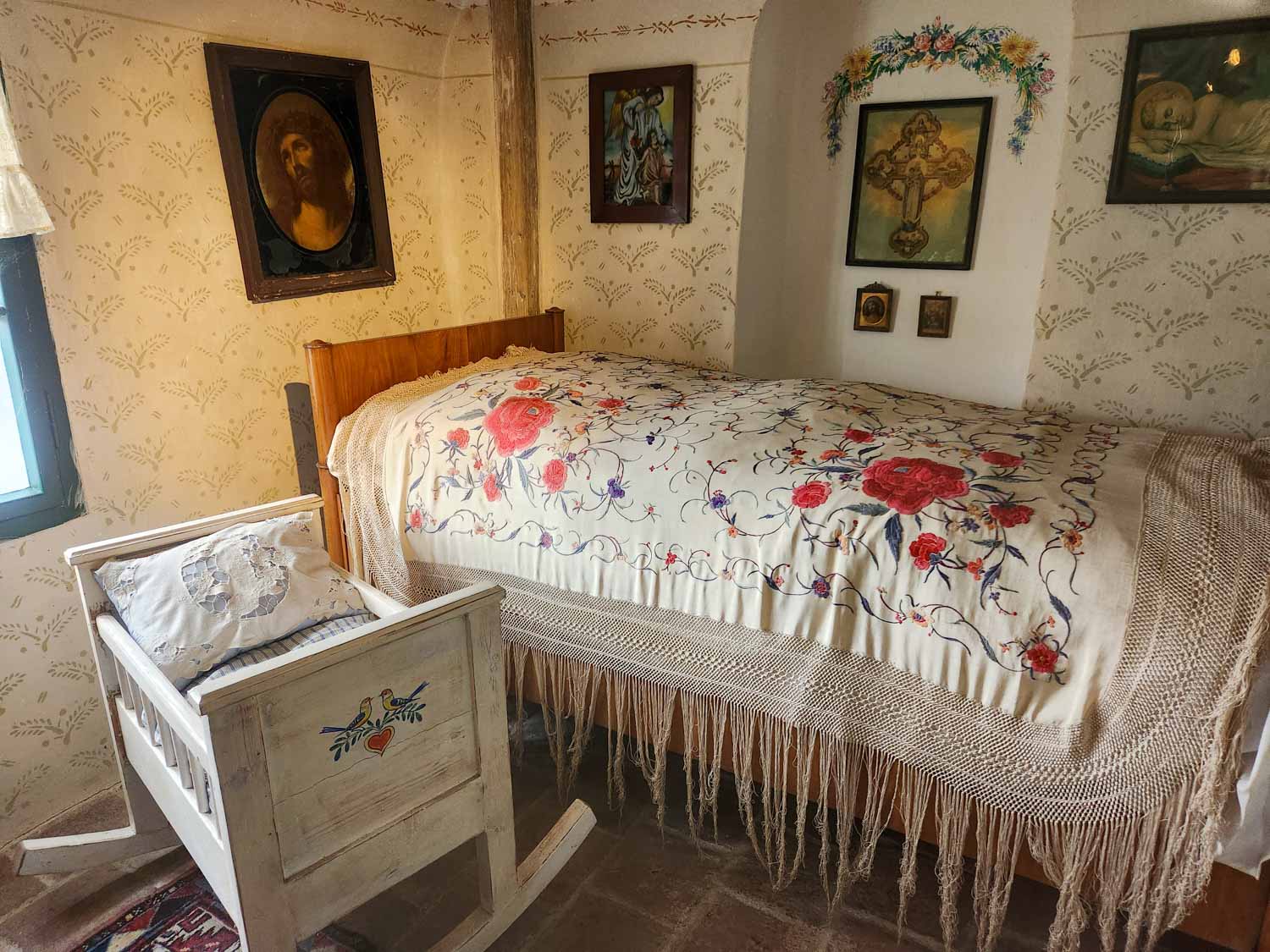
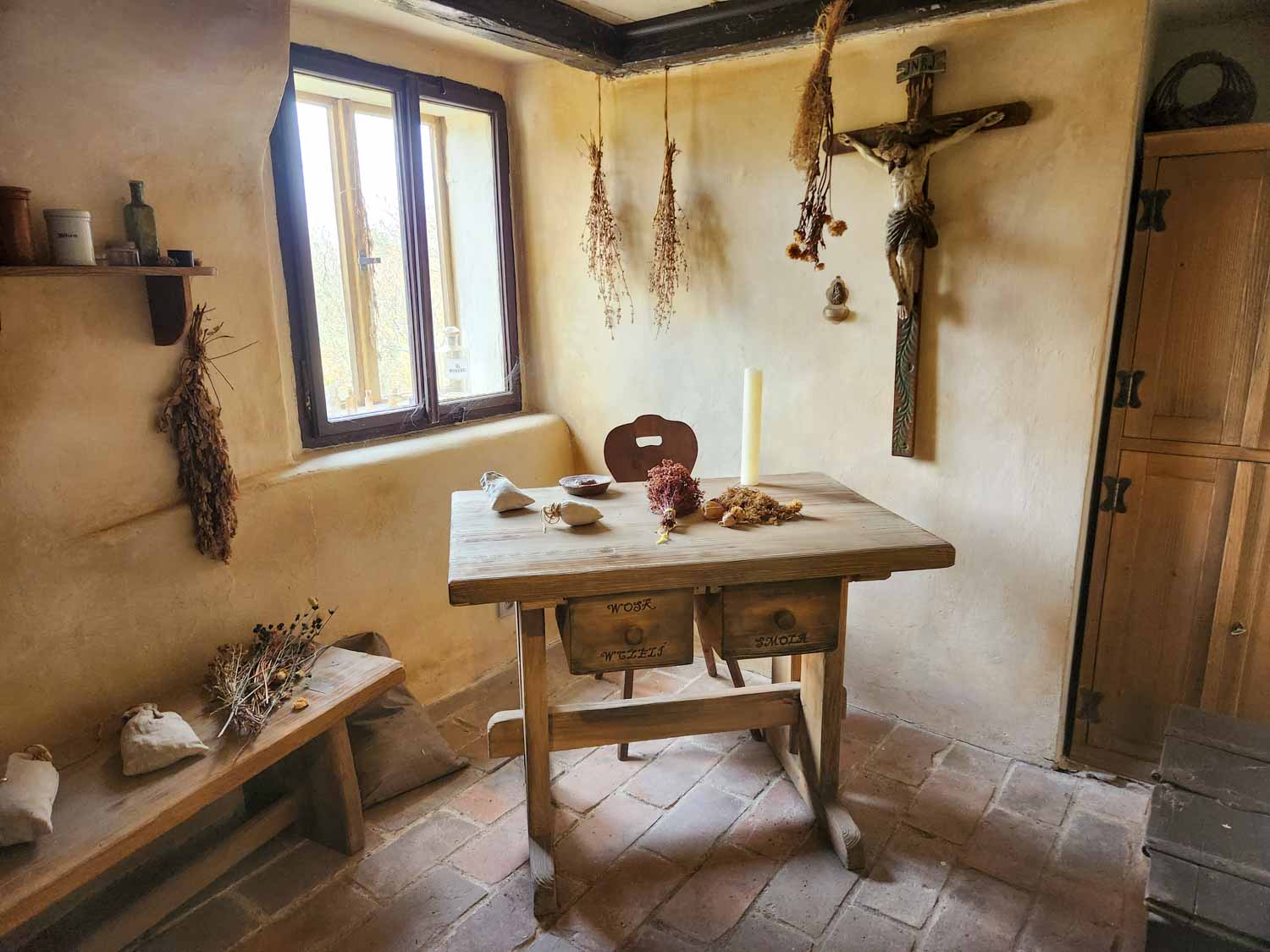
But you can also peek inside No 14, once home to a famous Prague fortune teller, who was murdered by the Gestapo during the Second World War, while No 12 was home to Josef Kazda, a film historian and collector who hid Czech films here to save them being destroyed by the Nazis.
A terrace here overlooks the Daliborka Tower, while there’s also a small weaponry museum that you can look around.
If you’ve got teens who are fans of Kafka, save some time to spot the metallic, reflective, rotating sculpture of Franz Kafka’s head too, created by artist David Černý. It’s in the square just off Vladislavova in the New Town.

Daliborka Tower
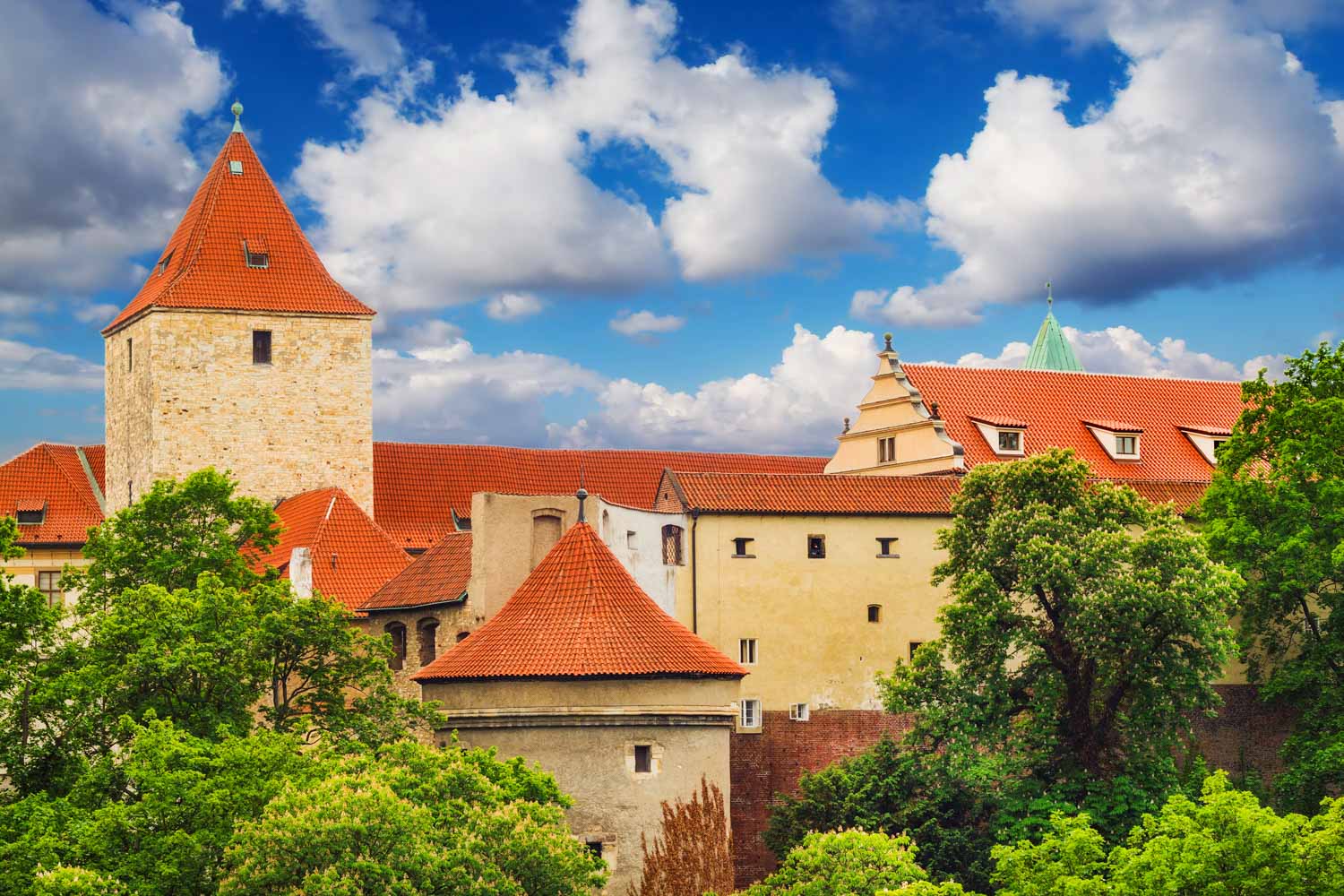
The round 15th century tower was a prison until the late 18th century, and is named for its first (and best-known) prisoner, Dalibor of Kozojedy, who spent the final years of his life here until his execution.
The knight had hidden rebels who’d risen against a neighbouring manor, and stories tell that he spend his imprisonment learning to play the violin, becoming so adept that people would stand to listen outside the door.
Other prisoners were not so fortunate, with a trapdoor to an oubliette below the ground floor, where some of those jailed were lowered down by rope and left to starve. There are various torture devices and cages dotted around as you explore too, so it’s not one for more sensitive kids.
The Story of Prague Castle
If you’re hoping to learn more about the history of the whole site, The Story of Prague Castle exhibition takes you through the thousand years that the castle has stood, with original items, stories from people who worked here over the centuries and some interactive elements, including activities for kids.
It’s not included in the standard ticket for the castle, so you do need to buy another pass (around £11 including entry to several other exhibitions, although these are less likely to appeal to kids, and you’ll need to buy that on the site).
The first part of the exhibition focuses on important people and events in Czech history, as well as showing models of the castle as it was developed over the centuries. Then the second section is themed, looking at everthing from the importance of the church to the castle, dining traditions and even burial practices.
St George’s Basilica
The second most important church in the Prague Castle complex (after St Vitus Cathedral), St George’s Basilica is also included in the main ticket, so it’s worth a quick look inside.
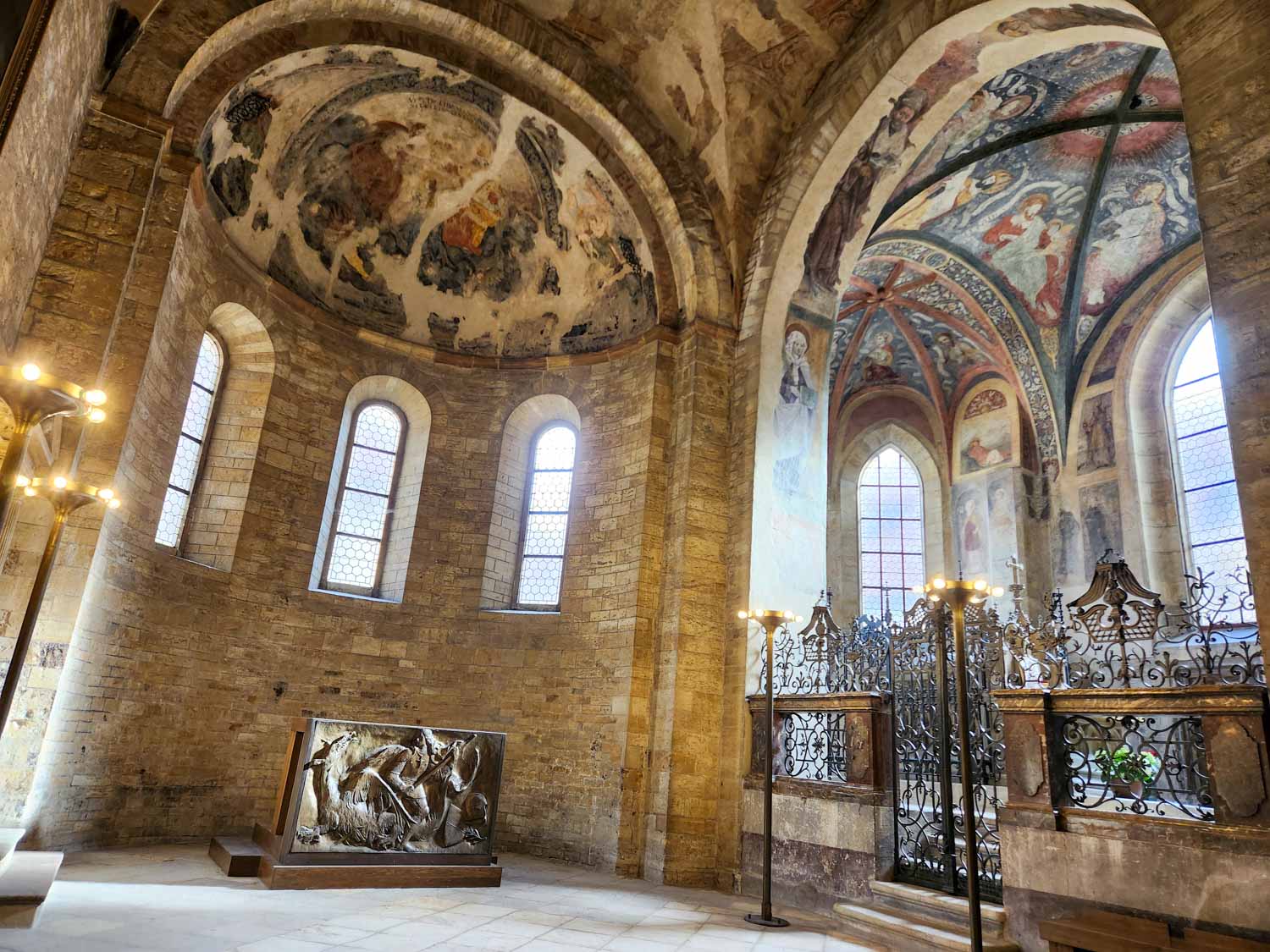
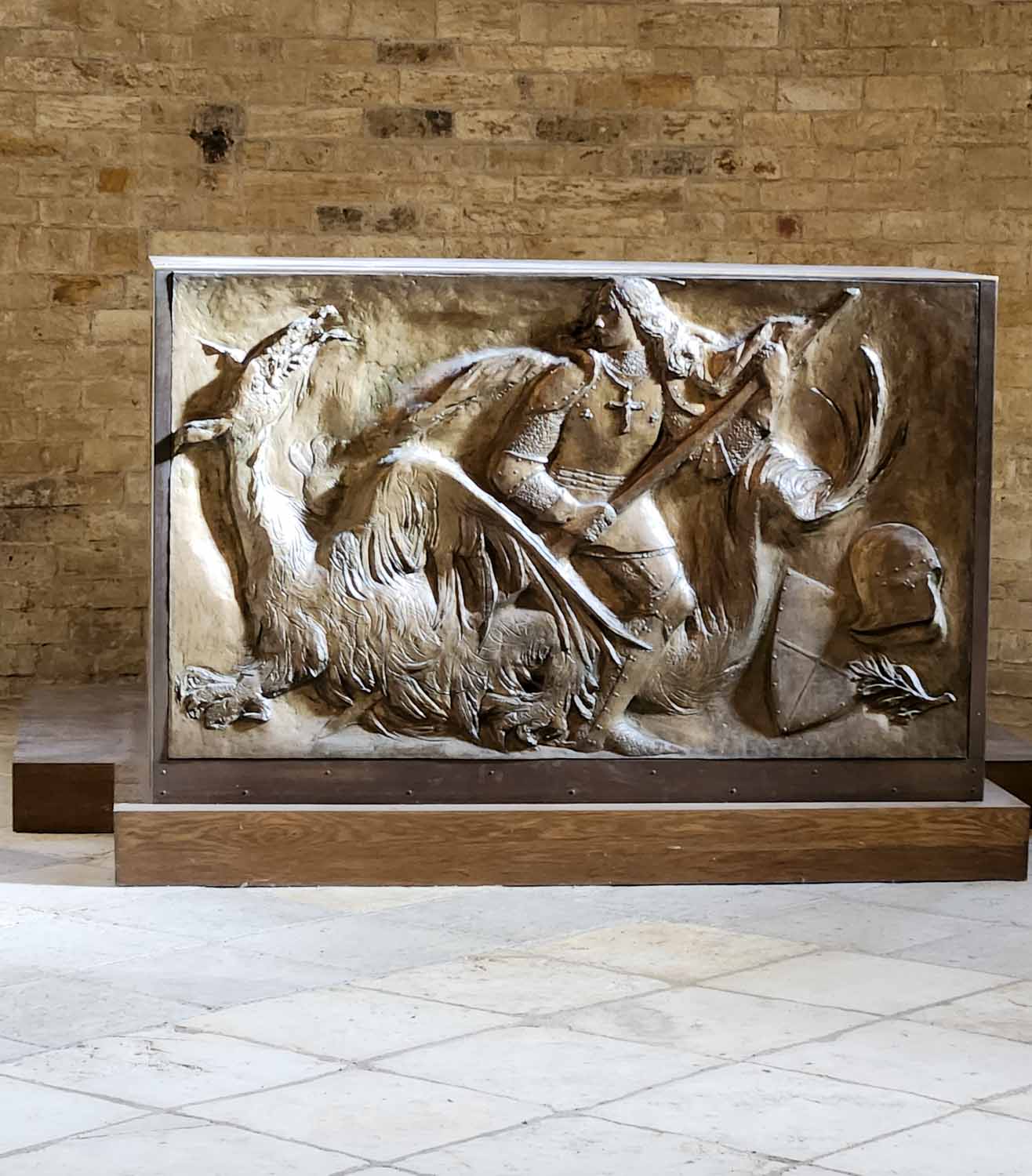

It’s the oldest surviving church building in the castle grounds, and you’ll find some royal tombs under the chancel, including the father and grandmother of St Wenceslas. Look out for the carving of St George slaying the dragon too.
Castle Gardens
Don’t miss the castle gardens either, especially if you’re visiting during spring or summer when they’re in full bloom.
Not all are open to the public, but you can wander around a lot of them including the formal South Gardens and the pretty Royal Garden, which lie either side of the main buildings.
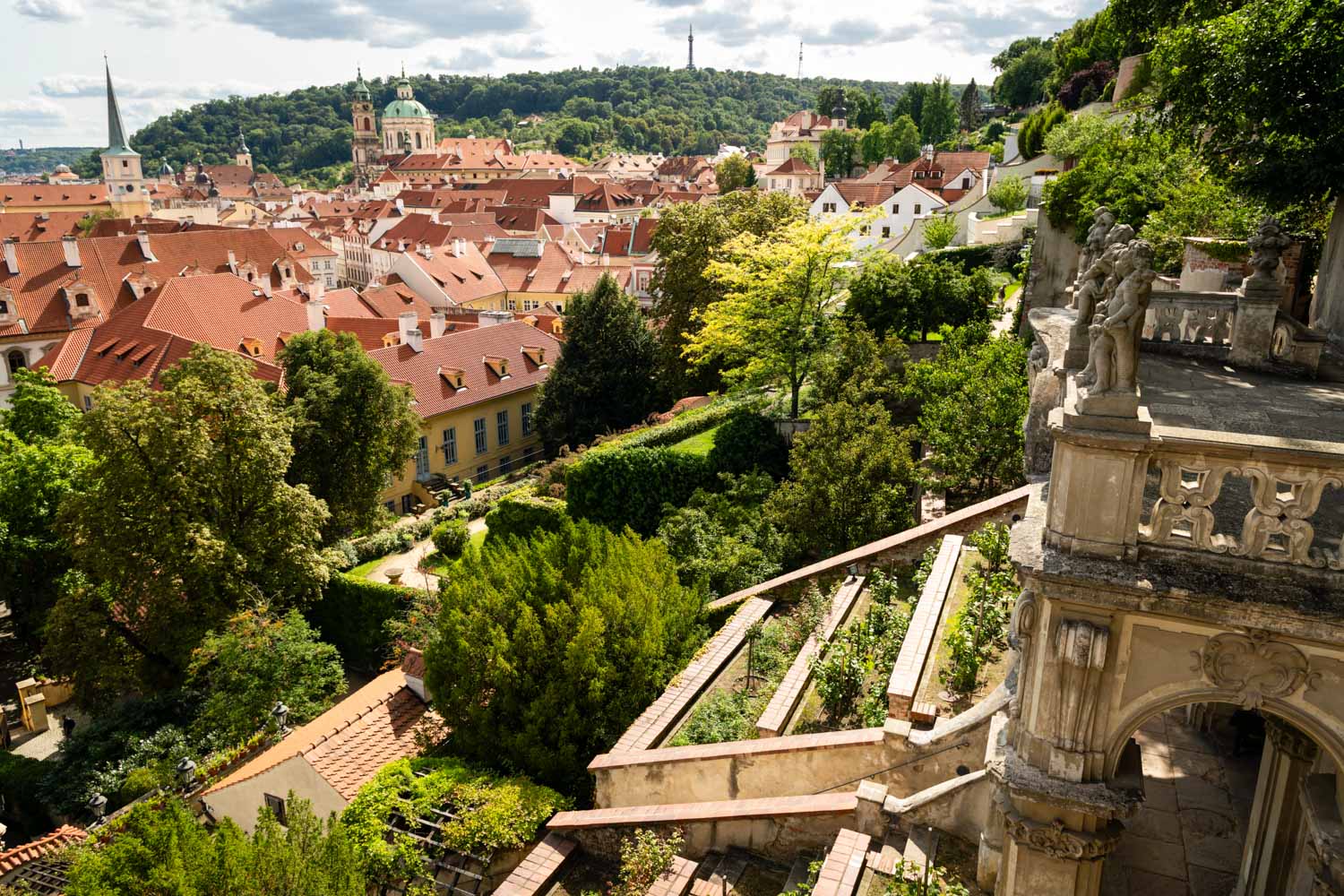
Or there’s even a vineyard you can stroll through, at the Daliborka Tower end of the castle complex. According to legend, St Wenceslas vineyard is the oldest in Bohemia – whether you believe that or not, it has some great views.
The Prague Visitor Pass includes entry to 70+ attractions including Prague Castle, as well as public transport – get a small discount if you book using my link
Astronomical clock
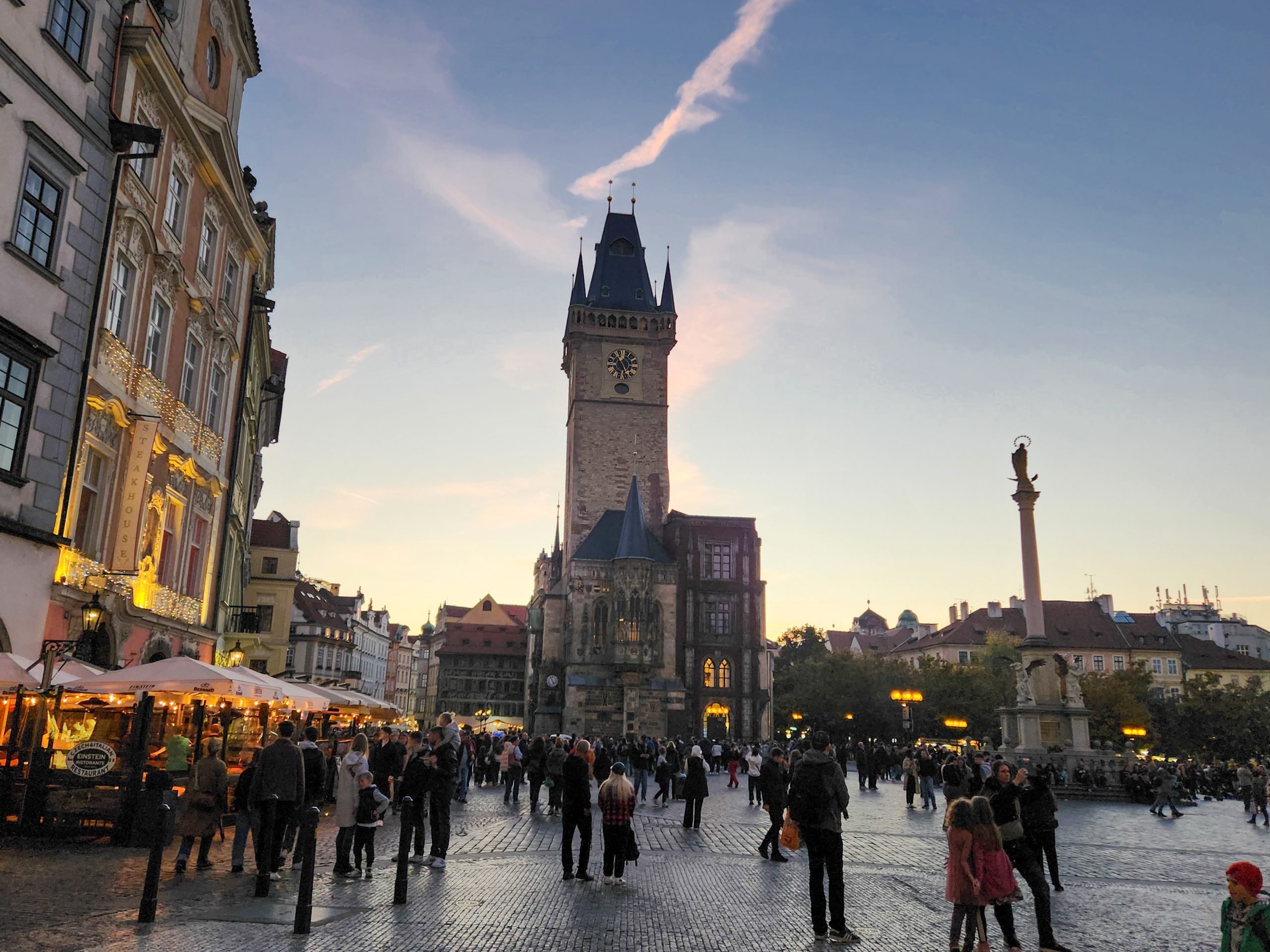
Prague’s Astronomical Clock, or Orloj, has been keeping time in the Old Town Square since 1410, making it one of the oldest working astronomical clocks in the world – and however touristy it is to watch, I never tire of doing it.
Every hour on the hour, crowds gather in the Old Town Square to see the clock’s mechanical show as the Twelve Apostles parade past the windows and various allegorical figures spring into action. Do be prepared to get there early to find a place near the front.
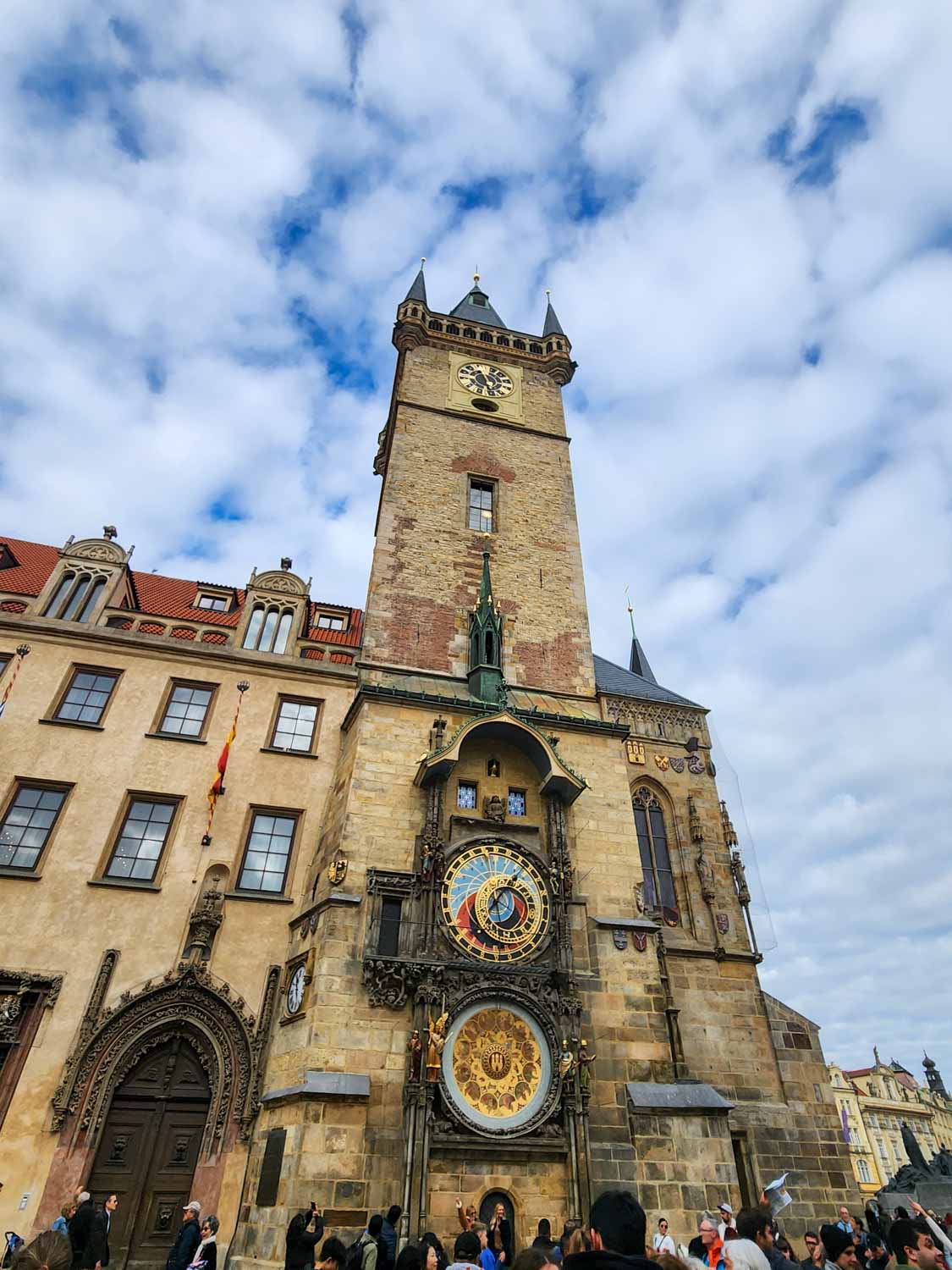

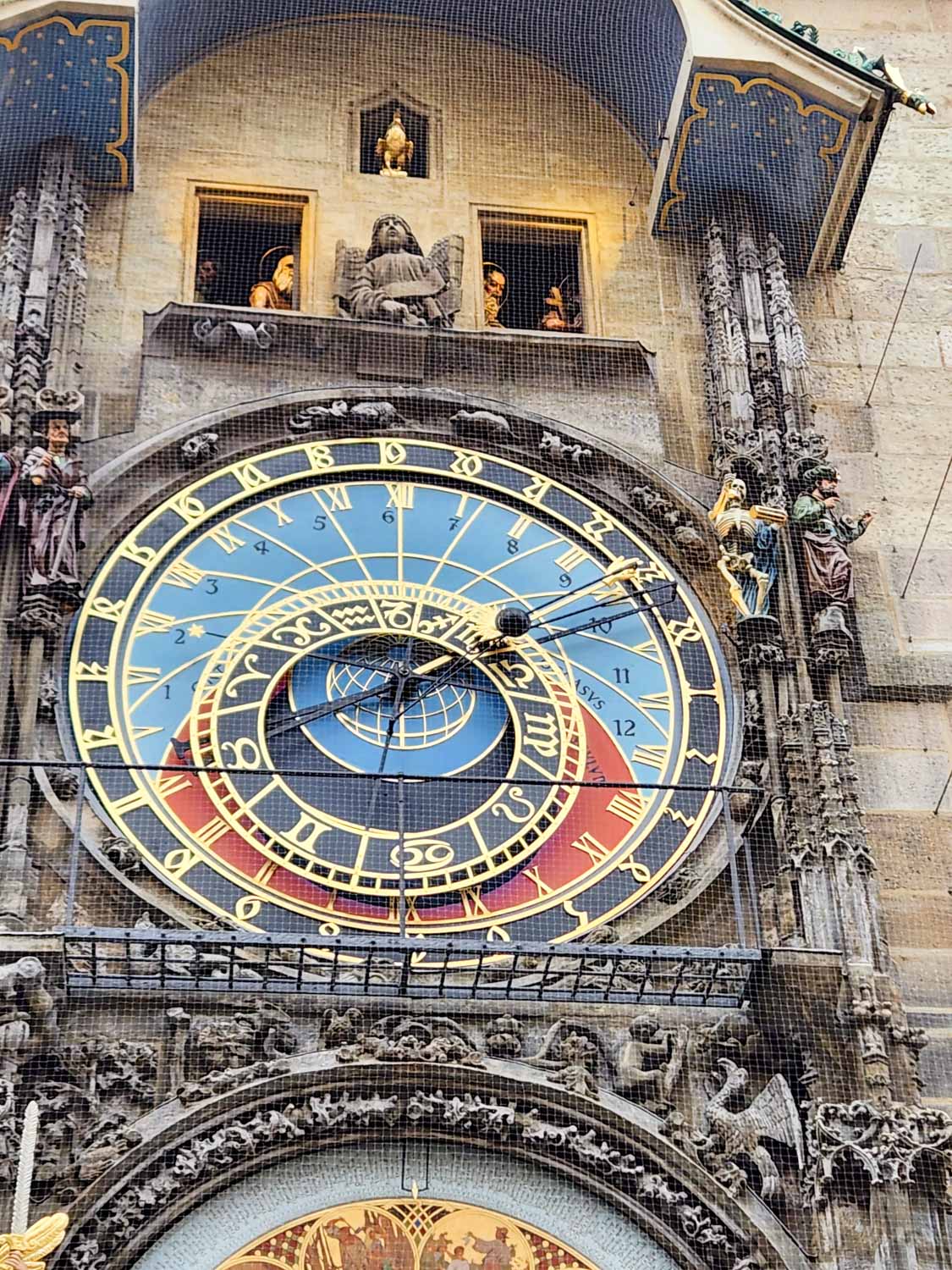
It only lasts just under a minute, but there’s something rather magical about watching a 600-year-old mechanism swing into action.
The clock face itself is a work of art, with three main components – the astronomical dial representing the sun’s journey through the zodiac and phases of the moon, the calendar dial with medallions depicting the months, and the figures including a skeleton representing Death who rings a bell as the hours pass, as well as rotating statues of the 12 apostles.
The clock also displays Babylonian time, Old Bohemian time, German time, and Sidereal time (a system used by astronomers). There’s also a calendar dial just below the clock, showing the day of the month, the day of the week, feast days and allegorical pictures of the current month and sign of the zodiac, so it’s well worth spending some time looking at all the details outside the busy point each hour.
There’s even a legend attached to the clock, that the brilliant clockmaker Mikuláš who created it was approached by kings and nations desperate for something similarly impressive; the Prague council was so worried that he’d agree to create a competitor that they had him blinded.
In revenge, the story tells that the clockmaker threw himself into the clock’s mechanism, killing himself and cursing the clock saying that all those who tried to fix it would go mad or die (although in rather more prosaic fact, the clock has been repaired multiple times over the centuries).
You can also book a ticket to go inside the Old Town Hall and climb the clock tower, to see the mechanism up close, as well as getting some great views, although that’s best with older kids.
Old Town Square
Whether you’re visiting the Old Town Square to see the Astronomical Clock, or passing through, it’s well worth spending a bit of time looking around.
The historic centre of Prague is a UNESCO World Heritage site, including the whole of the Old Town, and the mix of Gothic, Renaissance and Baroque buildings here are a great introduction to the city’s history.
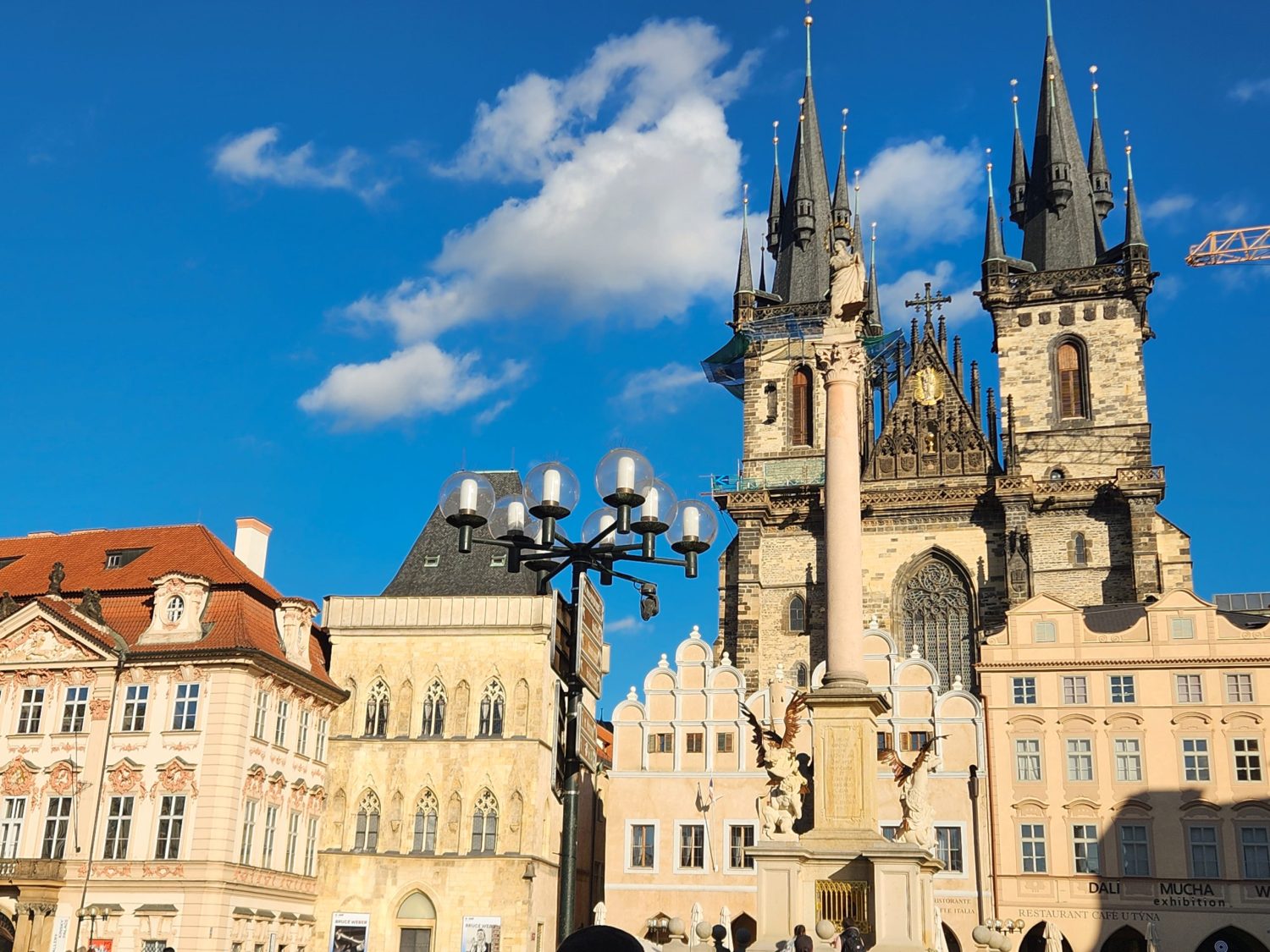
The Square itself dates from the 12th century, when it was the city’s main market place, book-ended by the imposing Church of Our Lady before Tyn and the Baroque Church of St Nicholas.
Look out for the monument to Czech reformer and national hero Jan Hus in the centre, near the 16m high Marian Column, itself erected to mark Prague’s escape from Swedish invading forces during the Thirty Years War.
You can also see the Rococo Kinsky Palace and the Gothic House at the Stone Bell among the notable buildings. And just around the corner from the astronomical clock you’ll find 27 crosses, marking the place where 27 Czech noblemen were beheaded in 1621, in one of the darker chapters of Prague’s history.
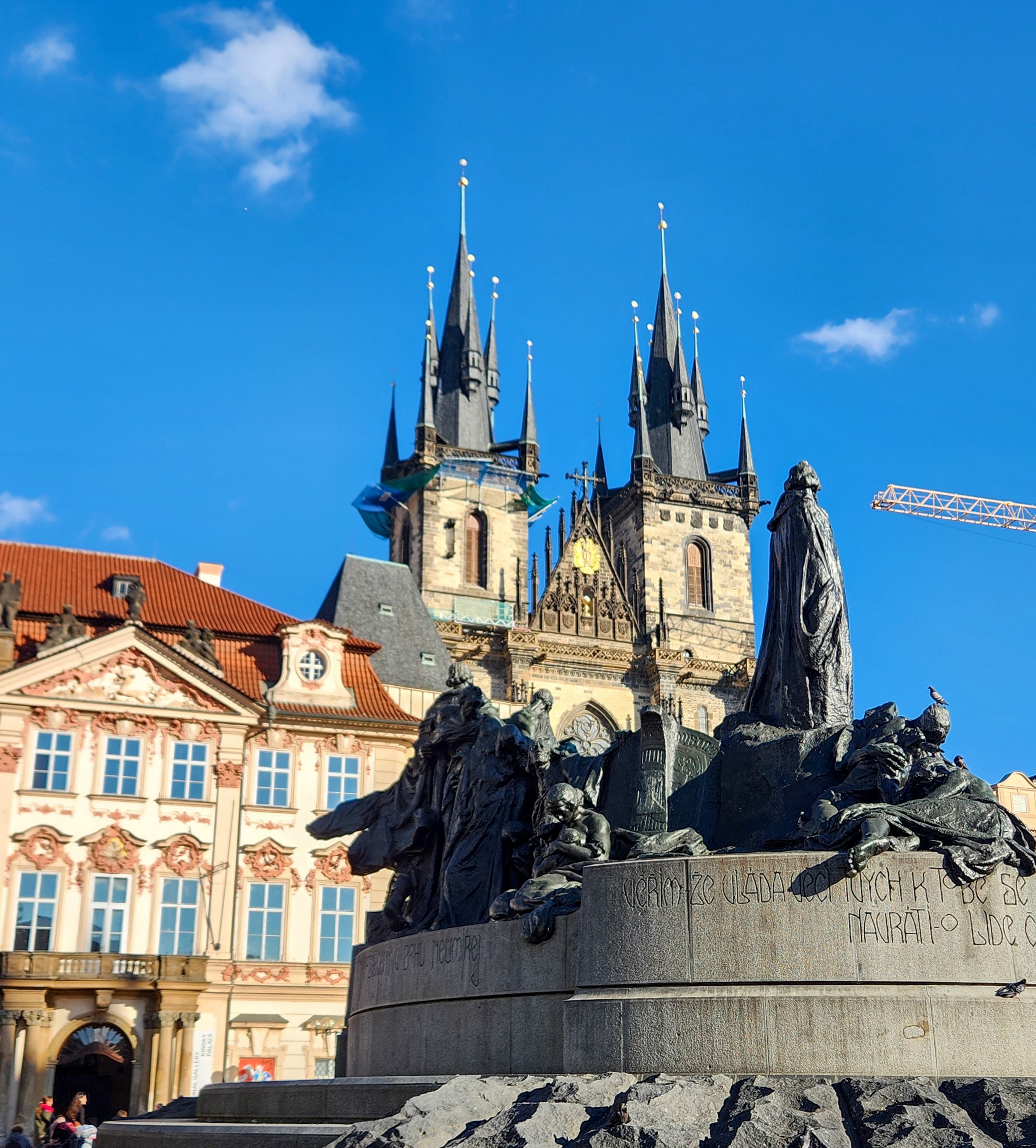
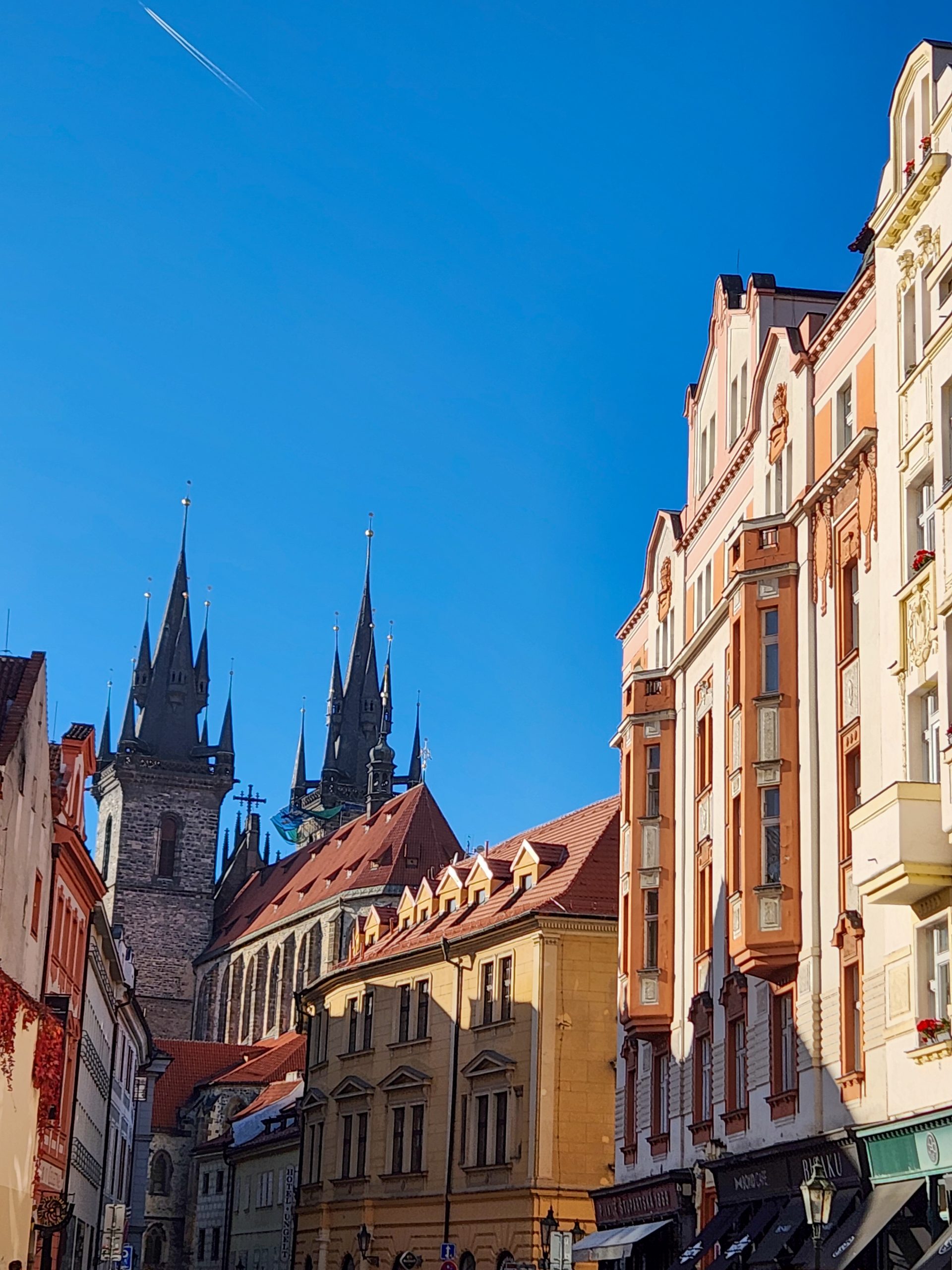
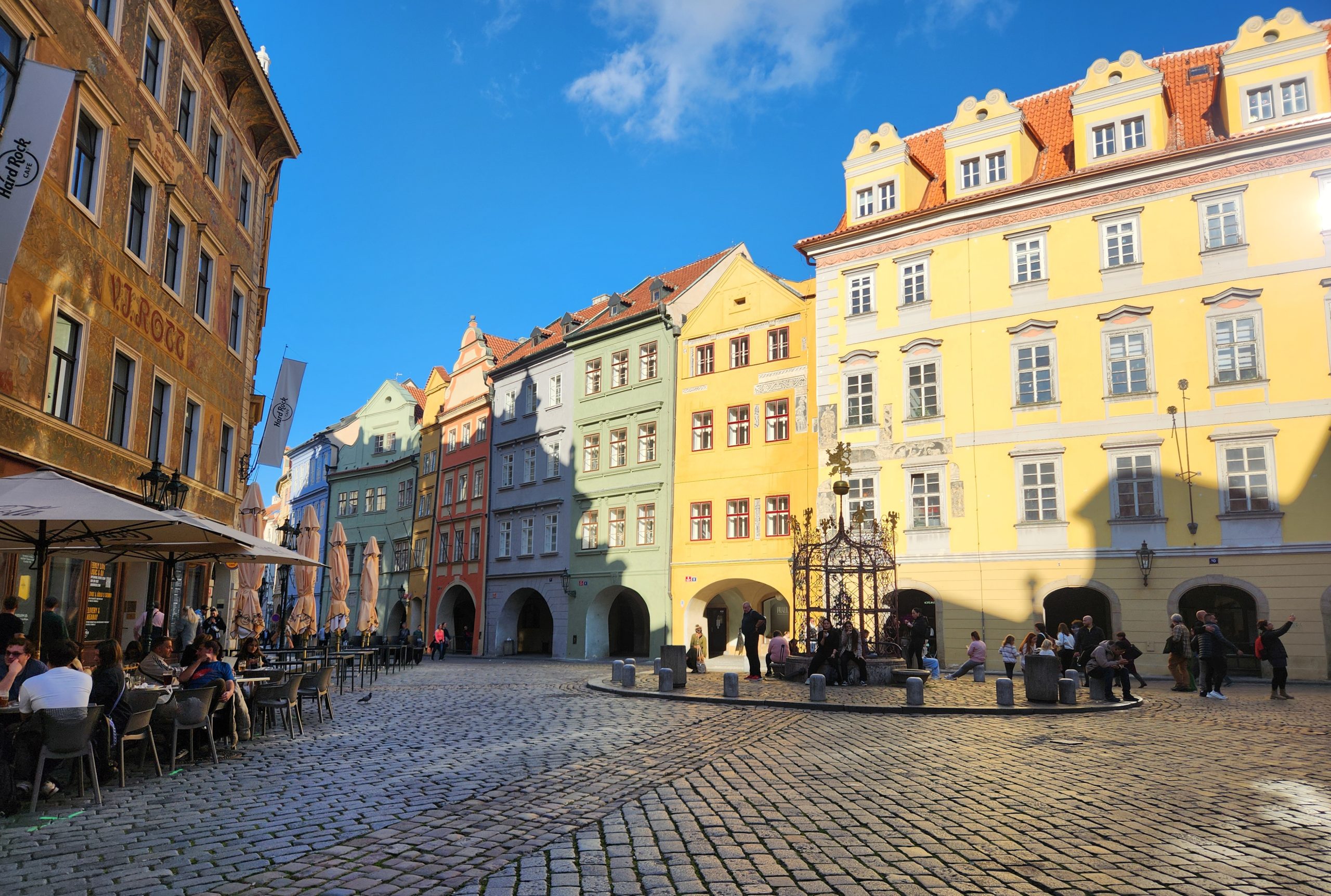
You can also find plenty of places to eat and drink here, lots with outdoor tables (and heaters for colder weather). The views are great, but the prices are distinctly touristy – stroll just a few streets away and the buildings are equally lovely and the prices less eye-watering.
Charles Bridge
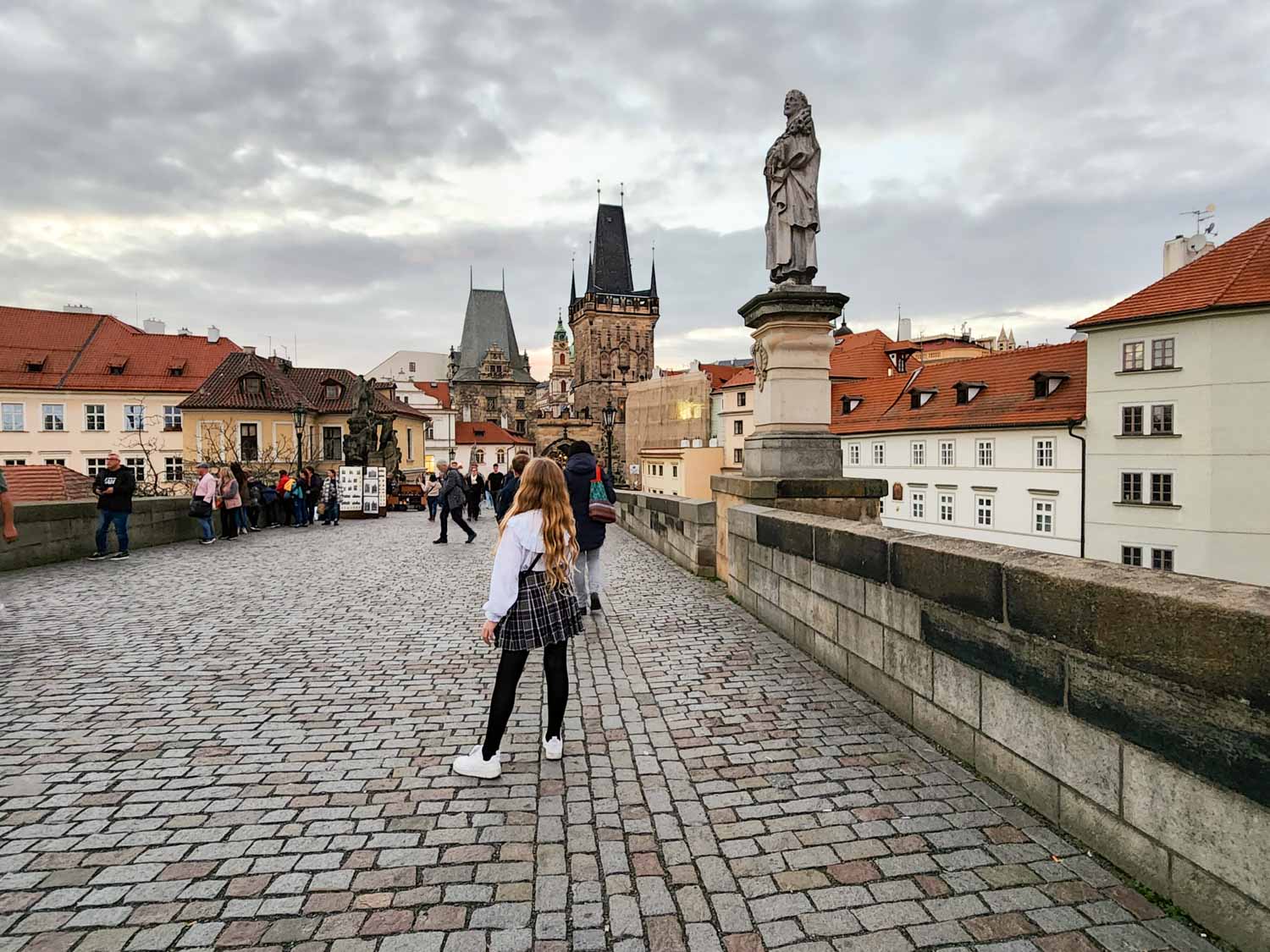
No visit to Prague is complete without a stroll across the Charles Bridge – it’s arguably the city’s most iconic landmark and one of the most beautiful medieval bridges in Europe.
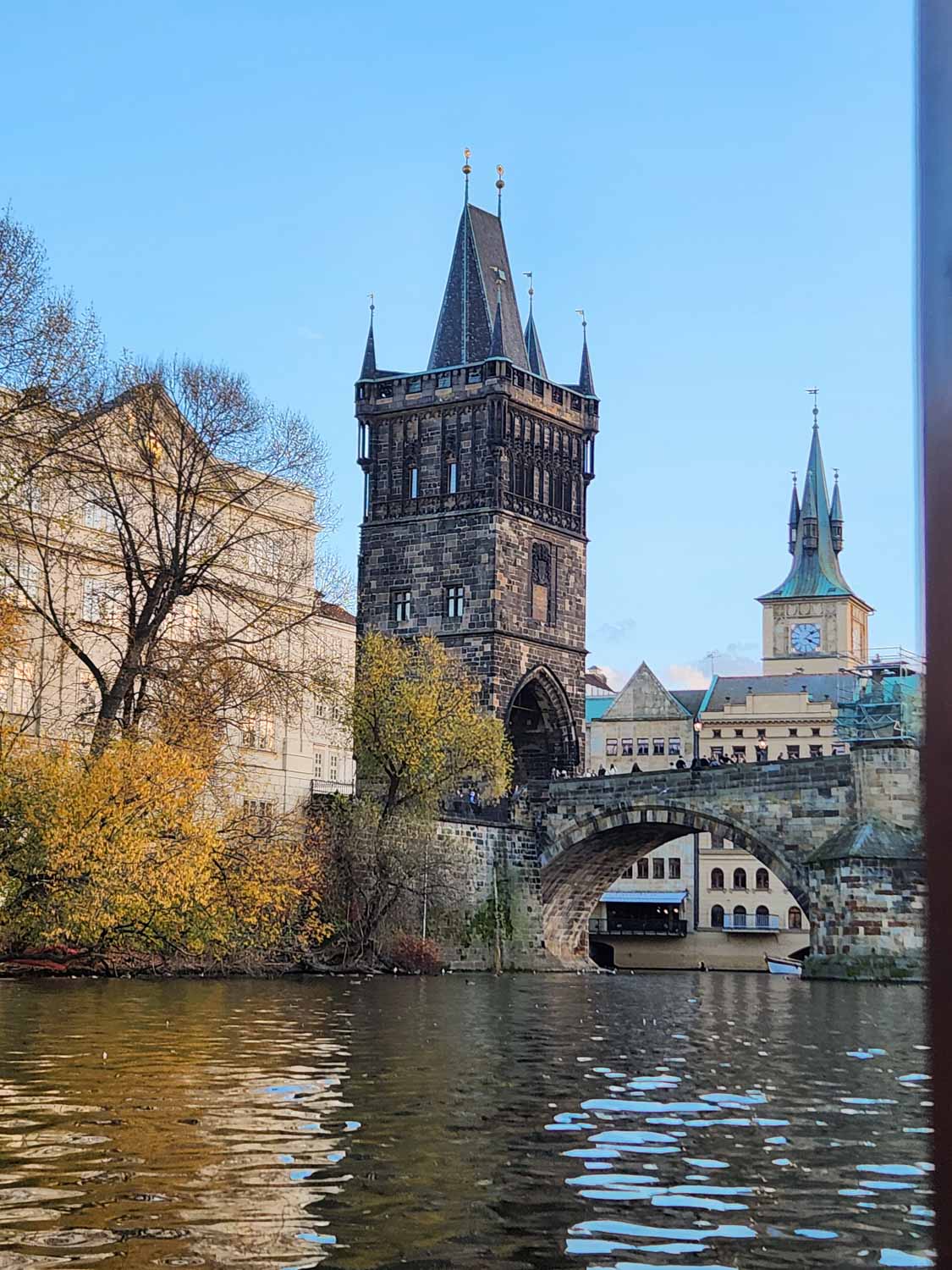
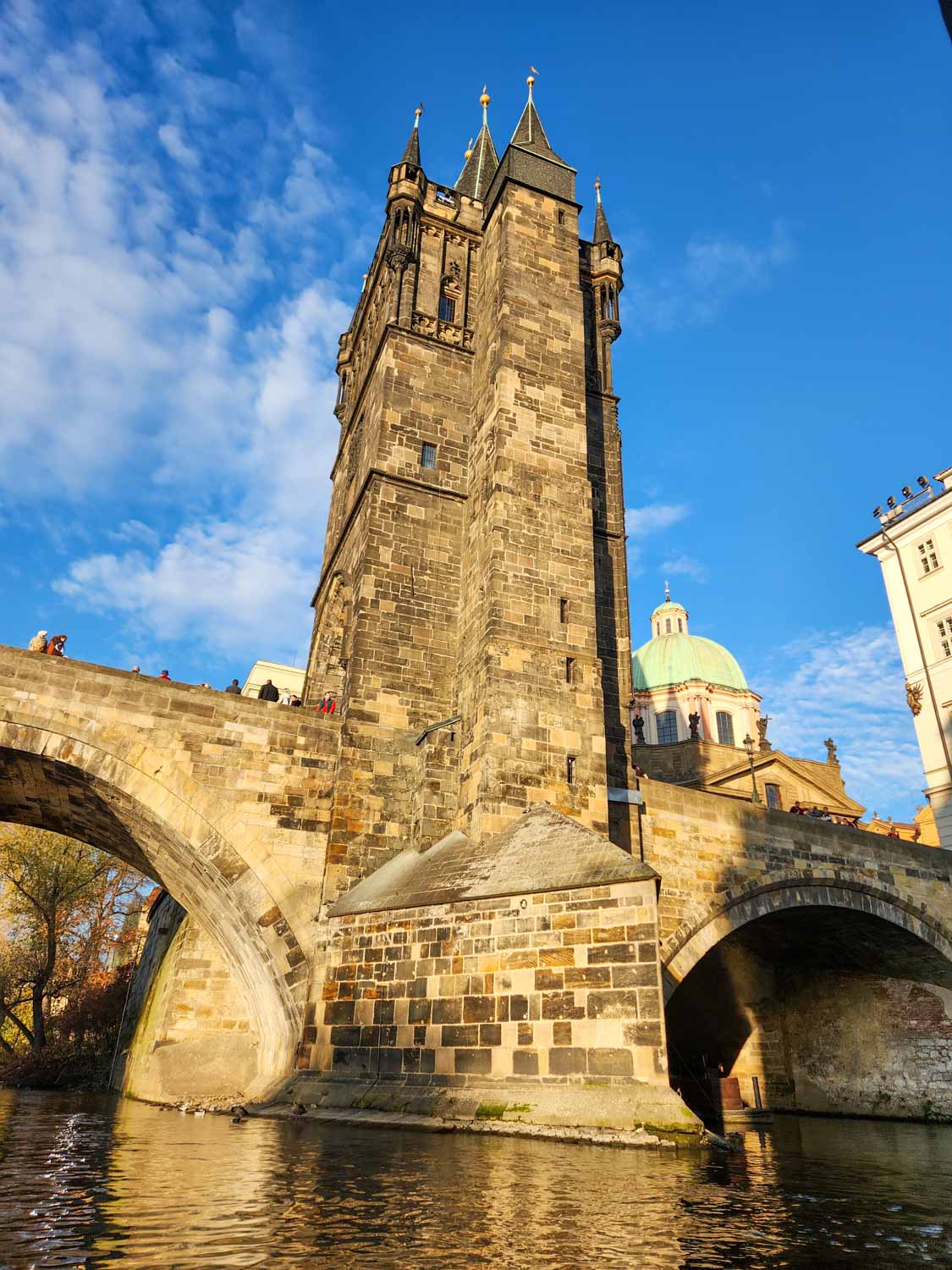
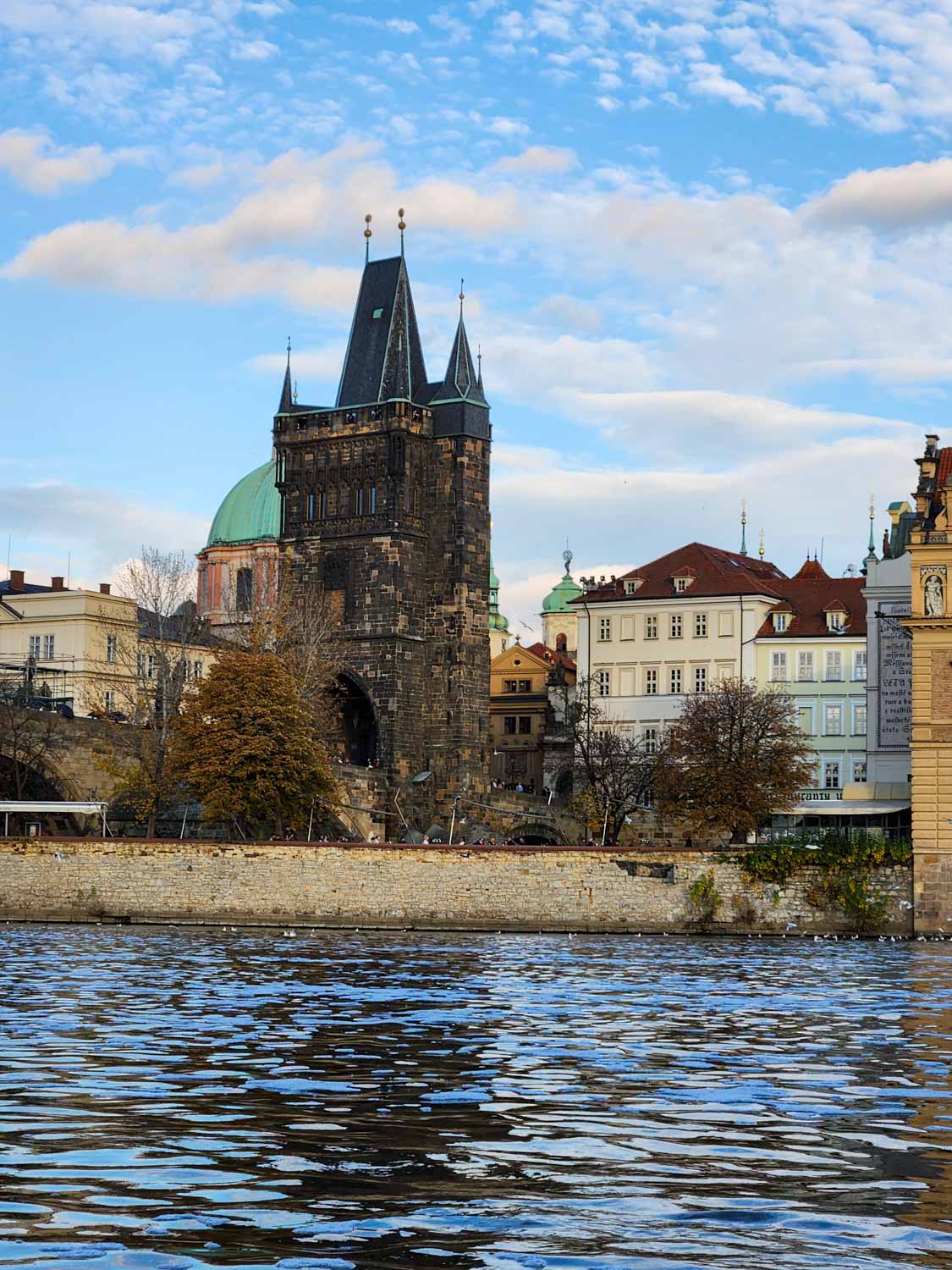
Crossing the Vltava River and connecting the Old Town with the Lesser Town, this Gothic bridge has been standing since 1402, and there are some spectacular views in both directions, with Prague Castle high above on one side and the spires of the Old Town on the other.
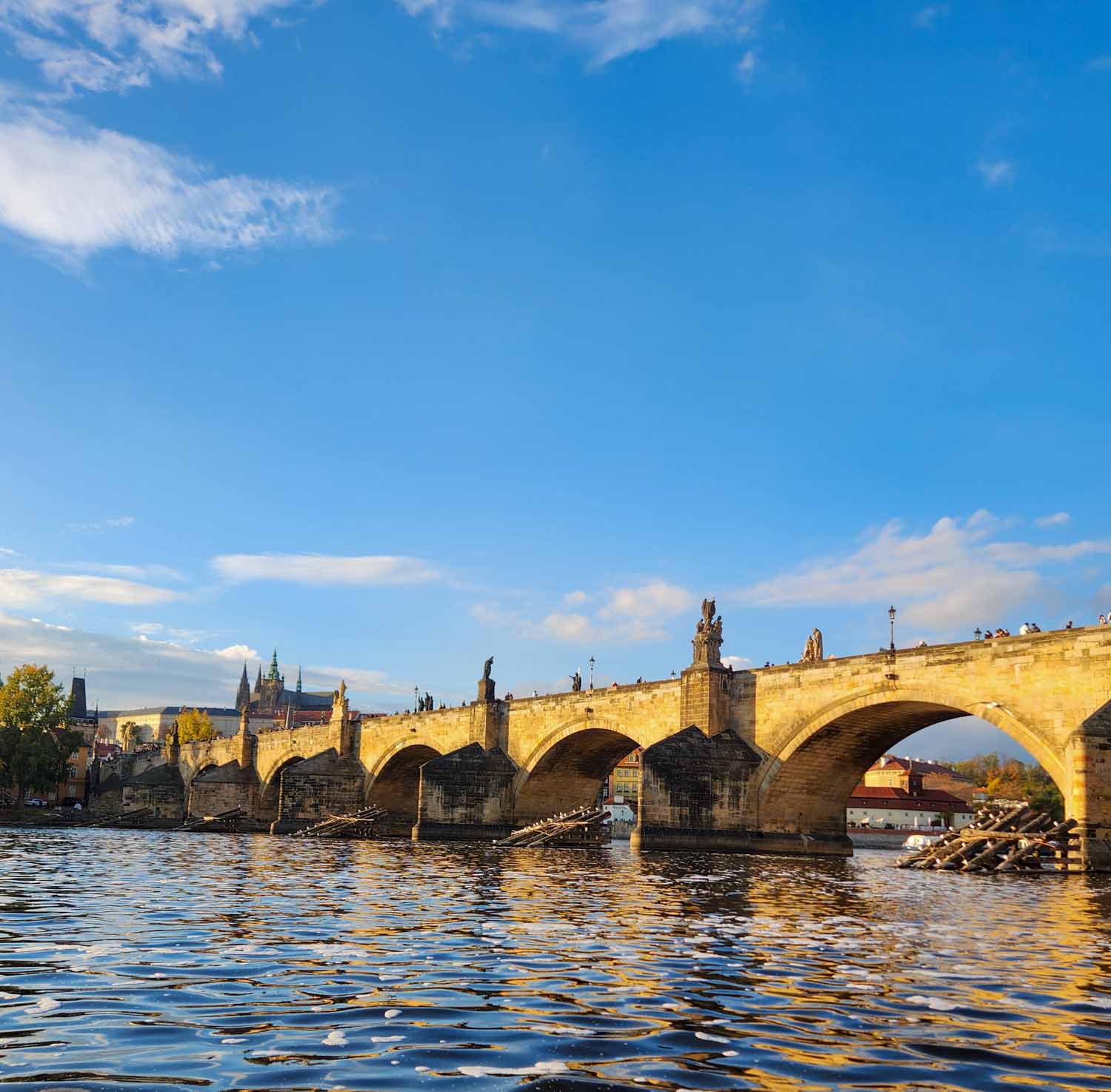
The bridge is lined with 30 Baroque statues and statuaries, most dating from the early 18th century, depicting various saints and religious scenes. The most famous is the statue of St John of Nepomuk – legend has it that touching the bronze plaque brings good luck and guarantees your return to Prague, which explains why it’s been rubbed shiny by countless hands over the years.
The bridge itself is pedestrianised, and you’ll find a string of street artists, musicians and little stalls (especially jewellery) but you can find huge crowds trying to cross during the day, so it’s best to get there bright and early or visit at sunset for a slightly more peaceful experience.
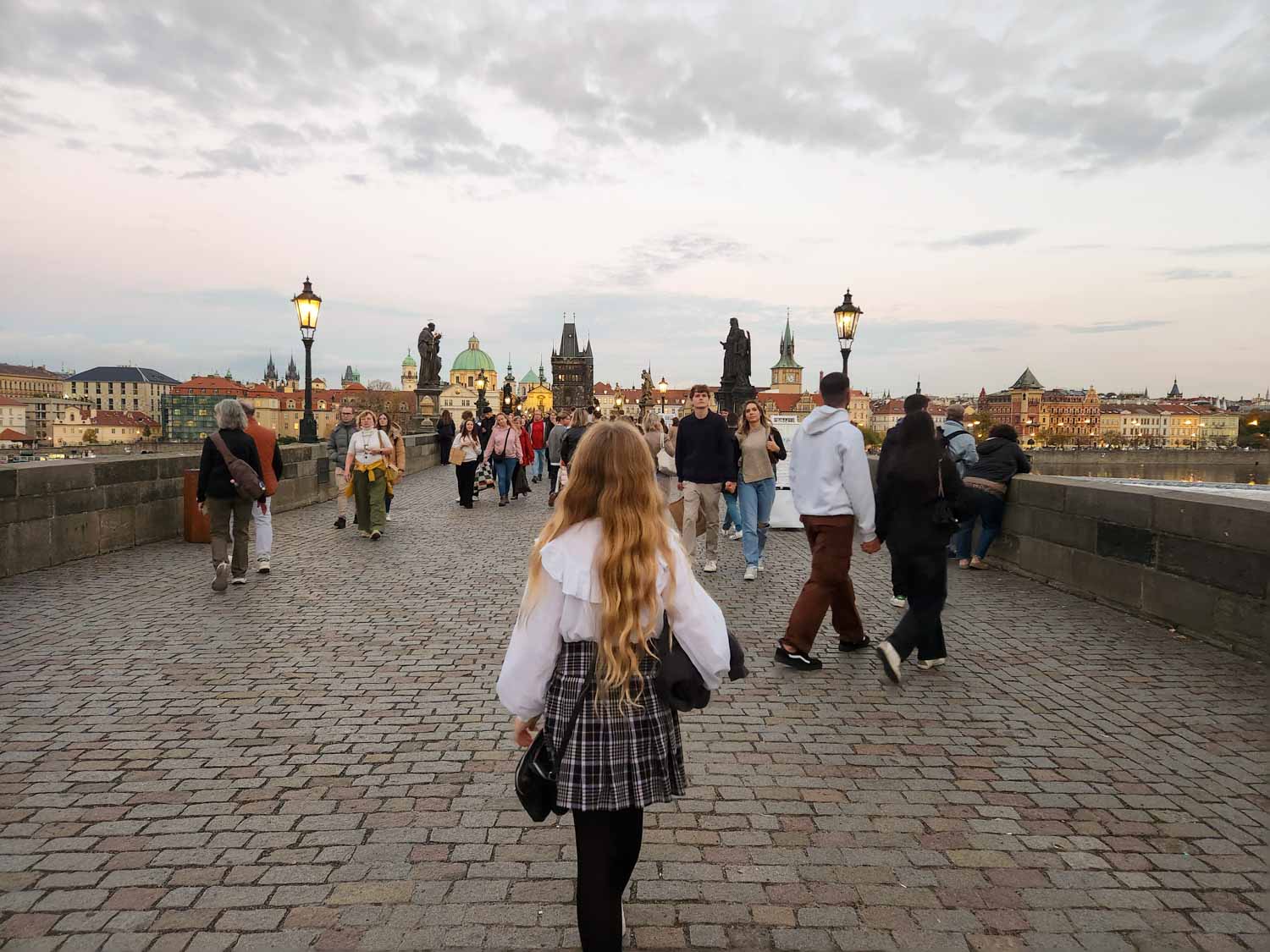
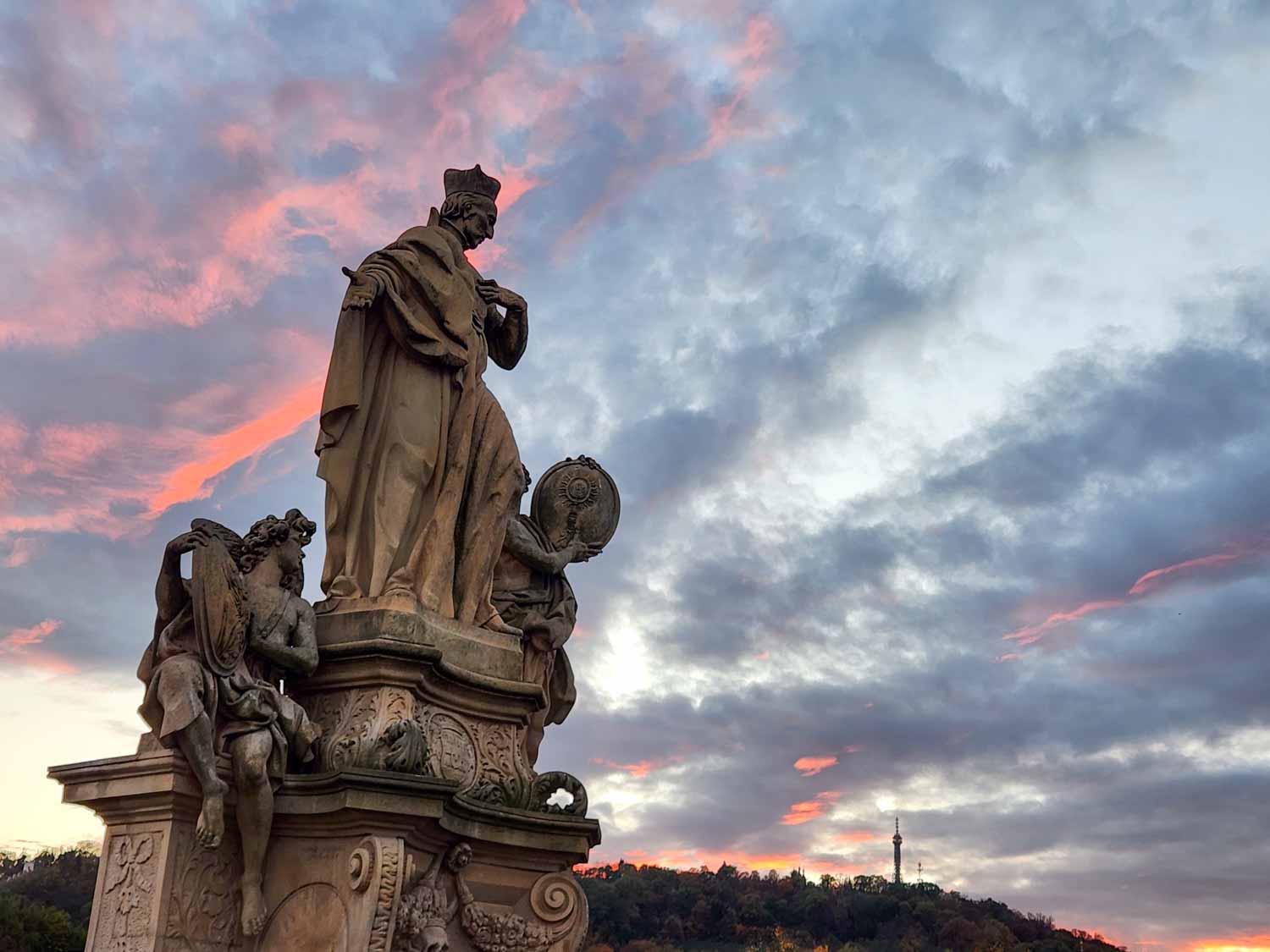
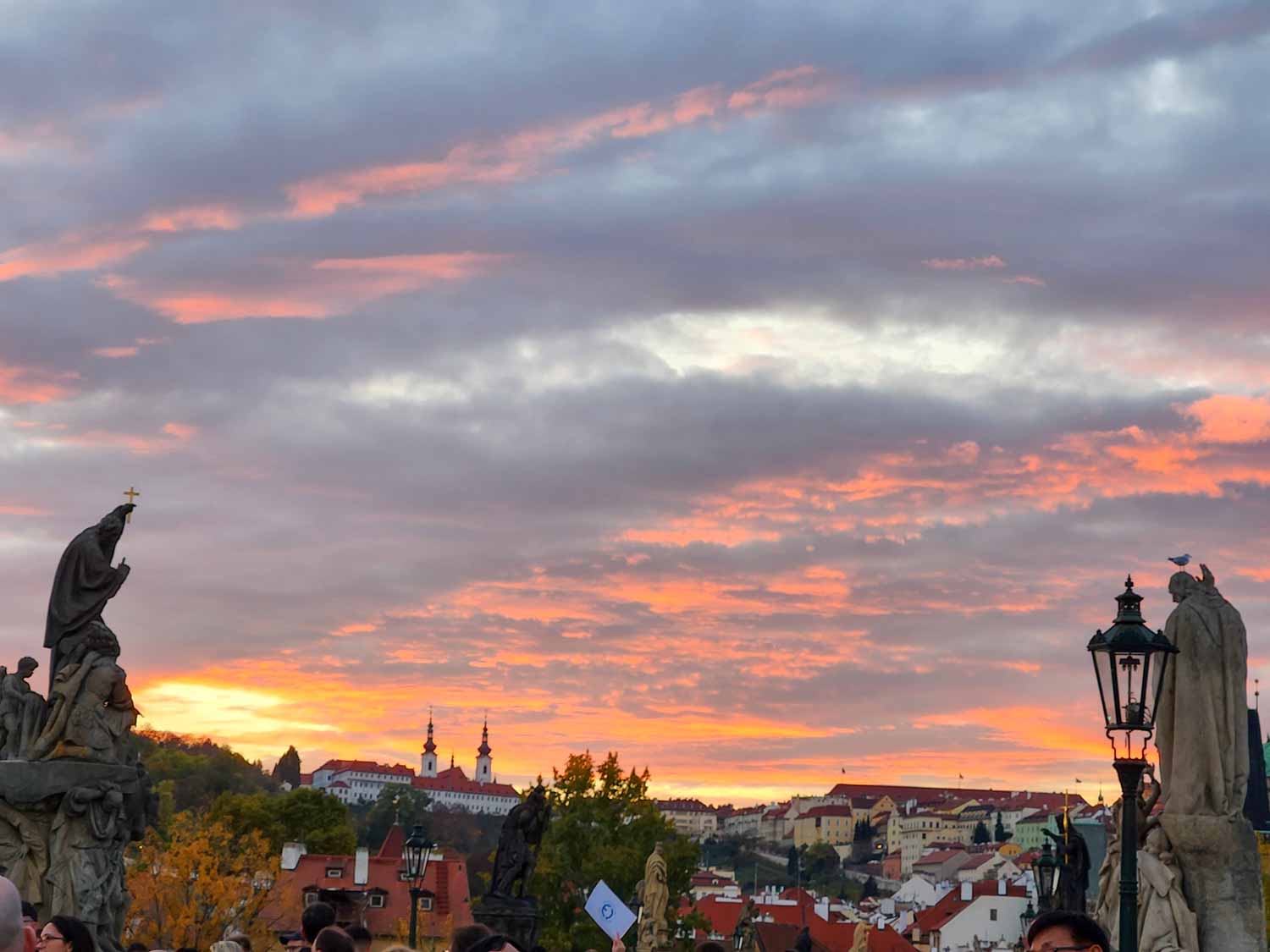
If you want a truly quiet and more atmospheric visit, sunrise outside the peak months is probably the best bet, so otherwise be prepared to share! If you are visiting in winter, there’s often mist in the early mornings which gives an added fairytale feel, as well as snow in January.
The bridge towers at either end are worth exploring too – you can climb the Old Town Bridge Tower for more wonderful views along the bridge and across the river. It’s 138 steps to the top, but well worth the climb, particularly at sunset when the light turns golden. This ticket lets you climb both towers – plus there’s a small discount if you book through my link.
Do watch out for pickpockets in the crowds – this is one of Prague’s busiest tourist spots, so keep valuables secure and bags zipped up.
Charles Bridge Museum
If you’ve fallen in love with the Charles Bridge (and who doesn’t?), there’s a chance to learn more about its history and construction at the Charles Bridge Museum.
Tucked away near the bridge itself, this small but unexpectedly engaging museum uses models, multimedia displays and archaeological finds to tell the story of how the bridge came to be.
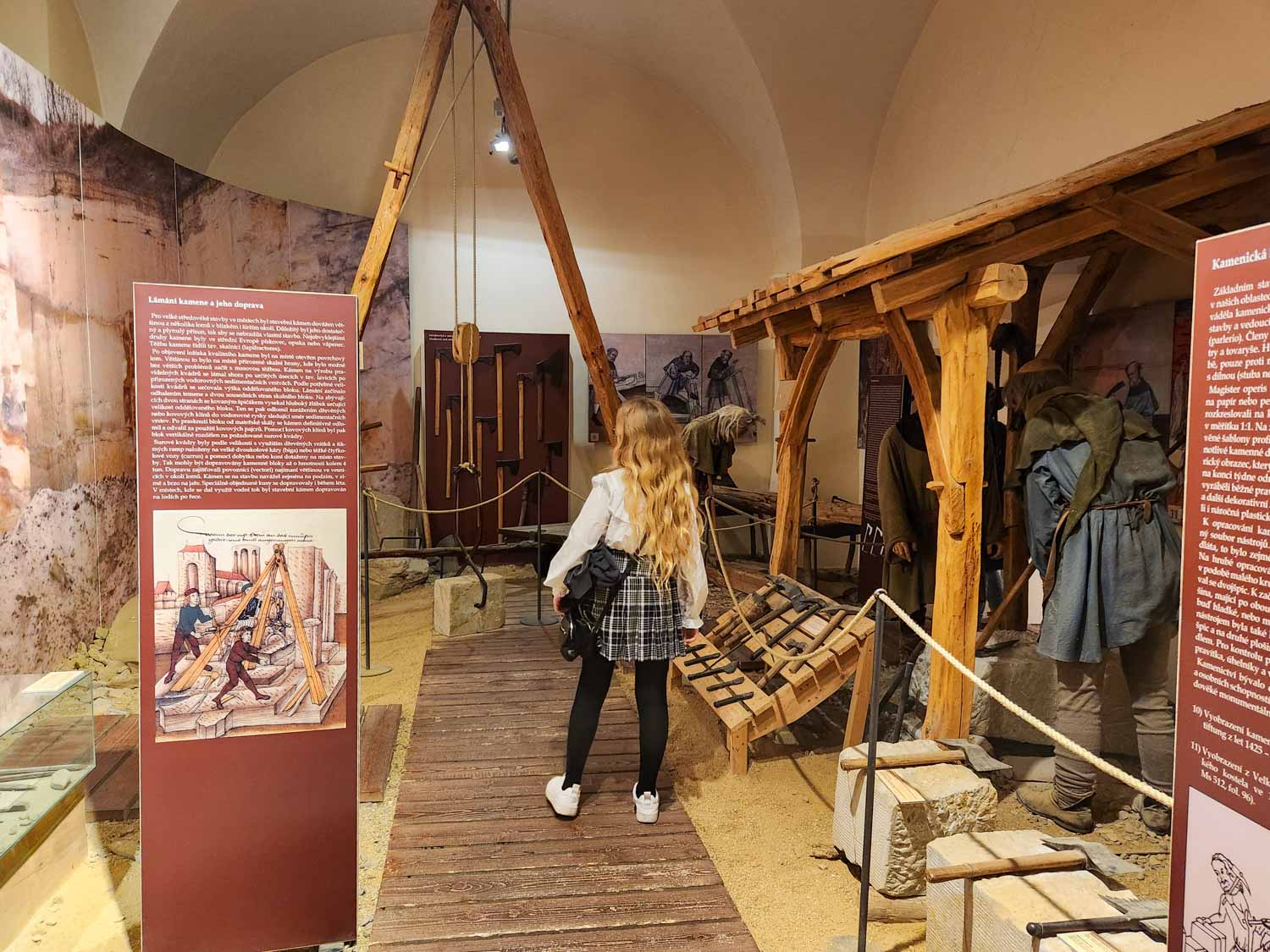
You’ll discover how medieval engineers managed to build such an enduring structure without modern technology, and learn about the various floods, wars and disasters the bridge has survived over its long history.
The highlight is definitely the detailed scale model showing the bridge’s construction process, which really brings home the incredible engineering feat this represented in the 14th century. There are also exhibits about the famous statues, explaining their symbolism and the stories behind them too.
The museum also displays some of the original stonework and architectural fragments from the bridge, giving you a close-up look at the craftsmanship that’s usually high above your head on the bridge itself. Plus there are a few small interactive elements demonstrating the medieval building techniques.
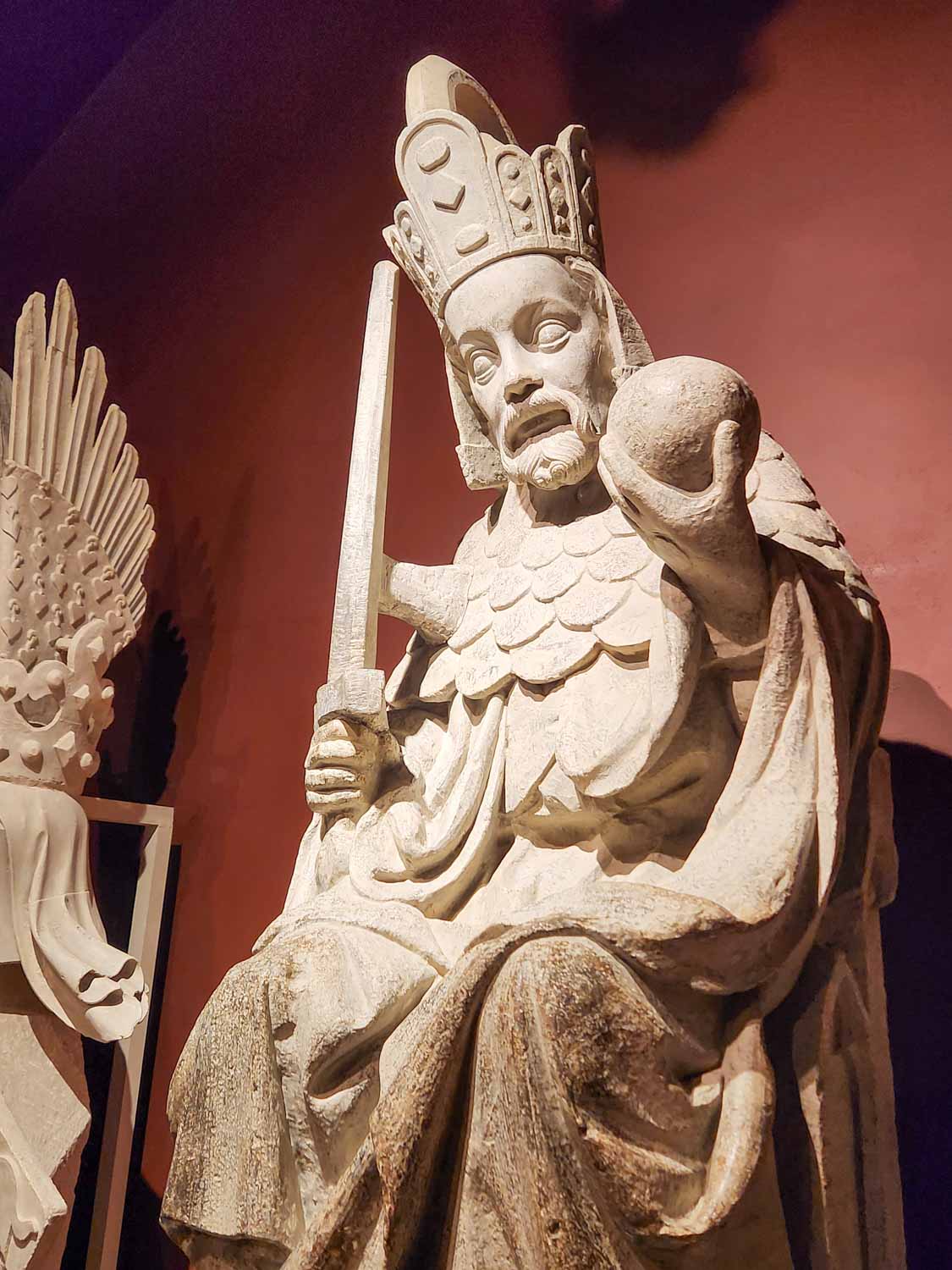

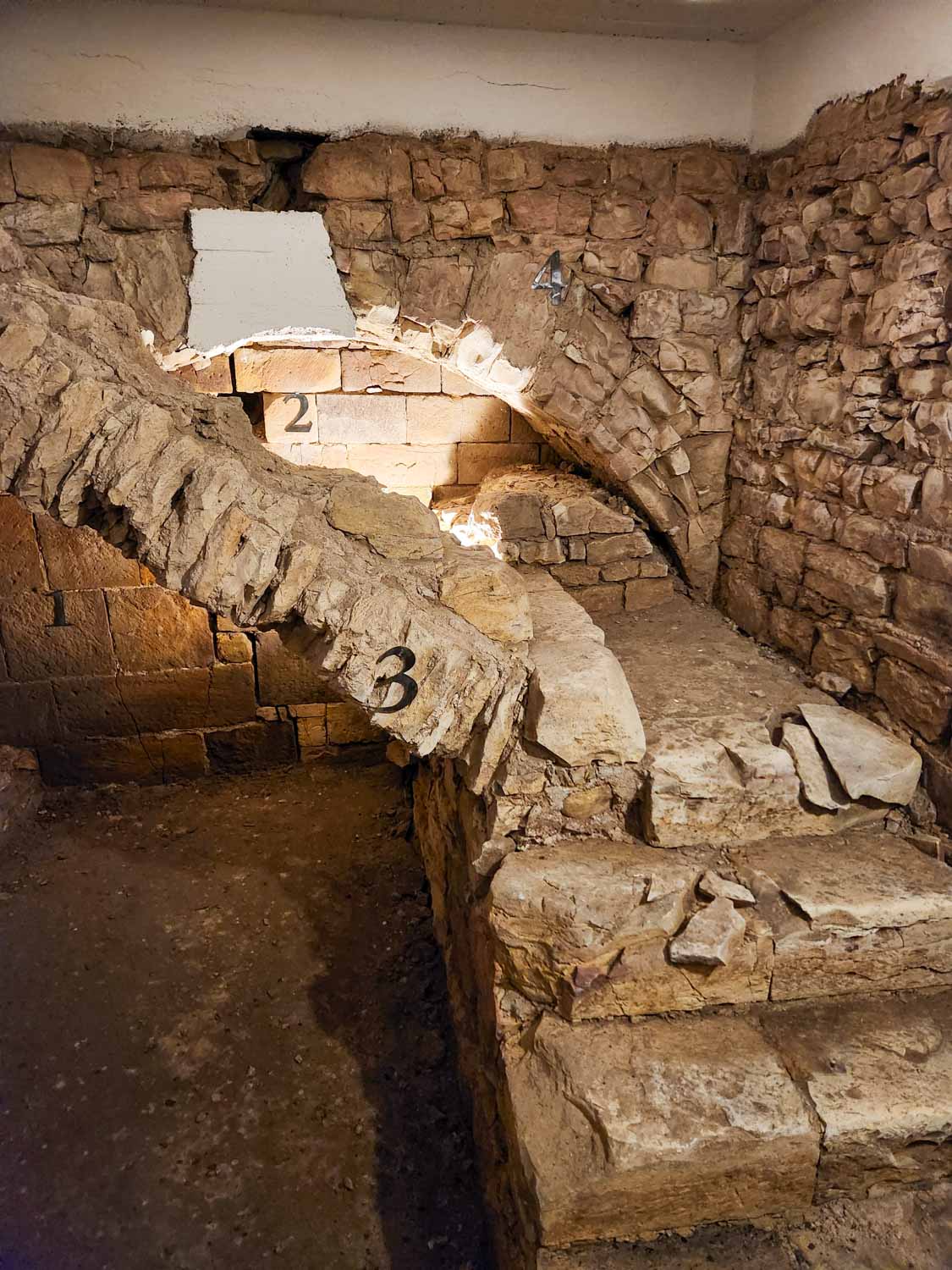
It’s not a huge museum so you can easily explore everything in less than half an hour – our boat trip tickets included entry, as well as to two other museums, so there’s no need to spend ages to get your money’s worth.
It’s worth visiting before you walk across the bridge, as it gives you a new appreciation of what you’re standing on, although not essential.
The Prague Visitor Pass includes entry to 70+ attractions including the Charles Bridge Museum and bridge towers, as well as public transport – get a small discount if you book using my link
Story of Prague experience
For a completely different way to discover Prague’s thousand-year history, the Story of Prague is the perfect start to a holiday in Prague with kids, an immersive multimedia experience to bring the city’s past to life.
Set just off Wenceslas Square and near Charles Bridge, the interactive exhibition uses holograms, projections, and touchscreen displays to guide you through Prague’s most important historical moments – from its founding legends to the Velvet Revolution and beyond.
While this sort of attraction can often be a bit kitschy, we loved the way this used technology to make the history so entertaining. You’re not just reading information panels – you’re watching battles unfold, seeing buildings rise and fall, and experiencing key events through multiple senses.
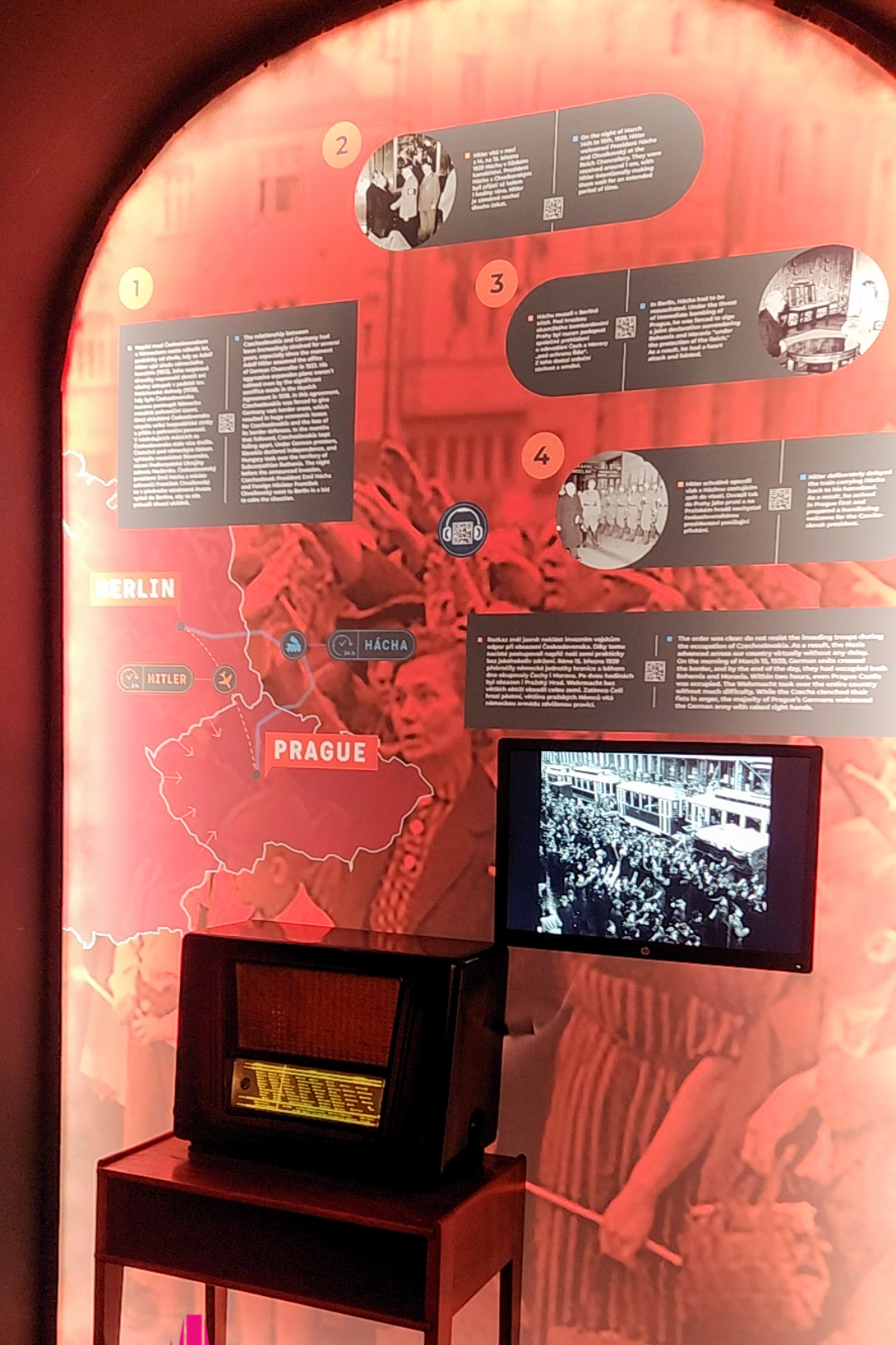

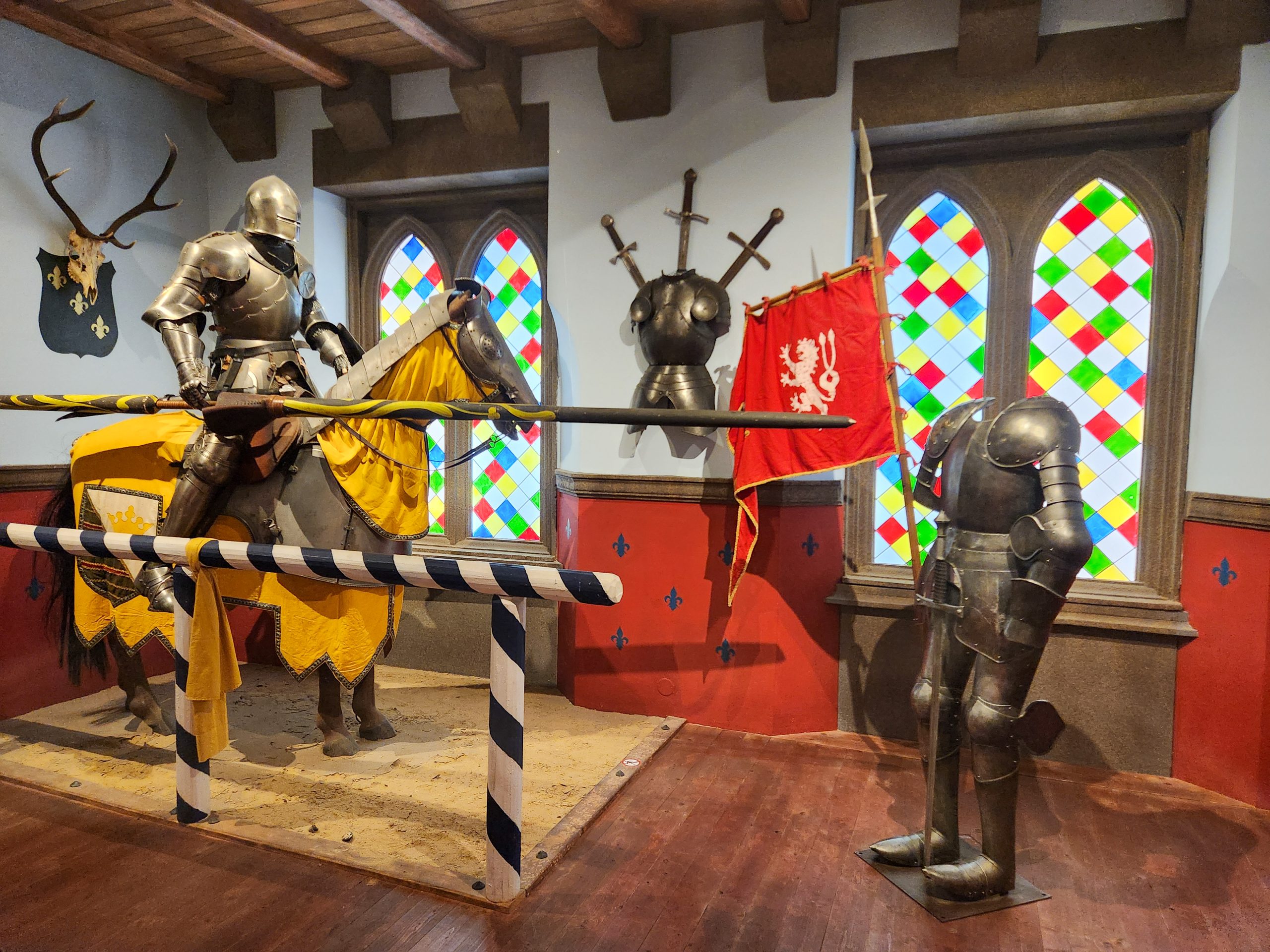
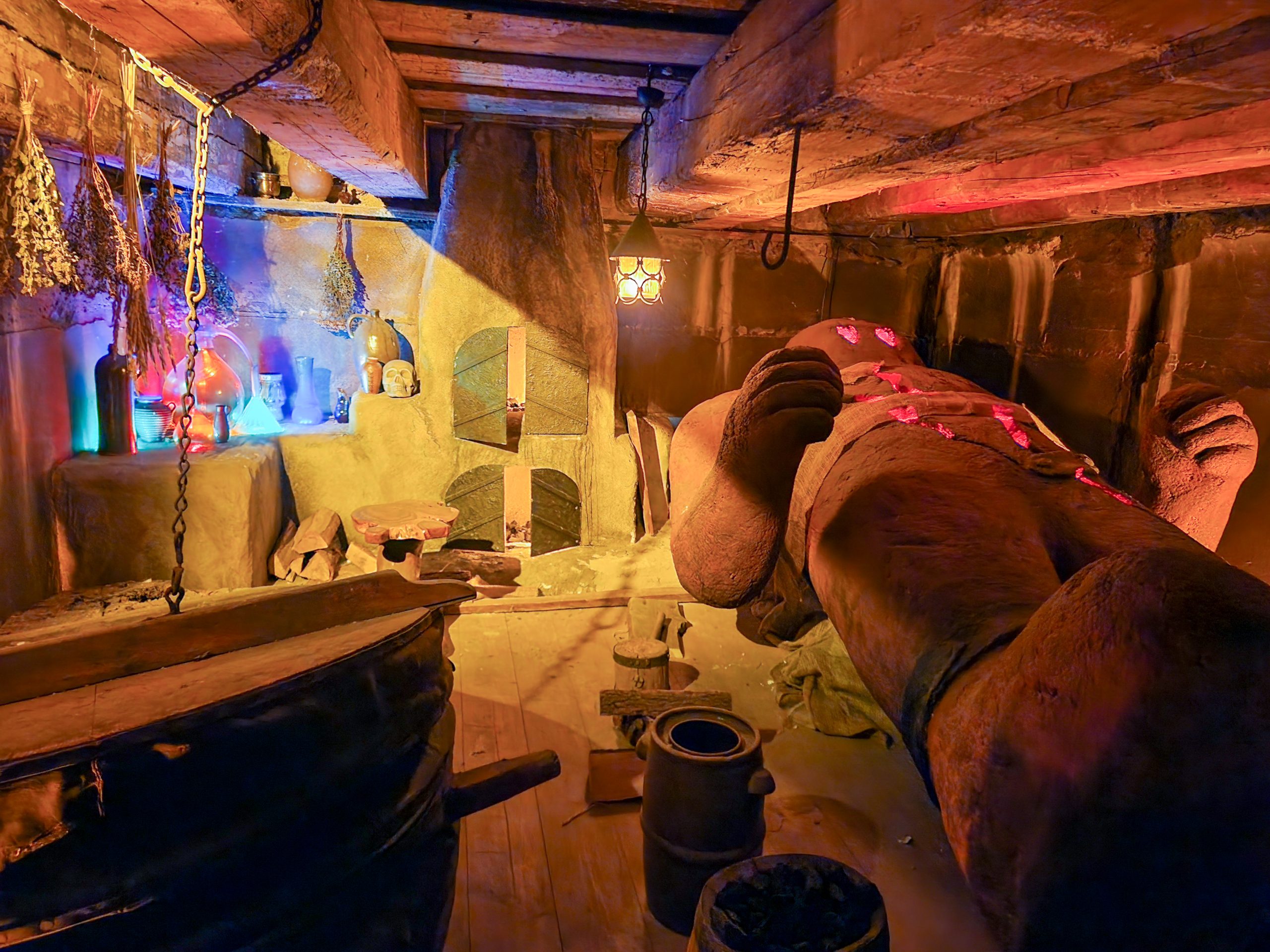
Because it’s so interactive, it’s a hit with kids (as well as adults), but you’re also getting a great introduction to Czech history without feeling like you’re sitting through a long lesson.
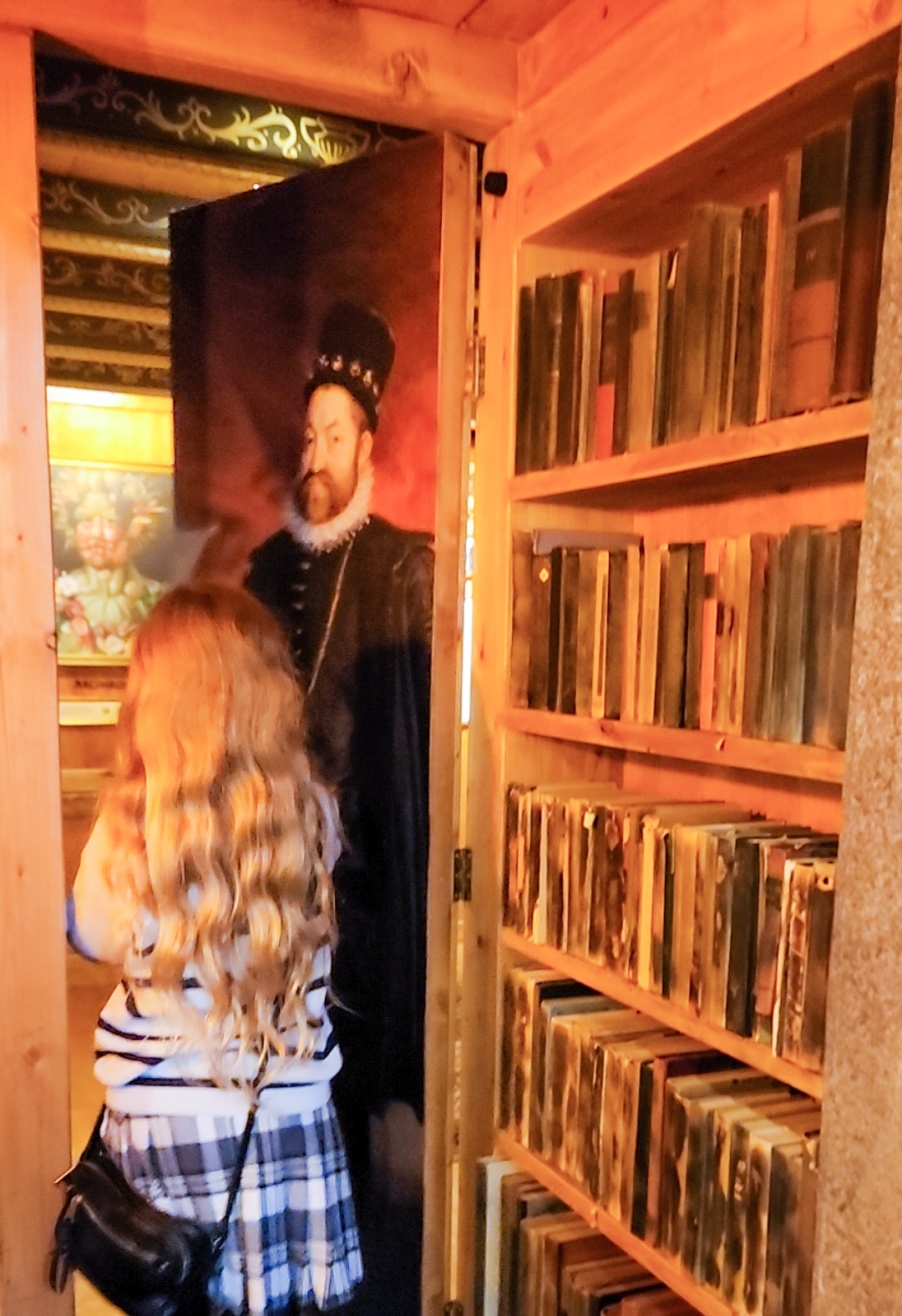
Split over three floors, the exhibition includes the recent past, including a room on the 90s in Prague, but also whisks you through medieval times (don’t miss the hidden chamber of Rudolf II), as well as the Second World War and Communism behind the Iron Curtain.
You’ll need to download the app onto your phone (a portable charger is also a very good idea!) although headphones are provided if you don’t have your own and you may be able to borrow headphone splitters if you’re using a single phone. Allow around 90 minutes to explore.
Buy tickets with free cancellation here, or you can also get a small discount if you book tickets using my link
Boat trip on the Vltava river
One of my favourite activities in Prague for families is taking a short cruise along the Vltava River – ours lasted 45 minutes but we seemed to pack a surprising amount in, so it’s easily one of the top things to do in Prague.
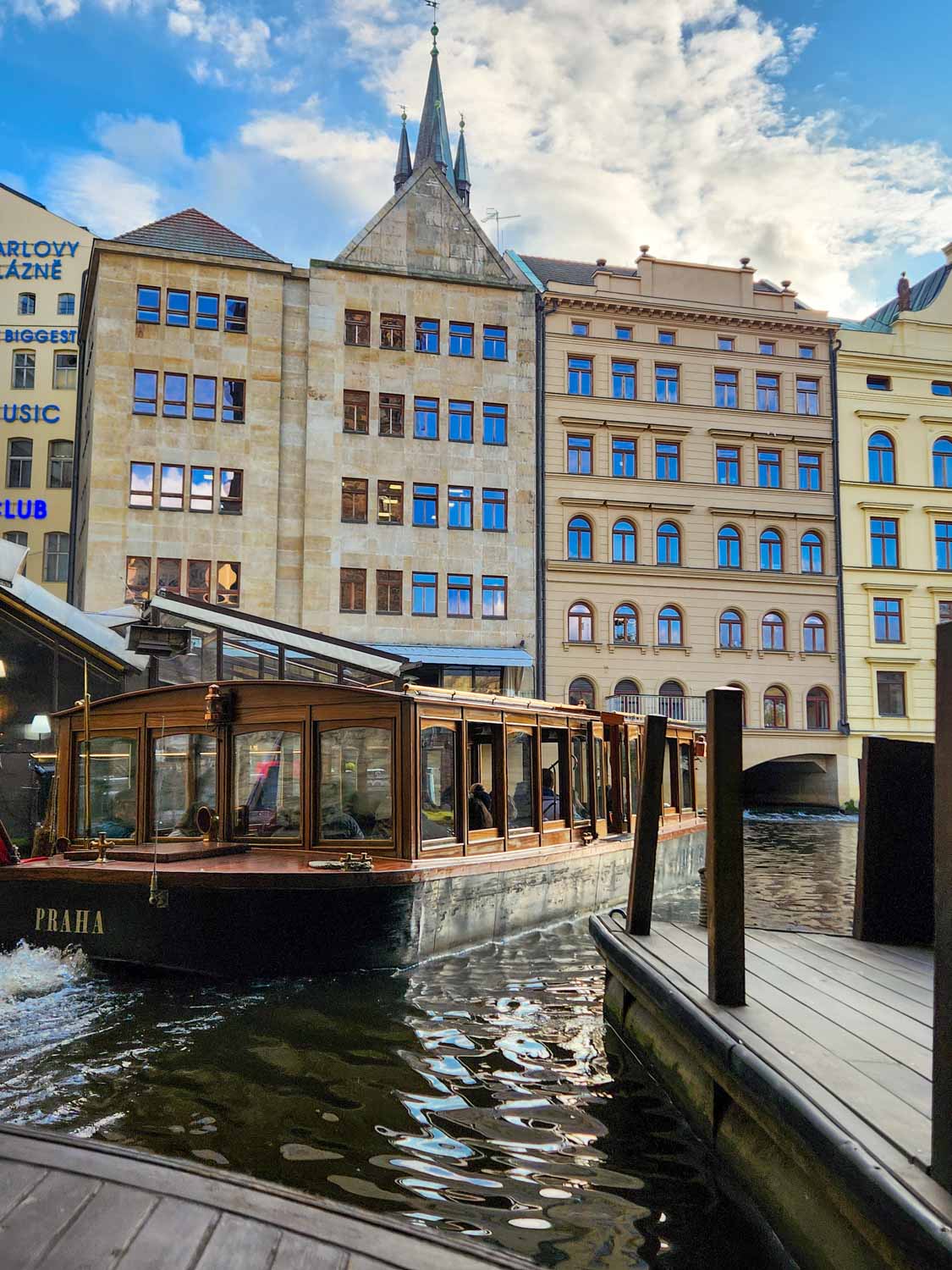
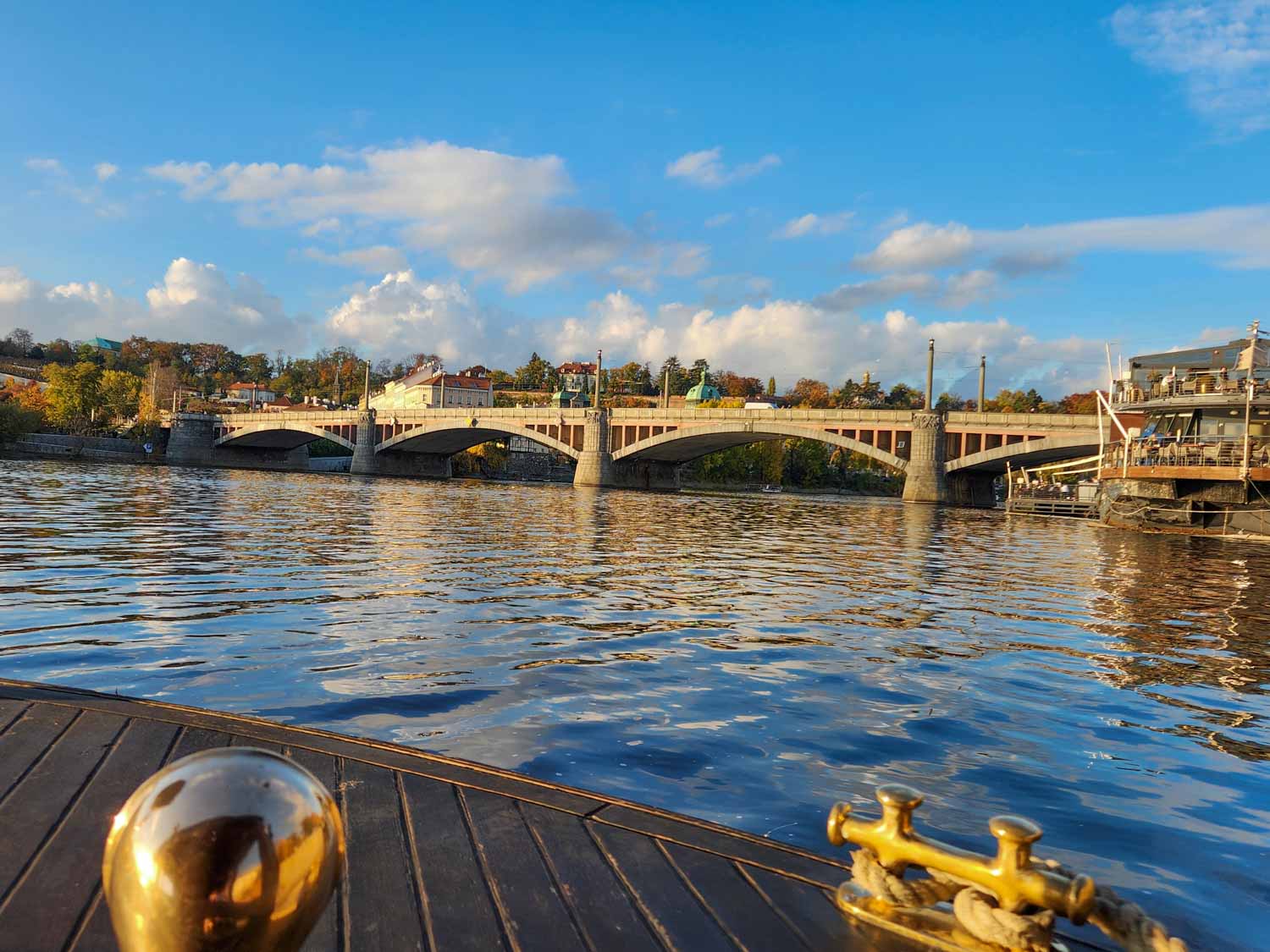
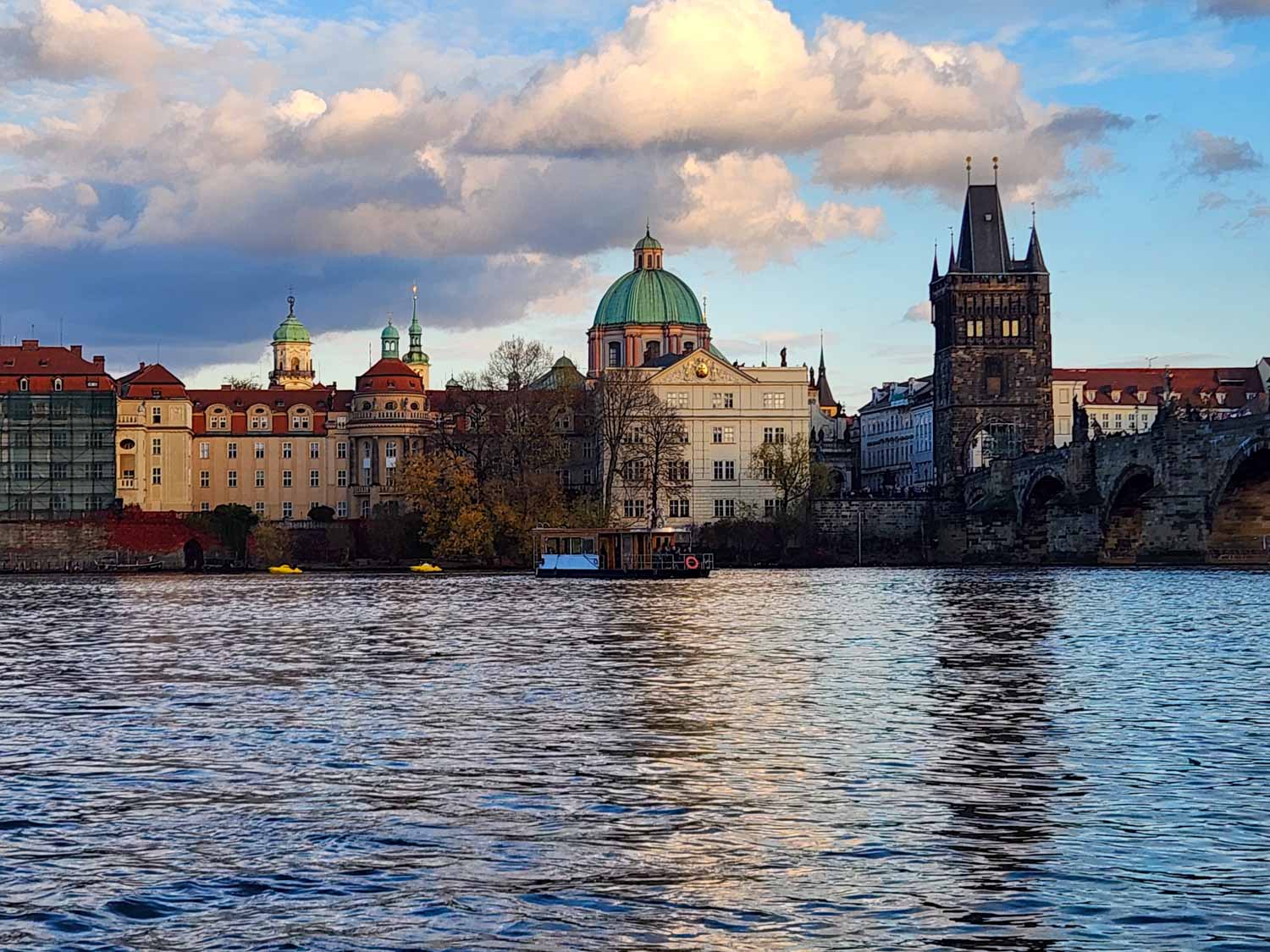
Seeing Prague from the water gives you chance to enjoy the city panoramas, as well as being one of the most relaxing ways to sightsee.
There’s usually some commentary, so you know what you’re seeing, and lots of great views of some city landmarks including the castle and cathedral, the Charles Bridge, the opera house, and the National Theatre. And on a sunny autumn day like ours, the golden light was spectacular, gilding the river and the rooftops.
You’ll find a whole string of Vltava cruises, ranging from shorter trips to longer lunch cruises or dinner cruises, as well as sunset sailings, but I think the shorter daytime cruises are ideal with kids – long enough to enjoy, short enough that no-one gets bored.
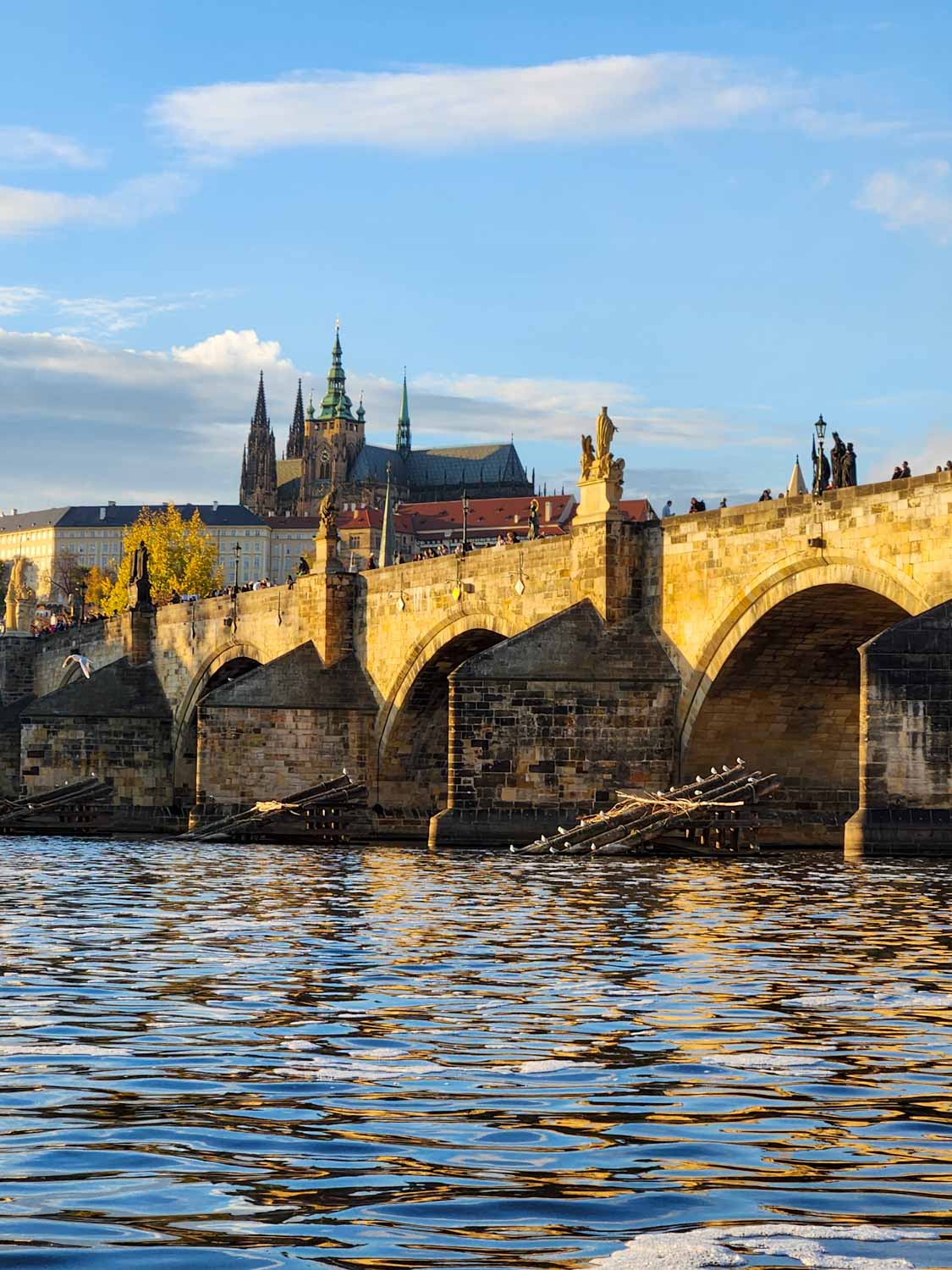
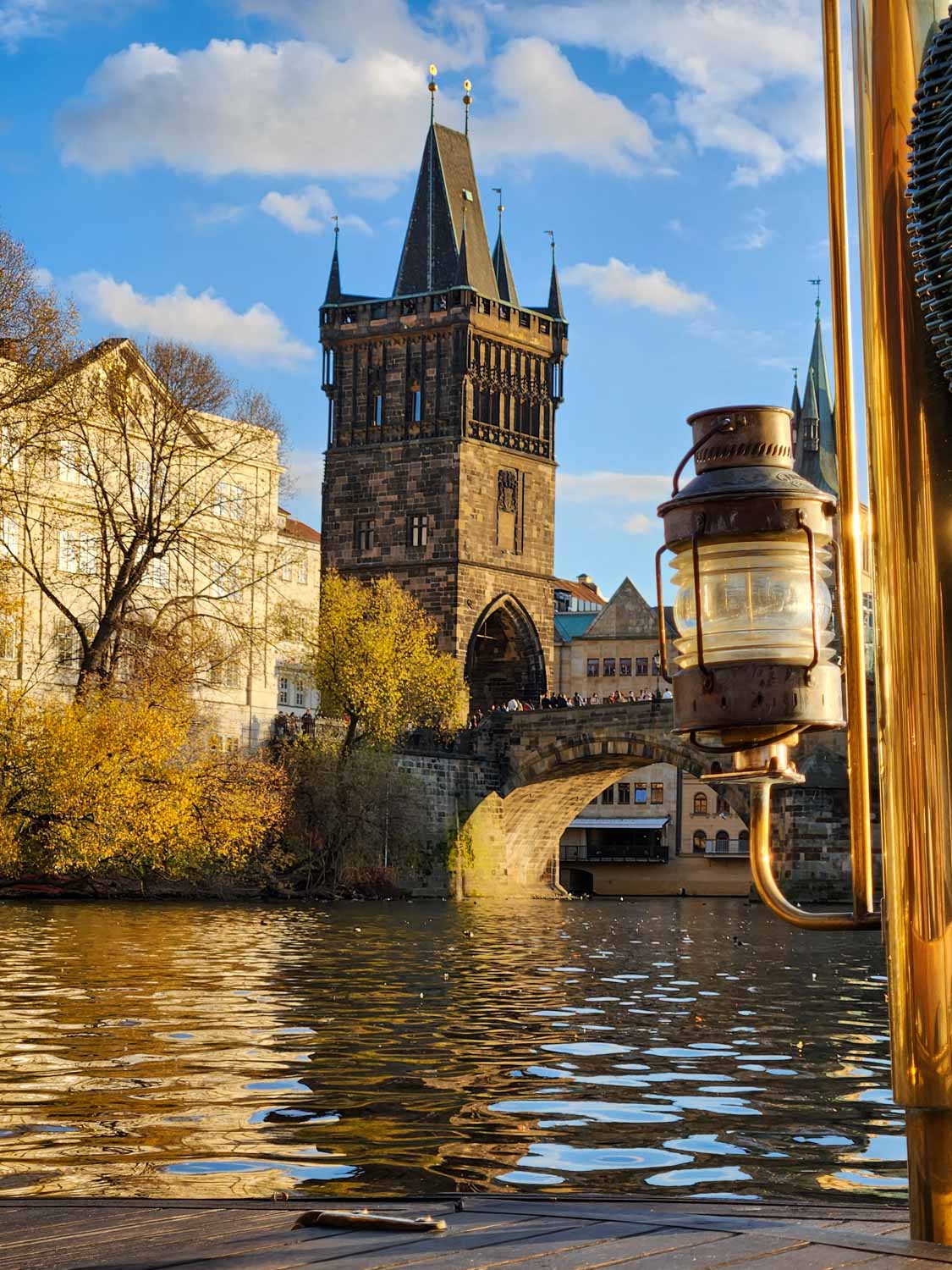
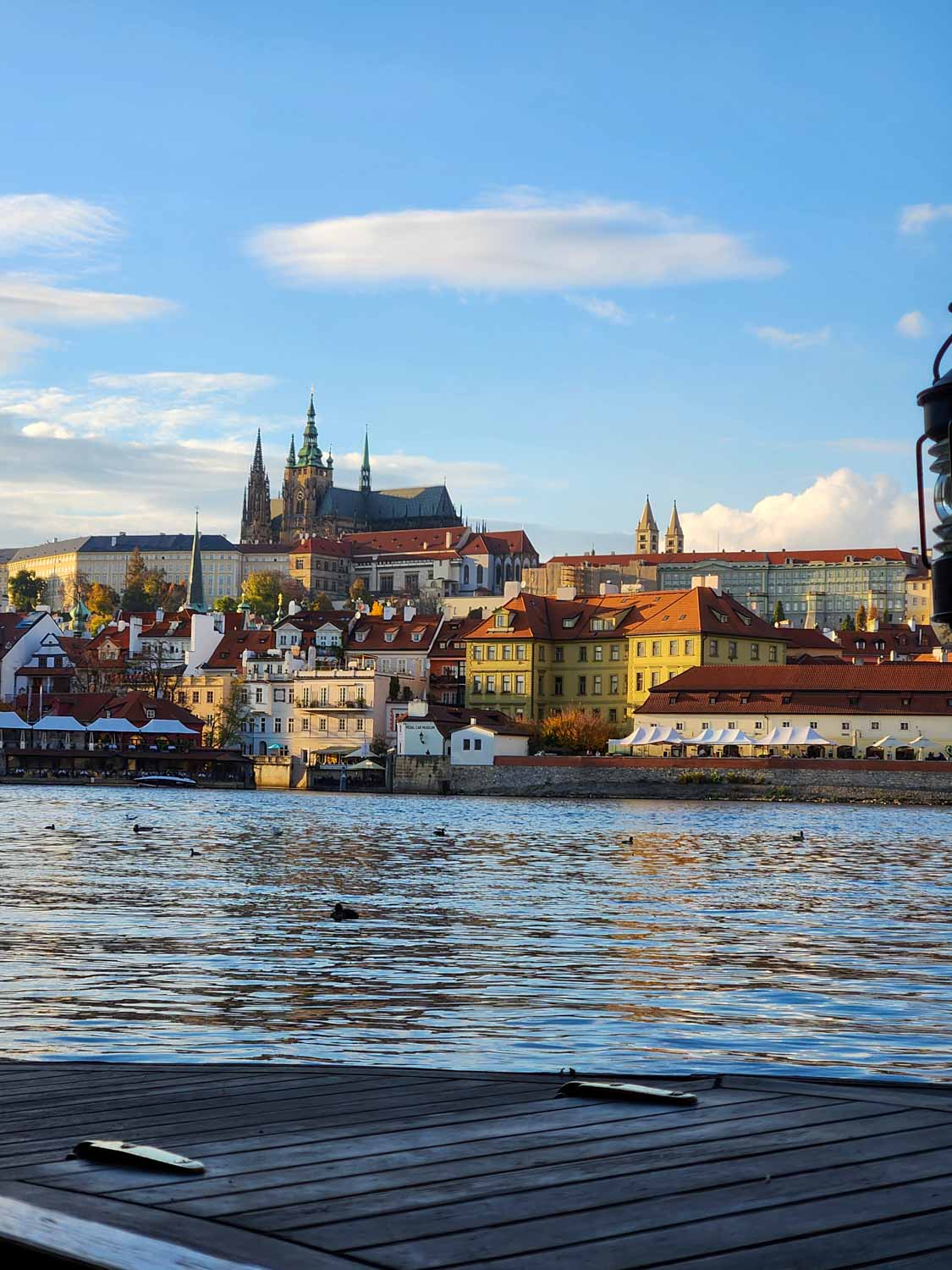
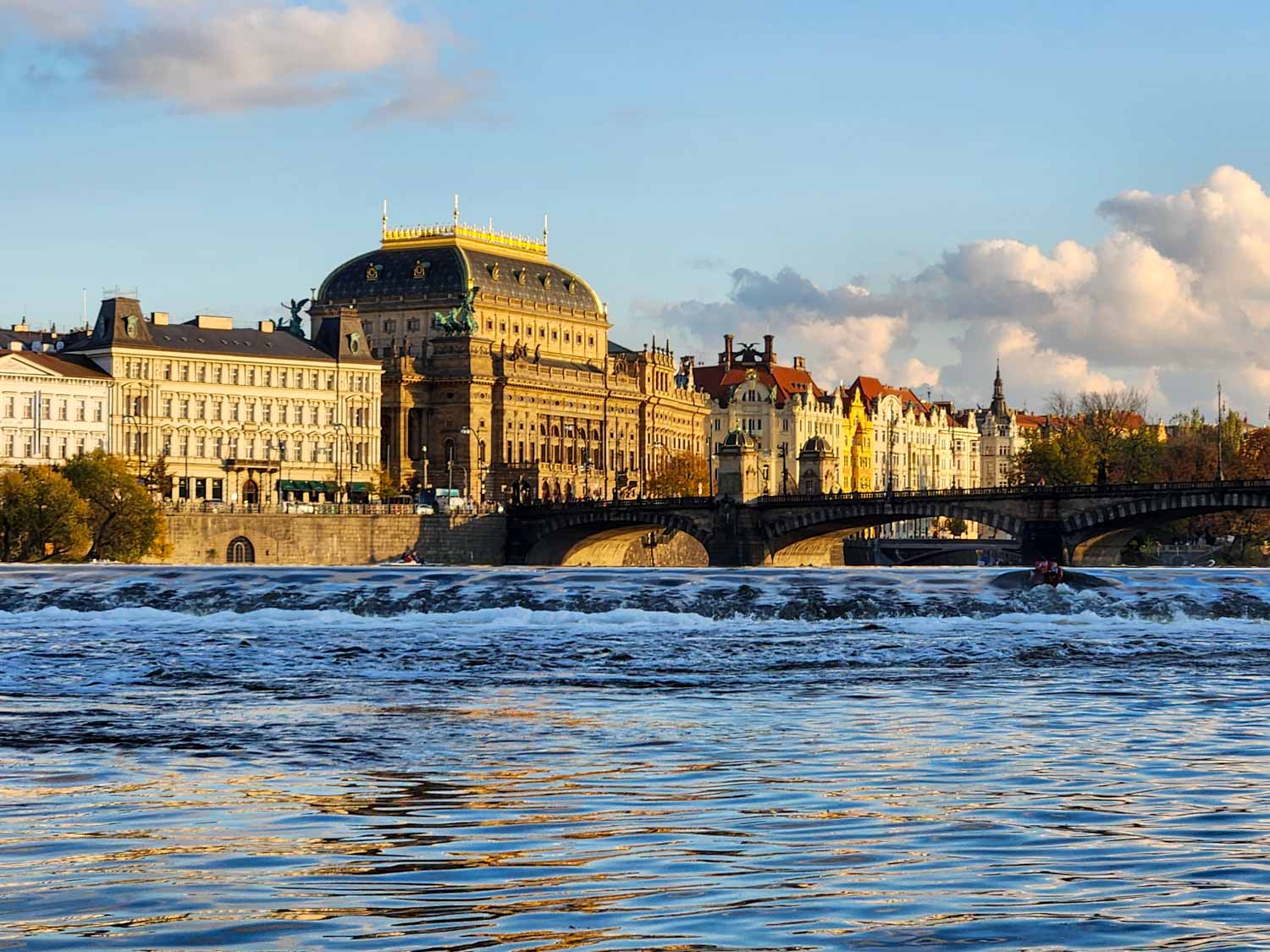
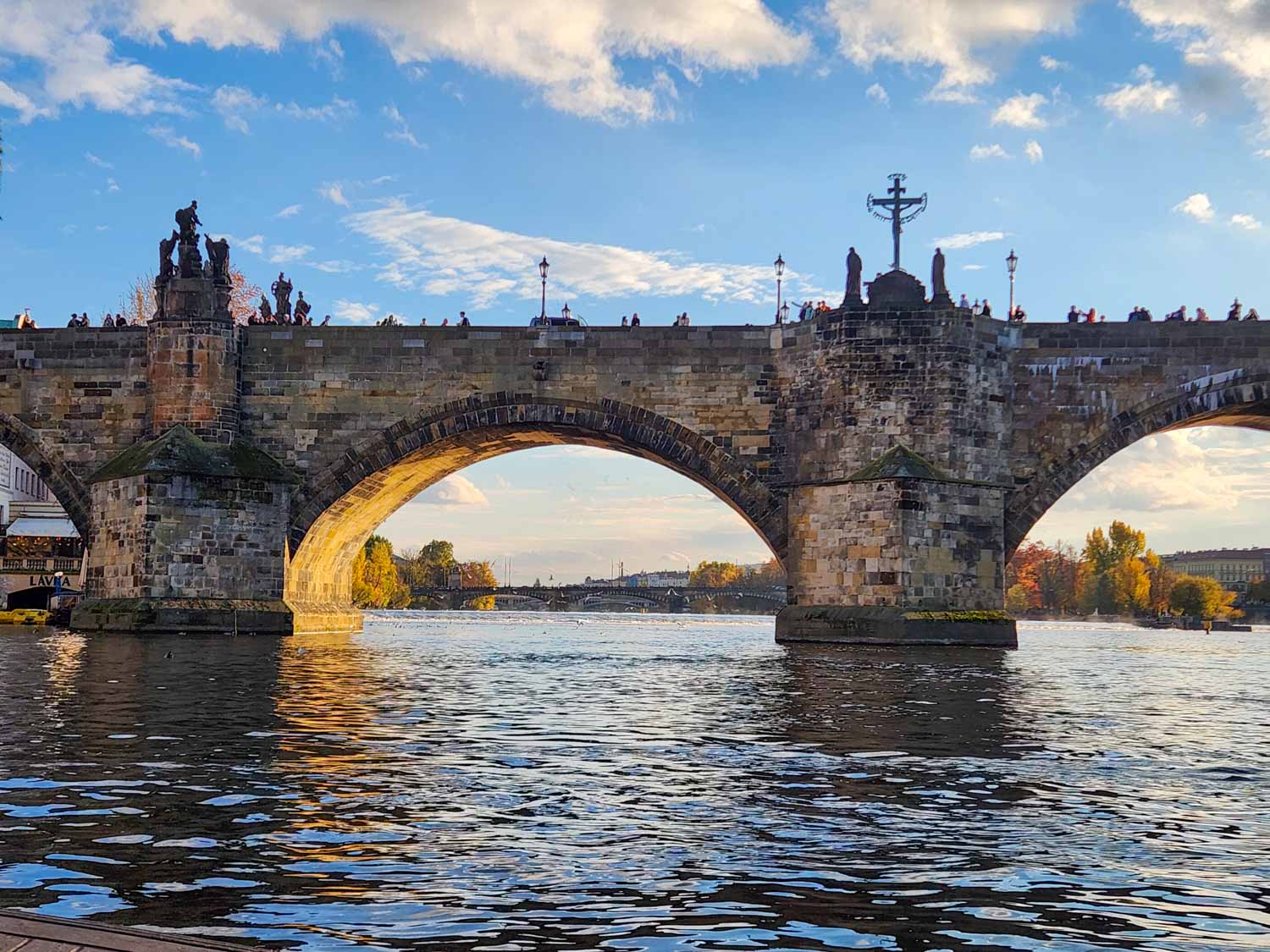
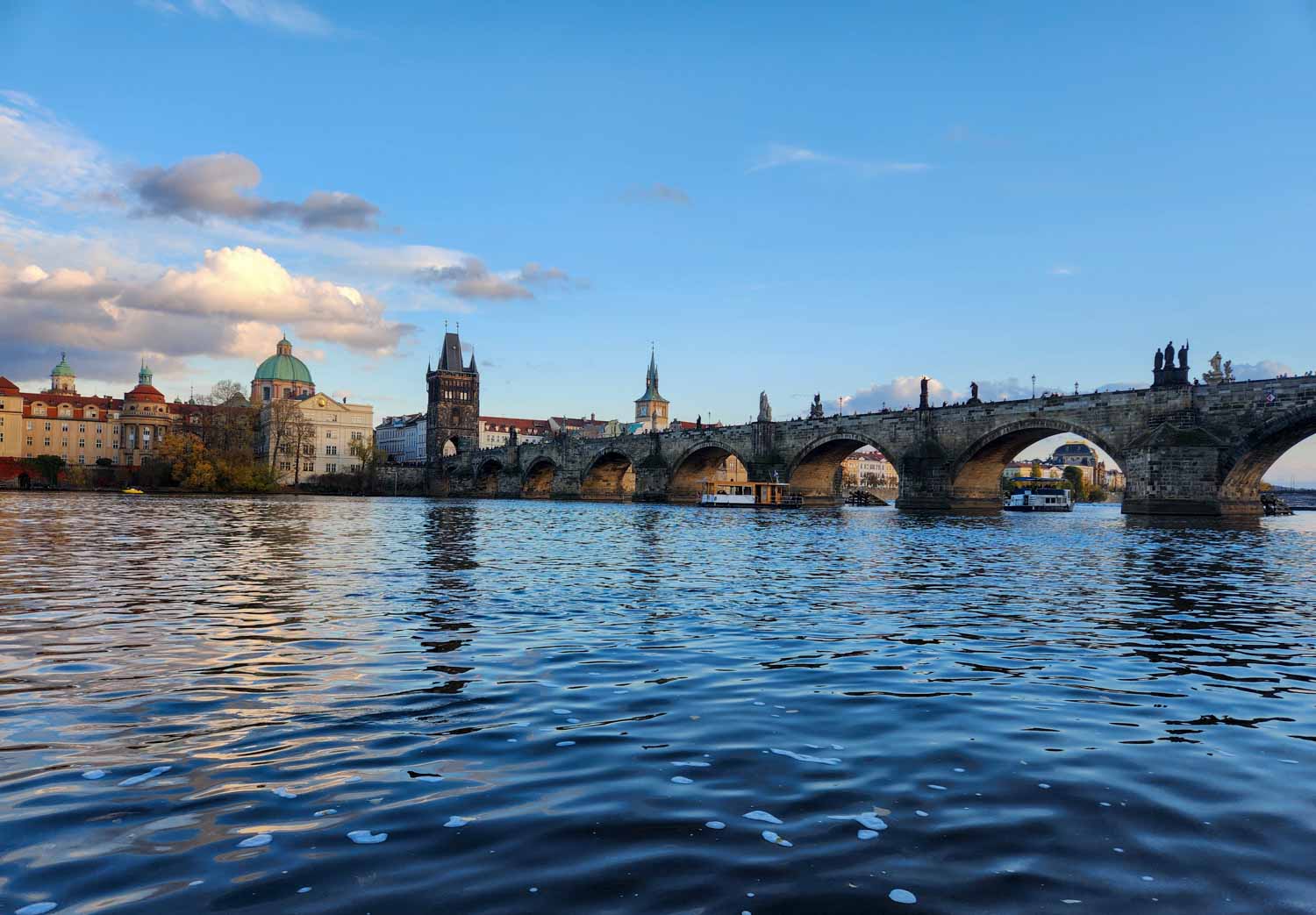
Our boat trip left from the Charles Bridge Museum (with combined tickets available) in a traditional wooden Vodouch boat, with a drink and ice cream or cake thrown in.
Check out a video of our Vltava boat tour in Prague here
Walking tours of Prague
The best way to see Prague is on foot, so you’ll be spoiled for choice for if you’re looking for a walking tour in Prague with kids, with a whole string of themed tours as well as standard sightseeing.
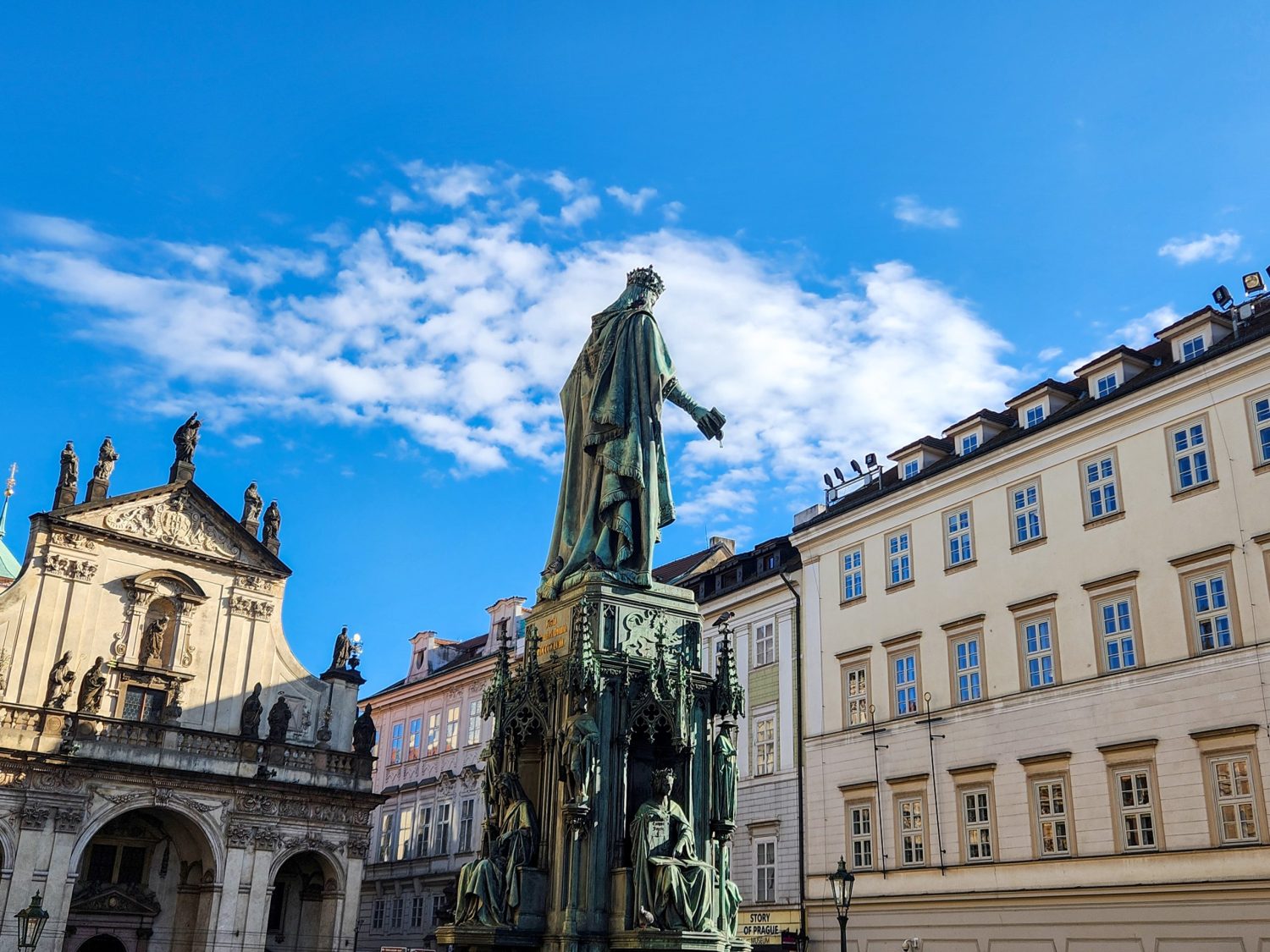
This Old Town Family Tour isn’t the cheapest but it includes games and activities for kids, as well as an option to extend the tour to include Prague Castle. Or this private tour of Prague can be personalised to an extent and includes a lot of the key sights.
For something a little different, this Immersive History walking tour includes VR for a really fun twist for families.
If you’d like to see Prague beyond the historic highlights, this alternative walking tour of Prague includes street art and independent music, so it’s a great option for teens.
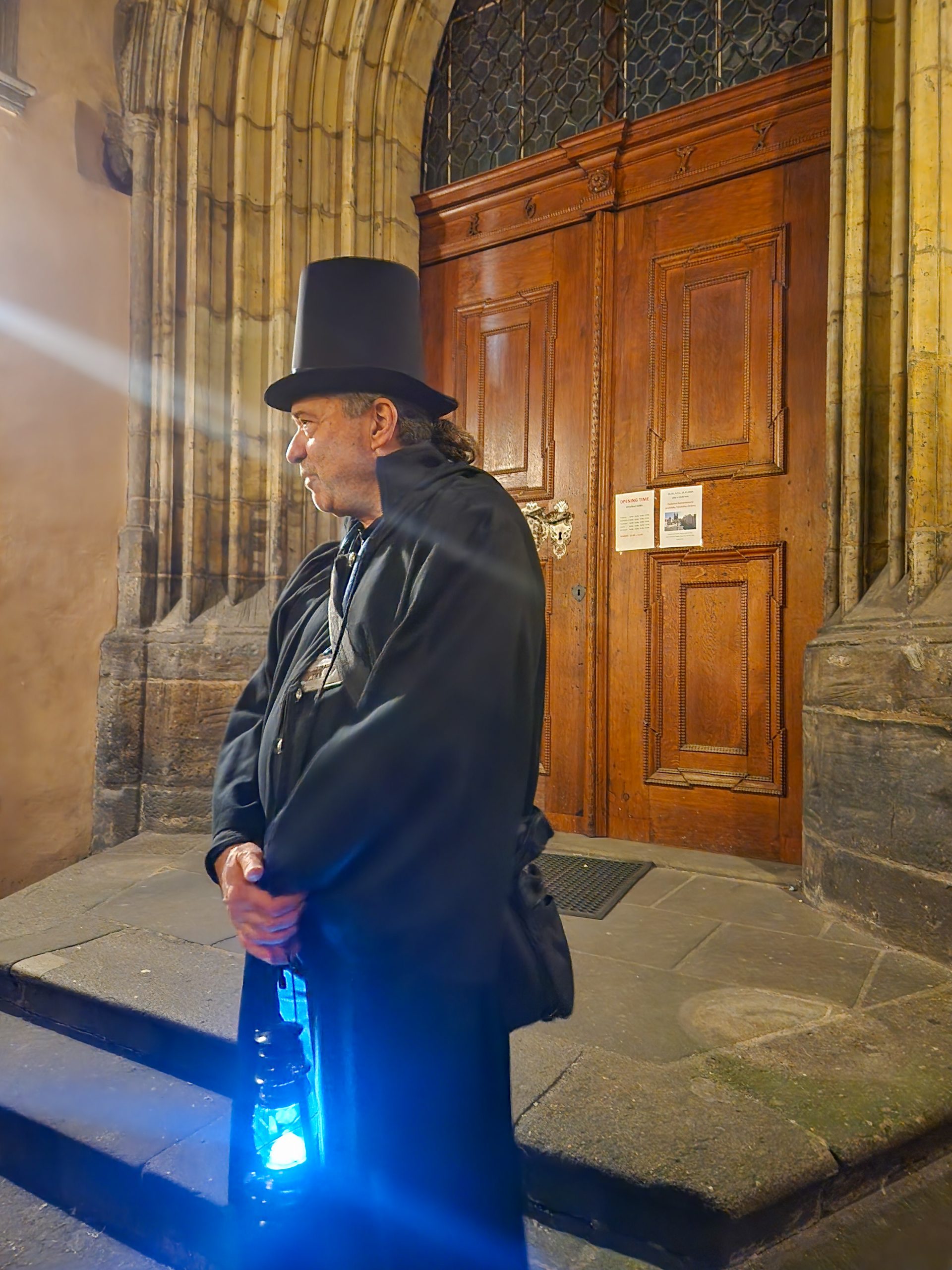
You’re not limited to daytimes either, with a whole string of evening ghost tours – we tried this Ghosts and Legends of the Old Town tour which was just the right balance of spooky and history. While my daughter was the only under-18, the guide was great at making everyone feel included, and at 90 minutes, it meant we weren’t out too late. Or this Ghosts and Legends Nighttime walk is another similar alternative.
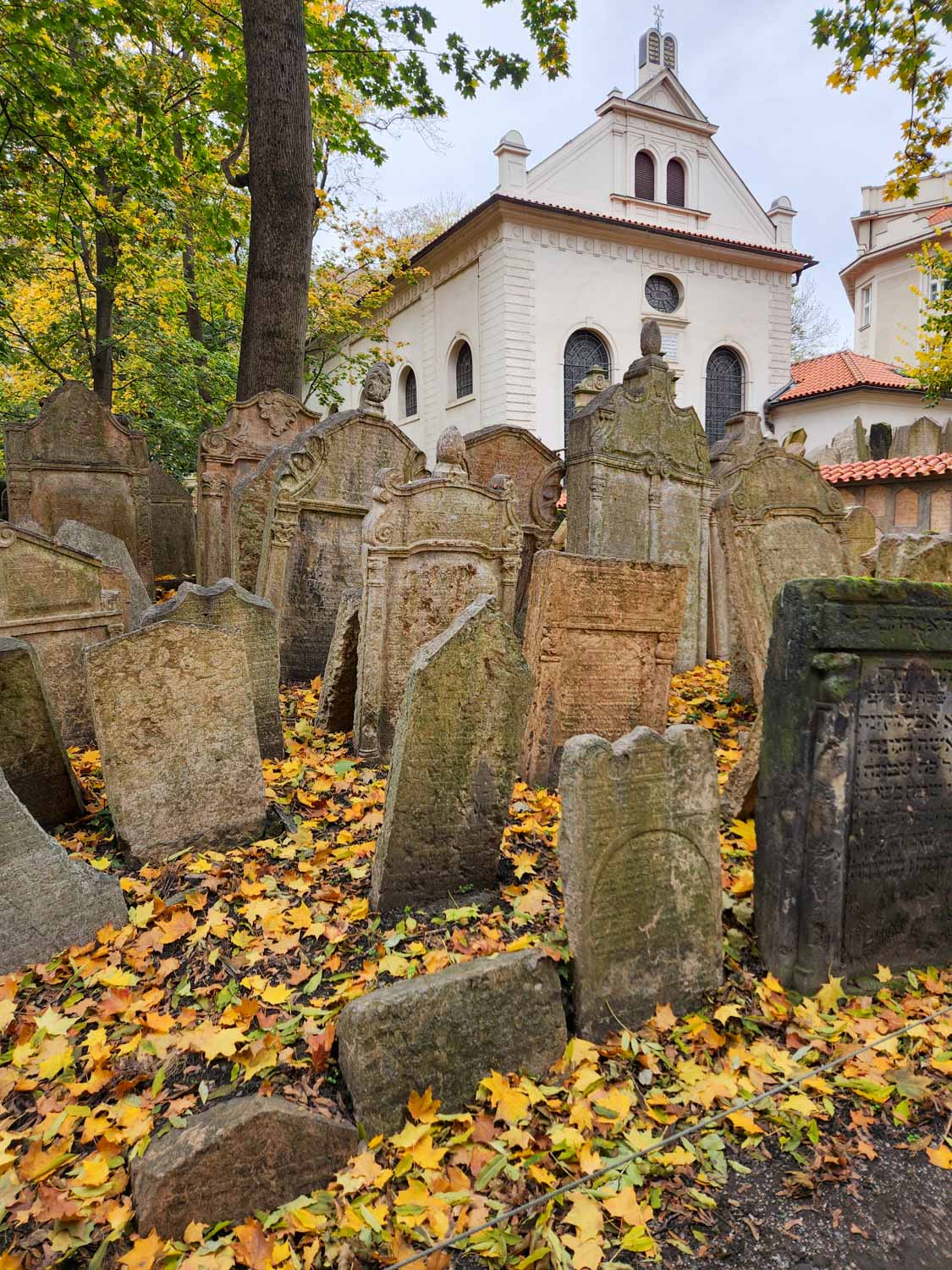
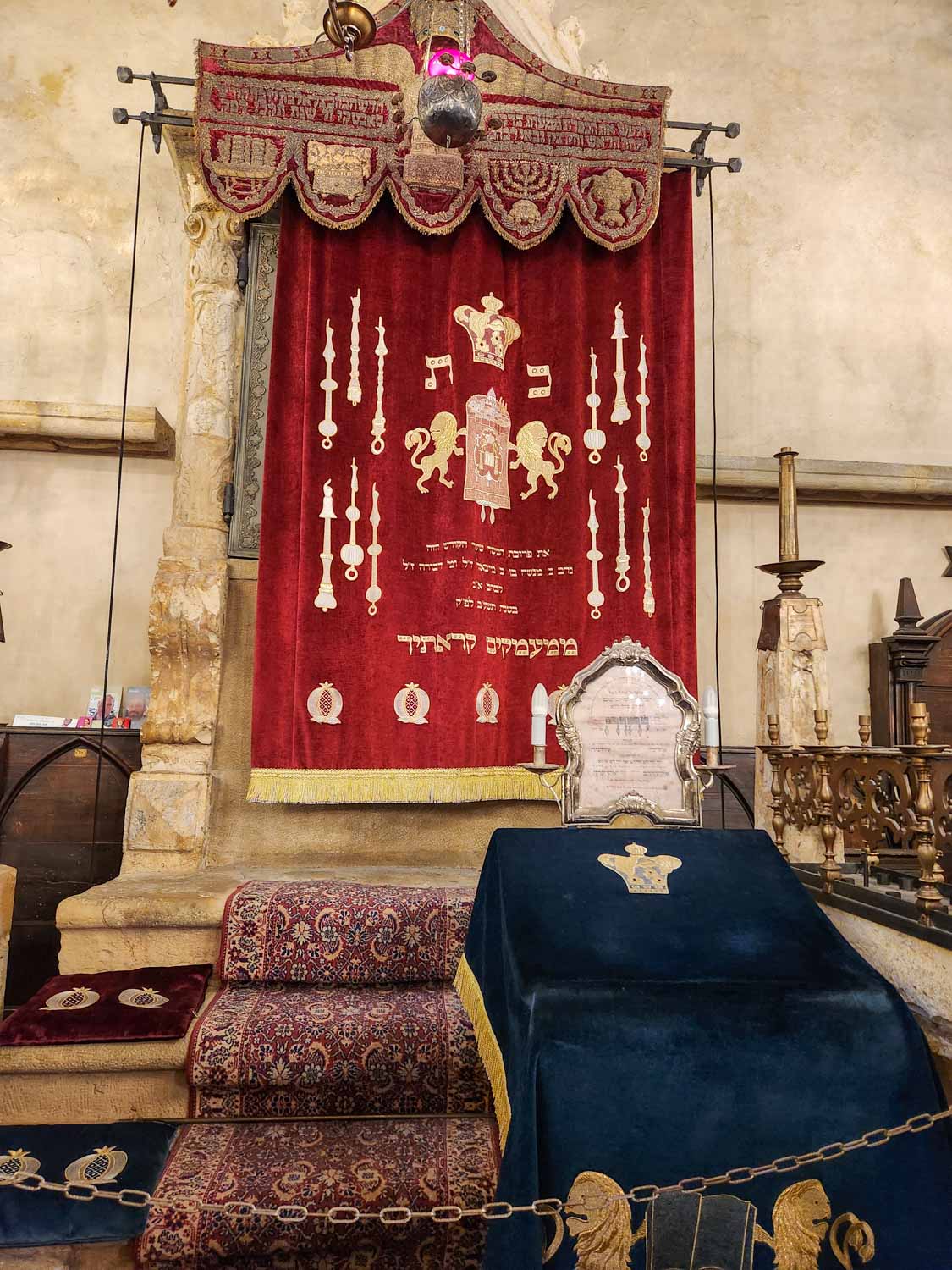
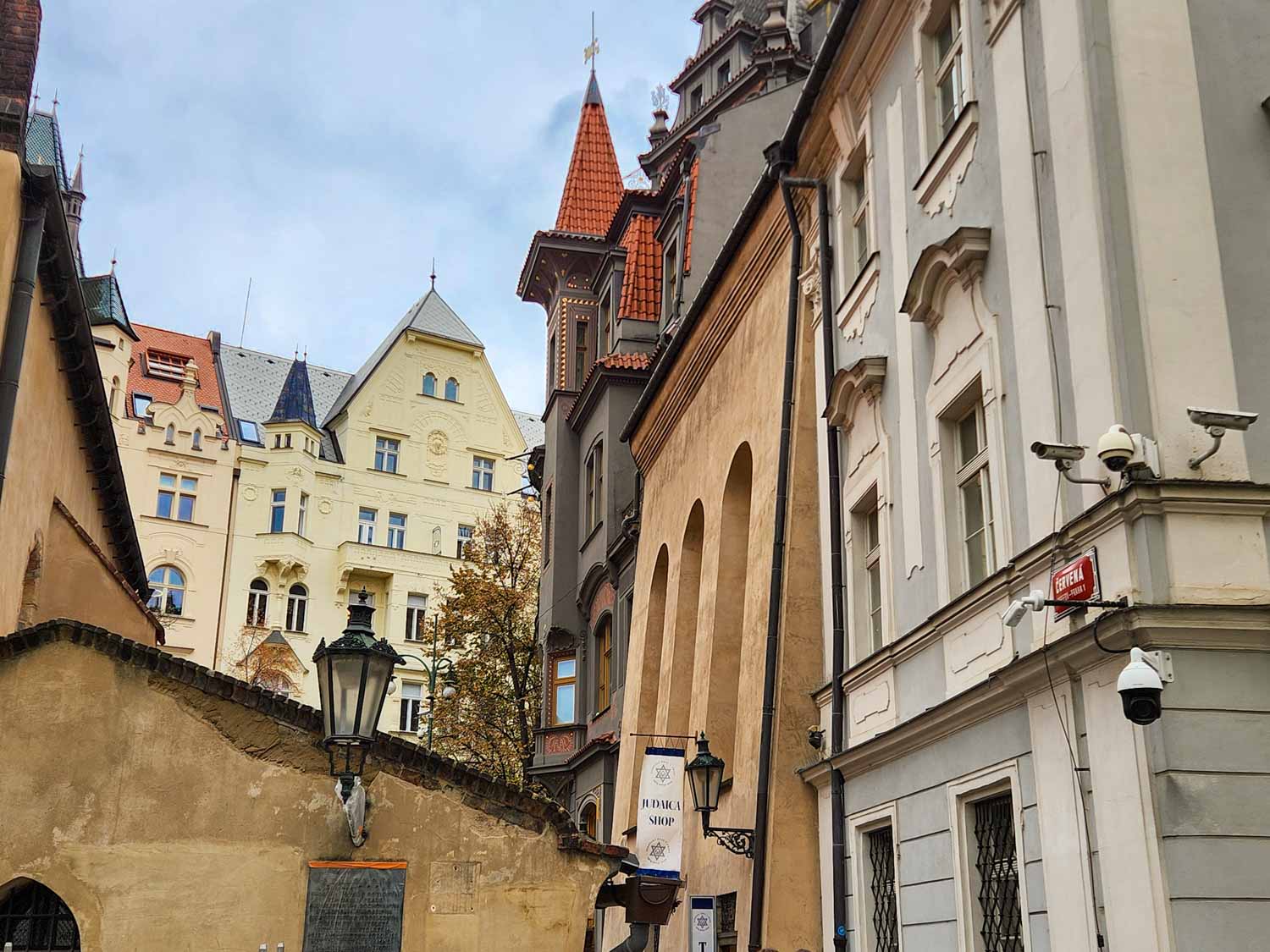
Prague’s Jewish Quarter, Josefov, was one of the largest in Europe, so you’ll also find plenty of Jewish walking tours exploring this area, including some of the main synagogues and the old Jewish cemetery.
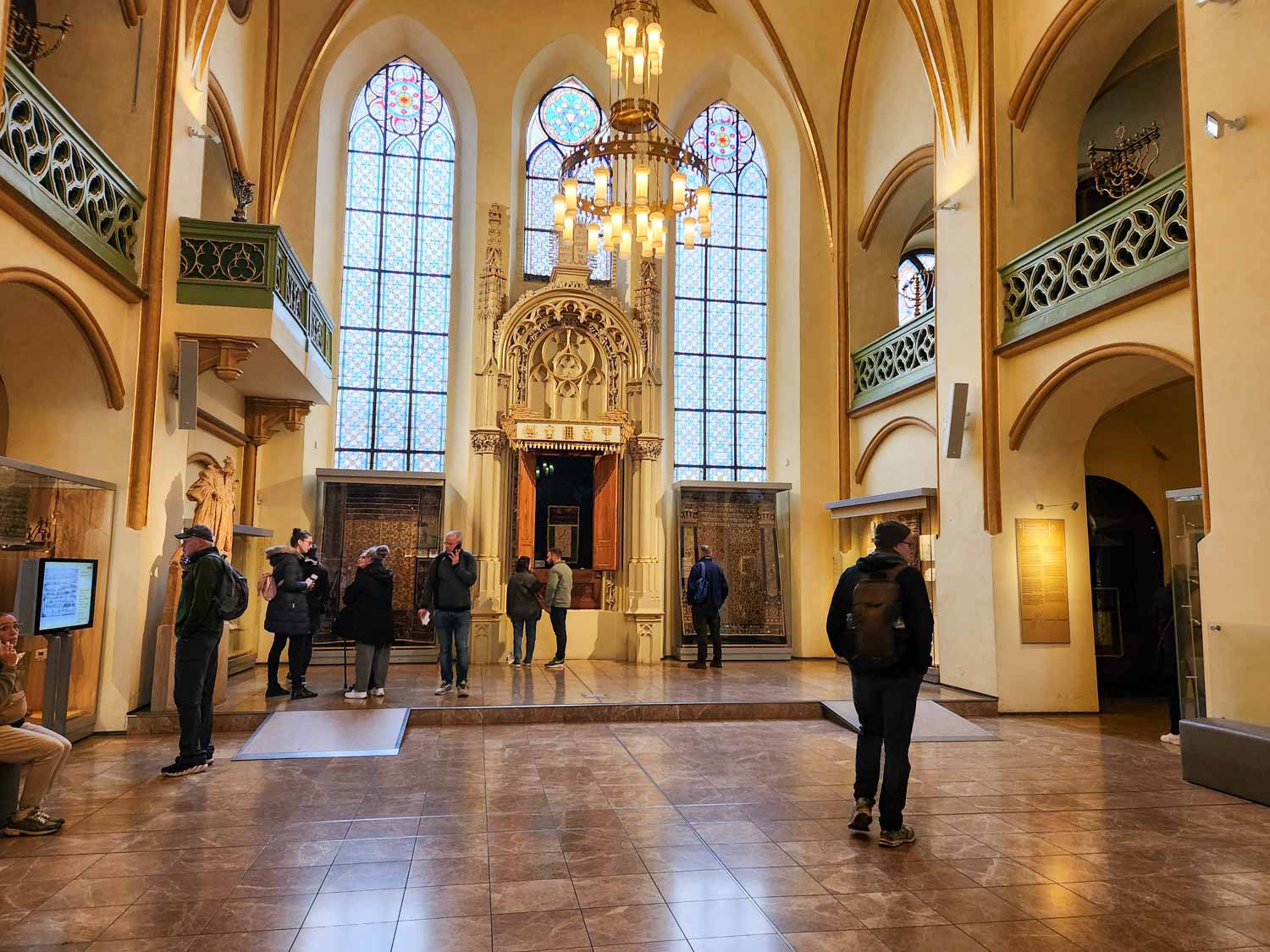
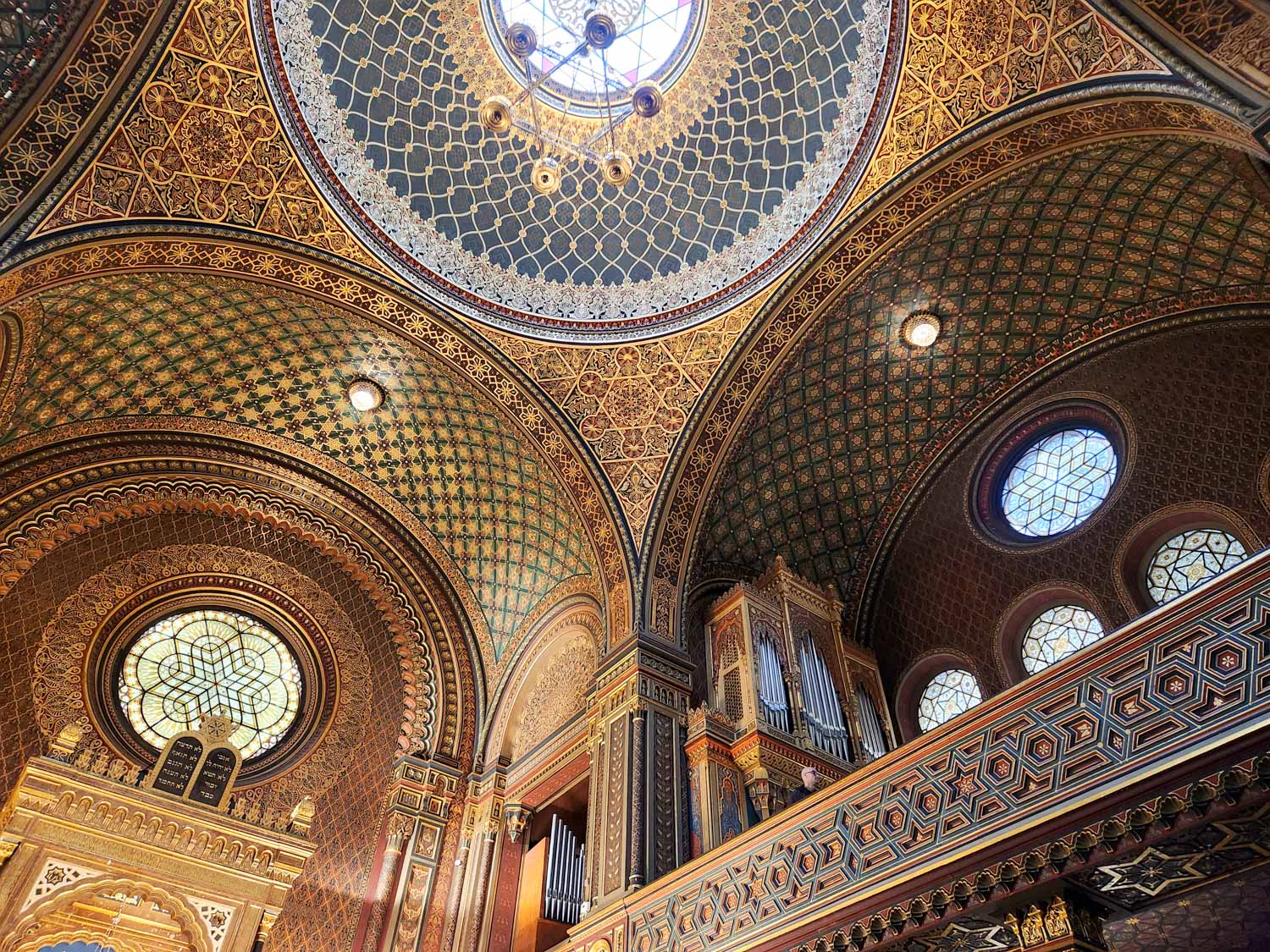
This Jewish Quarter walking tour includes entry to the Maisel Synagogue, Pinkas Synagogue, Old-New Synagogue and Spanish Synagogue, as well as some history of the area and its inhabitants. It’s definitely one for older kids, thanks to the content and amount of information, although you can also access the various synagogues independently.
Prague’s Narrowest Alley
Hidden away in the Lesser Town near Charles Bridge, you’ll find one of Prague’s quirkiest attractions – an alleyway so narrow that only one person can pass through at a time, complete with its own set of traffic lights.
Officially called Vinárna Čertovka or Nejužší pražská ulička, though locally known as the narrowest street in Prague, this tiny passageway measures just 50cm wide at its narrowest point – if you’re trying to find it on the map, look for 24 U Lužického semináře.
The miniature traffic light system was installed to prevent people getting stuck when they meet coming from opposite directions, which manages to be quirky but practical.
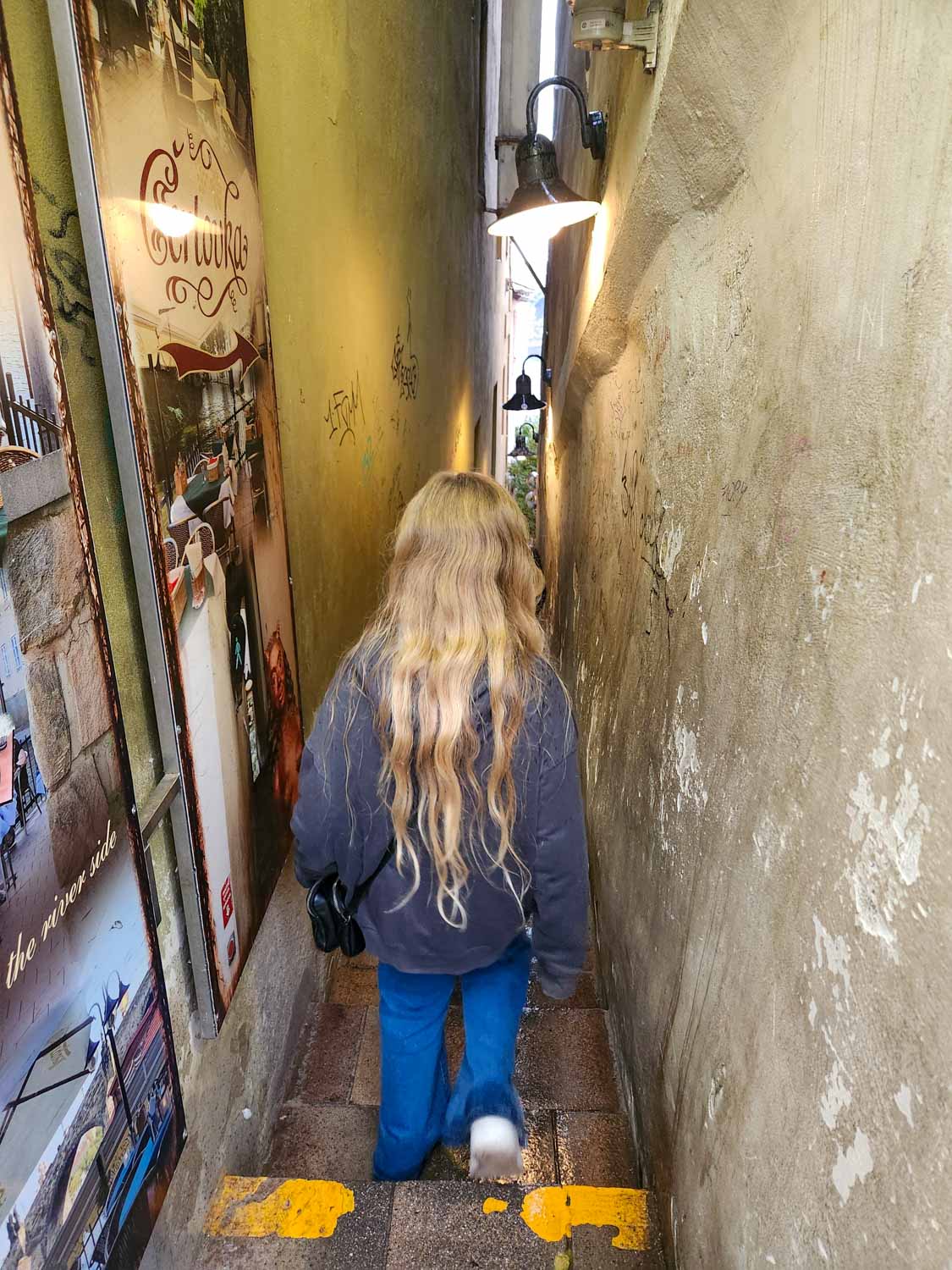
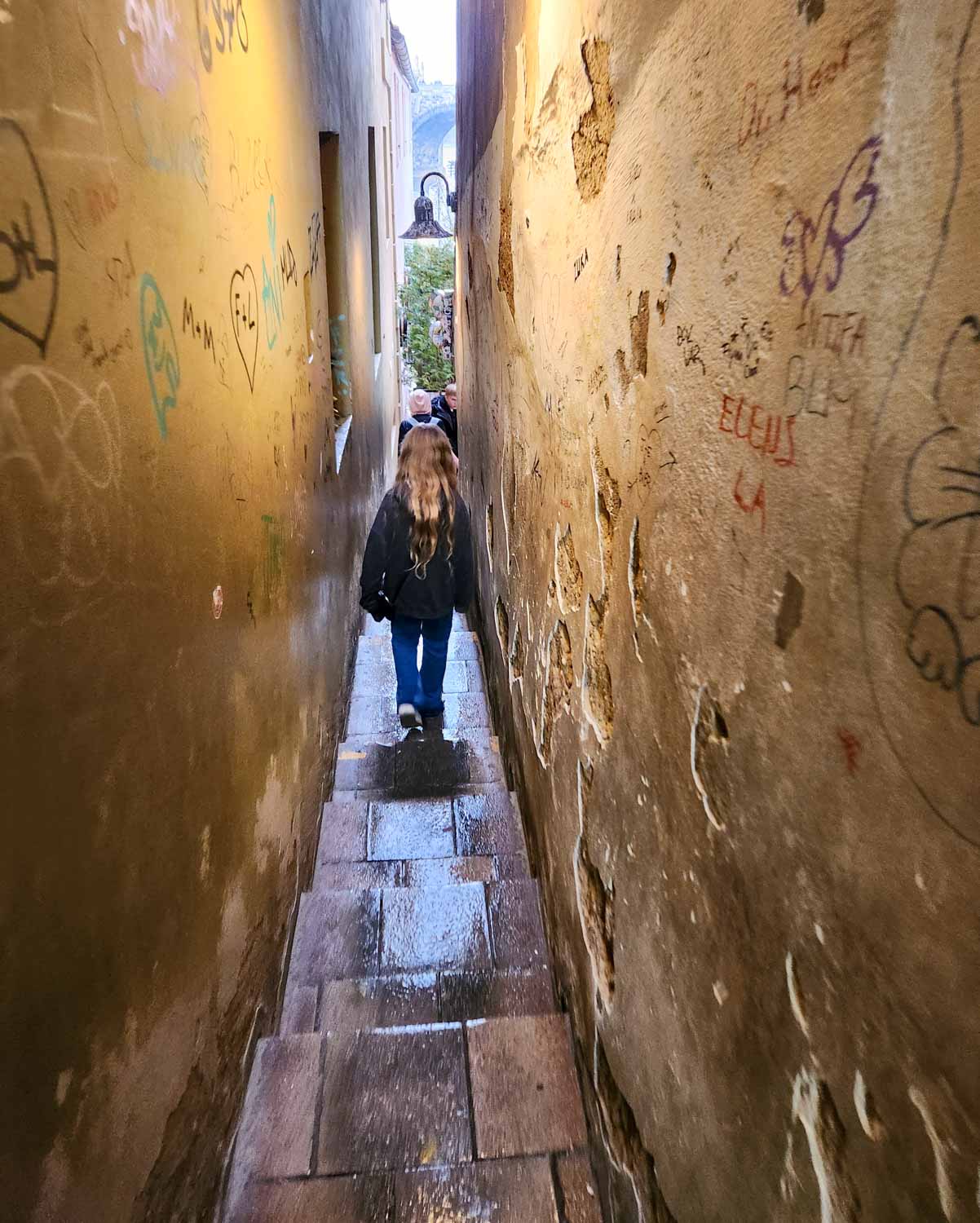
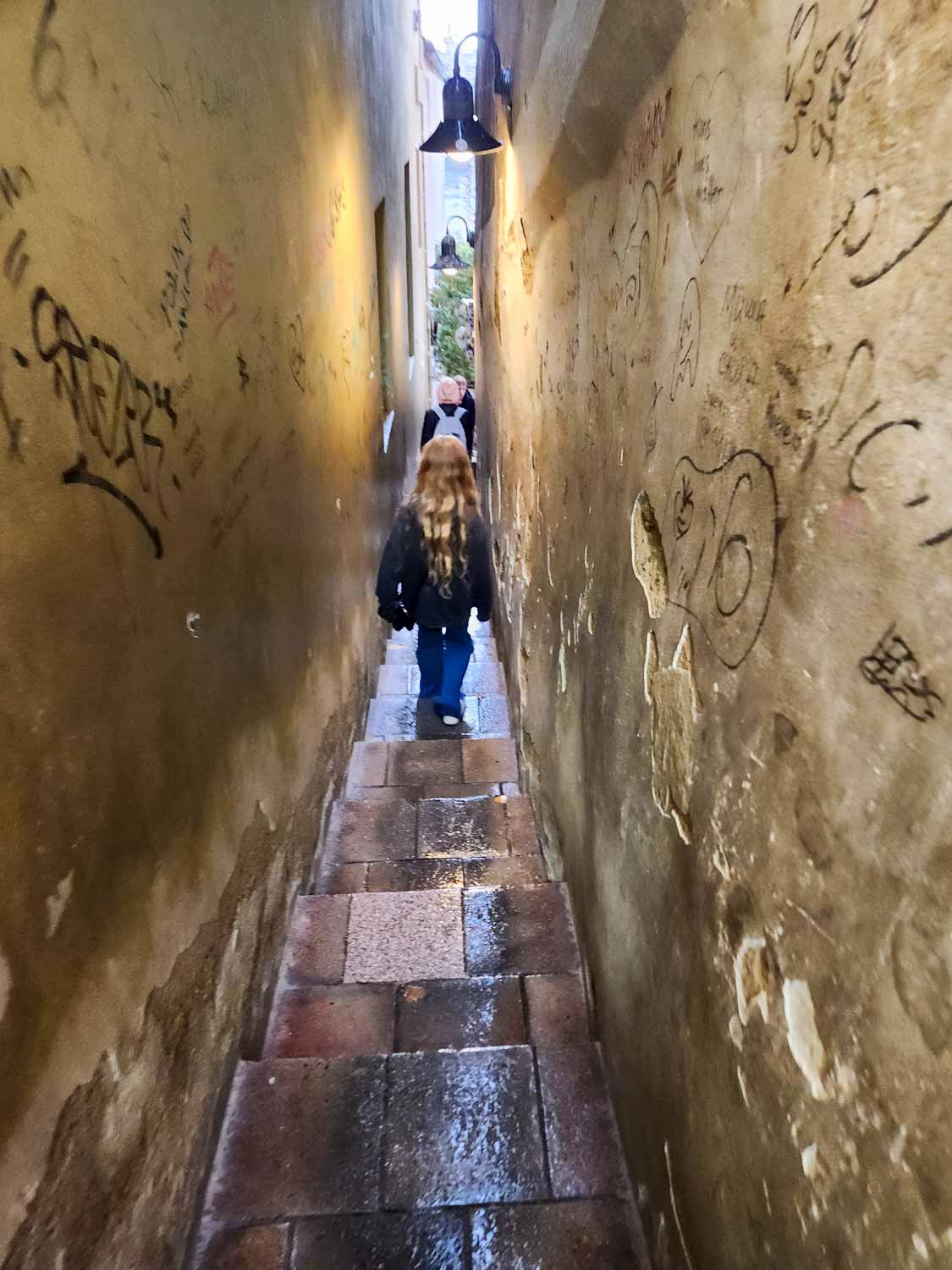
There’s usually a small queue of tourists waiting patiently for their turn to navigate the passage, and setting off to squeeze through as soon as it turns green. Realistically there’s not actually a lot to do once you do get through, but it’s free, only takes a couple of minutes and is very fun (plus you can get some great photos of your kids).
The alley does lead down to a riverside restaurant, Čertovka, which serves traditional Czech cuisine, so you can head over to eat, or wander over to enjoy the views. The surrounding area of the Mala Strana, or lesser town, is very pretty too with its cobbled streets and colourful buildings, so it’s worth saving some time to stroll around.
Don’t expect too much – it’s literally just a very narrow alley – but it’s become something of a cult attraction precisely because it’s so unexpected. Plus, how often can you say you’ve obeyed traffic lights on foot?
Prague National Museum
The Prague National Museum houses the Czech Republic’s largest museum collection, so whatever you’re interested in, you’ll probably find it in here.
The collections include natural history, arts, museum and Czech history, with everything from fossils and minerals to historical artefacts and musical instruments tucked inside the imposing building on Wenceslas Square (which had around a decade of major renovations before reopning in 2018).
It’s definitely along more traditional lines, with its grand halls filled with specimens rather than interactive exhibits, although there is an app to bring some of the displays to life – literally in the case of the fin whale skeleton hanging from the ceiling; just point your phone at it and the bones are transformed by the technology so you can visualise the real thing.
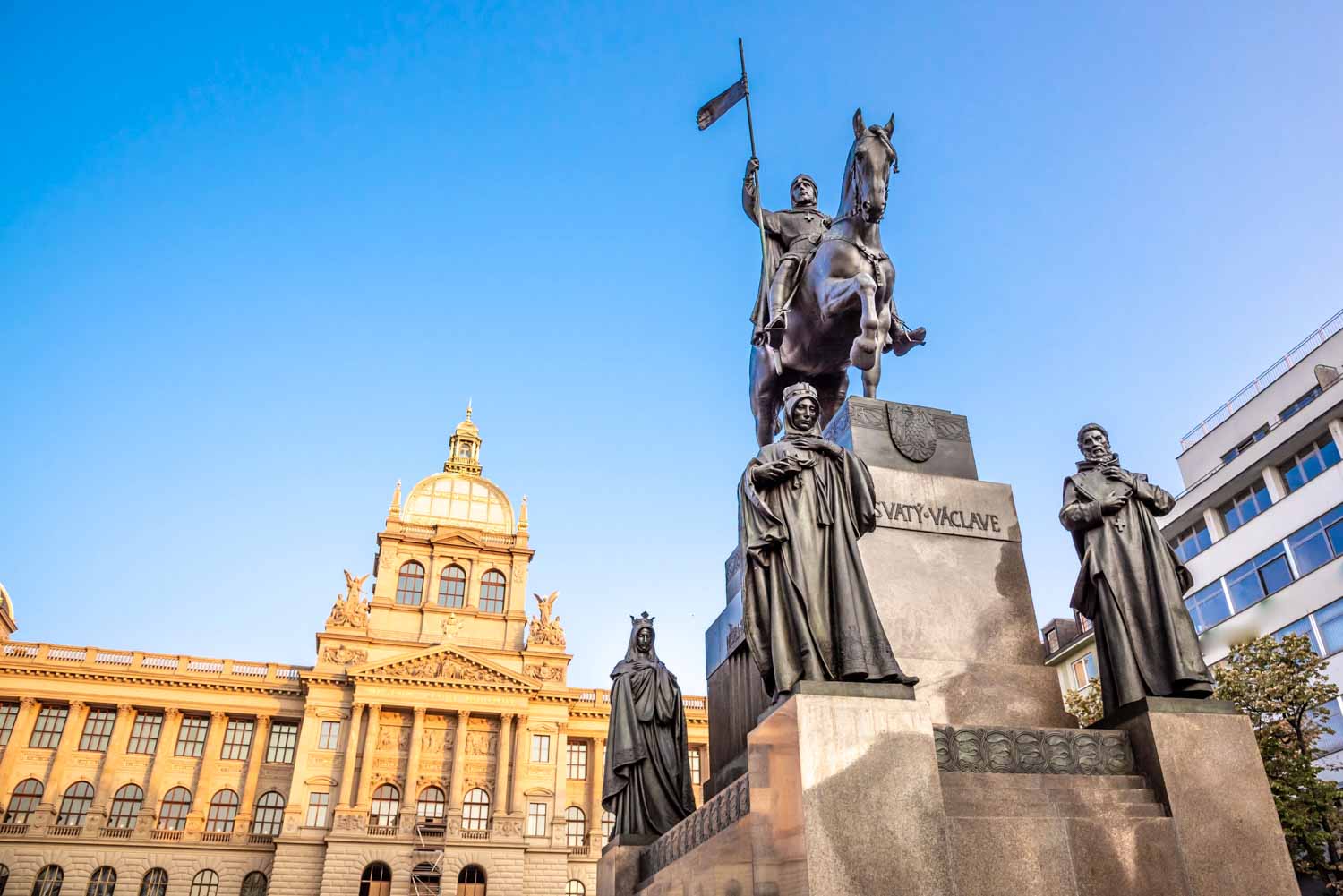
The building itself is very impressive too, especially the grand staircase and entrance hall, as well as ornate decor, with some lovely views across the square from the top floors. There are also regularly changing temporary exhibitions, which cover a huge range of topics from archaeology and imperial treasures to contemporary art and music.
Better with older kids, you could easily spend a couple of hours inside if you want to try to explore properly (although you may well find that museum fatigue sets in long before you’ve seen it all).
Did you know? The building’s exterior still bears marks from Soviet tanks during the 1968 invasion – these have been deliberately preserved as a reminder of that turbulent period in Czech history.
Museum of Alchemists and Magicians of Old Prague
One of the most unusual attractions in Prague is tucked away in a 16th-century house near Prague Castle, where the Museum of Alchemists and Magicians takes you into the mysterious world of medieval alchemy, magic and the occult sciences.
Prague was once a centre of alchemical research, particularly during the reign of Rudolf II who was fascinated by alchemy and invited practitioners from across Europe to his court, including Elizabeth I’s court astronomer John Dee and his seer (and almost certainly conman) Edward Kelley.
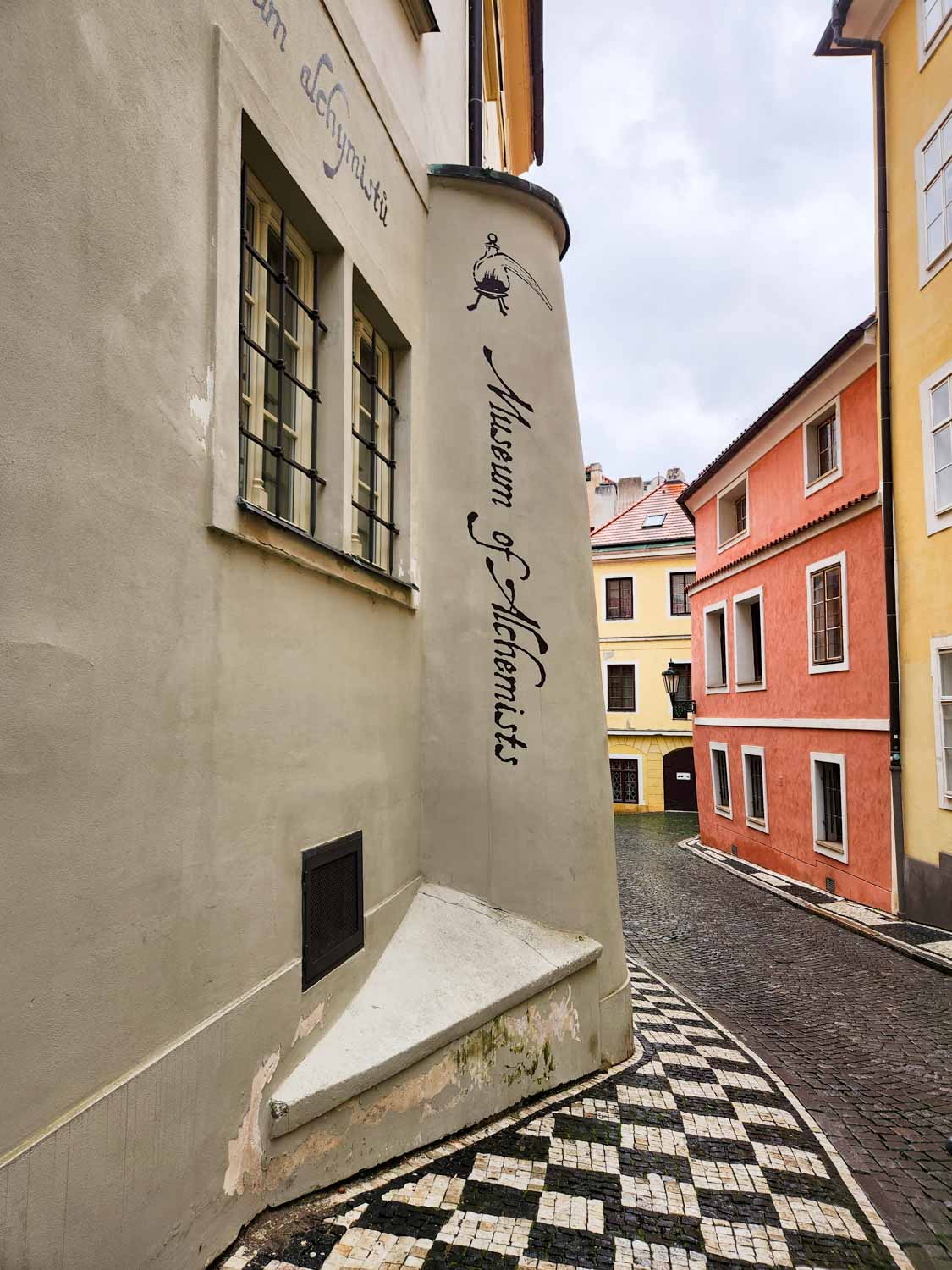
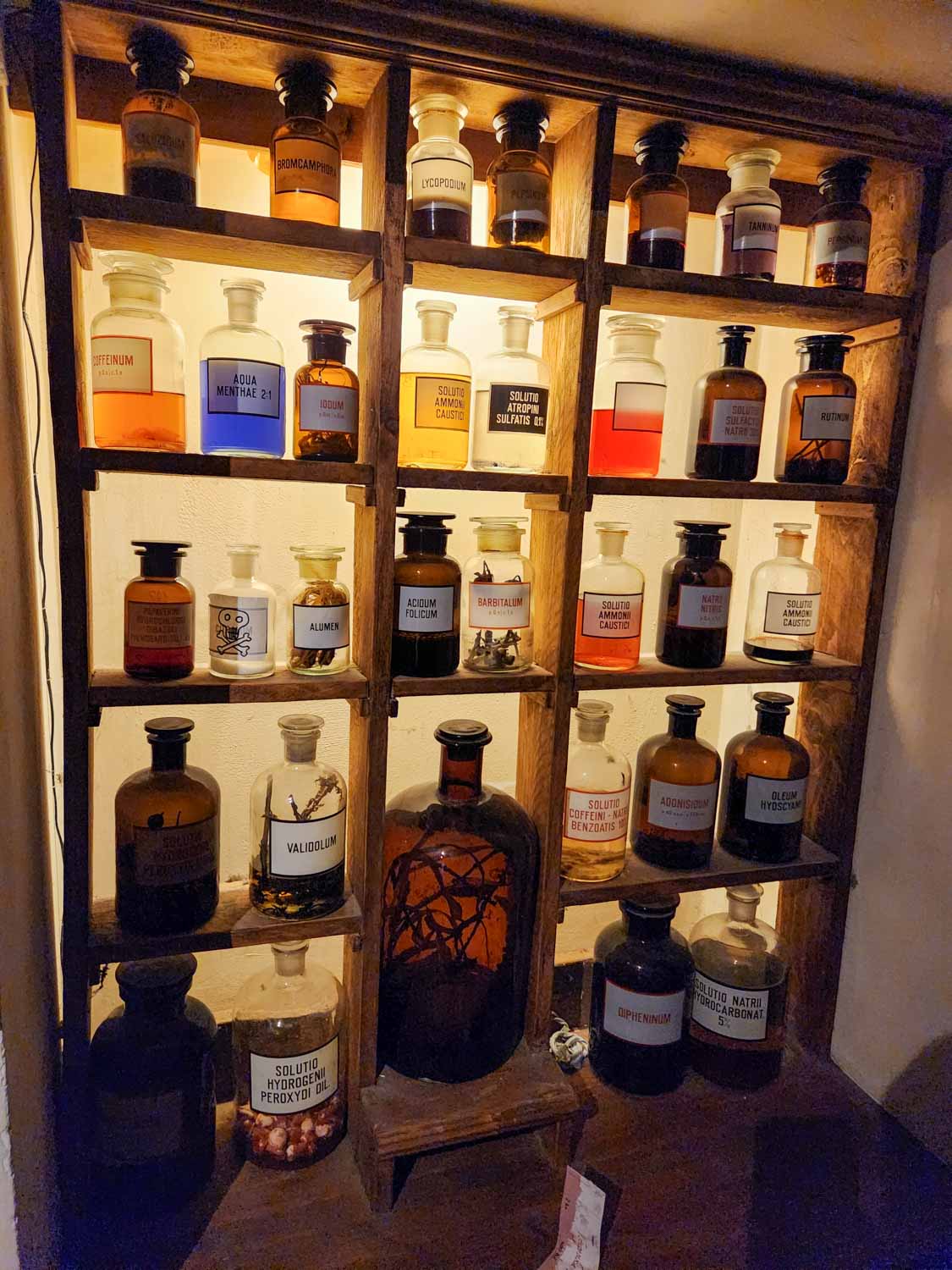
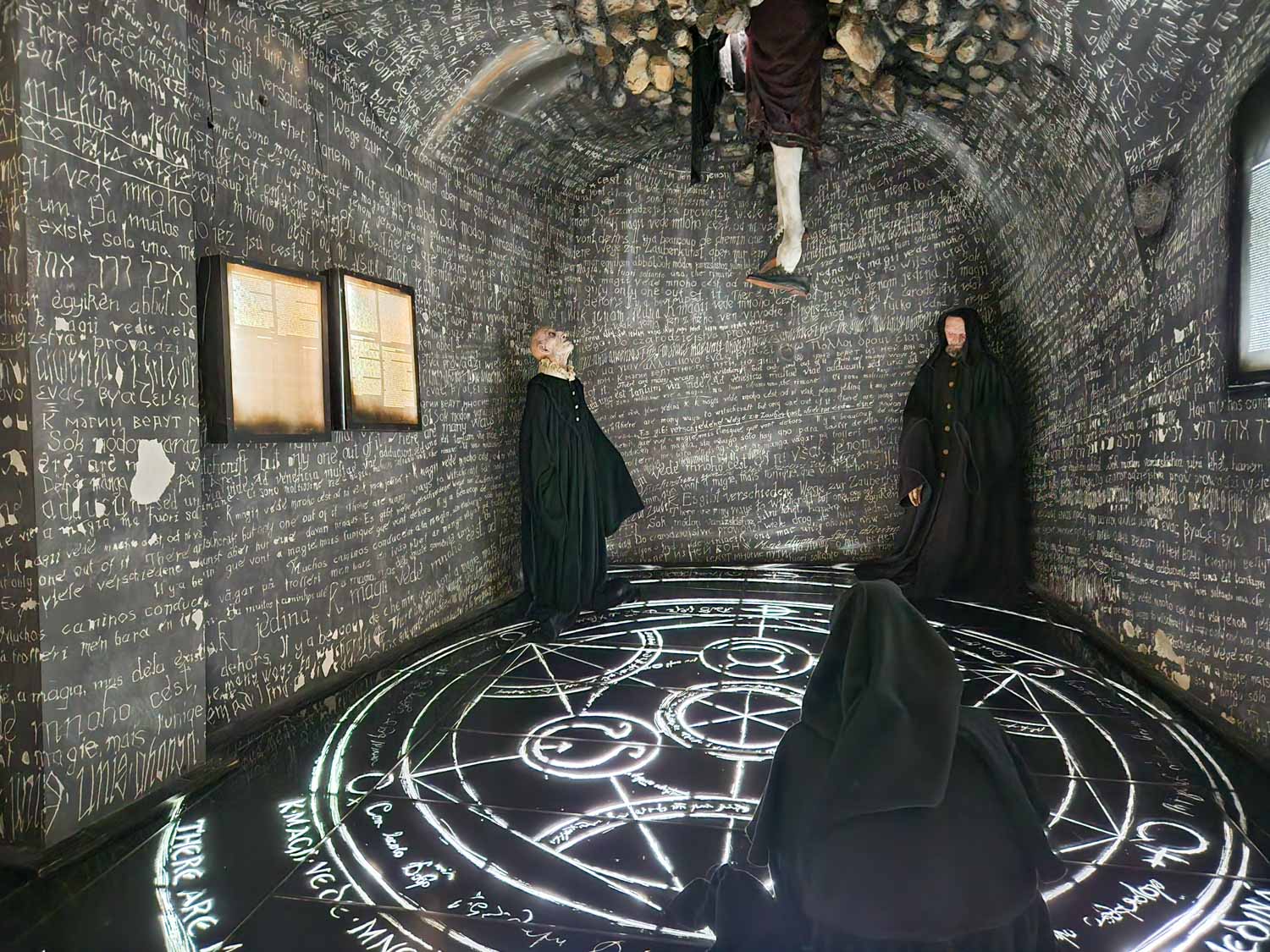
The museum is split into two sections, the first taking you through a history of alchemy, and the second recreating an alchemist’s laboratory, which is more child-friendly – although it’s packed with peculiar instruments and mysterious substances, plus a side helping of spookiness, so it’s not for younger kids.
You’ll see original alchemical equipment, manuscripts covered in cryptic symbols, and displays explaining the search for the philosopher’s stone and the elixir of life, with an audio guide to help explain what you’re seeing – without them, it can definitely be a bit confusing.
The museum does a good job of presenting alchemy as both a precursor to modern chemistry and a belief system wrapped up in mysticism and symbolism, plus there are some hands-on displays. There’s a lot of information to take in so it can be a bit overwhelming, and the figures in the darkened room covered in symbols were distinctly creepy.
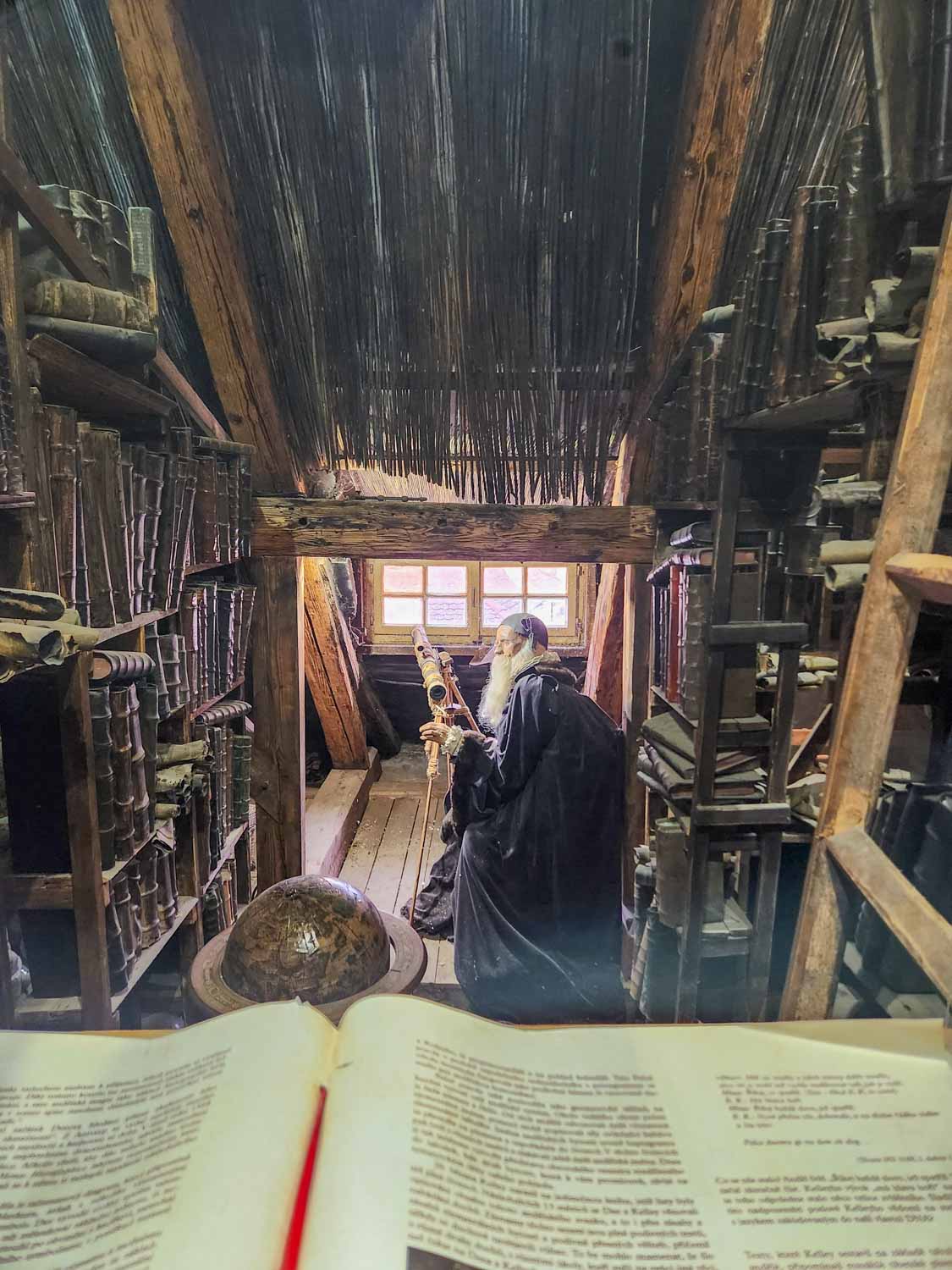
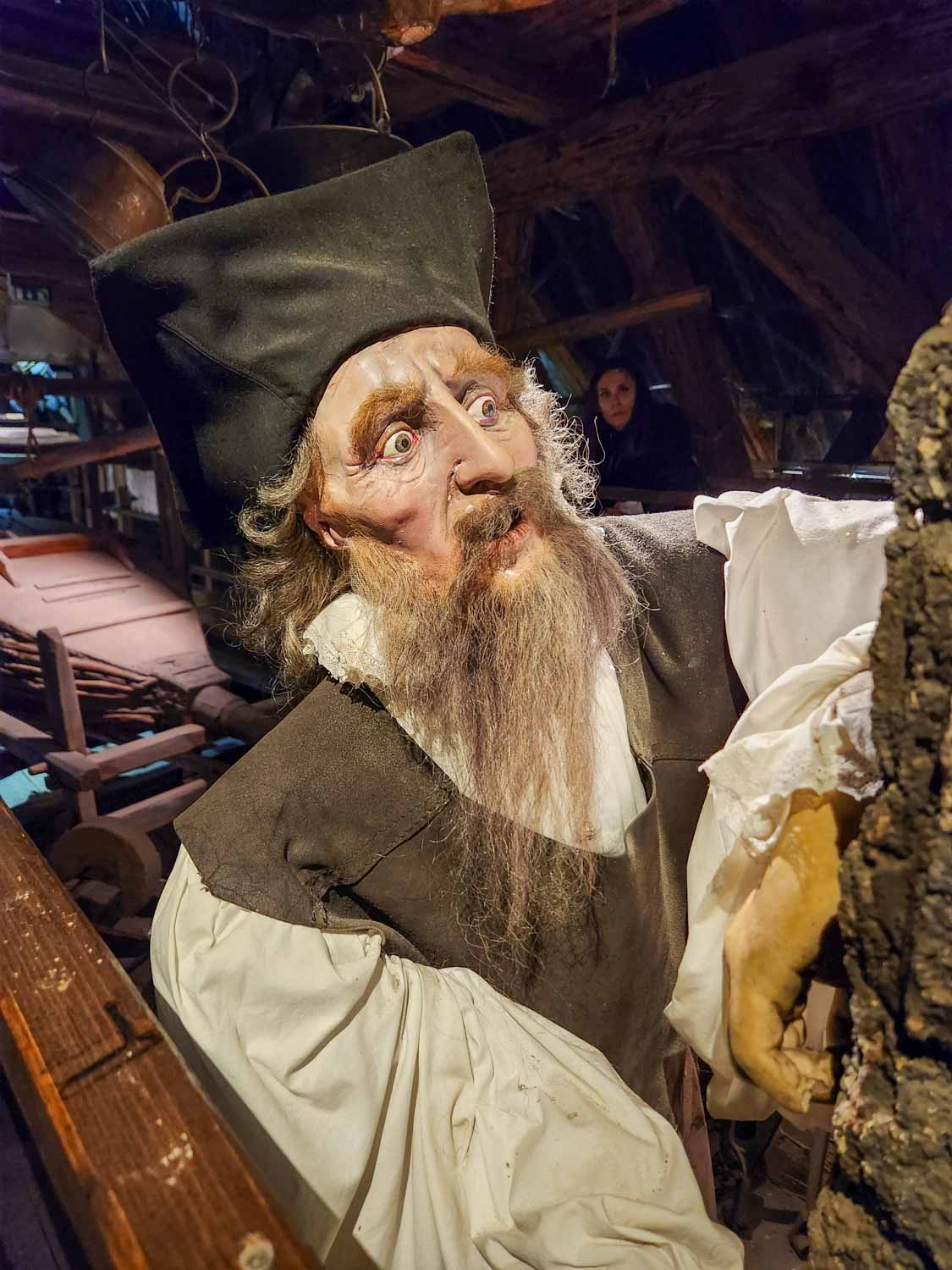
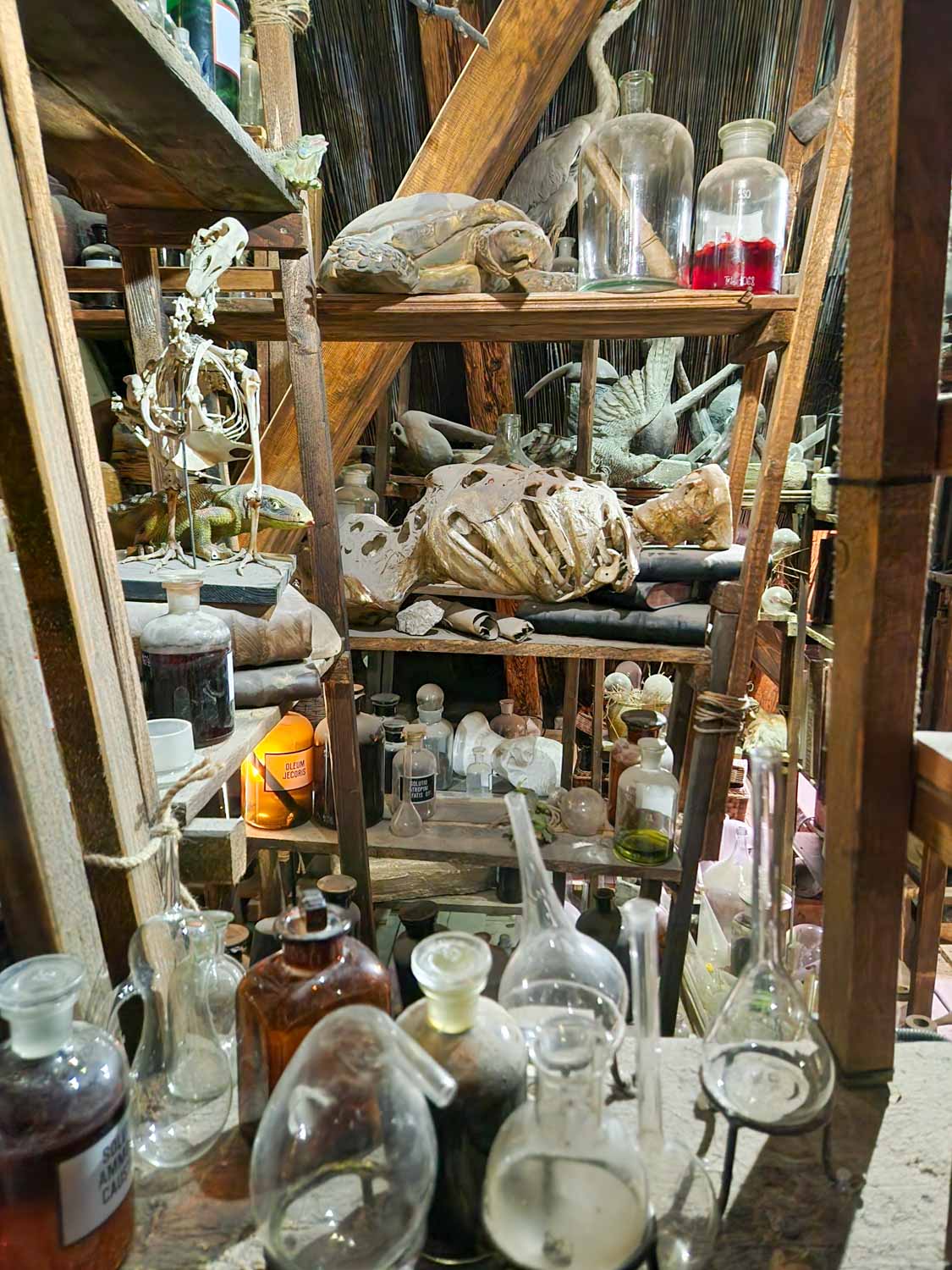
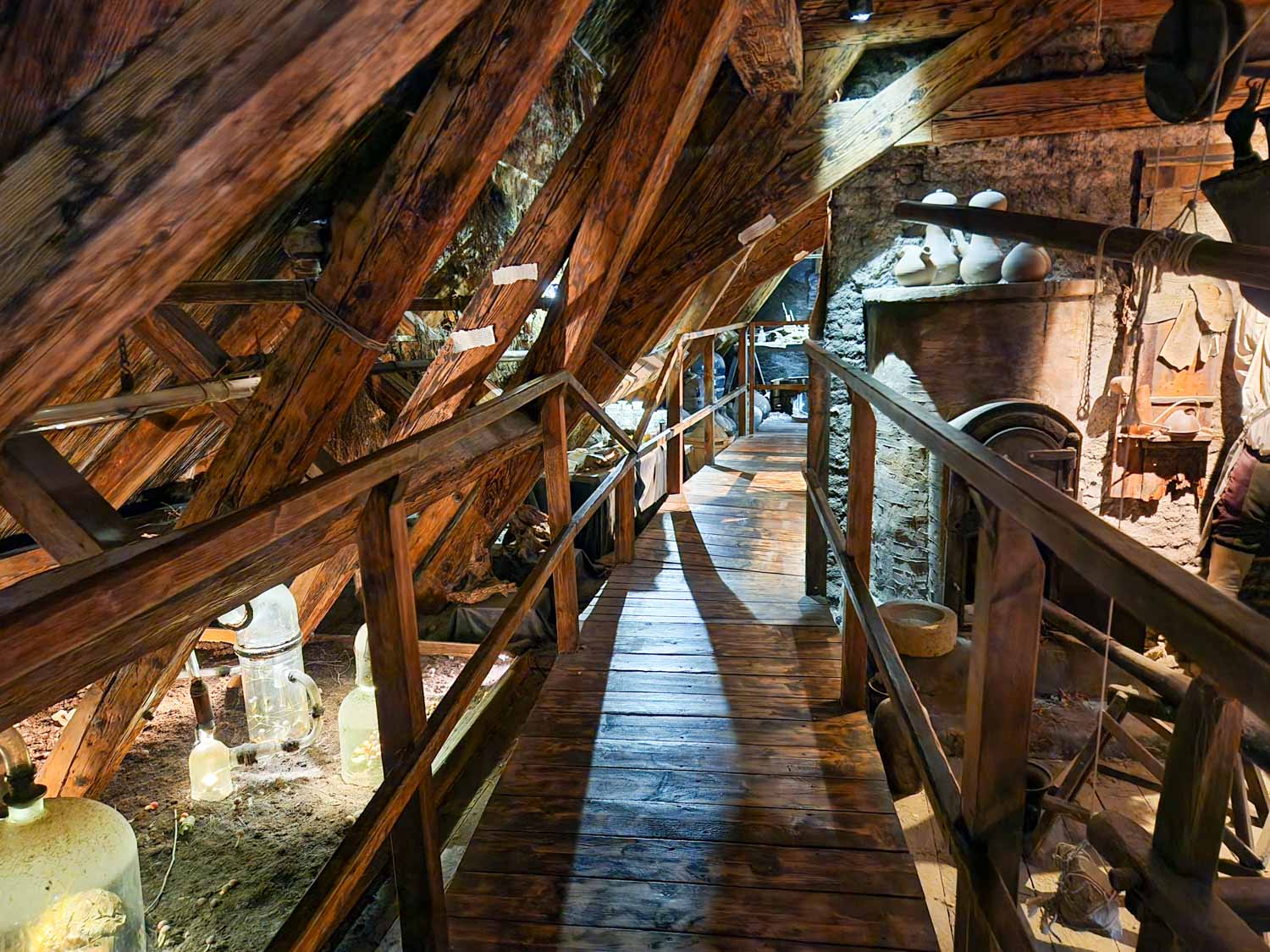
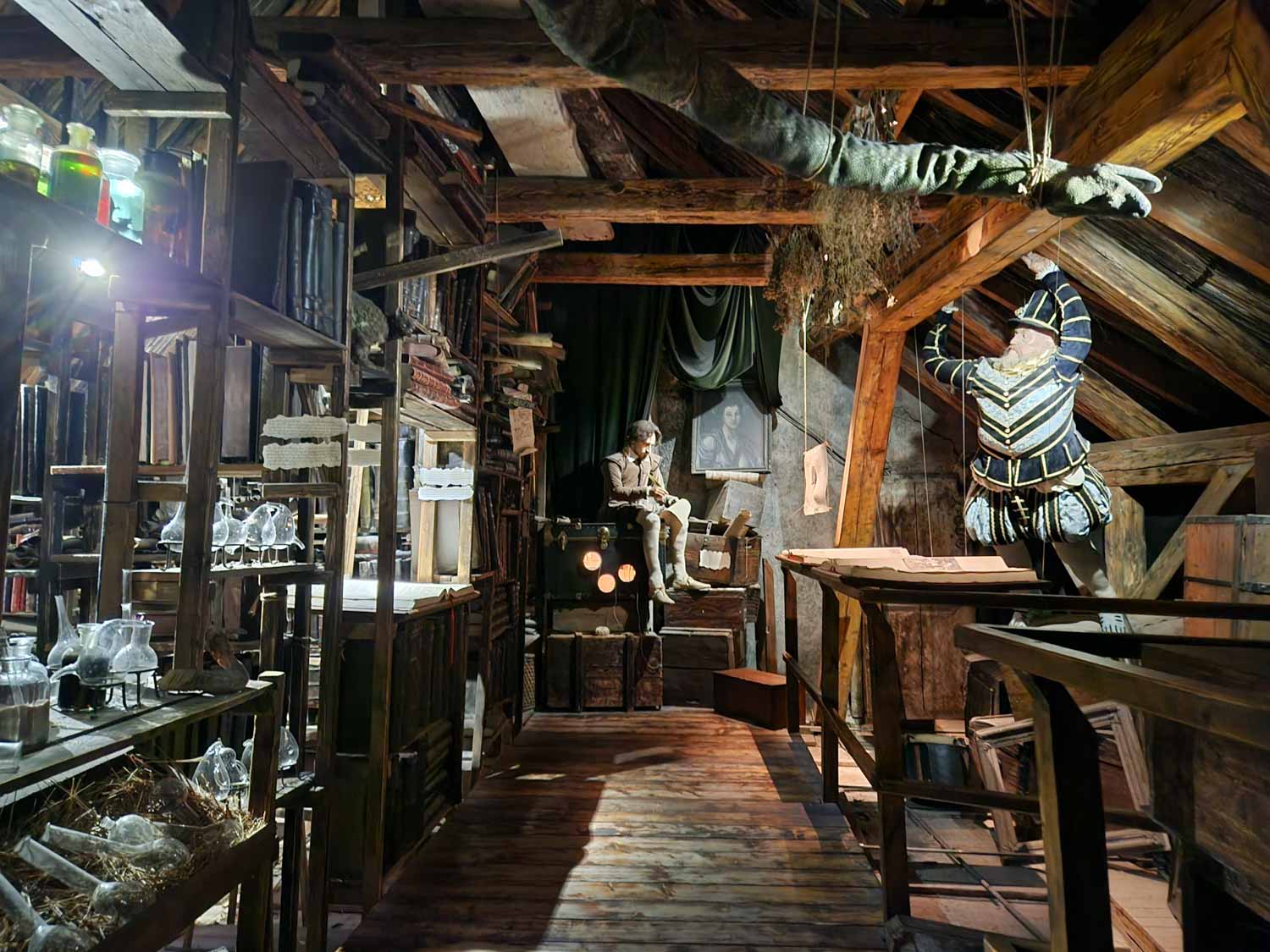
The highlight for most families is the tiny secret laboratory discovered during renovations, accessed through a low doorway – it’s thought to be where an alchemist actually worked centuries ago. The cramped, dark space really conveys how these mysterious experiments were conducted.
Bear in mind it is an authentic medieval building, which means steep stairs, low doorways and narrow passages – all part of the charm, but worth knowing in advance.
It’s not a large museum – you can see everything in about 45 minutes to an hour – but it’s utterly unique and quite unlike any other museum you’ll visit in Prague. Set in the Lesser Town, it’s easy to combine with the castle, and was included in the combined tickets we had for our boat tour and the Charles Bridge Museum.
Museum of Prague Ghosts and Legends
For another of Prague’s spookier attractions, the Museum of Prague Ghosts and Legends leads you through the darker side of Prague’s history, filled with tales of spectres, supernatural events and the legends that have haunted the city for centuries.
The first room shares various different ghost stories and myths, as well as a few interactive exhibits, and items to illustrate.
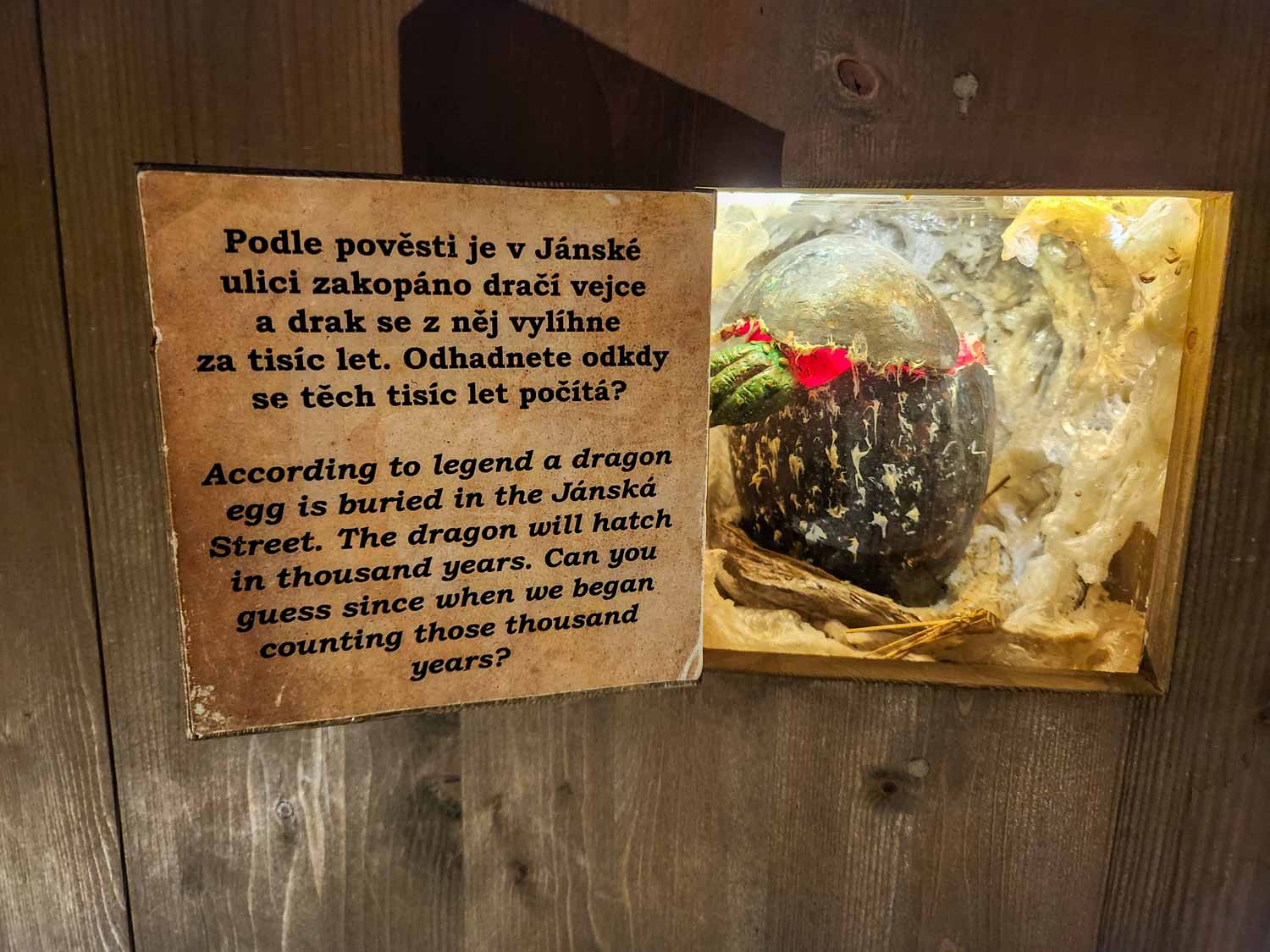
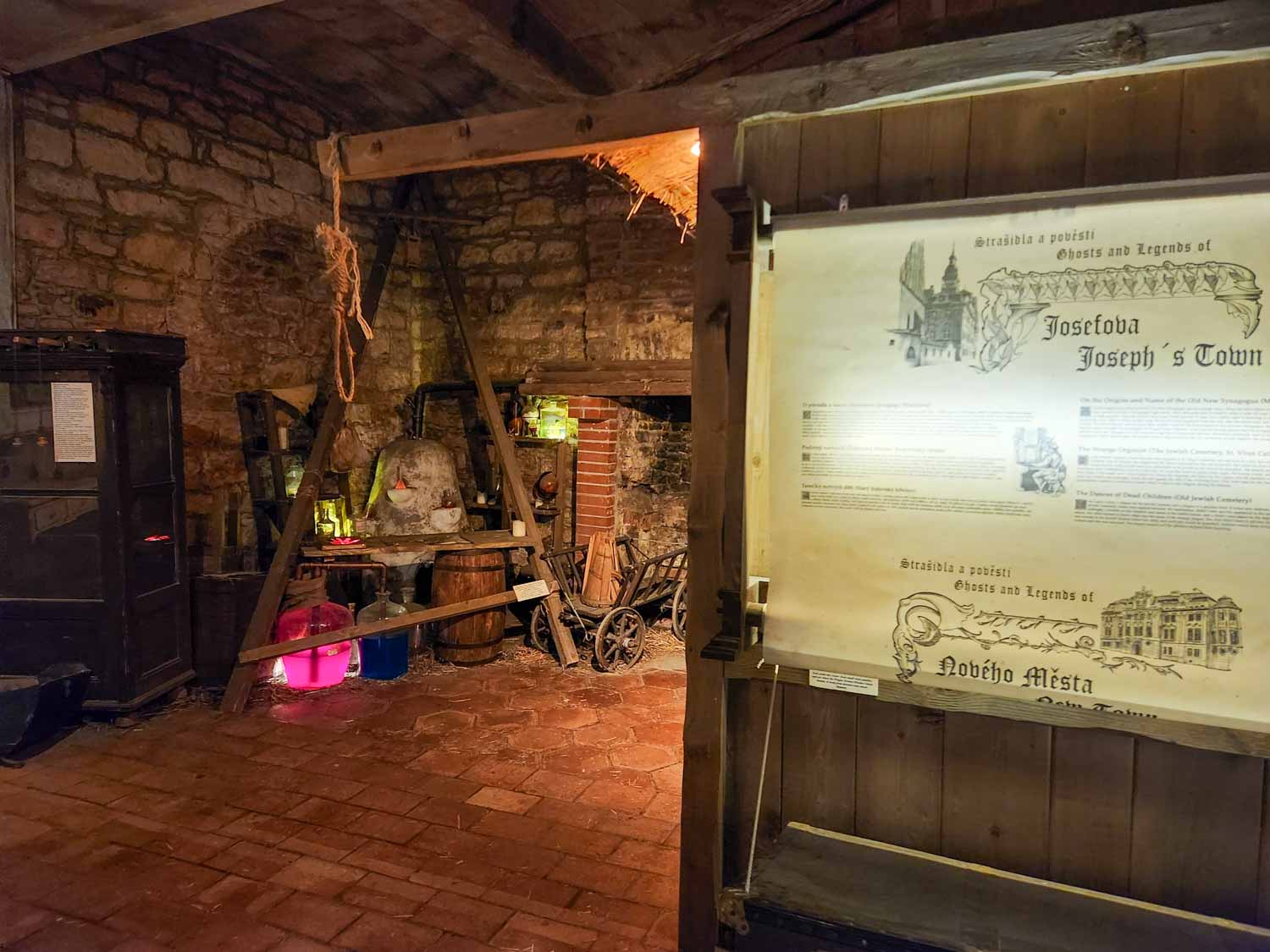
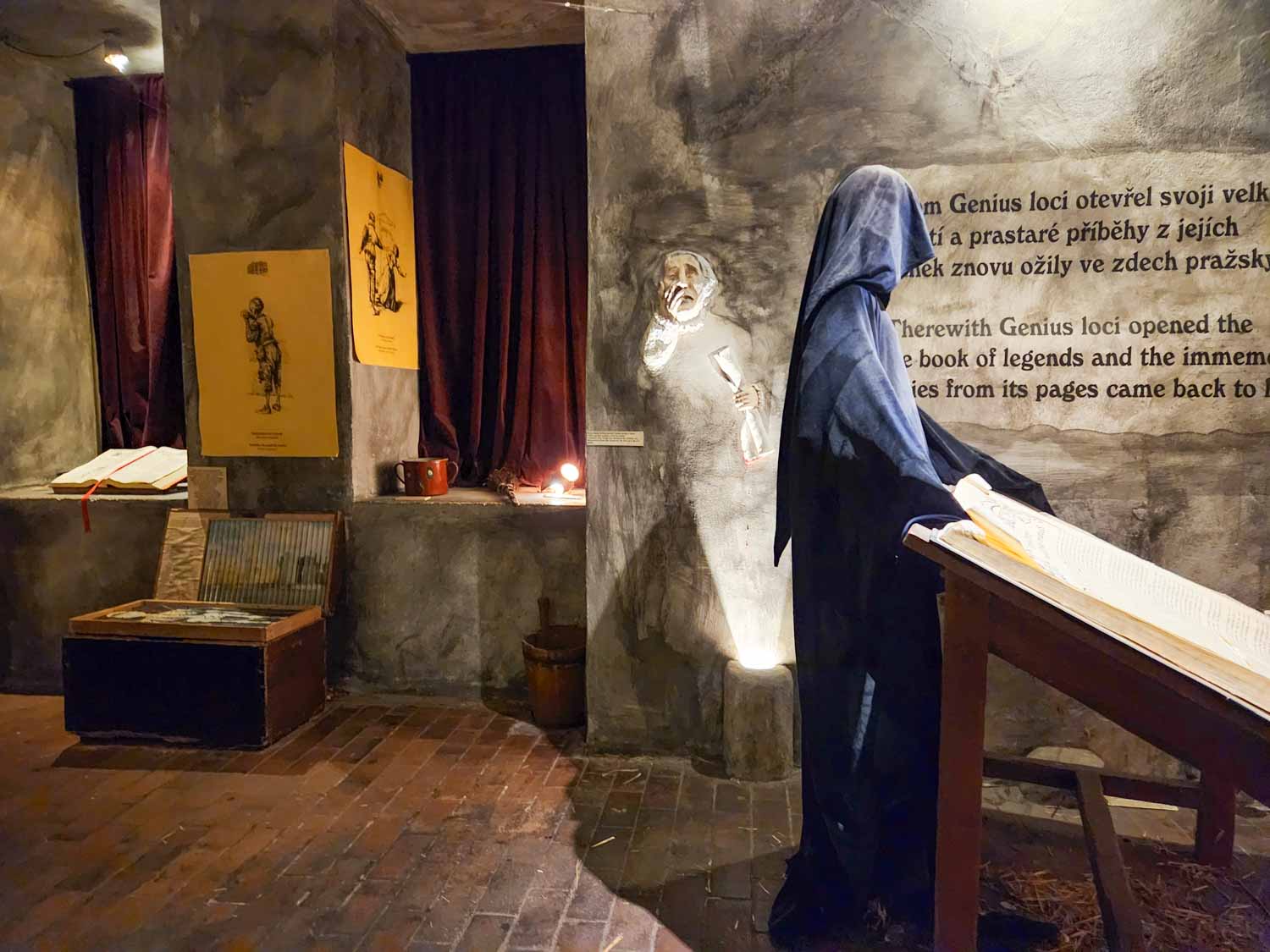
Then the Underground street of ghosts is partly housed in a 12th century basement, where you’re led past the 25 most famous ghosts of Prague, including the golem, a headless Templar who rides through the streets and others.
The sister museum to the Museum of Alchemists and Magicians, this one appealed less to my daughter, who found it a lot spookier but also a bit cheesy, and I wouldn’t recommend it for young children who are likely to find the darker basement quite scary (unless they’re fans of all things ghostly).
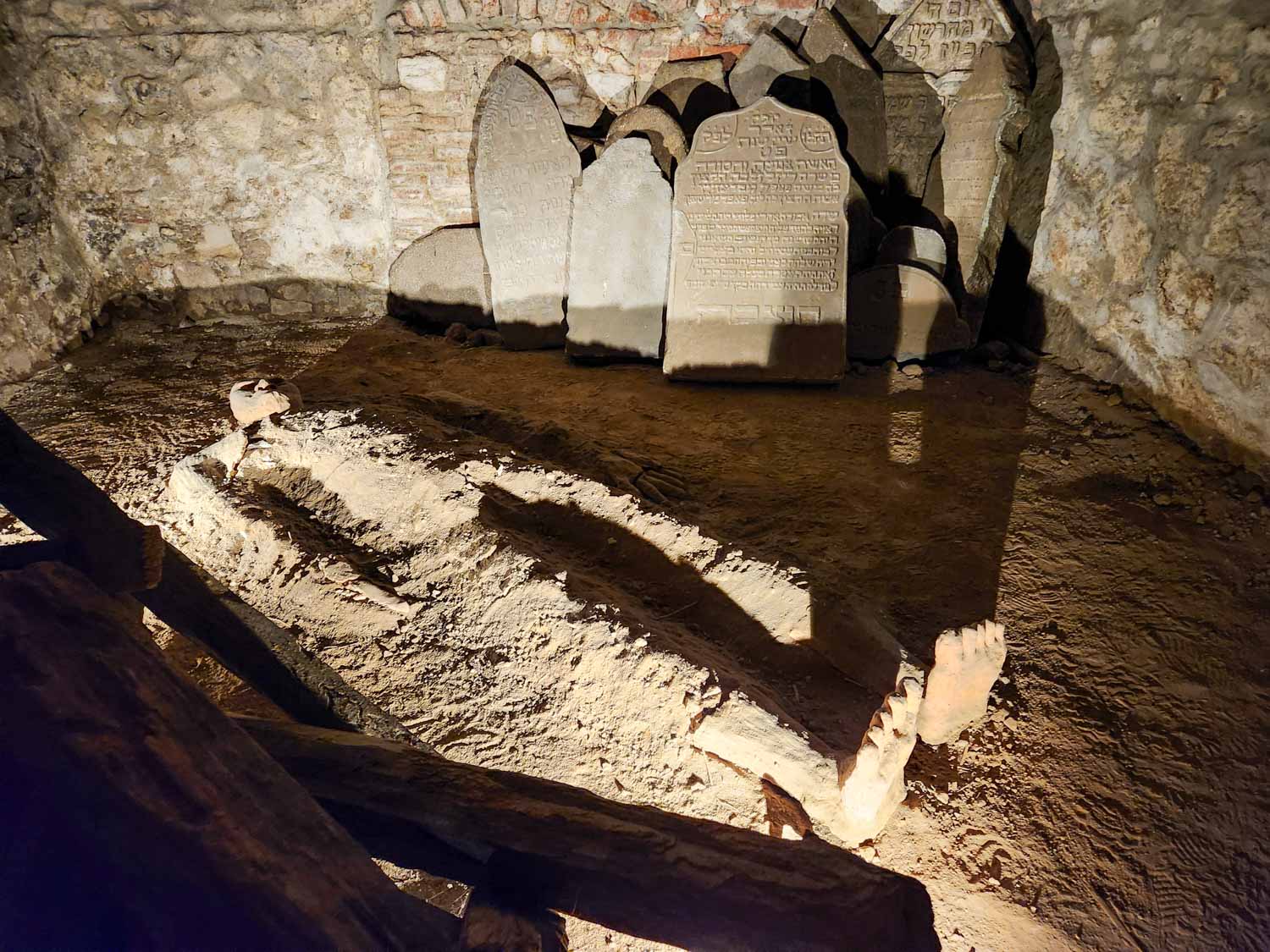
As it was included in our combined ticket, it’s worth a look, especially if your kids are interested in ghosts and legends, but you won’t need to set aside too much time.
Museum of the Senses
If you’re after something a bit different, the Museum of the Senses is Prague’s take on the illusion museums which mess with your perception and trick your eyes – perfect if you’re looking for a break from history, or somewhere to spend an hour on a rainy day in Prague with kids.
Spread across multiple rooms, this interactive museum is packed with optical illusions, sensory experiments and installations designed to confuse and delight your brain. Walk through a vortex tunnel, defy gravity in the anti-gravity room, or try to keep your balance in the tilted room – you can even brave the bed of nails with over 3.500 nails.
The mirror maze is particularly entertaining (and slightly disorientating), while the infinity rooms create the illusion of endless space. Plus, of course, there are a string of photo ops to come away with some weird and wonderful pictures.
Staff are on hand in each room to explain how the illusions work if you’re curious about the science behind them, though you’re equally free to just enjoy the experience without the technical explanations.
The museum isn’t huge, but every bit of space is used creatively with over 50 exhibits to explore, and it’s a short walk from the Old Town’s Powder Gate Tower.
If you can’t get enough of these, there’s also the Museum of Fantastic Illusions, near the Franciscan Gardens, and the Illusion Art Museum Prague, only a couple of minutes from the Old Town Square
Petrin Hill & Observation Tower
Petrin Hill is the perfect little escape from the city if you’re looking for amazing views over Prague or a lovely green space that’s perfect for kids to play.
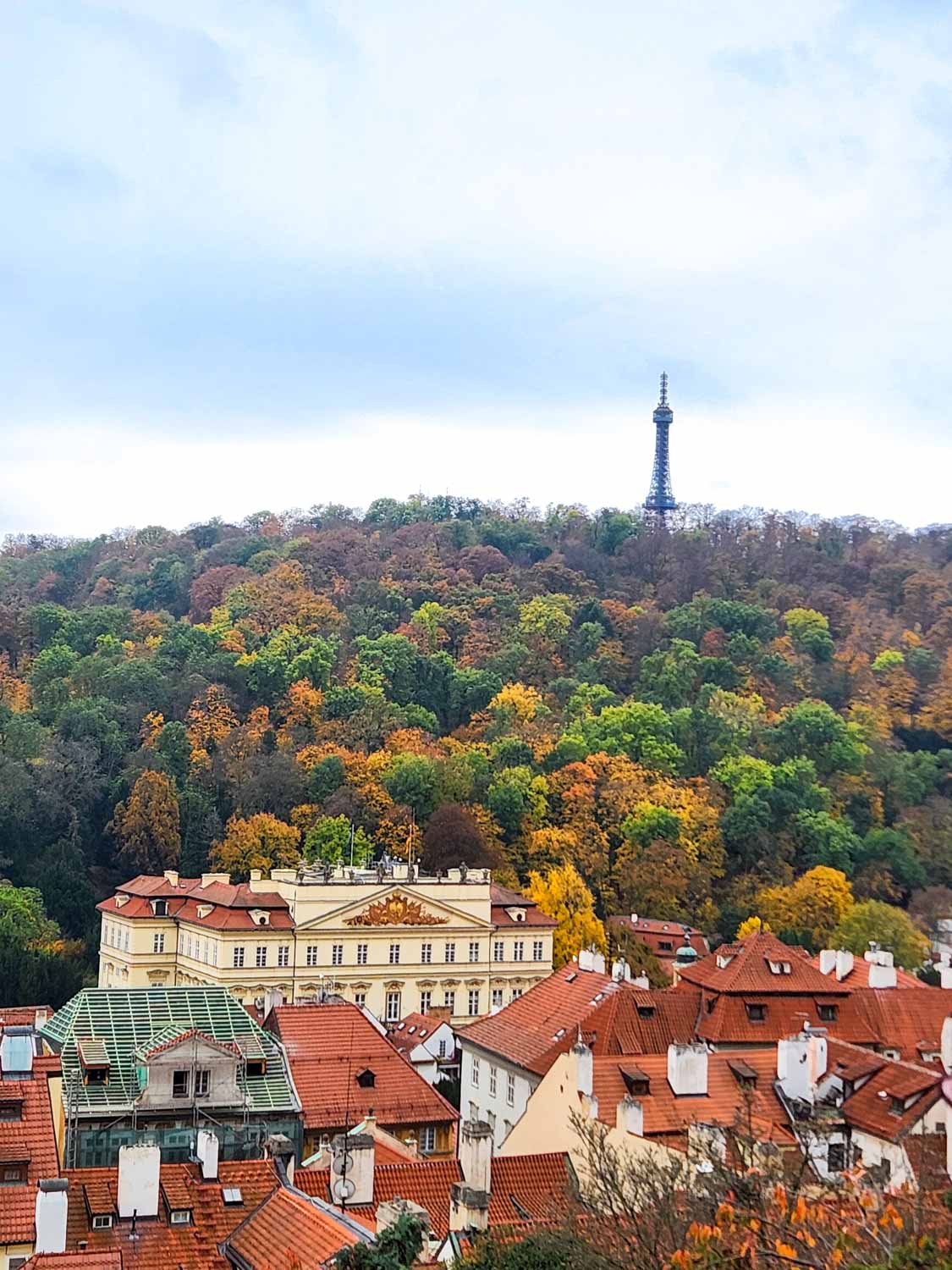
You can stroll up the steep, wooded paths to the top, or if you’re travelling with little ones, jump on the funicular from Újezd Street for an easier journey. EDIT: This is expected to reopen in summer 2026 after reconstruction work on the funicular railway track.
At the top of the hill, you’ll find Petrin Observation Tower, which resembles a mini Eiffel Tower for the best views down onto the city. The park has also a historic mirror maze and carousel nearby, as well as several other attractions including Štefánik Observatory and Church of St. Vavřinec, or simply take a picnic and enjoy a sunny day.
St Nicholas Bell Tower
For a less crowded alternative to some of Prague’s main viewpoints, check out St Nicholas Bell Tower, a former 18th-century watchtower with fantastic views over Malá Strana (Lesser Town) and Hradčany.
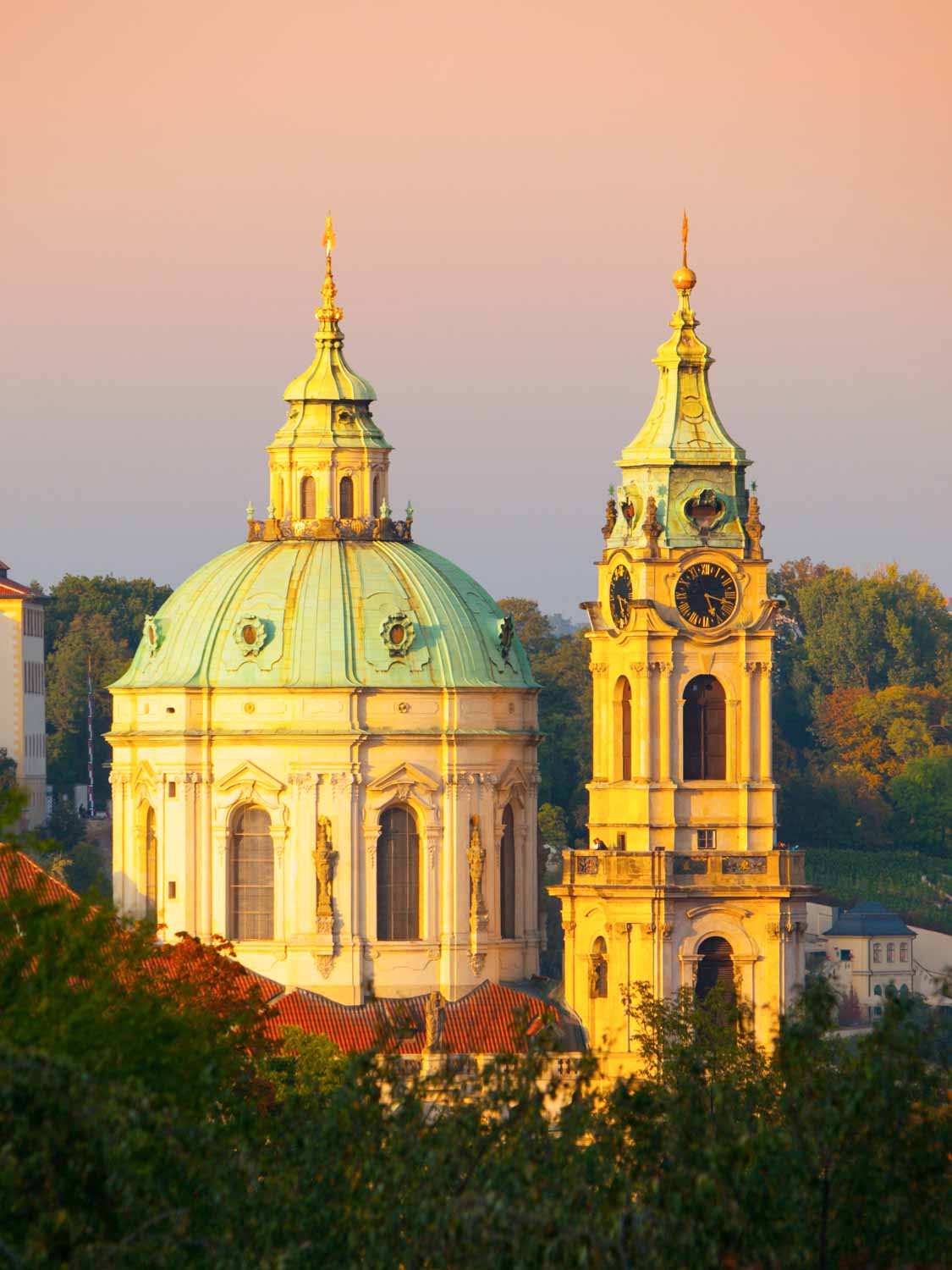
Not one for toddlers, as you do need to climb the 215 steps up the historic staircase to reach the vantage point at the top. From here, you can see out across many of the city’s main landmarks, including the neighbouring Baroque Church of St Nicholas, Prague Castle, and the iconic Charles Bridge.
Older kids will also enjoy exploring the former tower keeper’s apartment and reading the displays about the tower’s fascinating history – it was previously used by the Communist Secret Police to spy on the US and UK embassies nearby!
Buy tickets for St Nicholas Bell Tower with free cancellation here
Prague Zoo
One of Europe’s biggest zoos, Prague Zoo has been open for almost 100 years but still makes a great family day out in Prague.
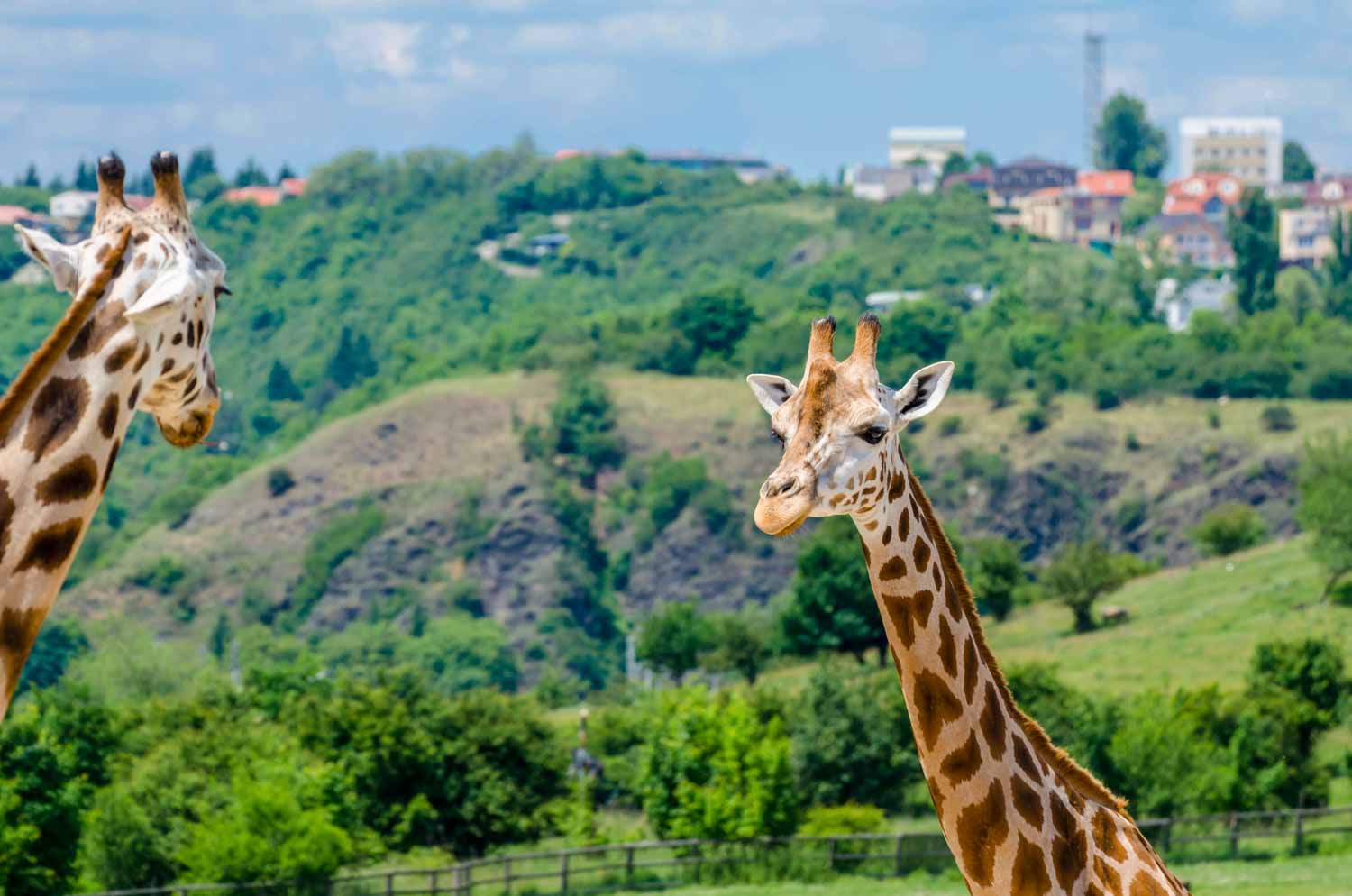
Famous for its ethical practices and conservation efforts, the zoo’s spacious habitats house over 5,000 animals and nearly 700 species. Some of the highlights include the impressive Elephant Valley and the Indonesian Jungle exhibit.
Kids will also love the playgrounds, mini-train, chairlift, petting zoo, and feeding sessions, making it easy to fill an entire day here. And if walking around the huge zoo is too much for little legs, you can jump on a family-friendly guided tour in an electric car instead, and there’s even a little chair-lift cable car to ride on.
Buy skip-the-line tickets for Prague Zoo here
Aquapalace Prague
If you need a break from sightseeing – or a way to cool down if you’re visiting Prague with kids in the summer, Aquapalace Prague water park is just a short drive from the city centre.
Older kids and teens can enjoy the water slides, outdoor and indoor wild rivers, and wave pool, while younger children will love the paddling pool, mini slides, and interactive pirate-themed play area.
The Water World area is great for all ages, while parents can even enjoy some pampering at the connecting Spa World, which has saunas, jacuzzis, and peaceful relaxation areas.
Lego Museum
One of the top places to visit in Prague with younger children, the Museum of Bricks is home to the largest private LEGO collection in the world.
The unique museum has over 3,000 models built from more than a million LEGO bricks. You can see amazing LEGO replicas of famous Prague landmarks, such as the Charles Bridge and the Old Town Astronomical Clock, as well as many iconic buildings from around the world.
There are also several themed areas, including Star Wars and Harry Potter, and an interactive play zone where kids can get hands-on and create their own LEGO creations (including larger bricks for toddlers).
The Playground
The Playground (formerly Hamleys) is a massive multi-level toy store and amusement centre in central Prague that’s a must-visit for families with young kids.
Beyond the endless selection of toys and games, the centre offers numerous interactive attractions, including a carousel, slide, mirror maze, arcade, VR room, laser tag, and even a rooftop butterfly house. There’s also a mini arcade, soft ball pit, and water play area for toddlers.
You can purchase tickets for individual attractions or get an unlimited fun card to spend a few hours enjoying all the activities and games.
National Technical Museum
The National Technical Museum is an unusual family-friendly museum in Prague that’s perfect for aspiring scientists and engineers.
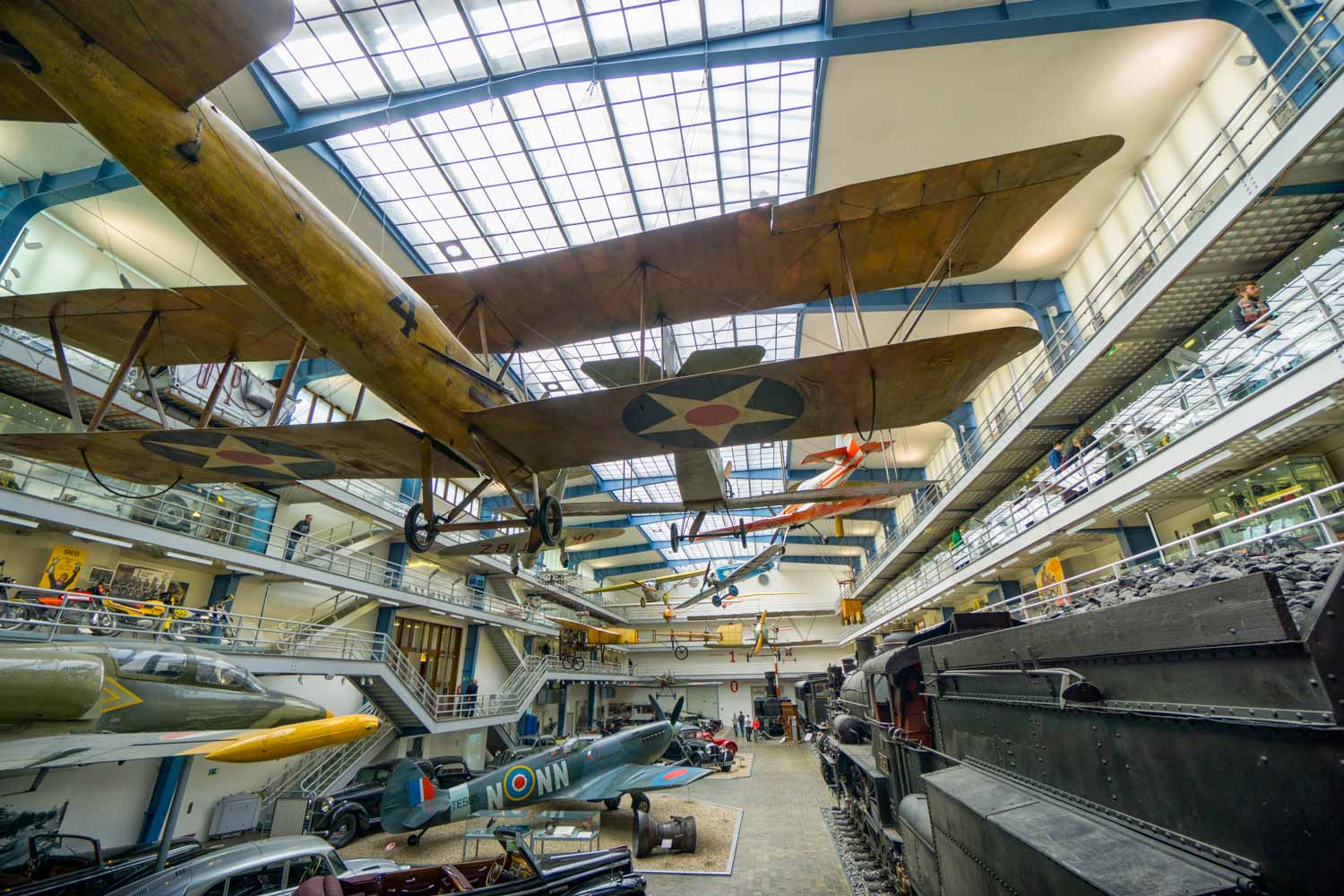
The large museum is dedicated to the history of technology and natural sciences, with exhibits on everything from transport and astronomy to photography and printing.
Older kids will love exploring the many historic planes, cars, and trains, while the interactive construction sets and games in the Merkur children’s corner offer some hands-on fun for younger visitors.
The Prague Visitor Pass includes entry to 70+ attractions including the National Technical Museum, as well as public transport – get a small discount if you book using my link
Výtopna Railway Restaurant
For a memorable family dinner in Prague, head to the Výtopna Railway Restaurant. At this quirky spot, your food and drinks are delivered to your table by miniature trains that wind their way through tracks around the restaurant.
While the food itself isn’t the most gourmet in Prague, there is a good range of burgers, steaks, and kid-friendly options, plus it’s far more entertaining than your average dinner time.
Kingdom of Railways (Království Železnic)
If your kids can’t get enough model trains, save some time to explore Prague’s Kingdom of Railways too.
Set in the modern neighbourhood of Anděl, the museum is home to the largest model railway in Central Europe, with nearly 2,000 feet (600 m) of track winding through intricate cityscapes and lifelike scenes of everyday Czech life.
You can also enjoy simulators made from real public transport vehicles, a giant race car track, exciting VR games, and classic MERKUR construction sets. There’s also a themed soft play area for little ones and a photobooth for some fun family photos.
Letná Park
Letna Park is a lovely green space on the north bank of the River Vltava, with some more fantastic views over Prague’s Old Town.
The huge park has playgrounds, open green spaces, a lake, and plenty of paths to stroll along, while kids can also watch skateboarders and in-line skaters zoom around the famous 32m tall metronome statue – the working metronome replaces the statue of Stalin which used to sit here (once the largest Stalin statue in the world, Khrushchev had it removed and demolished in 1962).
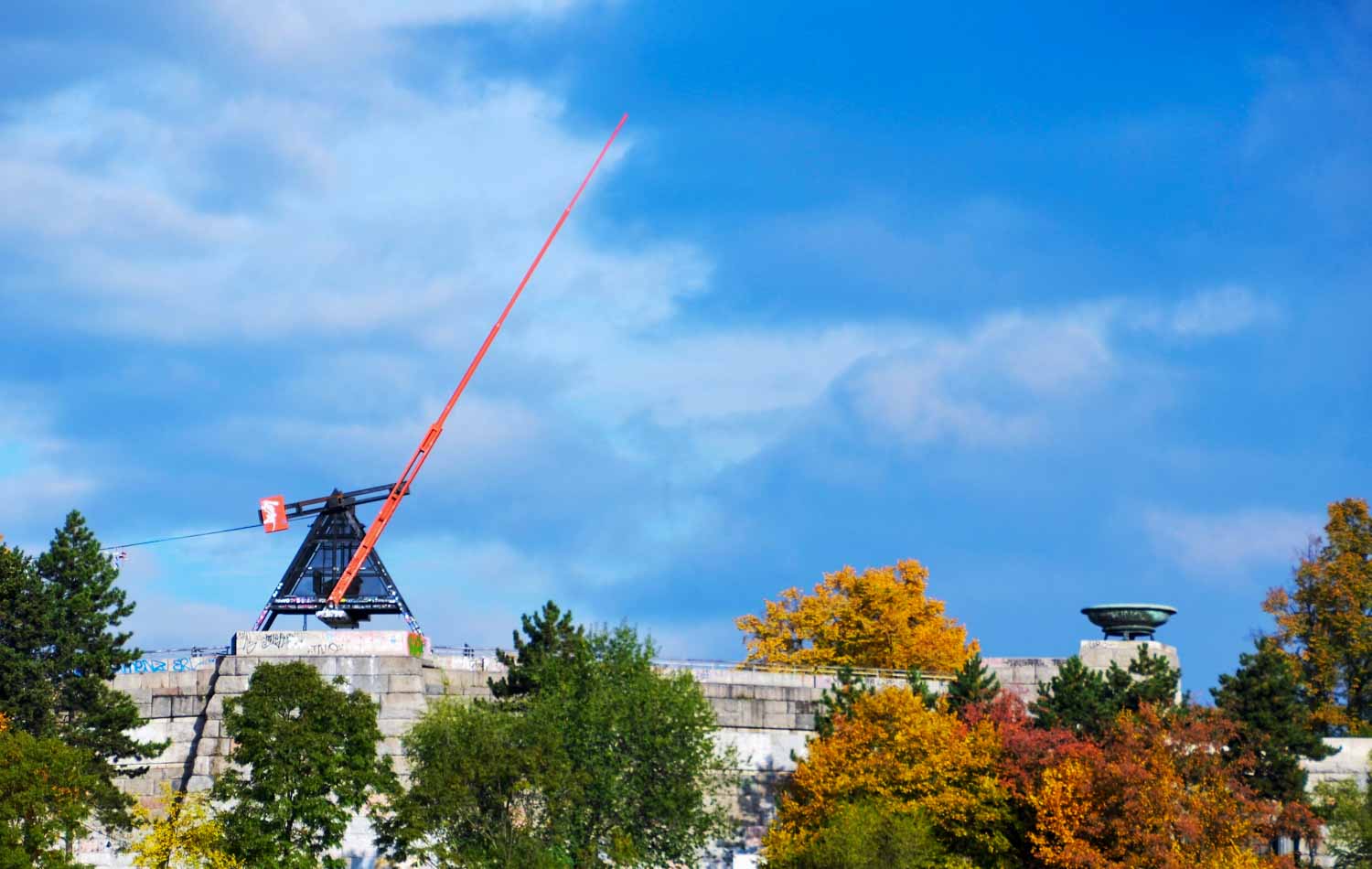
Each August, Letná Park hosts the Letní Letná International Festival of Contemporary Circus, where circus tents fill the park with unique performances. In winter, you can enjoy the park’s seasonal activities including ice skating, making it a great destination for families year-round.
If you need even more green space, Stromovka Park is around 15 minutes away on foot and is Prague’s largest park stretching for around 100 hectares
The Choco Art Museum
You might not immediately associate Prague with chocolate, but when you can have plenty of fun learning all about chocolate’s history and production, The Choco Story Museum is perfect for families with a sweet tooth.
Kids can discover the whole process involved in making chocolate, from bean to bar, along with watching live chocolate-making demonstrations. You can also admire the many impressive chocolate artworks and sculptures crafted by master chocolatiers, including famous landmarks and even the coronation jewels.
The museum also offers hands-on chocolate workshops where kids can craft their own treats to take home. Plus, there are plenty of delicious chocolate samples available to try.
Eat Chimney Cakes
After all the walking you’re likely to do in Prague with kids, chimney cakes are the perfect way to refuel or for a bit of bribery (or just because you’re on holiday and deserve a treat!)
Technically called Trdelnik, they’re made from dough that’s wrapped round a stick and grilled, so you end up with a crunchy caramelised exterior and a soft interior.
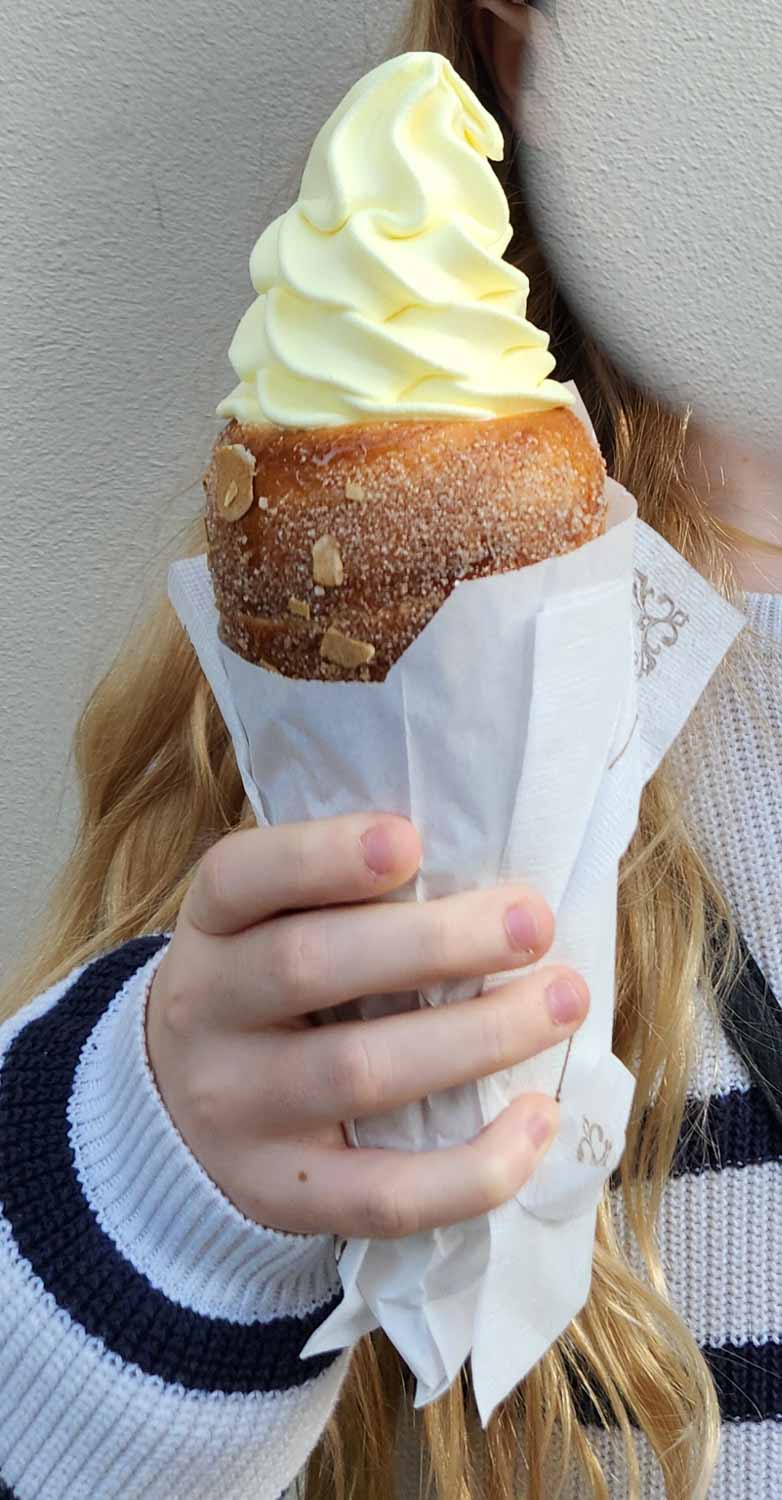
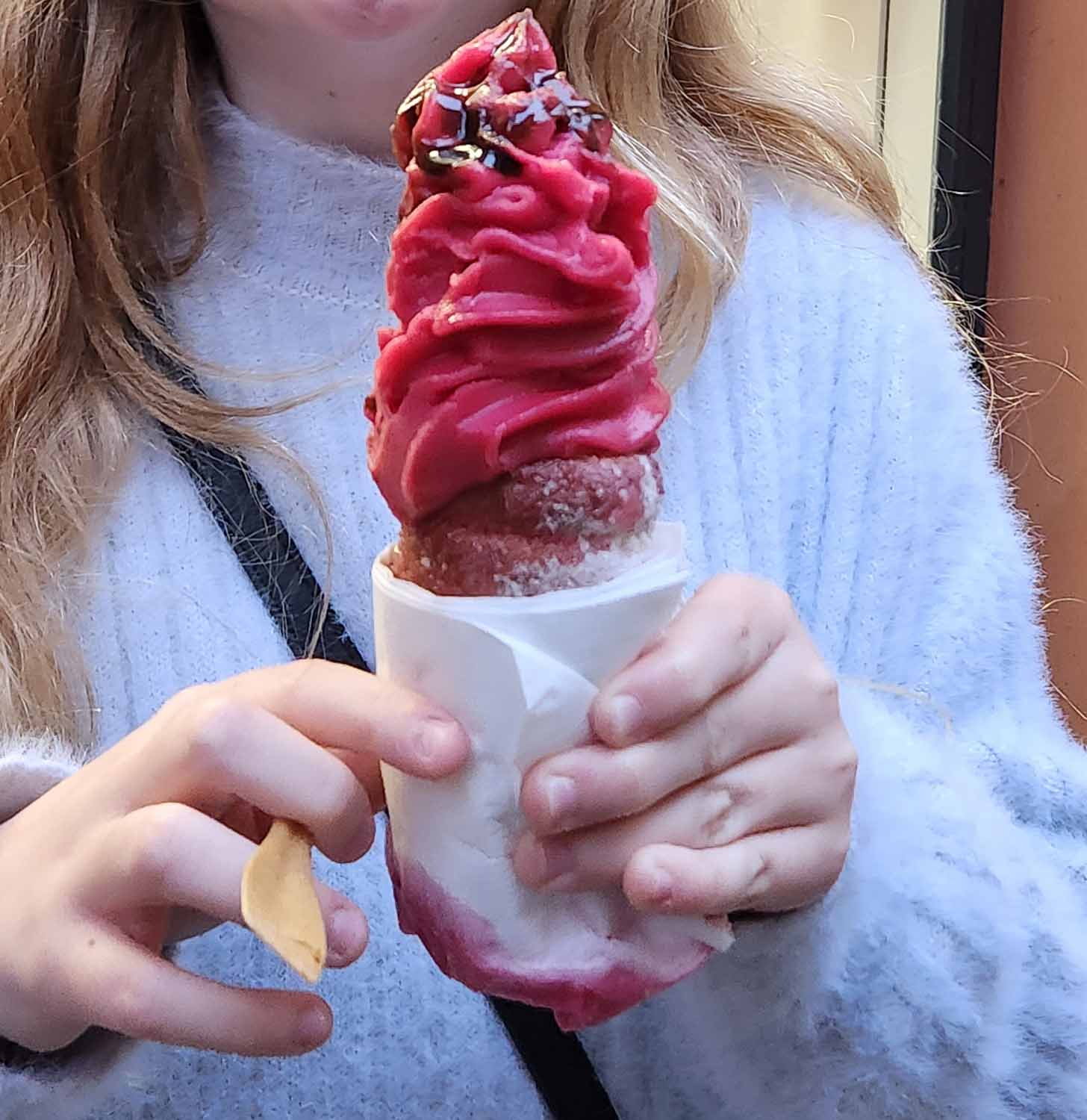
Traditionally they come plain with cinnamon and sugar, but you’ll find them everywhere in Prague filled with cream, multiple flavours or ice cream, or decorated with nuts, crushed biscuits or fruit – my daughter loved the ones filled with berry sorbet and studded with blueberries.
Although these chimney cakes aren’t traditionally Czech at all; they made their way from Hungary to a town on the border of Slovakia and Moravia, where they became popular. They’ve made their way to Prague far more recently, but with chimney cake sellers on (apparently) every corner, it’s safe to say they’ve caught on in a big way!
Black Light Theatre
A Black Light Theatre show is a unique Prague tradition that’s an unforgettable family experience while you’re in the city.
The mesmerising shows use black lighting and fluorescent costumes to create colourful visuals and illusions on a dark stage. Each show combines music, dance, pantomime, acrobatics, and puppetry, all synchronised with stunning lighting effects to bring stories to life in a visually captivating way.
The shows are performed entirely without any dialogue, making them ideal for children of all ages and non-Czech speakers – do check the recommended ages before booking, and as you’re sitting completely in the dark, it’s not ideal for younger kids who might find it scary.
There are a string of black light theatres to try – check out SRNEC, Image Theatre and Wow Black Light Theatre among others.
Kampa Museum & Kampa Island
Just a short walk from the Charles Bridge, Kampa Island and Kampa Museum are a great escape for families, whether you’re looking for some green space or some of Prague’s most unusual modern art.
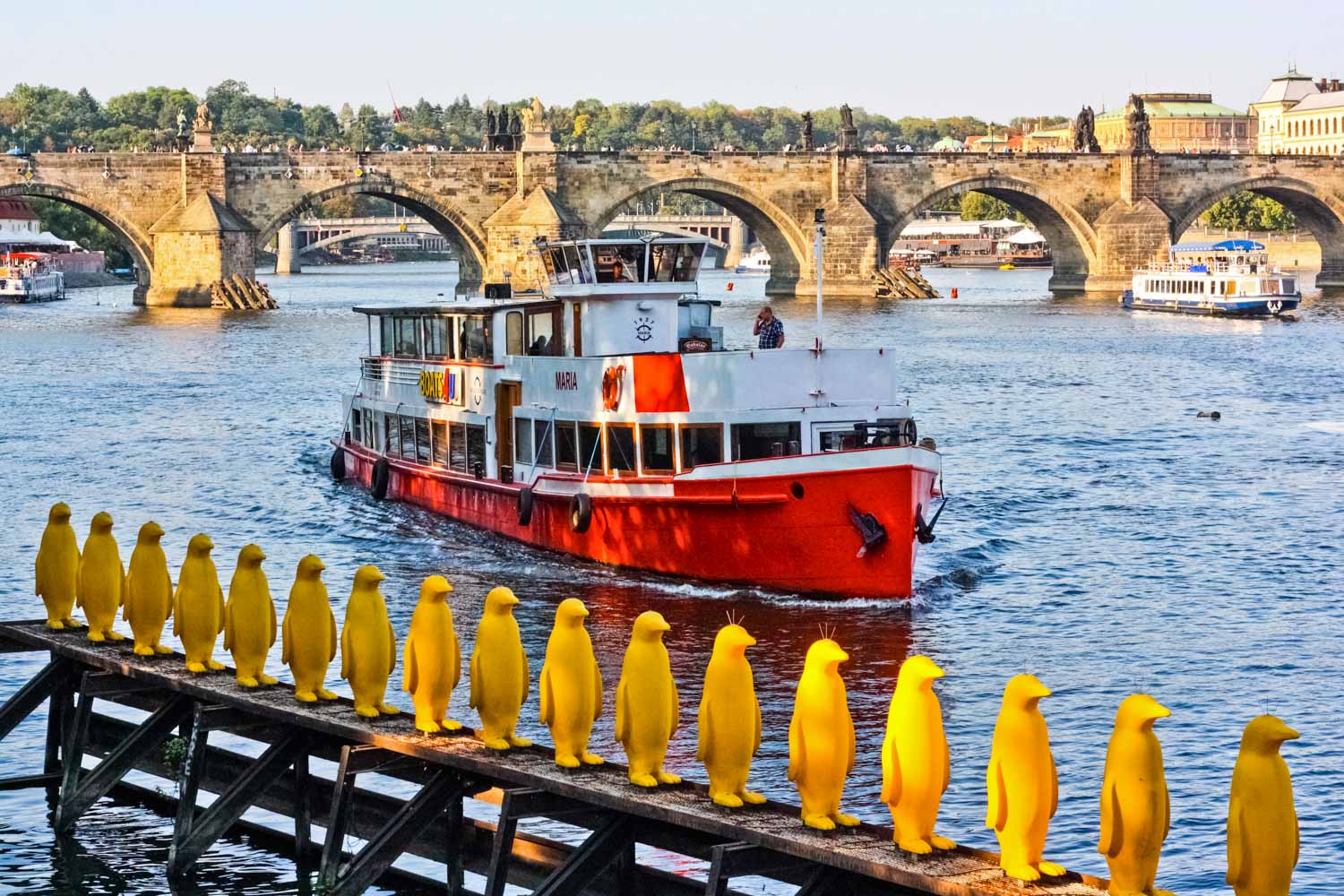
At Kampa Museum, everything is designed to get you thinking, from the giant crawling baby statues to fluorescent penguins, plus you can also find the John Lennon mural nearby.
Packed with some of the singer’s quotes, as well as graffiti added by visitors over the years, this was an important symbol of peace during the 1980s when Prague was behind the Iron Curtain.
Keep heading south from Kampa Island and you’ll also reach Children’s Island with its playground – great for burning off energy after sightseeing in the Mala Strana – and the famous ‘Dancing House’, the quirky Nationale-Nederlanden building with its dramatic angles
Getting Around Prague
Prague’s centre is very compact, with most major attractions in easy reach of each other on foot – if you’re starting from the Old Town, you can easily spend most of a day exploring one area, so avoid zigzagging around too, with lots of pedestrianised areas that make it even better to wander.
Do be prepared for cobblestones though if you’re dragging a suitcase or pushing a pushchair.
For longer distances or when you fancy saving your legs, Prague has a great public transport network of metro, trams and buses.
The Prague Visitor Pass includes public transport as well as entry into attractions, which can be simpler if you only plan to use it occasionally – plus there’s a small discount if you book using my link
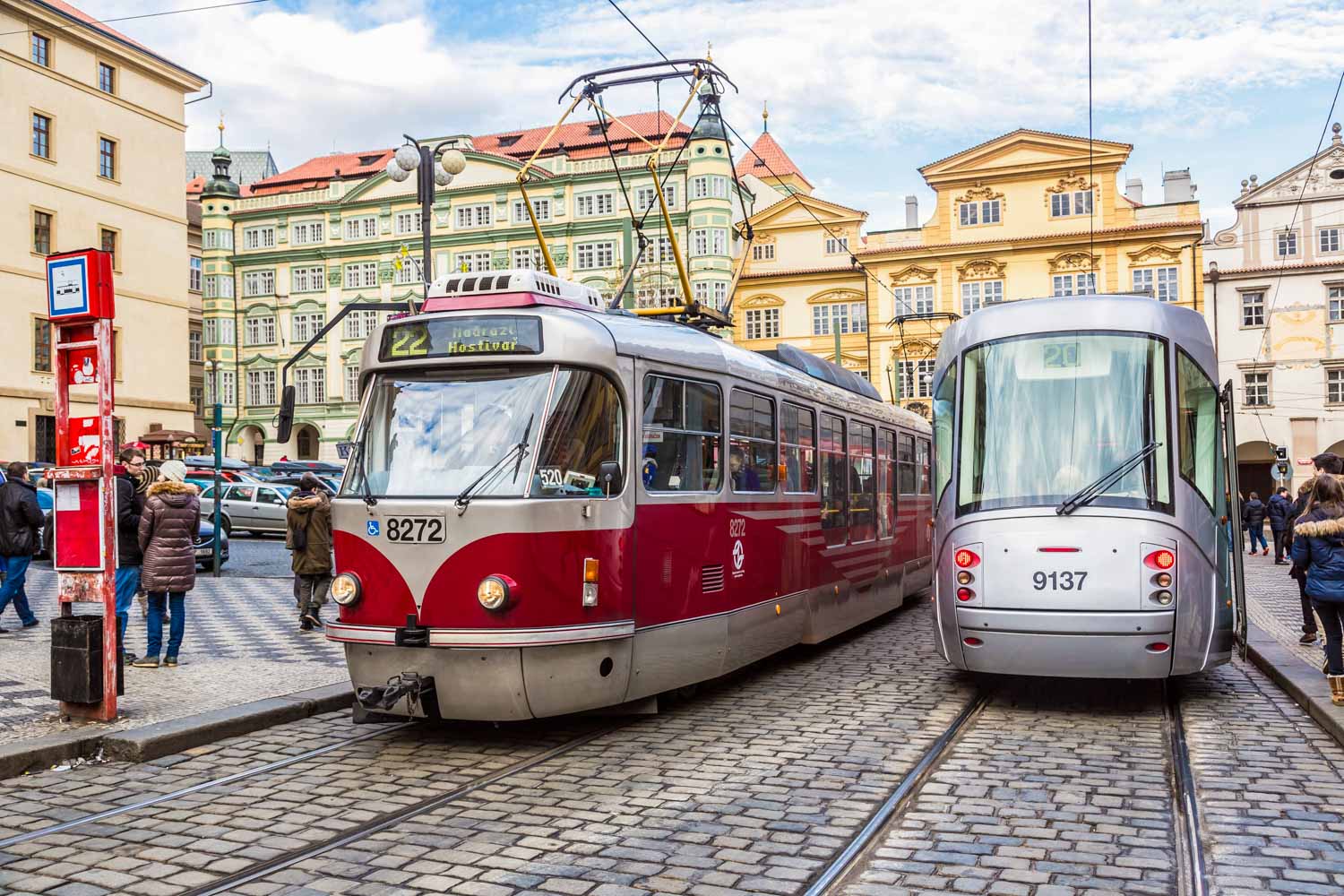
If you’re staying further out, the metro is a great way to get around quickly, but otherwise the tram system is one of the best options to get around the city’s historic streets – there’s 150km of tram network so they go pretty much everywhere.
Tram 22 is particularly useful for visitors as it connects many of the main sights, including Prague Castle, the Lesser Town and the New Town.
You can buy a 24-hour pass or 72-hour pass which include the funicular, or single tickets lasting 30 minutes (as well as 90-minute tickets, which are only slightly more expensive and allow you to make changes) – the 24-hour pass is the equivalent of four single journeys. Children under 15 travel free, but those aged 10-15 need proof of age such as a passport (there are different rules for trains).
You’ll find machines at stops and in metro stations, as well as on trams or in the PID Litacka app – make sure you activate it in the app before boarding.
At stops, you’ll find a mix of older machines which only take coins and newer touchscreen machines; you’ll need to validate your ticket as soon as you board (only once for 24h/72h passes, or a 90-minute ticket if you’re using it again within the time limit). There are regular inspections, and you will be fined if you haven’t.
The touchscreen machines on the trams issue tickets with the validity printed on them, so you don’t need to revalidate those.
If you’re looking at the best way to travel from the airport to Prague’s Old Town, the metro doesn’t extend that far, so you’ll need to use buses or taxis – Uber and Bolt operate in Prague, or you can prebook with Welcome Pickups.
Disclosure: This post contains affiliate links – any purchases you make are unaffected but I may receive a small commission
Images: Daliborka Tower/Castle gardens/National Museum/St Nicholas Church/Prague Zoo/Technical Museum/Letna Park/Kampa Island/tram courtesy of Depositphotos, all other photos copyright MummyTravels