Published on
December 1, 2025

For decades, the tourism narrative of the Eastern Mediterranean was simple: come for the summer sun, leave before the autumn rain. But as 2025 draws to a close, two of the region’s titans—Egypt and Greece—are proving that the old rules no longer apply. Through a combination of record-breaking infrastructure projects and imaginative thematic experiences, both nations are successfully transforming into 365-day destinations, albeit via very different paths.
While Egypt is banking on the monumental allure of the newly opened Grand Egyptian Museum and the eternal warmth of the Red Sea, Greece is turning the temperature down, embracing the cold with festive theme parks that rival the markets of Central Europe.
Egypt: The “GEM Effect” and a 21% Surge
The numbers coming out of Cairo are nothing short of historic. The Egyptian Tourism Federation has announced that the country welcomed 15.6 million tourists in the first ten months of 2025 alone. This represents a staggering 21% growth compared to the previous year, signaling that Egypt has fully shaken off the dust of post-pandemic recovery to enter a new golden age.
The announcement, made by Ehab Abdel-Aal during the RTK International conference in Hurghada, was strategic. Standing before 450 German travel agents—key gatekeepers of the European market—Egyptian officials showcased a country that has modernized its offer.
The catalyst for this explosion in numbers is undoubtedly the Grand Egyptian Museum (GEM). After years of anticipation, its official opening on November 1, 2025, has acted as a global magnet. Cultural tourists who once spent only a day in Cairo are now booking extended stays to explore the world’s largest archaeological museum.
However, the growth isn’t just cultural. The Red Sea coast, particularly Hurghada, has reinvented itself as a hub for eco-tourism and luxury, moving beyond the budget “sun and sand” packages. With the year-end target of 18 million visitors well within reach, Egypt is now setting its sights on a monumental goal: 30 million annual tourists by 2028.
Greece: The Magic of the “Mill” and the Rise of the Mountains
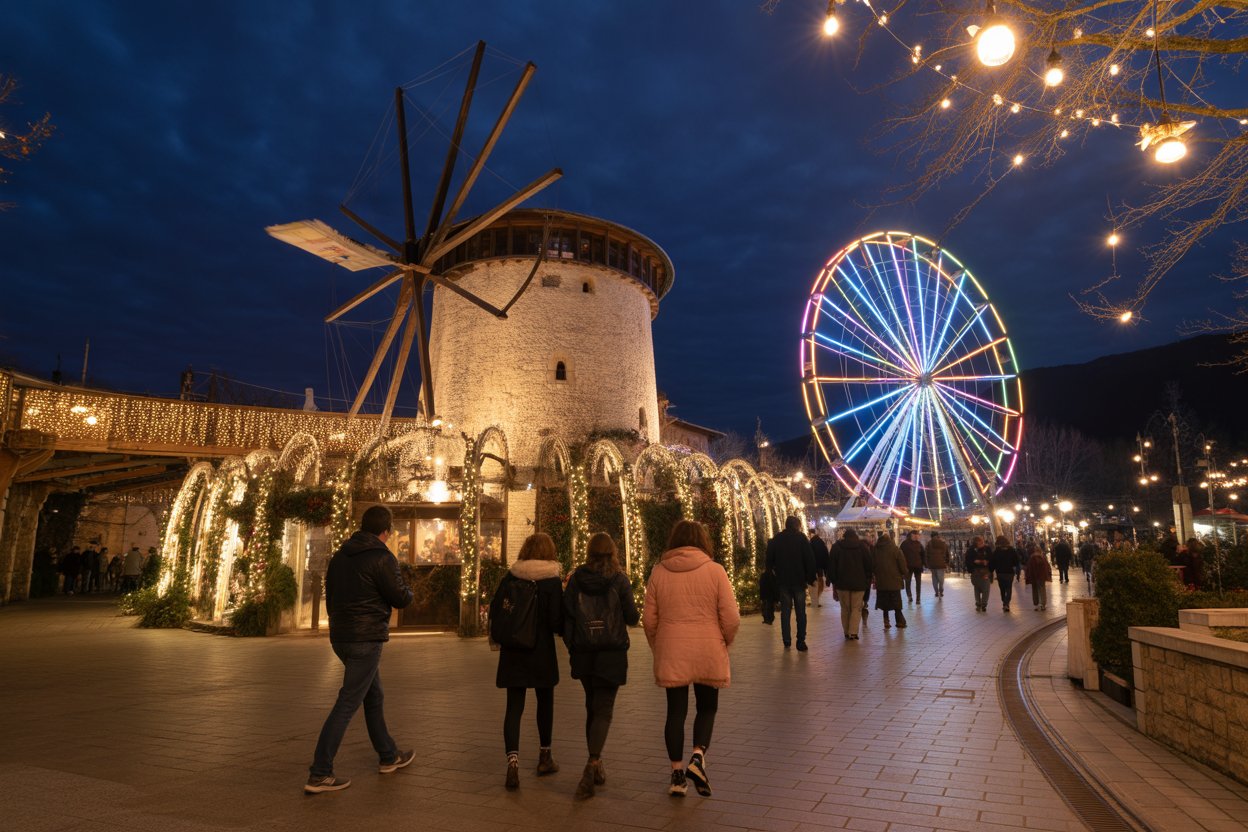
Across the Mediterranean, Greece is tackling the challenge of seasonality with a touch of magic. While the islands hibernate, the mainland is coming alive with a series of spectacular holiday theme parks that are reshaping the country’s winter identity.
Leading the charge is the “Mill of the Elves” (Mylos ton Xotikon) in Trikala. Running from November 21, 2025, to January 6, 2026, this year’s edition transports visitors to a “Neverland” inspired by Peter Pan. It is a masterclass in thematic tourism. Admission is free, but the economic ripple effect is massive. Weekend hotel occupancy in the region has hit 90%, with visitors using Trikala as a base to explore the nearby UNESCO-listed Meteora monasteries and local ski resorts.
Further north, the city of Drama is preparing to launch “Oneiroupoli” (Dreamland) on December 4. This festive village has become a magnet for the Balkans, drawing thousands of visitors from Bulgaria and Turkey who cross the border for the Christmas markets, ice rinks, and the unique “molecular pastry shop” experiences.
These parks are not just local fairs; they are strategic assets. They are proving that Greece has a viable “winter product,” shifting the focus from the beaches of Mykonos to the snow-capped peaks of the Pindus range.
A Tale of Two Strategies
The divergence in strategy highlights the versatility of the region.
Egypt is leveraging Scale and Climate: Using massive infrastructure (GEM, new airports) and reliable winter sun to attract volume.Greece is leveraging Niche and Atmosphere: Creating specific, high-quality events to lure travelers into the unexplored interior, extending the season through “experiences” rather than weather.The Economic Impact
For local economies, this shift is vital. In Egypt, the surge translates to hard currency—vital for the national economy—and job creation in the service sectors of Cairo and the Red Sea. In Greece, the “winter wonder” strategy spreads the wealth. It brings tourism dollars to the mountainous regions of Thessaly and Macedonia, areas that historically saw little benefit from the summer island boom.
The Verdict for Travelers
For the global traveler, 2026 offers a delightful dilemma. You can choose the “Winter Sun” of Hurghada, diving in the Red Sea and walking the halls of the GEM, or the “Winter Fun” of Trikala, sipping hot chocolate in an elf’s workshop before climbing the rocks of Meteora.
The Eastern Mediterranean has effectively cancelled the “off-season.” Whether you seek the pharaohs or the fairies, the region is open for business.
