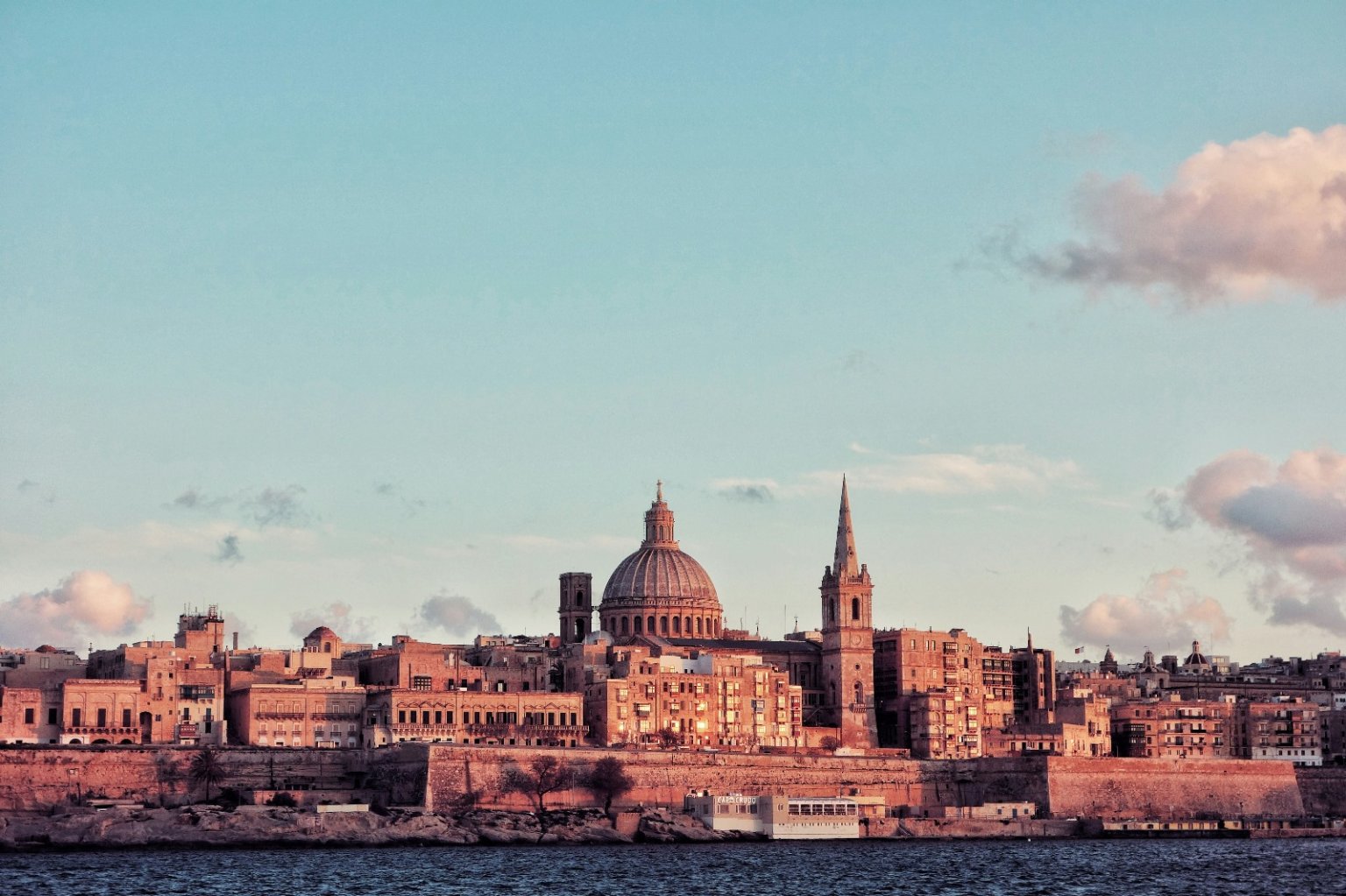
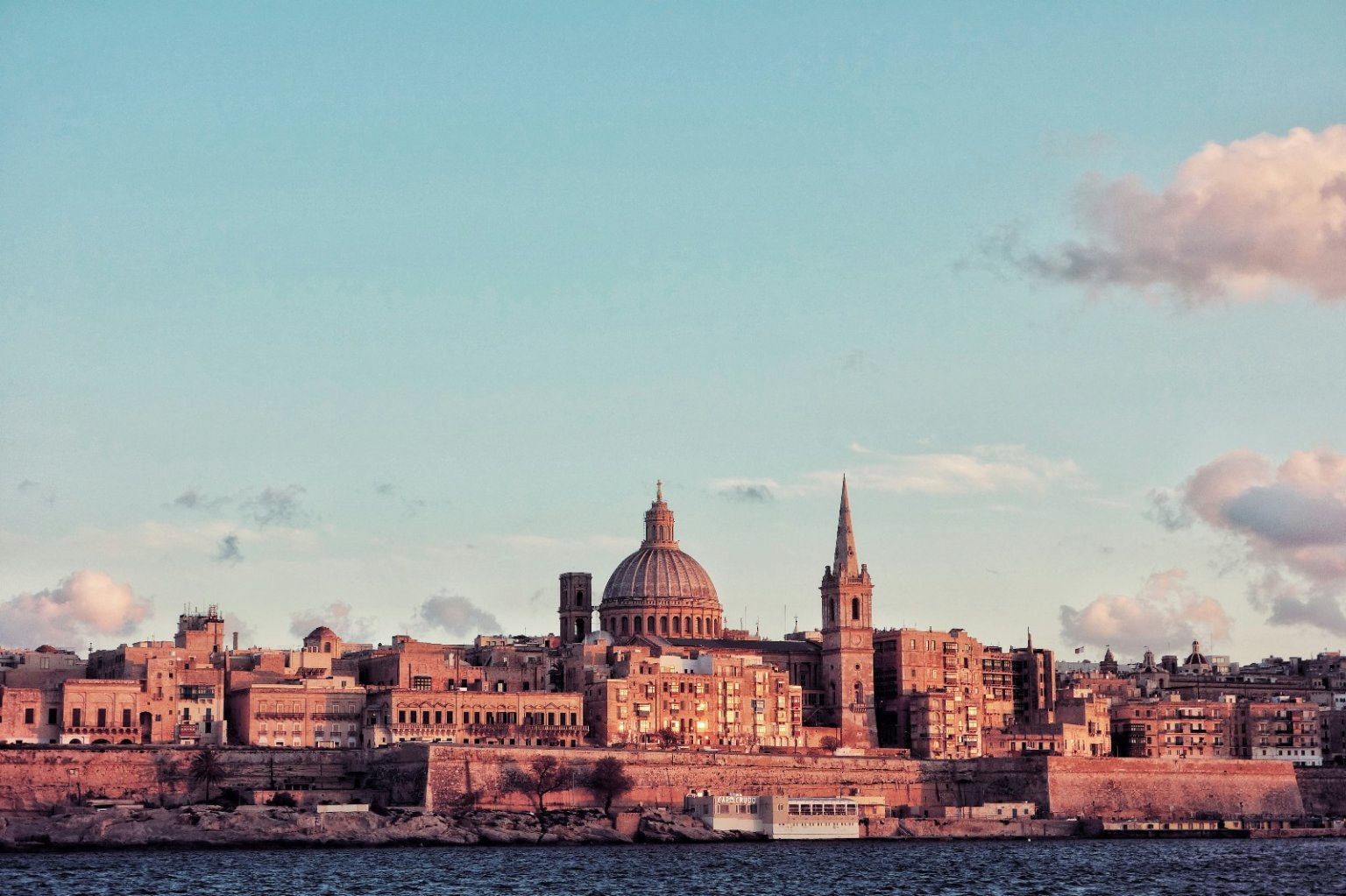
 Photo: Micaela Parente/Unsplash
After nearly 500 years of de facto serving this role, Valletta is now finally being officially recognised as the capital of Malta, through a constitutional amendment discussed – and in principle agreed upon – by Parliament on Monday.
Discussion on the constitutional amendment is still ongoing, but the general outcome is a foregone conclusion with the opposition confirming its support of the brief, simple bill.
The first chapter of the Constitution of Malta presently defines the country’s official religion (the Roman Catholic Apostolic Religion), the national flag, the national anthem (L-Innu Malti) and two of Malta’s three official languages (Maltese and English; the official status of the Maltese Sign Language comes through an ordinary act of law).
But it presently does not define – or even mention – the country’s capital, despite the obvious national and global consensus that has long considered Valletta to be such.
Valletta is home to the Office of the President, Parliament, the Office of the Prime Minister and many ministries and the Law Courts. Despite its small size and population within its legal borders – it is presently home to just over 5,000 people, and the number is declining over the years – it is at the centre of an urban area that, even if calculated conservatively, is home to the majority of the country’s population.
But the only city presently mentioned in the Constitution of Malta, as highlighted by minister Owen Bonnici in Parliament, is Athens, through a 2003 amendment recalling the signing of the treaty of accession to the EU at the Greek capital that same year.
Valletta will now become the second city to earn a mention through a new article – Article 5A – which specifies simply that “the Capital City of Malta is Il-Belt Valletta (Città Umilissima).” The bill also adds a reference to this new article to Article 66, which concerns the manner in which Parliament can alter the Constitution.
December 27 to become national anthem day
The proposed bill, however, adds another amendment to the first chapter of the Constitution, altering Article 4: the article confirming that L-Innu Malti is the national anthem.
The amendment establishes that 27 December will be “Jum l-Innu Malti” – Maltese national anthem day – though it does not provide any details of what this would entail.
The date recalls the day in which the anthem – which sets lyrics written by Dun Karm Psaila to music by Robert Samut – was first performed before the general public, during a concert at the Manoel Theatre which took place on 27 December, 1922.
PN MP insists Valletta must not become ‘soulless museum’
In his speech, Bonnici said that he hoped that the bill would receive unanimous approval: confirmation soon came from shadow minister for culture Julie Zahra, who confirmed that the opposition would back the amendments and ensure that they met the two-thirds majority required to amend the Constitution of Malta.
As she did so, however, the PN MP insisted that the amendments being were presented as a sop to Beltin while the authorities were doing nothing to stop Valletta’s transformation into a “second Paceville.”
Zahra, whose father hails from Valletta, expressed concerns about the city’s declining population as she insisted that the city must be a place in which people can live in, as well as visit and enjoy.
“The residents are the living heart of Valletta,” she said. “Without them, our capital becomes a soulless museum.”
Fellow PN MP Darren Carabott – whose constituency includes Valletta – recalled the controversial 2022 legal notices extending the curfew for live music within various parts of Valletta from 11pm to 1am, to the chagrin of residents.
He also recalled that prime minister Robert Abela had admitted, after a group of adolescents were attacked unprovoked by a slightly older group in 2023, that he did not feel comfortable letting his daughter walk alone in the streets of the country’s capital.
On his part, Carm Mifsud Bonnici suggested a further amendment to Article 4, arguing that it should include the national anthem’s lyrics in their entirety, rather than just its opening line as at present.
He also questioned Bonnici’s suggestion that the opposition would in any way be opposed to the bill, as he maintained that the bill had a tinge of “political opportunism” and questioned why the government felt the need to push it up the queue in Parliament’s agenda.

