Normal text sizeLarger text sizeVery large text size
If there were a dictionary entry for Donald Trump’s catchphrase “drill, baby, drill”, it might be accompanied by a photo of Meg O’Neill.
The American chief executive of Woodside Energy is bringing the Australian oil and gas giant back to her old home. Its $US17.5 billion ($26.71 billion) Louisiana LNG project, just off the Gulf of America/Mexico, is the company’s biggest US investment, and the largest foreign direct investment in Louisiana’s history.
The gas yield is potentially massive: 27 million tonnes a year. That’s basically equivalent to Woodside’s combined Australian operations. Trump’s energy and interior secretaries have praised the project for helping unleash “American energy dominance”. Speaker Mike Johnson appeared virtually at the groundbreaking.
Woodside bought the Driftwood LNG project, as it was then known, last year under Joe Biden, but made a final investment decision in April. If the US is “open for business”, as the president likes to say, Woodside is shaping up as a great customer.
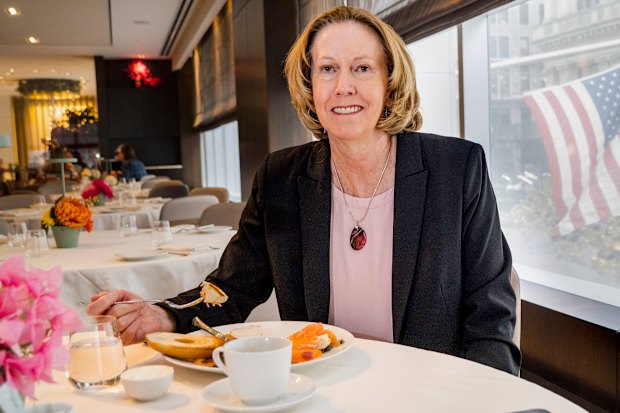
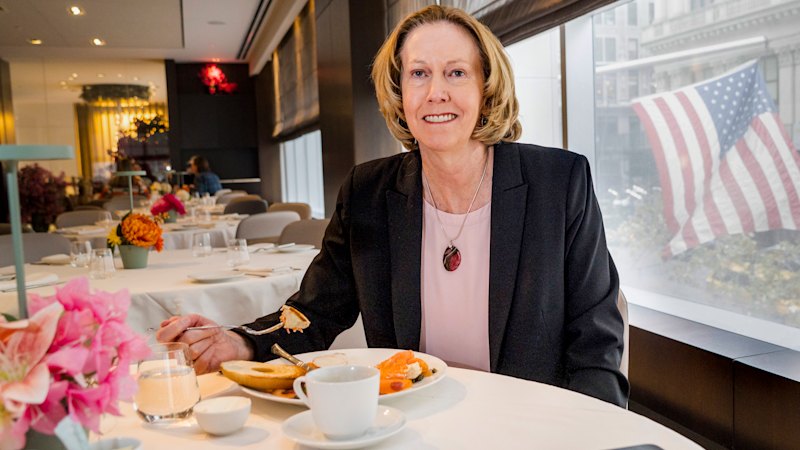
“I had a ‘don’t ask, don’t tell’ approach to who I was at work,“: Woodside chief executive Meg O’Neill came out when she moved to Australia.Credit: Photo: Ben Sklar
We are bending the rules of this column: O’Neill and I are meeting for brunch, and the restaurant, Ai Fiori, has no real significance other than its convenient location at the Langham Hotel, where she is staying in New York.
We get our orders in quickly: I indulge my Australian sensibilities with avocado toast and a cortado (effectively a piccolo), while O’Neill goes for a salmon bagel and black coffee. Despite seven years in Australia, O’Neill is yet to embrace espresso culture. “I like American-style filtered coffee,” she says. “I brew coffee at home every morning and bring in a thermos.”
O’Neill grew up in the college town of Boulder, Colorado, studied at Massachusetts Institute of Technology and joined ExxonMobil. The job took her around the world, including Indonesia, where she split her time between Jakarta and the gas fields of Aceh – and she was there for the devastating 2004 tsunami that killed at least 225,000 people. She has also lived in Texas, Norway and the remote Canadian city St John’s on Newfoundland island.
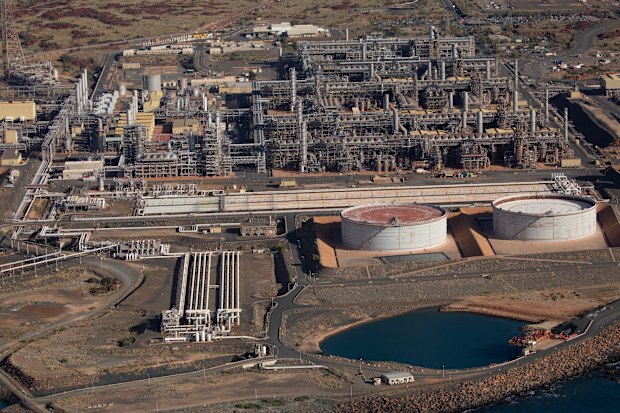
The North West Shelf Karratha gas plant on the Burrup Peninsula is now licensed to operate until 2070.Credit: Krystle Wright
In 2018, O’Neill joined Woodside as chief operating officer and moved to Perth, becoming its CEO in 2021. She spent most of her career in the closet – “I had a ‘don’t ask, don’t tell’ approach to who I was at work,” she says – but moving to Australia was the opportunity to come out. She is one of a handful of openly gay people to have led an ASX200 company.
Loading
This is O’Neill’s seventh trip back to the US this year. You can see why she might be more comfortable on this side of the Pacific right now. Here, the motto is “drill, baby, drill”, but in Australia, Woodside faces growing scrutiny of its climate and environmental impact.
That includes an embarrassing 58 per cent of shareholders who voted against the company’s climate report at last year’s annual meeting, and a legal challenge to Environment Minister Murray Watt’s decision to approve an extension of Woodside’s North West Shelf LNG project to 2070. The UN’s special rapporteur on climate has just joined the case as an amicus curiae.
It doesn’t rattle O’Neill. She believes the discourse is changing: not just because of the new administration in Washington, but a growing realisation that powering the artificial intelligence era and its energy-hungry data centres will require massive supplies of reliable energy, including from fossil fuels.
She says Trump’s pro-energy, anti-climate dogma is having an impact outside the US, including in Australia.
“It’s challenging some views that have been probably accepted without a lot of question or debate for a few years,” O’Neill says.
“It’s opening the conversation up to one that’s not just, ‘We have to solve climate change and forget about everything else’, to one that says: actually, we have to solve a number of different problems, and the solution may not be perfect for any one of those dimensions.”
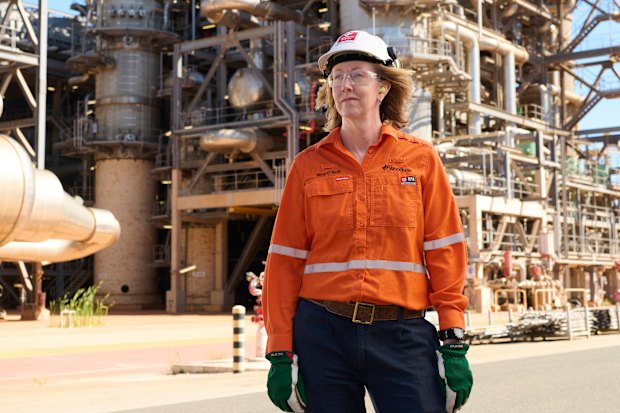
O’Neill at Woodside’s Karratha gas plant.
O’Neill notes that some European nations are increasingly conscious of losing their manufacturing edge due to the high price of energy compared with the US and China. Indeed, a day after our lunch, Germany confirms plans to subsidise energy prices for heavy industry to bolster its stagnating economy.
In Australia, the Albanese government wants to reduce emissions by 62 to 70 per cent by 2035, a target O’Neill calls “highly ambitious”. “I don’t know that the ramifications for society have been fully thought through, or described to the Australian people,” she says.
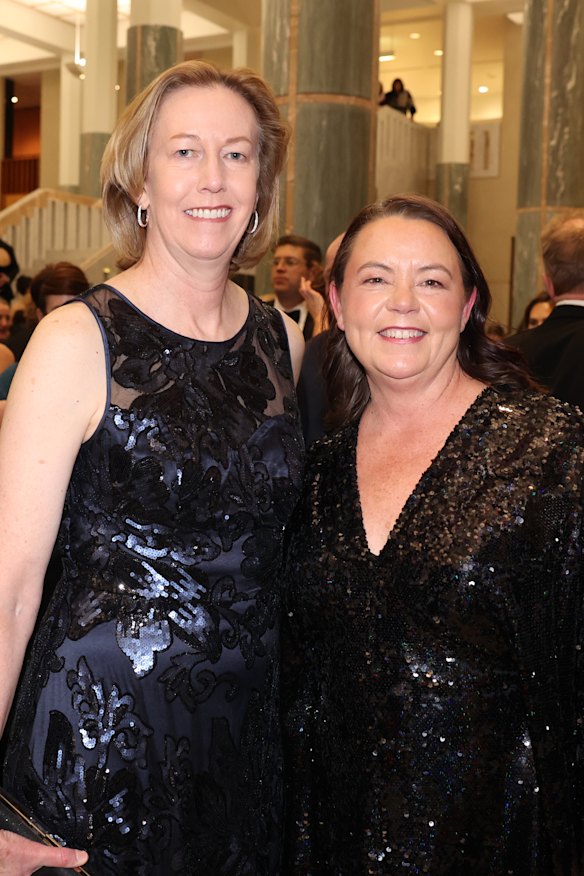
O’Neill and Resources Minister Madeleine King at last year’s Midwinter Ball in Canberra.Credit: Alex Ellinghausen
How would she describe it, then? The lower-hanging fruit is gone, so deeper emissions cuts mean large-scale changes to electricity generation, and dumping coal. “While there are visions of how we might get there, the permitting is not keeping up, the environmental approvals are not keeping up with that,” she says.
“The question of how you maintain reliable power with a heavy renewable input – that has not been addressed. How do you decarbonise heavy industry – has not been addressed. You’re seeing examples of industry flagging that increases in power prices are causing them to rethink the value of their investments. That’s going to be a choice between: do we keep jobs or do we cut emissions? So, Australia [will] have to start to confront some of these questions that Europe is confronting today.”
O’Neill’s salmon bagel arrives deconstructed; she declares it “very tasty”. My avocado toast is fine, but could do with some feta (high standards!). The coffee is mid.
For fossil fuel producers like Woodside, the times are arguably bending in their favour. The political heat has come out of climate change in developed countries, usurped by cost-of-living concerns. While most voters still say climate change is a major threat, the percentage has fallen from its 2018-22 era highs, the Pew Research Centre has found – from Europe to Canada to South Korea and Australia.
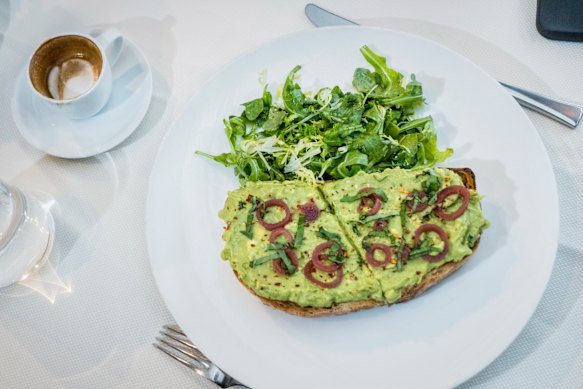
Taste of home: the avocado toast at New York’s Ai Fiori is “fine, but could do with some feta”. Credit: Photo: Ben Sklar
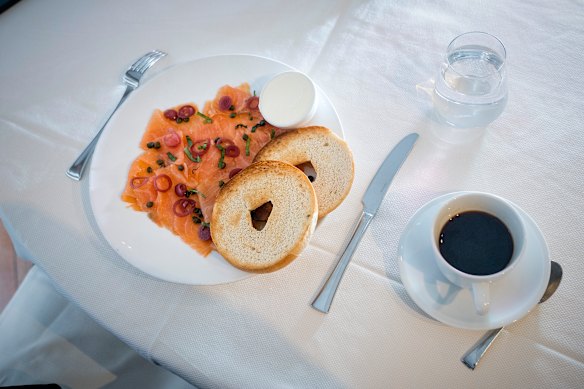
“Very tasty”: the deconstructed salmon bagel at Ai Fiori restaurant in New York.Credit: Photo: Ben Sklar
In the Australian National University’s recent study on the 2025 election, the proportion of voters who ranked climate change as their most important issue fell to 5 per cent, down from 10 per cent in 2022.
What climate responsibility, if any, does Woodside think it has in this new world? O’Neill adheres strictly to the disputed mantra that gas is a transition fuel that can replace coal rather than displace renewables. She suggests critics of gas are doing the coal lobby’s bidding.
“In Australia, there’s been probably close to 20 years of this anti-gas sentiment, which has at the end of the day resulted in brown coal staying in the mix longer,” she says.
“So, I don’t know if it’s people who are true environmentalists who are driving the anti-gas movement, or if it’s people who are in the coal industry, but the outcome is poor for the environment and it’s going to end up being poor for the consumers.” She points to taxpayer subsidies to keep coal plants open. “It’s not good for anyone.”
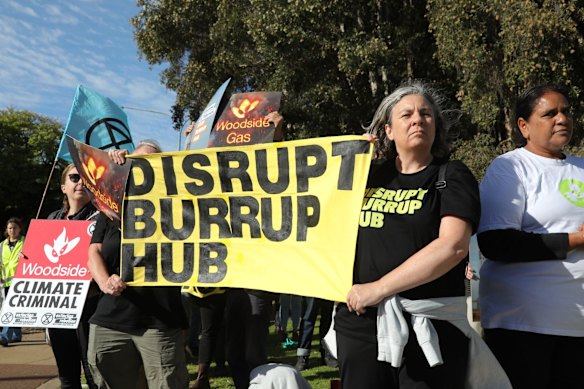
Protesters at Woodside’s annual meeting in Perth last year.Credit: Bloomberg
But the hugely controversial North West Shelf extension in Western Australia is expected to be responsible for nearly 90 million tonnes of CO₂ equivalent a year – more than the annual emissions of some countries – despite conditions imposed by the federal government as part of its approval. Moreover, the extension is only justified if Woodside and its partners ultimately get access to the Browse basin near the pristine Scott Reef, considered the country’s largest untapped conventional gas resource.
Those approvals are ongoing. Still, the Australian government and companies like Woodside are increasingly singing from the same song sheet on environmental laws, complaining that it takes too long to assess major projects. Woodside was ropeable that it took six years for the West Australian government to approve the NWS extension, before the baton was passed to the federal government for a separate assessment.
New laws that passed the federal parliament last week are a mixed bag for gas producers; coal and gas projects are not eligible for new “streamlined” approval pathways following negotiations with the Greens, but they may benefit from moves to eliminate duplication between state and federal assessments.
Part of this is, again, the Trump effect. Australia’s critical minerals deal with the US, agreed in principle during Anthony Albanese’s recent trip to Washington, means getting rare earth projects off the ground quickly. “Drill, baby, drill” is becoming not just a slogan but a policy the US exports to its allies.
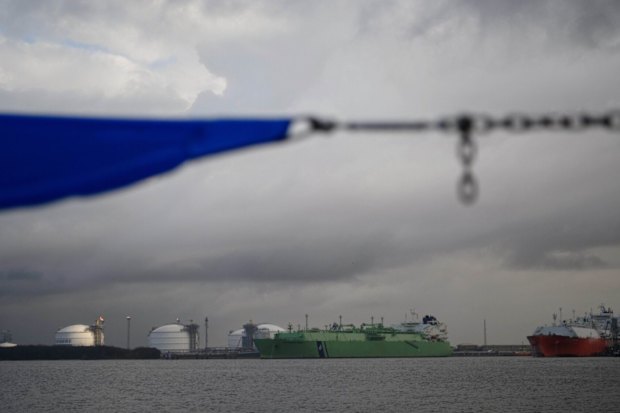
An LNG export terminal in Louisiana. Woodside’s project there is the largest foreign direct investment in the state’s history.Credit: Bloomberg
O’Neill lays out a stark reality for a global company such as Woodside, which is eyeing a roughly 50-50 revenue split between Australia and the US early next decade. The US has plenty of gas, favourable taxation rates and a relatively quick process for environmental approvals. In Louisiana, the combined state and federal tax rate will be about 25 per cent.
“We have to ask ourselves first and foremost: where is the resource? Australia compares quite favourably to the US [on that],” she says.
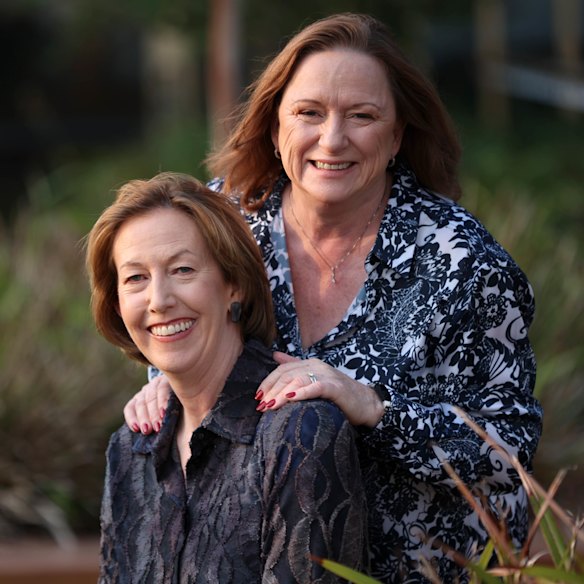
O’Neill with her wife, Vicky Hayes.Credit: Trevor Collens
“Where do we have confidence we can progress investments at a reasonable pace and generate returns for our shareholders? That’s where we’re fighting some headwinds in Australia.”
There has been speculation Woodside could shift its primary listing to the New York Stock Exchange, but O’Neill says that’s not true. “We intend to maintain our primary listing in Australia.”
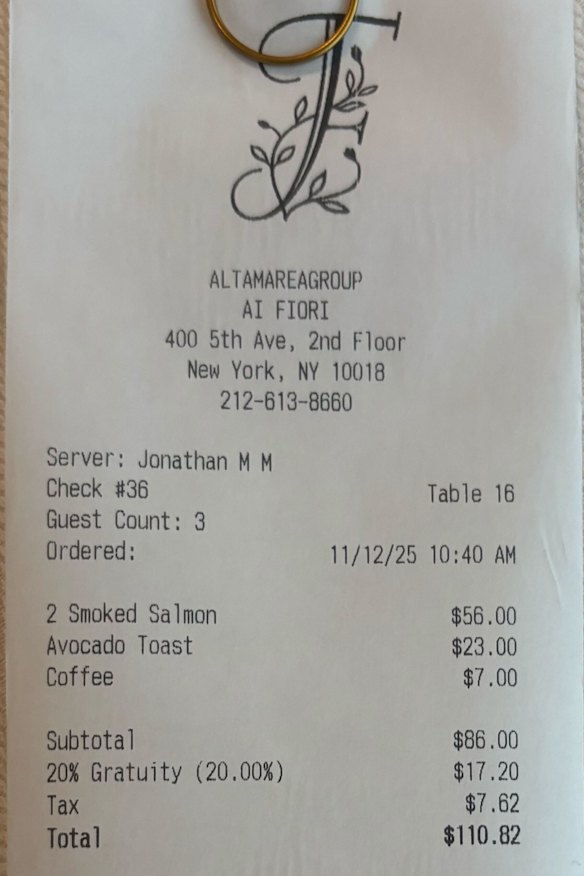
The bill for lunch at Ai Fiori in New York.
Before we leave, I ask O’Neill about life in Perth. She lives in City Beach with her wife, Vicky Hayes, and their teen daughter. Despite its isolation, O’Neill enjoys the relaxed pace and what she calls an “entrepreneurial spirit” that seems to imbue west coast cities.
“I like that feel of a city where people are ready to roll up their sleeves and make a difference,” she says. “It’s got a bit of the wild west to it.”
Loading
An NFL fan who backs the Houston Texans, O’Neill has been forcibly acquainted with Australian rules football, courtesy of Woodside’s sponsorship of the Fremantle Dockers. Woodside chairman Richard Goyder is also the outgoing chair of the AFL Commission.
O’Neill says she found the rules “a little fuzzy” and difficult to follow at first, but is now a convert and attends half a dozen matches a year. “I love the game. It’s fast-paced, it’s high scoring, there’s tremendous athleticism. It’s the full package.”
Not that the rules have gotten any easier to understand. “Like, why was this thing a push in the back and that thing was not?”
I could try to explain, but our time is up, and O’Neill is off – more meetings, and more drilling, await.
Start the day with a summary of the day’s most important and interesting stories, analysis and insights. Sign up for our Morning Edition newsletter.