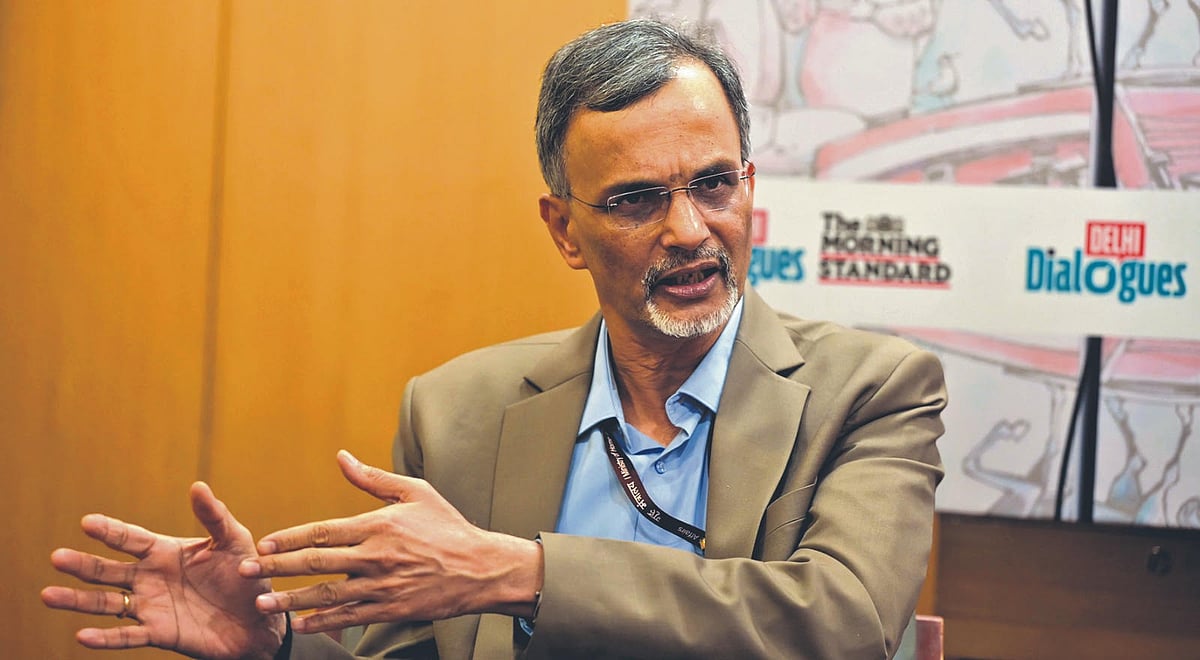
Chief Economic Advisor (CEA) to the government V Anantha Nageswaran has said that India need not be worried about the International Monetary Fund’s (IMF) annual review that assigned a ‘C’ grade to the country’s national accounts statistics.
In a report released on November 27, the IMF graded India’s national accounts — including Gross Domestic Product (GDP) and Gross Value Added (GVA) — as ‘C’, the second-lowest classification in its framework.
Speaking at the 30th edition of the Delhi Dialogues, the CEA clarified that the grading should not be viewed as alarming. He pointed out that the IMF only introduced the letter-grade system for its statistical assessments in 2024, and India has received the same rating for both 2024 and 2025.
“The overall median rating for India, which includes national accounts along with other external accounts and public finance numbers, is B, not C. And the median rating for India this year also remains B,” he said.
He emphasised that while the IMF has flagged certain data gaps, these do not affect the credibility of India’s growth estimates. “When we compare growth rates — say 2023–24 with 2024–25 — the database deficiencies are common to both years. So, the growth comparison remains valid. It’s like comparing apples to apples. These issues do not distort growth numbers,” he noted.
The IMF’s concerns relate mainly to the outdated base year (2011–12), the use of a single deflator, and discrepancies in public accounts data. But Nageswaran said these issues are already being addressed by the Ministry of Statistics and Programme Implementation (MoSPI). “The IMF itself has acknowledged this in an appendix detailing ongoing improvements, expected to be reflected in 2026,” he said.
The comments come amid criticism following India’s recent GDP release, which estimated 8.2% growth in the July–September quarter. Some economists have argued that the figure may be overstated due to the current methodology that proxies informal sector output using indicators from the formal sector.
Dismissing such claims, Nageswaran said they are based on “anecdotal impressions”, which cannot be relied upon. “We must rely on data. Now, look at the data: MSME credit is growing at 25.8%; disposable incomes have increased due to direct tax relief; a 100-basis-point reduction in policy rates is supporting liquidity; and non-food credit growth is 11%. With all this, a strong payback in Q2 was expected. So, the numbers are not surprising,” he asserted.