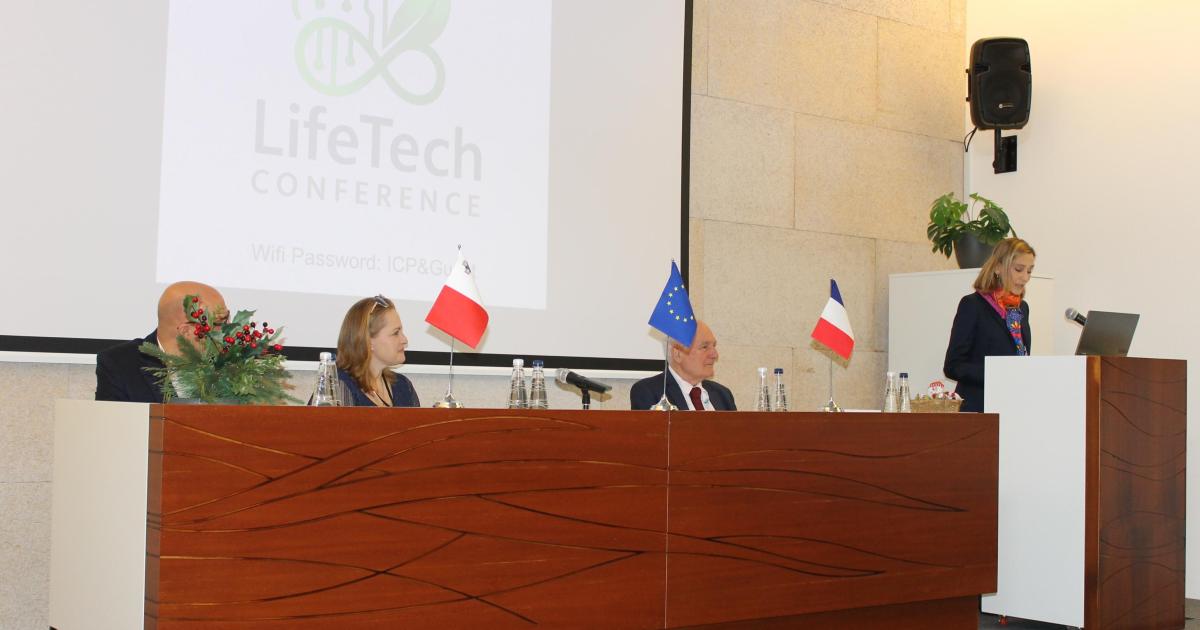
Last week saw Malta host a new two-day life sciences and biotechnology conference, bringing together scientists, regulators and the private sector.
The conference was hosted by the Applied Research and Training Academy (ARTA) in collaboration with the Institute for Cellular Pharmacology (ICP) Ltd and Evolve Ltd.
Organisers said the event marked a “significant milestone for Malta’s expanding scientific landscape and laid the foundations for an annual tradition”.
The conference opened with speeches by Claire Baluci and Gilles Gutierrez, Directors of ICP Ltd and senior leadership of ARTA, together with Evolve Ltd managing director Christopher Busuttil Delbridge.
Baluci highlighted ARTA’s educational model, structured within the company, while underlining that LifeTech had been conceived as a platform for cross-disciplinary exchanges.
Gutierrez spoke about the scientific motivations underlying the conference, particularly the concept of ‘phylogenetic compatibility’, which he said had guided ICP’s research for decades.
Busuttil Delbridge emphasised the importance of strengthening Malta’s research facilities through advanced laboratory environments, robust quality systems and training.
Ambassador of France to Malta, Sandrine Lelong-Motta, stressed the longstanding scientific collaboration between Malta and France.
The conference also saw the inauguration of ARTA’s refurbished premises, including the unveiling of a commemorative plaque outlining the company’s mission.
Organisers said the inauguration confirmed the premises’ role as a “new centre for training, applied research support and professional development in Malta, with the aim of fostering high-standard scientific practice and innovation”.
Speakers included representatives from the Malta Competition and Consumer Affairs Authority, the University of Malta, Promega UK, The BioArte, Evolve Ltd and the Malta College of Arts, Science and Technology (MCAST).
Students, researchers and professionals from local and foreign universities, the Malta Medicines Authority and public organisations, such as Xjenza Malta, took part in the event.
Conference sessions covered phylogenetic therapeutics and cross-kingdom homology, regenerative medicine and stem cell innovation, the design of high-performance research environments and scientific evaluation of bioactive natural compounds.
Discussions covering microbiota science and personalised health, regulatory pathways for emerging technologies, quality assurance frameworks in scientific education, genomics workflows and the integration of AI and digital tools into laboratory practice also took place.
Organisers plan to hold the next edition of the conference in Malta next year.