The brisk March air was thick with tension and anticipation. One by one, victims kept being identified as dozens of police officers, labour inspectors and immigration officials searched house after house. By early evening, over 30 human trafficking victims had been found and eight suspects arrested, making this the largest anti-human trafficking operation in Iceland’s history.
“I had just joined the department and was very new to the topic of human trafficking,” says Agnes Eide Kristínar, Chief Superintendent for Centralized Investigations in Iceland’s Metropolitan Police. “I wondered how we were going to manage such a complex operation, and then I remembered Brühl.”
Total gamechanger
Brühl — a small city near Cologne, Germany — was where Agnes joined over 50 anti-trafficking professionals from Finland, Germany, Iceland, Lithuania, and Sweden for one of the OSCE’s realistic simulation-based training courses. These courses are designed to help anti-trafficking professionals across the OSCE region to effectively identify and assist victims and prosecute perpetrators, placing particular emphasis on deploying a trauma-informed and rights-based approach to dealing with victims of trafficking.
“It was a total gamechanger for me,” says Agnes.
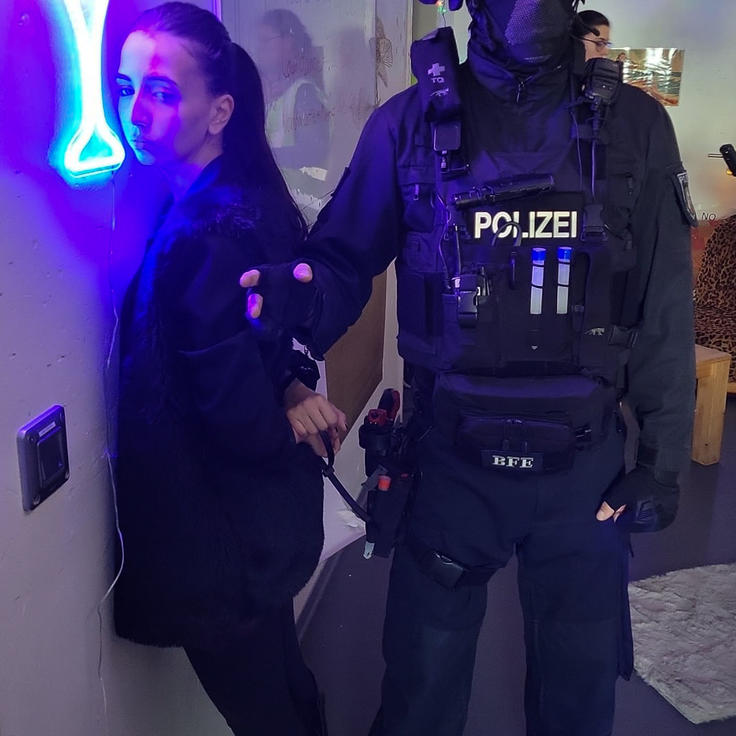
Simulation in action: participants practice the arrest of suspected traffickers during training in Brühl.
© OSCE
“I was quite new to this theme, and we were on our way to investigating this big case. I kept wondering how we’d be able to connect all the dots — how we would coordinate all the actors involved: prosecutors, labour inspectors, social workers, criminal and financial investigators, lawyers, NGONGO
non-governmental organization workers and migration officers. I also wasn’t sure how we would take statements from all the victims we identified. It all felt incredibly complex to me. But after Brühl, where we trained side by side, practiced our individual roles and learned how to co-operate effectively with multiple counterparts, everything became clear.”
“If I hadn’t had this training, we definitely wouldn’t have approached the operation the same way. Some of my colleagues from the Brühl exercise were even part of our investigation. In many ways, we did our own Brühl in Iceland.”
Uncovering labour exploitation
The lessons from Brühl translated directly into results on the ground. The Icelandic operation mirrored the methods practiced during the simulation — coordinated planning, clear division of roles, trauma-informed interviews and real-time information-sharing. These approaches enabled Agnes and her team to piece together the full picture and uncover a major trafficking network exploiting workers.
The investigation centres on the fact that many victims were deceived in Vietnam with promises of good jobs. Some had obtained residence permits as so-called “experts in Vietnamese cuisine,” with applications in some instances submitted using deliberately false information about professional qualifications or facilitated through purported sham marriages. In this case, investigators suspect that the alleged perpetrators either provided forged documents or facilitated sham marriages, receiving payment from the victims in return. Once in Iceland, they were forced to work long hours without pay or basic rights, and some had even paid millions of Icelandic kronas — tens of thousands of euros — (for help with permit processing and getting to Iceland.
After the operation, the survivors met with Agnes and her team every week as they began rebuilding their lives. Thanks to the trust that grew over the course of the investigation — strengthened in part by the simulation training in Brühl — the survivors gradually felt safer and more confident speaking about their experiences. They received free legal, medical and psychological support, and were able to obtain renewable residence permits.
“Most have now found stable jobs and can finally enjoy the rights they were denied for so long,” says Agnes.
The arrested trafficking suspects are still under investigation.
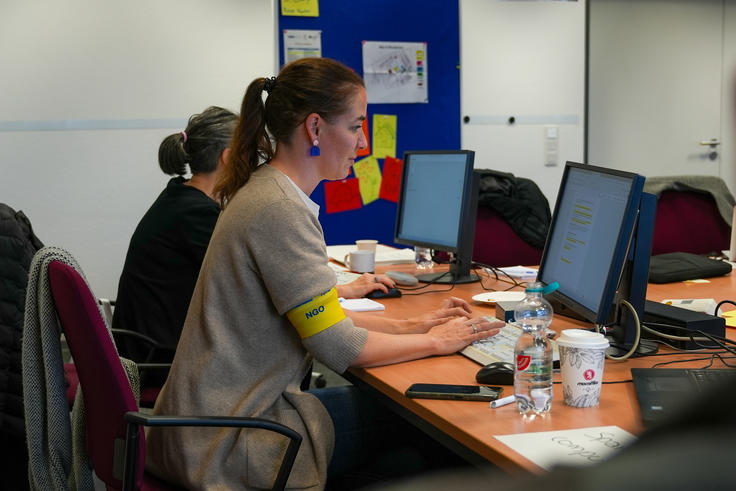
A week of hands-on, simulation-based training in Brühl to strengthen the fight against human trafficking.
© OSCE
A safe space to learn
But not every operation is a success, and that’s why learning from real scenarios is so important, says Alda Hrönn Jóhannsdóttir, Head of the Prosecution Unit and Chief Attorney at Sudurnes Police District, who worked with the OSCE to design the Brühl simulation training course Agnes attended in November 2023.
“The scripts are often based on real cases, especially those where investigations didn’t go as planned. The goal is to learn from them. It’s a safe space where mistakes are valuable lessons,” Alda says, explaining how she and the OSCE work together to add new lessons and real-life challenges to keep each new script relevant and immersive.
“It’s crucial to step away from daily routines, immerse ourselves in the exercise, and focus fully. That’s when new insights happen,” she says.
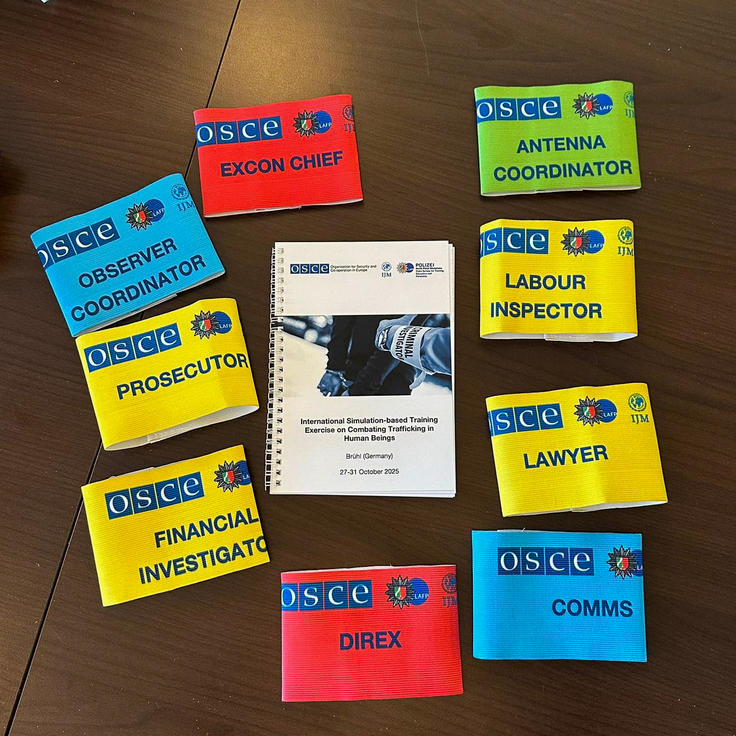
Taking on different roles in a simulation-based exercise to strengthen anti-trafficking responses.
© OSCE
A new path forward for Iceland
For Agnes, the Brühl training did more than prepare her for a single operation — it reshaped how she sees Iceland’s fight against human trafficking.
“After taking part in this exercise, I believe it should be mandatory for everyone working on human trafficking,” she says.
Today, cooperation continues to expand beyond Iceland’s borders. “We’re now working with colleagues from Romania, Bulgaria, Poland, the Netherlands, and Germany,” notes Alda. “We’ve handled cases involving minority communities. Sharing experiences helps us understand how others work and what we can improve.”
For Agnes and her colleagues, Brühl was the beginning of a new model — one that blends practical skills with an international network they can rely on when cases cross borders, as they so often do.
Where One Story Meets Many Others
What happened in Iceland reflects a much wider shift across the OSCE region. Since 2016, the OSCE’s simulation-based trainings have helped build a growing community of professionals who know how to work together, respond quickly, and put victims’ needs, their safety and dignity first. The methodology was developed with direct input from experts with lived experience. What began as an urgent response to trafficking along migration routes has evolved into a shared learning effort that now connects practitioners in dozens of countries.
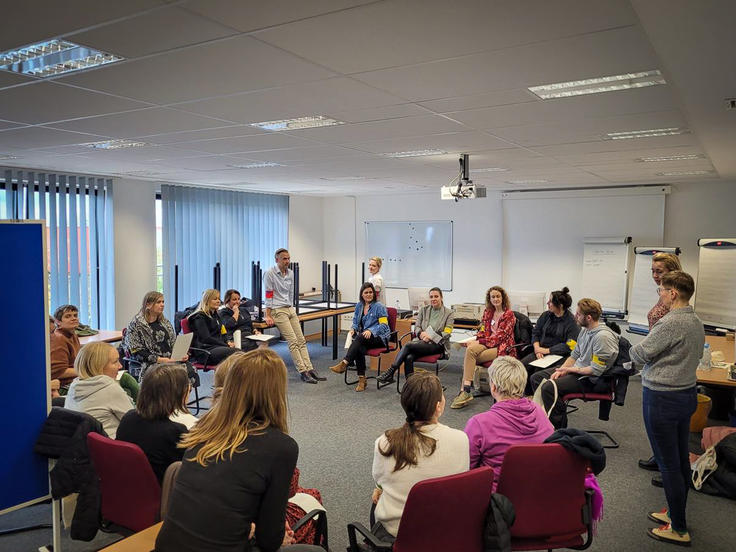
Participants engaged in simulation-based anti-trafficking training in Brühl, Germany.
© OSCE
Livia Zampolini from the Office of the Special Representative explains why the approach works: “Stepping into realistic scenarios helps participants understand the challenges their colleagues face, spot gaps, share what works, and build trusted relationships across agencies and borders.”
The programme continues to expand. After successful international and regional trainings this year — including sessions focusing on child trafficking and vulnerable minority communities — the OSCE plans to launch its first Western Balkans regional simulation exercise in 2026 and the first national simulation exercise in Romania in 2026.
Each new training strengthens the network of people fighting human trafficking, ensuring that lessons learned in one country can help protect victims in another.