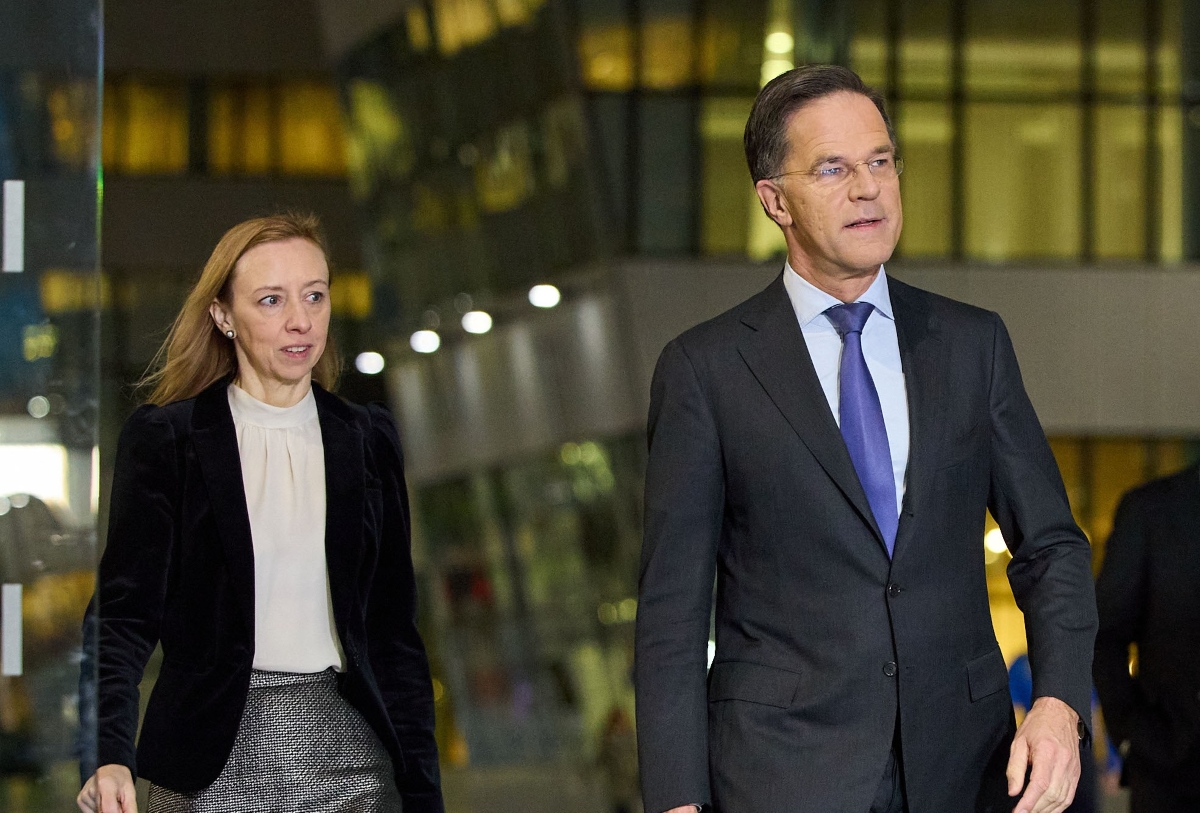
NATO allies have committed to sending new deliveries of US weapons to Ukraine under the PURL initiative, but allies should step up the flow of equipment even further, NATO Secretary General Mark Rutte said on Wednesday morning.
The Western military alliance’s Foreign Ministers are meeting today in Brussels to discuss how to sustain the stream of American-made weapons to Ukraine.
Launched in July under the coordination of the Trump administration, the PURL initiative has NATO countries buy weapons from US stockpiles to send directly to Ukraine. NATO coordinates the delivery of packages and payments, which include both offensive and defensive weapons.
Rutte said allies had already committed $4 billion in arms packages, and he is “optimistic” they can reach $5 billion by the end of December. However, Ukraine will likely need more than that as it continues to fend off Russia’s invasion.
For the NATO chief, allies should increase the target to $50 billion for the whole of 2026, bringing the monthly commitments to more than $4 billion a month.
So far, more than 20 countries have backed the PURL initiative, and Rutte expects more pledges to come in today, he added.
This week, five allies came up with new contributions. Canadian Foreign Affairs Minister Anita Anaud said Ottawa will put down an additional $200 million, bringing the Canadian contribution to $850 million over the last six months.
Her Dutch counterpart, David van Weel, highlighted an additional $250 million contribution announced earlier this week. And the diplomatic envoys from Norway, Poland, and Germany announced a combined $500 million package “for immediate disbursement.”
In Washington last year, allies pledged to provide Ukraine with at least €40 billion in military support for that year. But NATO countries went beyond the target and sent more than €50 billion worth of equipment in 2024. Some of that funding came from the US, by far the alliance’s biggest economy.
Rutte is now suggesting that European and Canadian allies alone should match that commitment through PURL, on top of other contributions.
While discussing next year’s plans, some countries have raised the need for the alliance to share the burden, since some European heavyweights, such as France and Italy, have yet to pay into the NATO-coordinated programme.
Instead of paying per delivery, the idea of a monthly subscription is being mulled, one NATO diplomat told Euractiv. The new format would guarantee long-term commitment from the allies.
“We have to share the burden. We cannot proceed like it is right now on the shoulders of Nordic, Baltic countries, Germany, Poland, some of the others,” Lithuania’s foreign minister Kęstutis Budrys said ahead of Wednesday’s meeting. For him, Kyiv’s needs go beyond the $50 billion 2026 target.
(cp, cm)