Parliament is set to call for a €169 billion increase in the EU’s next seven-year budget, according to the first draft of its interim report on the Commission’s 2028 to 2034 Multiannual Financial Framework (MFF) proposal.
The Commission has touted its budget proposal of €2 trillion as historic. However, that amount is presented in nominal terms, which does not account for inflation, and includes €168 billion to repay the bloc’s €650 billion COVID loan.
In real 2025 prices and without the loan, the budget is €1.614 trillion, or 1.15% of the EU’s Gross National Income (GNI).
The Parliament’s draft report, obtained by Euractiv, suggests increasing this amount to €1.783 trillion, or 1.27% of the EU’s GNI. It proposes an €89 billion boost for national plans supporting regions and farmers, €58 billion extra for “competitiveness,” and €21 billion more for foreign policy.
Of the €58 billion, €24 billion would go to the new European Competitiveness Fund, €18 billion to the bloc’s next Horizon research programme, €8 billion to infrastructure. An additional amount of €8 billion would be spread out over the Erasmus student exchange programme, nuclear energy, media support, and other programmes.
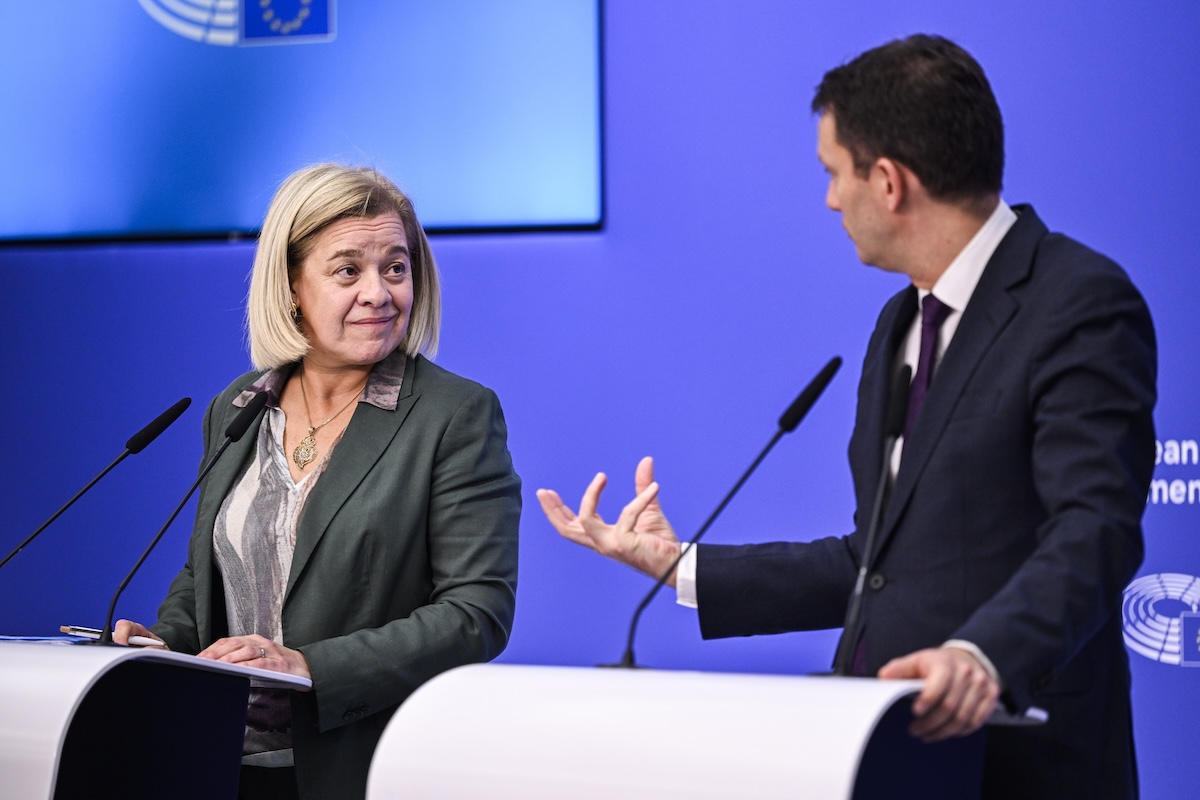
The document was drafted by centre-right MEP Siegfried Mureșan and centre-left MEP Carla Tavares, both of whom serve on the budget committee. They will receive opinions from 15 other committees before presenting a final version for a plenary vote in May.
To fund the budget, the report backs the Commission’s revenue plan, which would generate around €60 billion annually for the EU and reduce the need to rely on direct national contributions. Should EU countries shoot down any of the controversial new income sources, “a digital services tax should be explored as a possible solution,” the report reads.
France joins mounting pressure against proposed EU-wide corporate levy
EU finance ministers slammed a proposed EU-wide corporate levy as a threat to competitiveness, casting…
3 minutes
A digital services tax would mostly affect large American tech companies, and many have speculated that the Commission refrained from proposing the measure to avoid US backlash amid high-stakes trade talks.
Having called off its rebellion against the new structure, MEPs remain opposed to the Commission’s overhaul, which merges programmes into flexible cash pots managed by the Commission and EU capitals.
Parliament “acknowledges the need for flexibility but firmly rejects any approach that sacrifices transparency under the guise of efficiency,” the draft report reads.
The report adds that Parliament “regrets that the Commission’s simplification proposals primarily benefit its own processes rather than final beneficiaries.”
(cm)
Disunited Parliament calls off EU budget rebellion
Parliament has called off a vote to reject the European Commission’s budget proposal, but the…
3 minutes