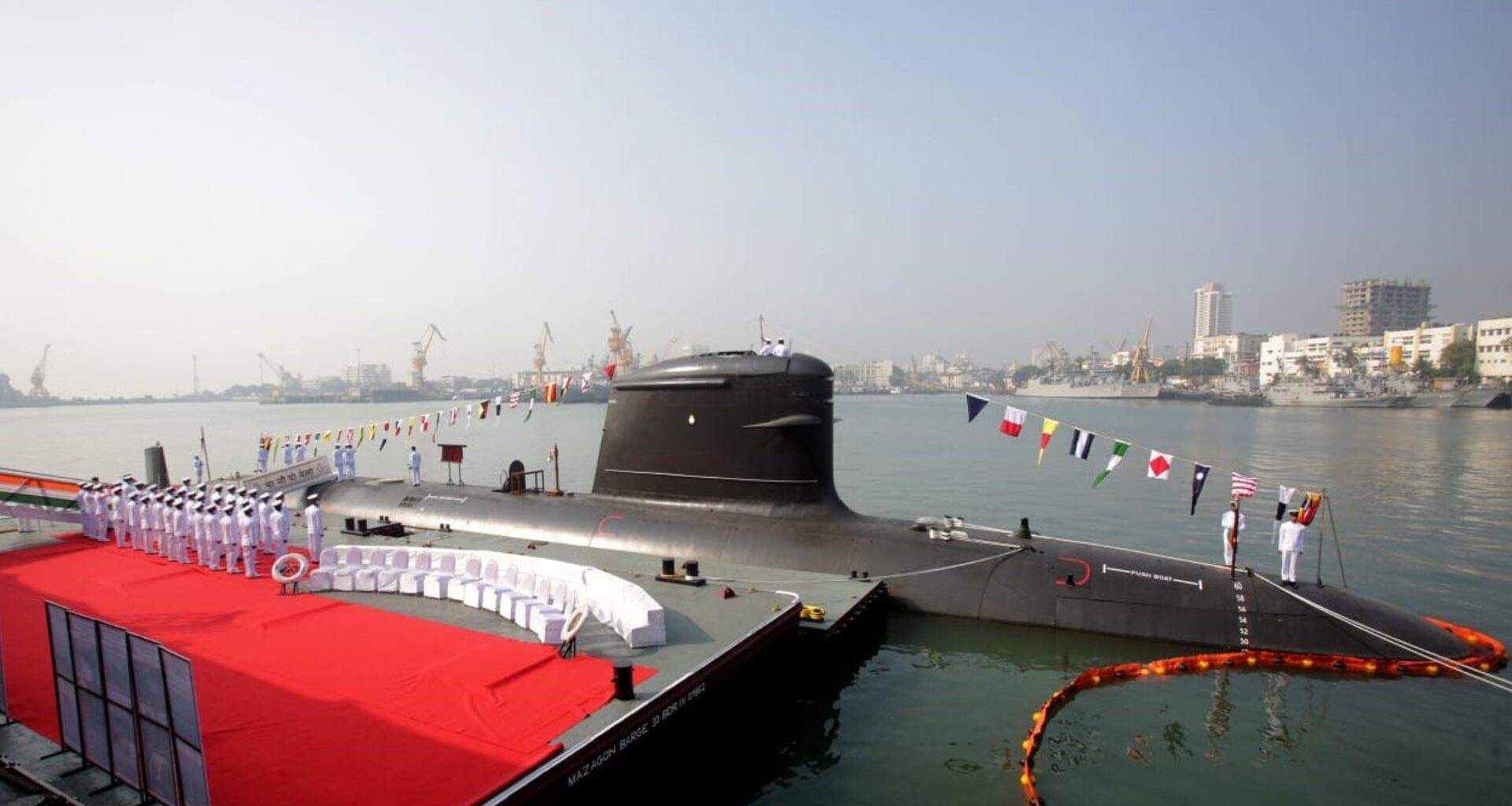
India is preparing to induct its third nuclear-powered ballistic missile submarine, INS Aridhaman, as the vessel enters the final phase of trials and moves closer to commissioning, Navy Chief Admiral Dinesh Tripathi said this week.
Aridhaman will become the country’s third indigenously built SSBN, following INS Arihant and INS Arighaat, and will mark a significant expansion of India’s sea-based nuclear deterrent.
The Navy commissioned Arighaat into the Strategic Forces Command in August at Visakhapatnam, marking the first time India has two operational ballistic missile submarines. With Aridhaman’s entry into service, India will have three SSBNs available for patrols.
Tripathi said the submarine’s progress reflects India’s growing industrial and technological capacity in strategic naval platforms. “INS Aridhaman has entered the final stage of its trials and will be inducted soon,” he said.
Larger submarine, longer reach
Aridhaman is designed to carry more long-range nuclear-tipped missiles than its two predecessors, a capability that supports India’s nuclear doctrine of assured second-strike capability.
The submarine’s expanded configuration allows it to accommodate additional K-4 submarine-launched ballistic missiles, with a reported range of approximately 3,500 kilometers (2,174 miles).
A fourth SSBN is under construction and is expected to enhance India’s ability to maintain continuous at-sea deterrence.
Both Aridhaman and the upcoming fourth submarine are larger than Arihant-class vessels, offering greater missile storage capacity and improved survivability.
According to publicly available specifications, Aridhaman is expected to displace roughly 7,000 tons and measure about 125 meters in length.
It will carry a complement of around 95 personnel. The submarine will be equipped with USHUS and Panchendriya sonar suites, advanced systems that provide surveillance, targeting, and underwater communications. Its defensive fit will include Rafael Broadband Expendable Countermeasures to protect against torpedo threats.
New naval initiatives
Tripathi also highlighted several diplomatic and outreach programs launched by the Navy over the past year.
He pointed to the Indian Ocean Ship (IOS) Sagar initiative, in which INS Sunayna embarked with 44 crew members from nine Indian Ocean Region nations for a month-long deployment beginning in April.
The mission included port calls at five locations and aimed to expand cooperation, training, and interoperability among regional maritime forces.
Another initiative, the Africa-India Key Maritime Engagement, known as “Samanvaya” (meaning unity in Sanskrit), was conducted in partnership with nine African nations.
The program concluded in Dar es Salaam, Tanzania, and included joint exercises and exchanges. India’s defense minister and his Tanzanian counterpart attended the event.
Tripathi said both initiatives drew positive responses from participating countries and underscored India’s growing role in cooperative maritime security across the Indo-Pacific and Africa.
Strengthening the nuclear triad
The addition of Aridhaman marks another step in India’s long-term goal of fielding a credible nuclear triad, the ability to deliver nuclear weapons from land, air, and sea.
SSBNs are considered the most survivable leg of that structure because their stealth and endurance allow them to remain hidden for extended periods.
With two SSBNs already operational and a third nearing service, India is improving its ability to keep at least one nuclear-armed submarine on patrol at all times, a core requirement for maintaining a secure second-strike capability.
Aridhaman’s commissioning date has not been announced, but officials say the submarine is approaching completion as it undergoes final evaluations.
India’s expanding ballistic missile submarine fleet also carries strategic implications for the Strait of Malacca, the narrow maritime chokepoint through which more than 60 percent of China’s seaborne trade and nearly 80 percent of its oil imports transit.
India’s submarine, INS Aridhaman, is mainly built for nuclear deterrence, not for attacking other ships. However, it can remain underwater for extended periods and operate covertly in the eastern Indian Ocean. This improves India’s naval presence in this important area.
In a crisis, India’s silent nuclear-powered platforms, supported by attack submarines and surface forces, could complicate China’s access to the Strait of Malacca, raising the cost of any attempt by the People’s Liberation Army Navy to project power into the Indian Ocean Region.
This latent capability underscores New Delhi’s advantage along China’s most vulnerable sea line of communication, giving India leverage in strategic competition and crisis stability planning.