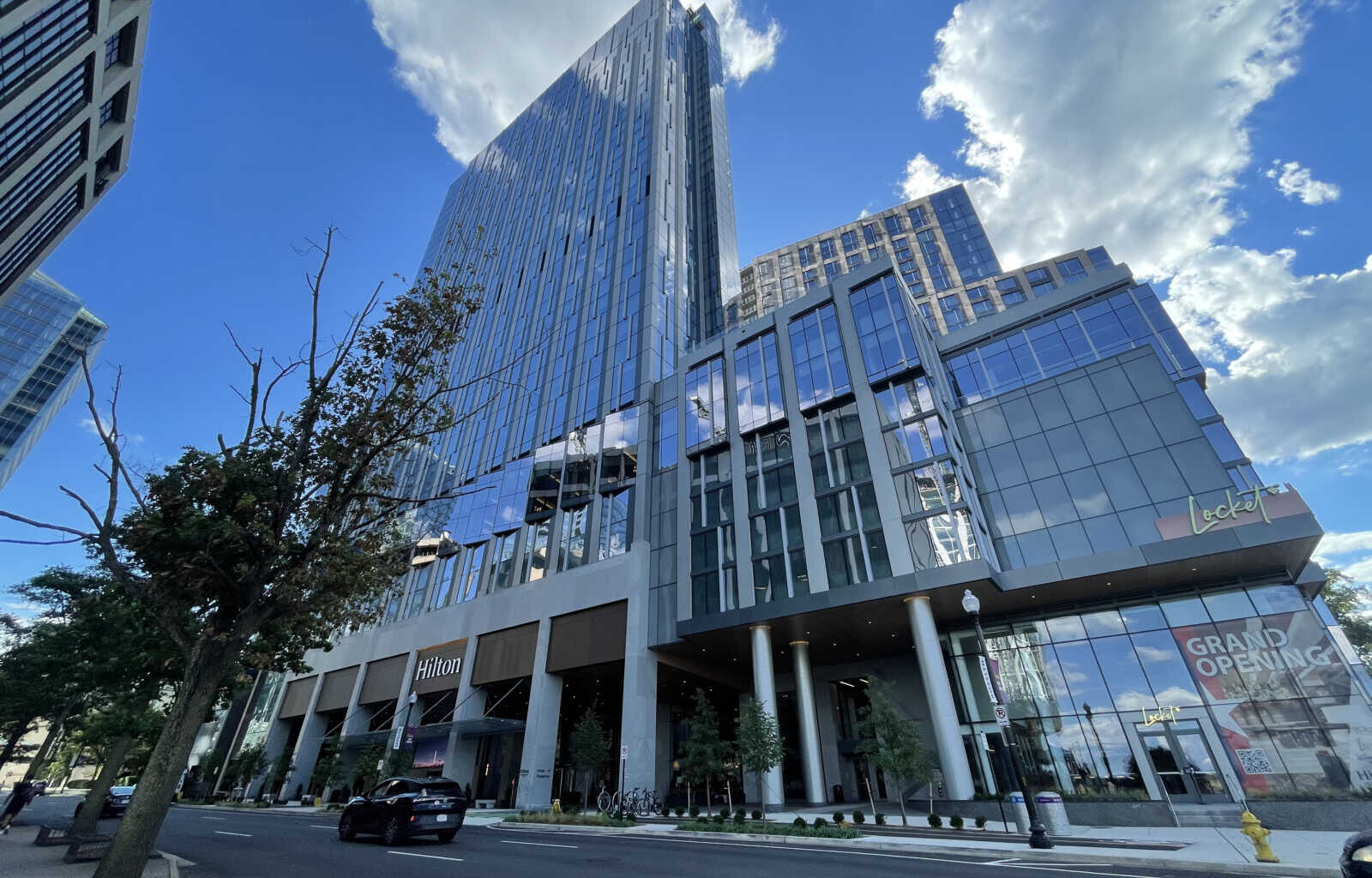
A drop in occupancy rates at Arlington hotels is raising concerns about how long a rebound might take and the ripple effects it will have across the county’s overall economy.
Vacancy rates are “the biggest challenge� among local economic indicators at the moment, said Kate Ange, acting director of Arlington Economic Development.
The 68.8% occupancy rate in September was down from 74.7% a year before, according to figures referenced at the Nov. 18 meeting of the Economic Development Commission. The numbers represent rates prior to the federal shutdown.
“We’re really seeing a drop,� said Ange, who was tapped to lead the department on an interim basis in the wake of Ryan Touhill’s resignation.
Among those serving on the Economic Development Commission is Kate Bates, president/CEO of the Arlington Chamber of Commerce. She told ARLnow that business leaders expect an even more significant drop in rates in figures that reflect the effects of the government shutdown, which began Oct. 1 and ended Nov. 12.
“It’s a clear example of how shutdowns ripple far beyond federal agencies, disrupting the broader regional economy and the businesses that rely on predictability and stability,� Bates said, adding:
“While we are hopeful that numbers will stabilize now that the shutdown has ended, the decline reflects broader pressures we’re seeing across Arlington’s hospitality sector. Hotels, restaurants and retail businesses are all feeling the cumulative effects of federal policy uncertainty, softening consumer spending and a challenging economic environment.�
“A strong hospitality industry is essential to Arlington’s economy,� Bates said. “The Chamber continues to advocate for dedicated, long-term funding for Arlington’s tourism-promotion efforts and looks forward to working with Arlington County and our private-sector hospitality partners to advance a sustainable, impactful plan.�
 November 2025 Economic Development Commission meeting (screenshot via Arlington County)
Flavia Sampaio, general manager of Residence Inn Arlington Rosslyn and chair of the Arlington Chamber’s hotel general managers’ committee, broke down the decline into several component parts:
“The decline of government transient and group business in the DMV due to government downsizing and the cancellation of meetings and trainings, a major source of revenue for hotels and restaurants. The cancellations of groups and meetings have hit the mid- to large-size hotels particularly hard, as they rely on large blocks of rooms to reach monthly occupancy goals.�
“The loss of federal jobs nationwide has taken a toll on tourism spending, as families have less discretionary income and are cutting costs when traveling or not traveling at all.�
“The decrease of business and leisure international travelers, in particular from Canada, the largest international market for U.S. tourism.�
Working with more recent data than was presented at the Economic Development Commission meeting, Sampaio told ARLnow that the government shutdown resulted in a decline of approximately 7% in occupancy rates across the D.C. market.
Arlington was more significantly impacted — occupancy rates down 11% — due to the heavier presence of government and defense contractors in the county, she said.
Where is the local market headed in 2026? “We do expect the impact of government downsizing to continue to negatively impact hotel occupancy,� Sampaio said, adding:
“Most hotels are forecasting 2026 occupancy to stay flat or lower than 2025. However, hoteliers are better prepared and ready to replace government travelers with other travel segments such as extended stay, leisure and non-government groups.�
This year’s downturn came as the Arlington hotel industry had been on a rebound from the impacts of Covid.
Occupancy levels had been bouncing back after that freefall, according to data from Amadeus Hospitality. The county’s hotel occupancy rate for all of 2024 was 73.6%, up from 70.5% the preceding year.
Nationwide, hotel occupancy fell year over year for a seventh consecutive month in September, according to Arlington-based CoStar. The rate of 63.4% was down 1.9 percentage points from September 2024, while the average daily rate for hotel stays was down slightly, at $162.69.
Among the nation’s top 25 markets, New York City saw the highest occupancy rate in September at 86.6% — aided by Fashion Week, the U.S. Open and the United Nations’ General Assembly gathering. Though highest among large metro areas, New York’s occupancy rate was down 0.5% from the same month a year before.
The lowest occupancy rates for the month were reported in New Orleans (48.5%) and Houston (55.6%).
The Nov. 18 Economic Development Commission meeting was the first since Touhill left for Arizona. Ange acknowledged being “a little surprised at Ryan’s departure,� but said economic-development staff was filling in the gaps.
“We are charging ahead, not missing a beat,� she said.
County officials have set a Dec. 4 deadline for applications to fill the post. The salary is described as “negotiable up to $195,000.�