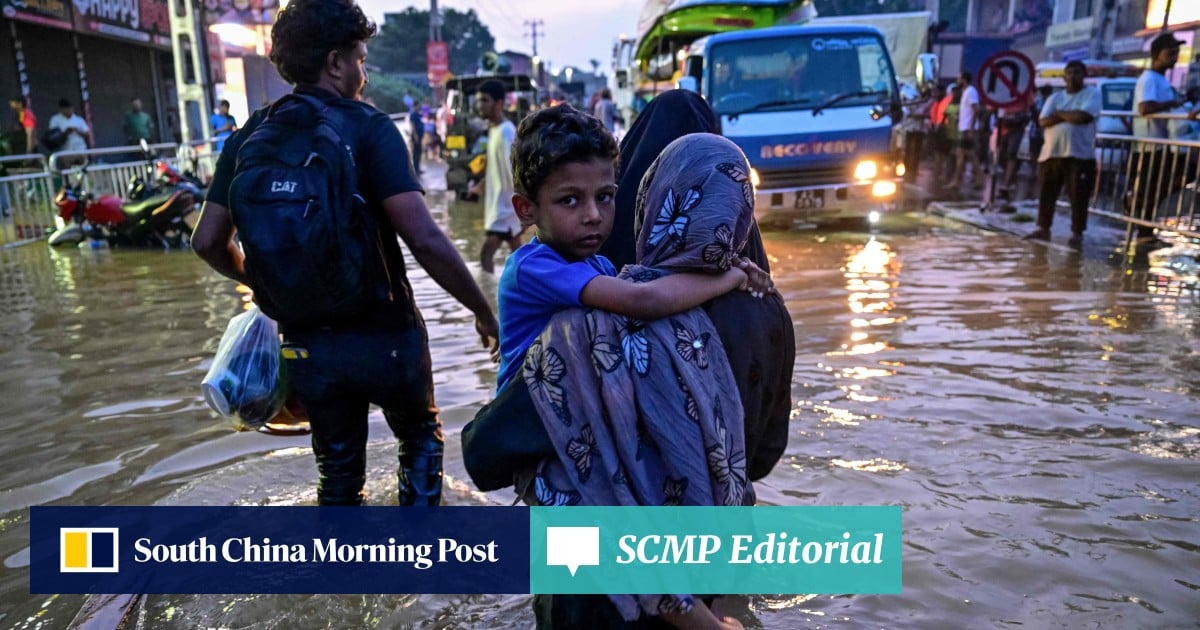
What sets this season apart is that separate weather systems brought torrential, extended rainfall to the entire island of Sri Lanka and large parts of Indonesia’s Sumatra, southern Thailand and northern Malaysia. Climate change is blamed for generating more extreme rain events and supercharging storms.
In Indonesia, where the toll has passed 700, with hundreds missing, President Prabowo Subianto has been under pressure to declare a national emergency. The government has sent three warships carrying aid and two hospital ships to some of the worst-hit areas. In Sri Lanka, where more than 400 people are reported dead, the government called for international aid and used military helicopters to reach victims stranded by flooding and landslides triggered by Cyclone Ditwah. Flooding has killed at least 267 people in southern Thailand. Across the border in Malaysia, where heavy rains also inundated large stretches of land, two people were killed.
The regional flooding was exacerbated by a rare tropical storm that dumped rain on Sumatra Island in particular. Climate change has also increased the intensity of storms through more heavy rain events because a warmer atmosphere holds more moisture.
Monsoonal rain is inevitable, although more unpredictable. Even where these countries have implemented flood management strategies, extreme weather patterns present a challenge. Heavy rains from tropical storms can lead to rapid water rises, inundating agricultural areas and causing significant economic losses.
Scientists say climate change plays a crucial role in intensifying monsoonal patterns. Rising temperatures lead to increased evaporation and moisture in the atmosphere, resulting in heavier rainfall. This heightens the risks of flooding and challenges disaster preparedness. The latest disasters are a reminder of the need for strategies to mitigate the growing threat of flooding in the region.