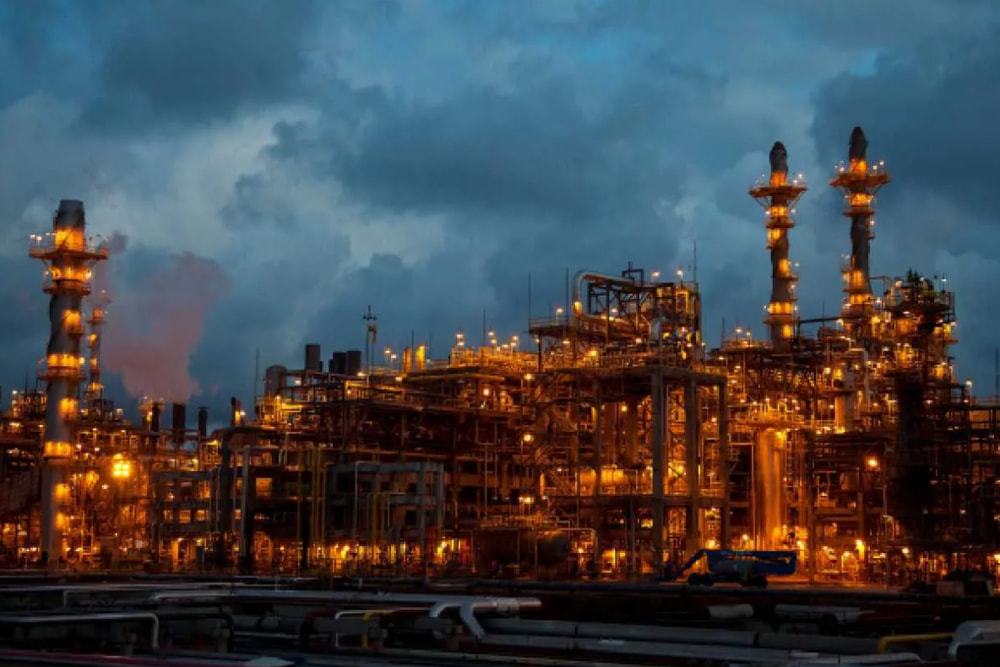
Petrobras is pressing forward with a major upgrade at its Abreu e Lima Refinery (RNEST) in Ipojuca, Pernambuco, Brazil, by constructing the second set of units known as Train 2.
This project will double the refinery’s processing capacity to 260,000 barrels per day (bpd) by 2029, from its current 130,000 bpd following recent Train 1 modernisations.
The state-owned oil giant has allocated approximately 12 billion reais ($3.4 billion) for Train 2 completion and Train 1 maintenance, aligning with its recently approved Business Plan 2026–2030, trimmed by 2 per cent to 581.2 billion reais amid softer global oil prices.
The expansion promises significant economic and operational boosts.
It will generate around 15,000 direct and indirect jobs during construction, with 5,700 workers already on site, though some reports estimate up to 30,000 jobs overall.
Key units include a delayed coking unit (UCR) processing 75,000 bpd, a Diesel Hydrotreating Unit S10 (UHDT-D) at 82,000 bpd capacity, and an atmospheric distillation unit (UDA), secured via a 4.9 billion reais ($1.396 billion) contract with Consag Engenharia S.A. in June 2025.
This will ramp up S-10 diesel output by 88,000 bpd, alongside higher gasoline, liquid petroleum gas (LPG), and naphtha production, meeting up to 17 per cent of Brazil’s diesel demand and cutting import reliance for greater fuel self-sufficiency.
Petrobras President Magda Chambriard emphasised the project’s broader impact: “With the expansion of RNEST’s refining capacity, we are generating jobs, strengthening regional development and increasing the supply of higher-quality fuels for the Brazilian population.
“Upon completion, the refinery will meet up to 17 per cent of the national demand for diesel, reinforcing the country’s energy security.”
RNEST serves as Petrobras’ key hub in Brazil’s North and Northeast, with Train 2 positioning it as the company’s second-largest refinery by capacity.
Environmental and social commitments accompany the buildout.
The project incorporates initiatives across 29 communities in seven municipalities, building on last year’s launch of the atmospheric emissions reduction unit (SNOX).
Train 1 recently hit full 130,000 bpd after a R$93 million ($26.6 million) revamp, part of Petrobras’ push to lift system-wide refining from 1.8 million bpd in 2025 to 2.1 million bpd by 2029 via US$3.8 billion in downstream investments.
This move underscores Petrobras’ refining resurgence after Train 2 stalled in 2015, now revived for energy security amid Brazil’s growing fuel needs.
The refinery, operational since 2014, bolsters domestic supply chains as the firm navigates market volatility.
Share this story