
In recent weeks, leaked text messages involving violent, racist, sexist, antisemitic, homophobic or demeaning language have made national news and implicated political operatives, candidates for office and political nominees on both sides of the aisle.
From a group of Young Republican leaders to Virginia Democratic Attorney General-elect Jay Jones to Office of Special Counsel nominee Paul Ingrassia, the spectrum is vast.
In response to these scandals, Vice President JD Vance, a parent of three young children, said in an interview that “the reality is that kids do stupid things. Especially young boys, they tell edgy, offensive jokes. … And I really don’t want us to grow up in a country where a kid telling a stupid joke ‒ telling a very offensive, stupid joke ‒ is cause to ruin their lives.”
Like Vance, I’m a parent of young boys. I, too, worry about raising my children in an era of perpetual, social media-fueled outrage.
Yet I also don’t want my children to grow up in a country where grown men freely use racial and ethnic slurs, or where threats of violence against political opponents are dismissed as “boys being boys.”
Educating children in a digital world
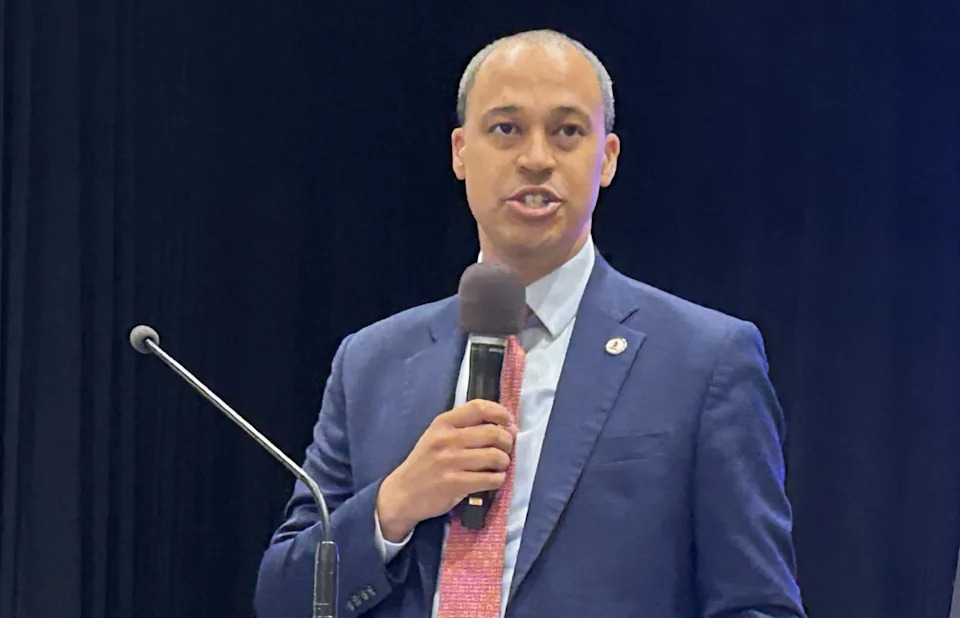
Democrat Jay Jones won Virginia’s race for attorney general Nov. 4, 2025, overcoming a text message scandal that threatened his chances while becoming a cudgel that Republicans used to try to sink the rest of his party’s statewide ticket.
Online platforms have made it easier than ever for young people to be exposed to hate speech and violence. A study of youth ages 12-18 from eight countries, including the United States, revealed that nearly half of those surveyed “observed hateful or degrading writing or speech online, which inappropriately attacks certain groups of people or individuals because of their sex, religious affiliation, race, or sexual orientation” online within the past year.
Of the nearly 7,000 respondents, 1 in 7 youth reported having posted such content, with boys perpetrating online hate speech at higher rates than girls.
Opinion: Remember the hateful Young Republicans group chat? It’s the tip of the iceberg.
While my sons, like the vice president’s, are too young to participate in group chats or post online, they are not too young to learn to recognize and reject words that exclude and dehumanize others.
Opinion alerts: Get columns from your favorite columnists + expert analysis on top issues, delivered straight to your device through the USA TODAY app. Don’t have the app? Download it for free from your app store.
Our family encountered hate speech in our community this fall when we found antisemitic graffiti in a park near our home, the spray-painted black letters leaving an ugly trail reminiscent of the leaked text messages that had recently made national news.
We could have ignored the graffiti. Instead, I chose to report it to the county park police and to begin a conversation with my sons about the words we saw, their harmful history and how to respond when we encounter them – whether in person or online.
Opinion: After Trey Reed’s death, I stayed quiet. Then my relative found a noose at work.
Act right, and you won’t worry about getting caught

U.S. Vice President JD Vance, 41, second lady Usha Vance, 39, and their children tour the Taj Mahal on April 23, 2025, while on a trip to India. The second lady, the first Indian American and practicing Hindu to hold the role, was born in San Diego to Indian immigrants.
Vance stated in his interview that he would encourage his children, especially his sons, to be careful of what they post in group chats and on the internet, saying they should assume “some scumbag is going to leak it. ”
Certainly, we should teach our children to be careful what they say, in public and in private. However, the lesson Vance missed is this: Teach his children not to fear censorship but to develop character, so they won’t have to.
The words we choose, both online and face-to-face, reveal who we are. How we talk about others matters deeply.
Opinion: JD Vance is wrong. I don’t want racists and antisemites in my Republican Party.
In the United States, where reported hate crimes have doubled since 2015 and researchers report growing acceptance of political violence among both Republicans and Democrats, hateful language has consequences far greater than individuals being canceled for stupid jokes.
I cannot prevent my sons from encountering racist, sexist or violent language in the schoolyard, in locker rooms or online as they grow up. But by openly discussing the impact of such language from a young age, I will equip them to consider the harm words can inflict – and to choose respectful and dignifying communication with and about others.
Dehumanizing language is a bipartisan problem. Americans across the political spectrum must raise our sons to be better than those who came before them.
Hannah Estifanos is a writer, editor, nonprofit professional and mother of two boys.
You can read diverse opinions from our USA TODAY columnists and other writers on the Opinion front page, on X, formerly Twitter, @usatodayopinion and in our Opinion newsletter.
This article originally appeared on USA TODAY: JD Vance missed the moment to send a better message | Opinion