By Ella Nilsen, CNN
(CNN) — Stephanie Tate couldn’t figure it out. After three years of living in her new Illinois home, her winter energy costs last year suddenly spiked to $400 per month.
She had three different technicians come to look at her HVAC system and furnace, but nothing was wrong with it. She had her home insulation inspected and found no issues. She installed new, energy efficient windows to stop cold air from leaking into the house.
“It still didn’t make a dent,” she said.
In the summer, her bills were even higher, driven by the cost of the electricity needed to run her air conditioner. Tate tried to use her heat and cooling sparingly in hot and cold months.
“In the winter, I keep my heat well below 68 — and it gets cold here, so you just bundle up,” Tate said. “In the summer, my AC is at 75. I’m dealing with a little warm weather inside my house.”
Diving into her bills, Tate found something surprising. Her electricity bill’s delivery fees — the costs customers pay to help maintain electric infrastructure like the poles and wires carrying power to their homes — were often just as high as the cost of the electricity she used.
“That’s ridiculous,” she said. “You’re paying more for everything right now, and the electrical costs — the way they increase so exponentially and so quickly is stunning to me.”
Around the country, customers like Tate are getting sticker shock when they open their monthly utility bills. Since last September, residential electricity rates nationwide increased by 7.4%, according to the federal Energy Information Administration. Tate’s home state of Illinois had the third-highest increase nationwide, with a 20.6% jump year-over-year, behind the District of Columbia and New Jersey.
And electricity rates themselves — a bill’s “supply charges,” — don’t explain the total increase, because they don’t include those electric infrastructure “delivery charges” like Tate found.
Cost increases in Tate’s area are largely about the cost of generating electricity, said a spokesperson for Ameren, the Illinois and Missouri-based utility that Tate uses. The company doesn’t generate power itself, and has to buy it from third-party suppliers, which can result in big price fluctuations during high-demand times, like summer.
But, like many other utilities, Ameren is also “investing in strengthening and modernizing the grid,” the spokesperson said. Increasingly, the costs of meeting those goals are showing up on utility bills around the country.
Customers often think of their utility bill as a measure of the energy they use to keep the lights on, and heat and cool their homes. But it’s also a reflection of what their utility is building or upgrading. Across the country, the rising costs of updating aging energy infrastructure are inflating bills.
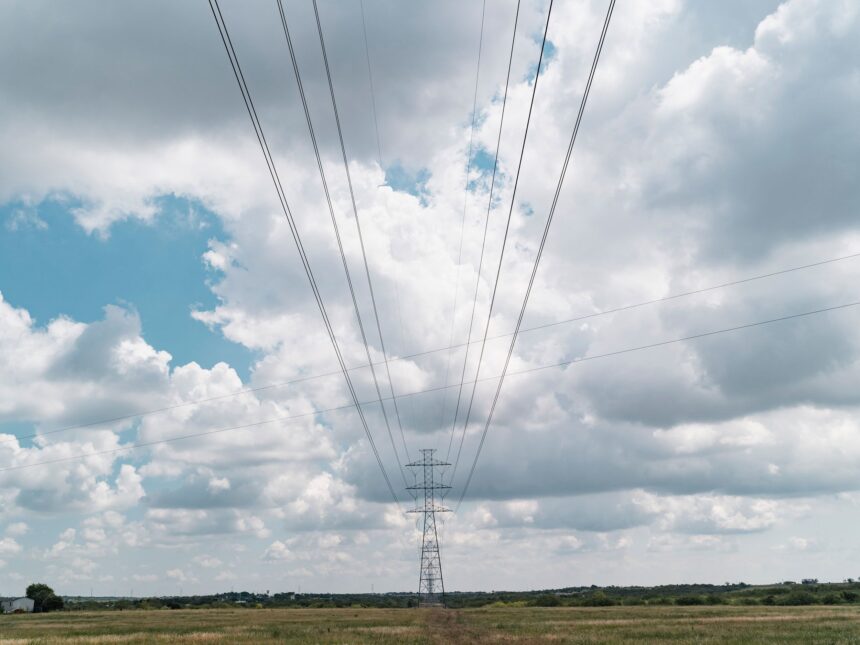
The nation’s electricity infrastructure is old, and utilities across the country have recently been pouring money into upgrading it; in just five years, US utilities spent $5 billion on transmission (the massive high-voltage towers carrying electricity from one region to another) and another $16 billion on distribution (the smaller substations, poles and wires).
Electric utilities are making “essential investments” to strengthen the grid, said Drew Maloney, president and CEO of the Edison Electric Institute, an electric utility trade group.
“Our electric grid is America’s most important machine — and we have to make sure it works reliably every day for families, businesses, and local communities,” Maloney said in a statement to CNN.
Part of that investment is driven by new demand growth. Electricity demand in the US used to be pretty flat. Now, demand is exploding primarily from data centers, along with new manufacturing and home and vehicle electrification. Power demand from data centers alone is projected to reach 106 gigawatts in the next decade, according to a report from research firm BloombergNEF.
“Over the last decade or two, we’ve been able to get by with the grid that we have,” said Ryan Hledik, a principal at the research and consulting firm Brattle Group and author of a recent study on electricity prices. “The unfortunate thing is, we’ve been needing to make those investments to basically tread water and keep the grid as reliable as it has been in the past, at a time when the cost of that equipment has been getting more expensive.”
New demand is coming at a pricey time for upgrades. The Covid-19 pandemic thrust global supply chains into chaos and made everything more expensive. As a result, the cost of some electrical equipment like transformers has risen faster than the rate of inflation, Hledik said.
Electrical systems have also taken beatings from flooding, high winds and wildfires, and companies often need to invest more to try to make systems more resilient to future storms.
“The grid is being updated, but it’s definitely still old,” Hledik said. “We’re continuing to confront the reality of more volatile weather conditions. So, it’s not my expectation that the need for this investment is going to be finished” anytime soon.
In some cities around the country, the same is true for the network of gas pipelines that deliver winter heating fuel to millions of homes. There was a customer outcry in Baltimore earlier this year as winter heating costs shot monthly bills above $1,000 for some residents.
Those spikes related to seasonal heating needs were also driven by the cost of replacing (extremely) old equipment. Baltimore Gas and Electric operates the oldest gas system in the country and is replacing hundreds of miles of the most ancient, leakiest iron and steel pipes in the ground, CNN recently reported. One pipe scheduled for replacement this year was first installed during Ulysses S. Grant’s presidency in the 1800s, BGE spokesperson Nick Alexopulos told CNN.
“Our hundreds of miles of century-old gas main is far past the end of its useful life,” Alexopulos said. “We’ve got to upgrade this system.”
BGE crews have already replaced around 600 miles of elderly metal pipes with new, plastic ones and have around 800 miles left to complete, Alexopulos said.
In Illinois, Stephanie Tate got so fed up with her electricity bills that she decided this year to take the plunge and outfit her house with solar panels and a battery storage system, which she expects to be producing power soon.
Tate said she was “stunned” at how expensive her home solar and battery system was, but she expects state and federal tax credits and rebates will cover half of the cost. She plans to pay off the remaining balance in a year and expects the new system will save her thousands of dollars per year on her utility bills.
“I’m extraordinarily excited,” she told CNN. “Every day it’s sunny outside, I’m like, ‘oh gosh, I missed this day with solar. I wish it was up now so that I could reap the benefits.’”
She’s looking forward to having a cooler temperature in her house this summer and also anticipating a more reliable home system that will keep her power on during severe spring storms that can knock electricity out for days.
“Those batteries will run even when Ameren is offline,” Tate said.
She’s hopeful she’ll see her monthly bill reduced to a shell of its former self. However, Tate won’t be completely off the grid; she’ll still have to pay delivery fees to Ameren to remain connected to their system, even as she’s generating and storing her own power. Nevertheless, she remains optimistic.
“I’m just incredibly frustrated with the high bills,” she said. “It doesn’t seem logical that they should be this high, this quick.”
Switching to solar and batteries is “a leap of faith,” she said.
The-CNN-Wire
™ & © 2025 Cable News Network, Inc., a Warner Bros. Discovery Company. All rights reserved.