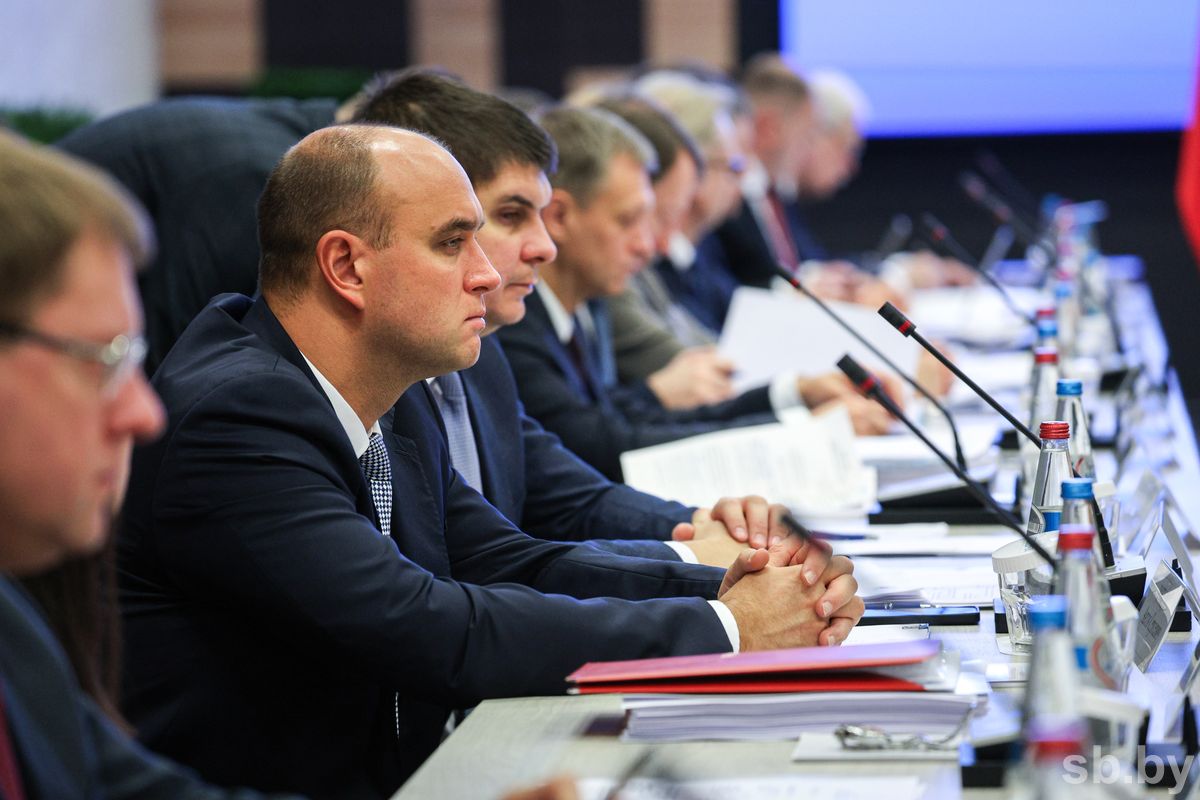
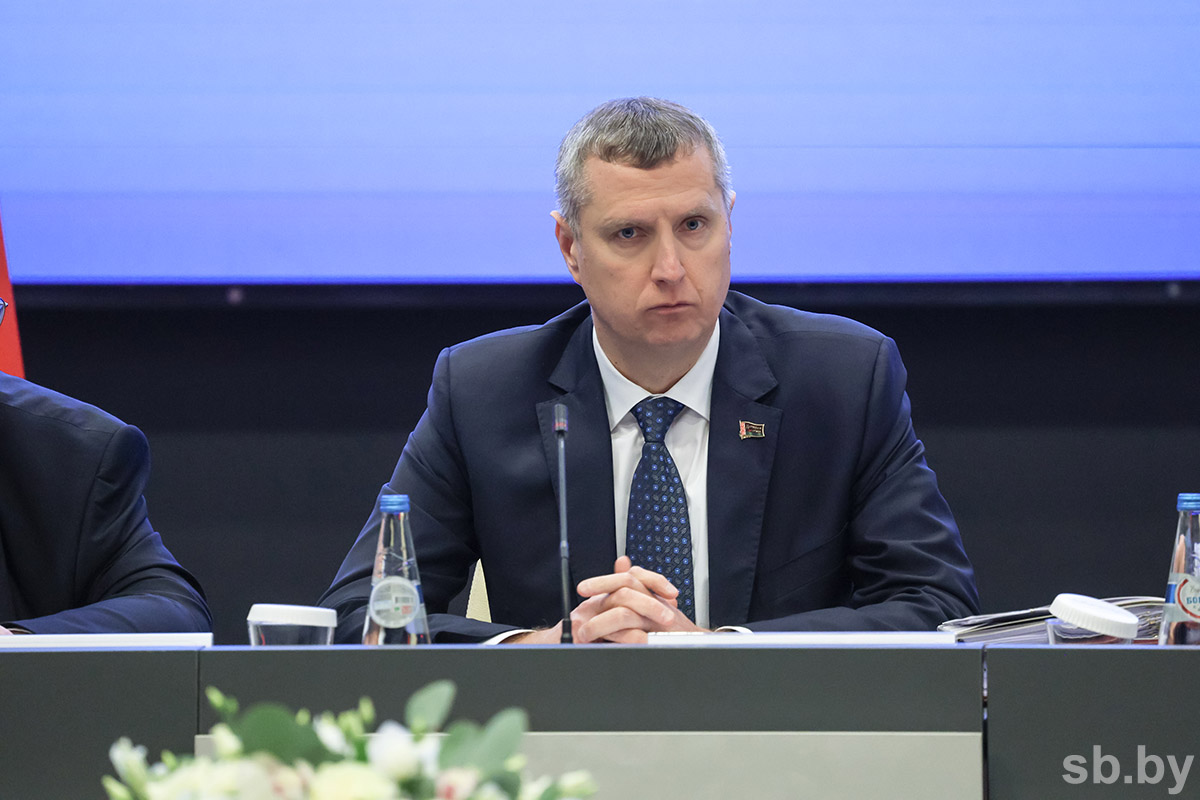
Despite ongoing sanctions pressure on our countries, Belarus and Russia continue to maintain high rates and volumes in bilateral trade — as stated by Dmitry Krutoi, the Head of the Belarus President Administration, during a meeting of the High-Level Group of the Council of Ministers of the Union State, sb.by reports
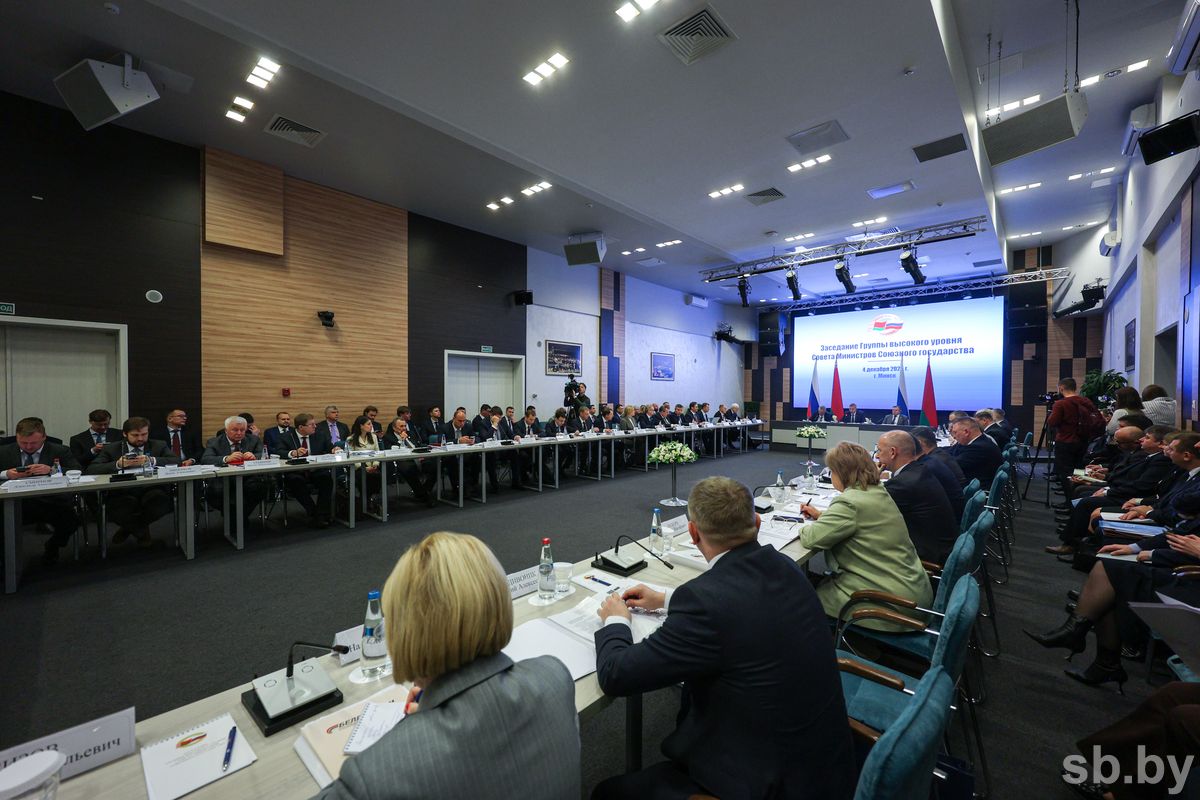
Mr. Krutoi noted that over the first ten months of this year, the trade volume of goods between Belarus and Russia totalled $44bn, with a growth rate of 101.8 percent. Additionally, trade in services rose by 17 percent, reaching $6.5bn.
“The primary guidelines for joint work are based on the main directions for implementing the provisions of the Union State Treaty for 2024-2026,” the Head of the Belarus President Administration emphasised. “As of early December, more than one-third of the activities have been completed — specifically, 115 out of 310, or nearly 40 percent. The two countries’ economy ministries have begun working on the main directions for the upcoming three-year period.”
Similar to the previous document, the focus for 2027-2029 will be on developing key sectors for the Union State.
“These are industrial policy, technological sovereignty, food security, transport, energy and tourism,” Mr. Krutoi listed. “To implement these main directions, action plans with detailed implementation mechanisms will also be developed and approved.”
The Head of the Belarus President Administration also highlighted key areas for joint co-operation, “Firstly, the implementation of investment projects to modernise the production facilities at major industrial enterprises such as Integral, Planar, BelAZ, Gomselmash and others. Secondly, the fulfilment of the provisions of the Decree of the Supreme State Council of the Union State on a unified industrial policy, adopted in January 2024. A list of programmes supported by the Russian Government that includes Belarusian manufacturers has been created, and efforts are currently underway in the trade sector to prepare a similar list for 2026. Thirdly, the expansion of industrial co-operation across key high-tech areas, including aviation, microelectronics and machine tool manufacturing. The development of new technological processes has enabled the production of new products and the substitution of goods previously made by Western manufacturers. At present, both parties are considering the creation of a unified register of microelectronic products.”