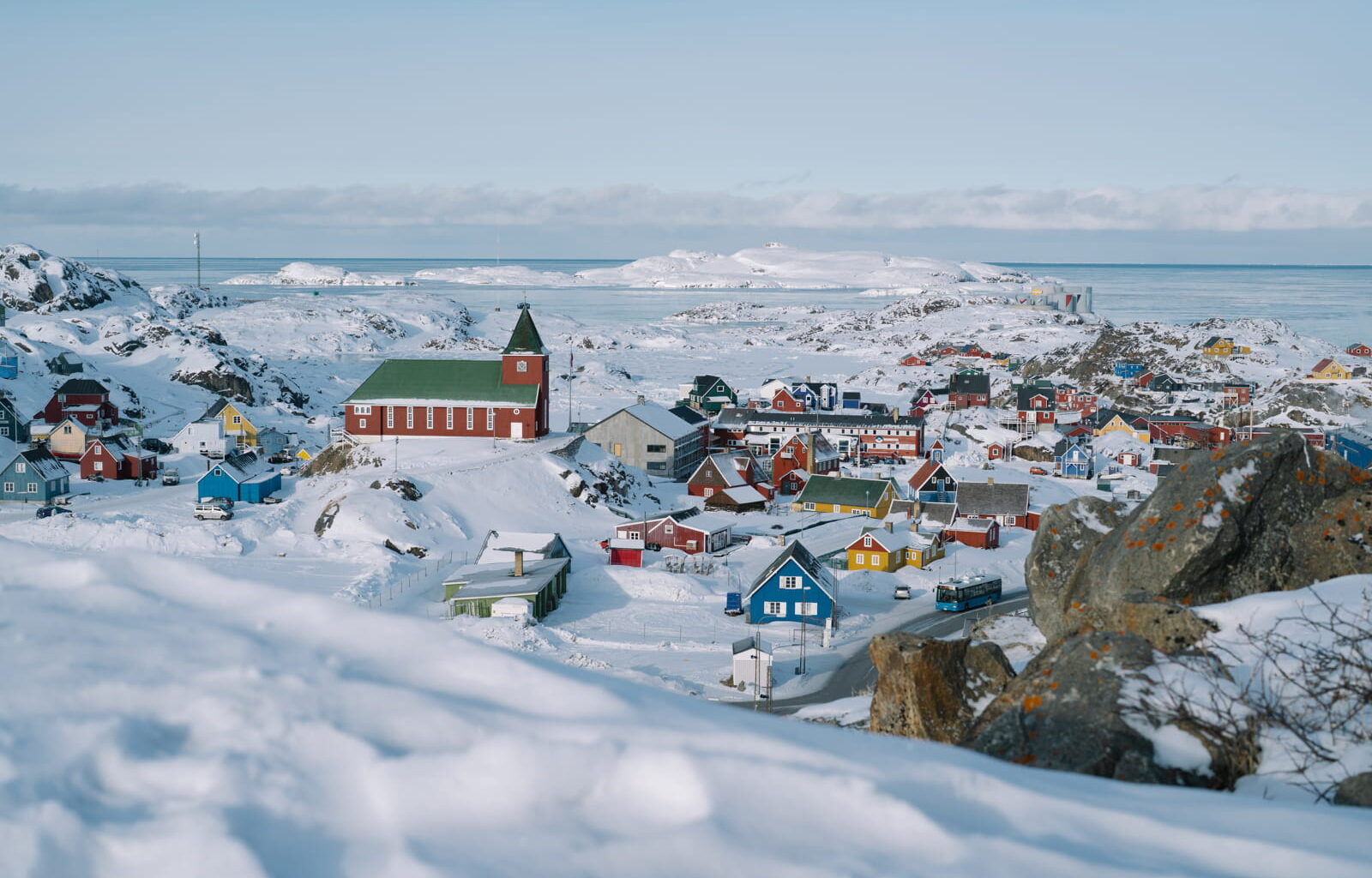
As light fades across Copenhagen, a Danish foreign ministry senior official prepares to burn the midnight oil, monitoring every utterance about Greenland from the Trump administration.
From the ministry’s sixth floor, the night watcher – who has access to a bed for brief naps during the 5pm to 9am shift – is charged with circulating a morning report on overnight developments and has a telephone tree to wake up Denmark’s top officials should an emergency arise.
The night watch shift has become permanent, according to Danish newspaper Politiken and comes as Denmark’s Washington DC embassy has ramped up public diplomacy staffing and pivoted to operating in a “diplomatic grey area� – talking to people with ties to Trump outside the formal US power structure.
The historically close ally relationship has been under unprecedented strain since US President Donald Trump began talking up America’s need to take control of the autonomous Danish territory “one way or the other� for what he called national security reasons.
His son Donald Trump Jr’s jaunt to Nuuk in January and Vice President JD Vance’s trip to the ageing US Pituffik Space Base in March put a cow on the ice to use an old Danish idiom.
The Danes have been operating on a crisis footing ever since Trump and Danish Prime Minister Mette Frederiksen’s fiery 45-minute phone call in January. Trump’s references to Greenland in a speech to a joint sitting of Congress in March also heightened tensions.
Locals say the anxious mood in Greenland has calmed somewhat in recent months, with daily conversations returning to regular programming – the Arctic island’s relationship with Denmark, its independence dream, the cost of living, social issues, climate change, fishing, and infrastructure.
“In the beginning, there was a lot of noise – a mix of anger, hurt, dark humour and eye-rolling. Many people felt it echoed older colonial patterns: powerful outsiders talking about Greenland as an object, not a place where people live,� Ujammiugaq Engell, the director of Nuuk’s Local Museum, told me.
“Now the general ‘vibe’ feels more like low-grade background worry than active panic. It’s not that people don’t care – we definitely do – but I believe it’s very human not to be able to stay in a state of high alert about one topic for months on end. We know that things could change at the drop of an orange hat, but we still have to go to work, raise kids, deal with housing problems, groceries, the weather, all of it.�
The American strategy with Greenland is to “fuel Greenlandic frustrations with Denmark and test the limits of unity�, according to Danish media reports.
The Trump saga is set to loom large over two separate routine annual trilateral meetings expected to be held in Nuuk on Monday and Tuesday (8 and 9Â December) between Greenland, Denmark and the United States.
The meetings represent an attempt at “business as usual� despite uncertain times, according to Danish Institute for International Studies senior researcher Ulrik Pram Gad.
The joint committee established in 2004 covers trade, minerals, education and science – its past communiques hardly set the world on fire. While the permanent committee, which has been around since 1991, has closed meetings and is focused on America’s military presence in Greenland.
“(These upcoming meetings) are an indication that perhaps the Danish and Greenlandic governments are eager to restart some sort of dialogue with the US on Greenlandic affairs. They are very eager to put these deliberations into tracks that have been used before – to normalise relations,� Arctic expert Martin Breum said.
It’s believed that Greenlandic Foreign Minister Vivian Motzfeldt will represent Greenland.
Breum is keen to see who else will be in the room, given that the meetings are usually at officials level. It would be “highly unusual� if Danish Foreign Minister Lars Løkke Rasmussen took part in the meetings, Breum said: “I don’t think that has ever happened�.
He’s also curious about whether the newly arrived US Ambassador to Denmark, Kenneth Howery, will use the talks to make his first trip to Nuuk. After riding in a horse-drawn carriage to present his credentials to Danish King Frederik in November, Howery has talked up cooperation, but has not walked back Trump’s comments about acquiring Greenland.
Trump hinted at Howery’s mandate when he announced that the PayPal co-founder would be posted to Denmark.
“For purposes of National Security and Freedom throughout the World, the United States of America feels that ownership and control of Greenland is an absolute necessity. Ken will do a wonderful job in representing the interests of the United States,� Trump wrote on his Truth Social website.
The American strategy with Greenland is to “fuel Greenlandic frustrations with Denmark and test the limits of unity�, according to Danish media reports. The US had attempted to set up a high-level political meeting between America and Greenland, behind Denmark’s back, but the new Greenlandic PM Jens-Frederik Nielsen, who was elected in March, turned down the offer.
In August, Denmark’s foreign minister hauled in the US Chargé d’Affaires for a dressing down over rumblings that the Americans have run covert operations in Greenland aimed at influencing public opinion.
When the delegations finally get together, there will be much to catch up on.
In June, the Trump administration revised a military command map, shifting oversight of Greenland from the US European Command headquarters in Stuttgart, Germany, to the US Northern Command in Colorado Springs.
The move means that “an attack against the US that passes through Greenlandic airspace or waters will be able to be defeated from the US without prior coordination with Stuttgart�, according to Breum, who noted it fitted in with Trump’s so-called Golden Dome project.
Whatever is on the agenda at the talks, there’s likely to be more sleepless nights ahead.
“As long as we are talking the White House, Donald Trump, Greenland, anything could happen at any time,� Breum said.