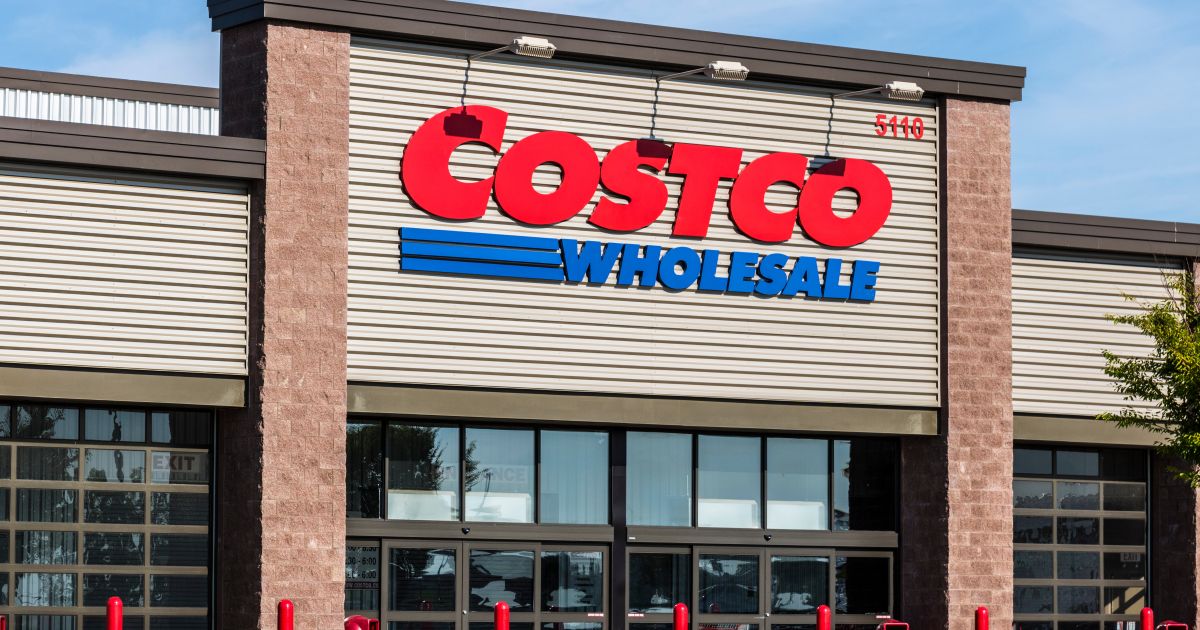
Costco Wholesale Corporation has filed a lawsuit against the federal government, arguing that emergency tariffs added to its imported goods were imposed without legal authority and must be struck down before upcoming liquidation deadlines make the charges final. The company asks the United States Court of International Trade to block further collection and refund the money already paid.
The complaint states that President Trump issued several executive orders beginning in February that relied on the International Emergency Economic Powers Act, known as IEEPA. Each order declared a national emergency and then raised tariff rates on goods from Canada, Mexico, China, and other countries. Costco states it has been charged for these additional duties throughout the year. IEEPA is a national emergency law that lets the President restrict certain dealings with foreign countries, such as freezing assets or blocking money transfers. The statute focuses on financial controls, not taxes on imported goods, and it has never been used to impose new tariffs.
Once the orders were issued, United States Customs and Border Protection implemented them by updating the Harmonized Tariff Schedule with new codes that carried higher rates. The schedule functions as a catalog that assigns every imported product a specific classification and tax rate. Costco claims that changing these codes enabled Customs officers to collect duties that Congress never approved.
The filing cites recent decisions from the Court of International Trade and the Court of Appeals for the Federal Circuit. Both courts concluded that IEEPA does not give the President authority to impose tariffs. Those rulings prompted importers, including Costco, to bring their own cases because refunds are not granted automatically. Even when a tariff is ruled unlawful, companies must file individual suits to protect the right to recover money already paid. The Supreme Court heard arguments on the issue on November 5 but has not released a ruling.
Along with its statutory claim, Costco raises a constitutional concern. The lawsuit notes that tariffs function as taxes on imported goods, and the Constitution gives Congress the exclusive authority to regulate foreign commerce, create taxes, and change duty rates. Costco argues that treating IEEPA as a tariff statute would shift a core legislative power to the executive branch without clear limits.
When goods enter the country, importers pay estimated duties that become final only after a process called liquidation, which is when the government completes its accounting for each entry. Liquidation closes the government’s books on that shipment, and once it occurs, the duty amount is fixed. After this point, companies may lose the ability to dispute the charges or obtain refunds. Costco says its first entries subject to the emergency tariffs will begin to liquidate in mid-December and that Customs denied its request to delay the process. The company filed this lawsuit now because liquidation deadlines are approaching, and once an entry liquidates, refund rights become significantly harder to pursue.
Costco asks the Court to halt the collection of new IEEPA-based duties, invalidate the executive orders, and require the United States to return the payments it has made with interest.