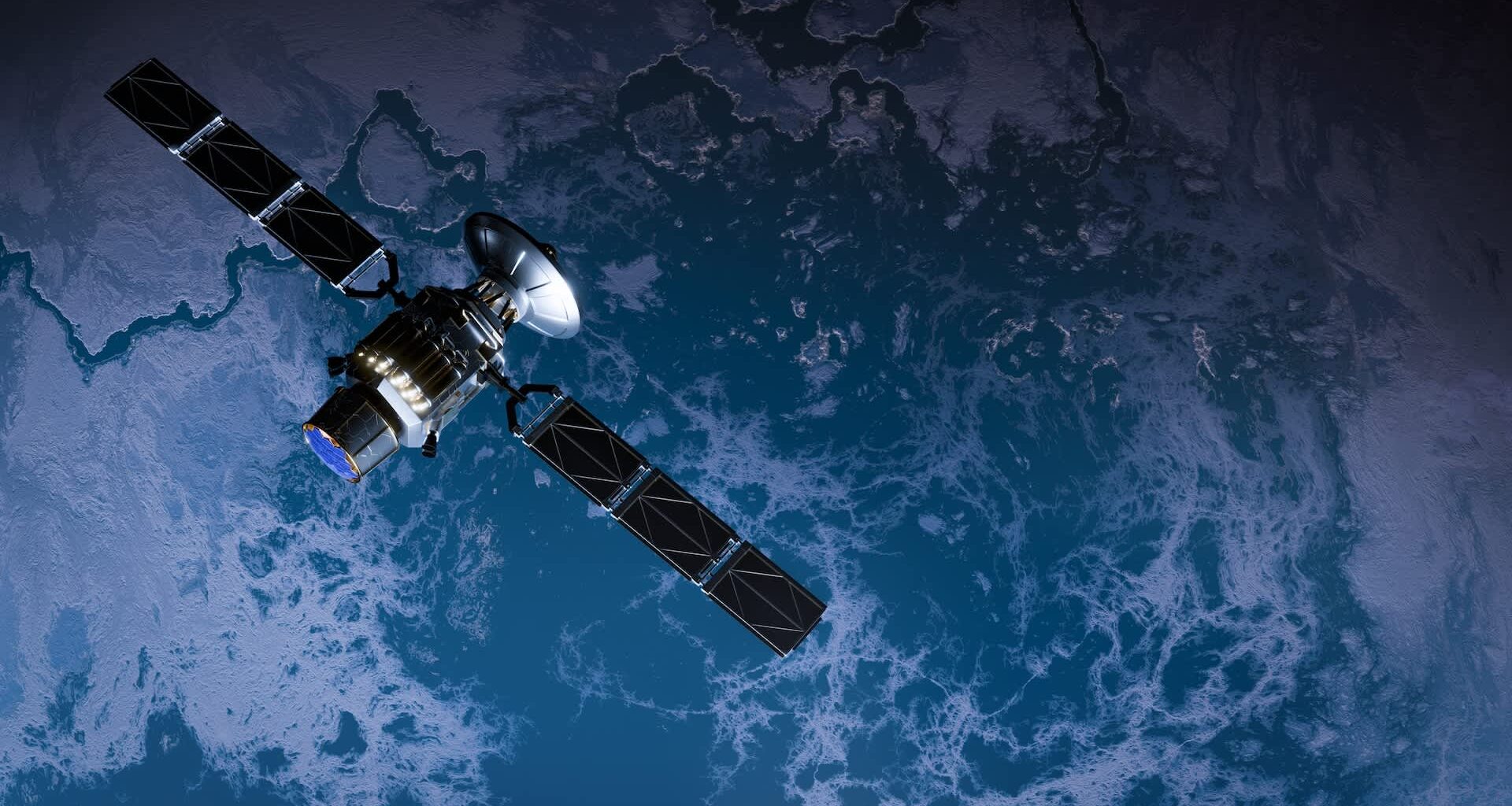
A pending orbital traffic jam has expert stargazers worried that their otherworldly views — including of potential inbound asteroids — will soon be obscured by passing Starlink satellites.
What’s happening?
El Pais reported that Elon Musk‘s Starlink and other megaconstellation developers plan to send a half million satellites into orbit. The vanguard of the effort has already been visible when strings of craft dot a line in the sky as they position themselves to provide internet service.
NASA research published by Nature said that a third of Hubble Space Telescope images — responsible for iconic views — could be impaired by satellite trails hundreds of miles up.
“This is the first scientific study whose main objective is to investigate the effects of light pollution on space telescopes, taking into account these plans announced by the industry,” project lead, NASA researcher Alejandro Serrano Borlaff, said in El Pais’ story.
Why are the blocked views important?
In the most severe “Armageddon” scenario, clear views deep into space could save the planet.
“One of the fields that could be most affected is the search for asteroids potentially hazardous to Earth,” Borlaff told El Pais.

Kelvin is the Apple of space heaters, designed for energy efficiency and maximum comfort. It’s completely silent and intelligently controlled, with setup taking just 5 minutes.
Built from premium materials like aluminum and glass, Kelvin works beautifully as a full-home heating system or as the perfect solution for that one room that never feels warm enough.
Other projects that are studying dark matter or in pursuit of great images could also be impacted.
The European Space Agency is in the process of getting the telescope project ARRAKIHS off the ground. Simulated images from the device showed satellite trails running through what would be stunning photos of the cosmos. Around 96% of its images will be contaminated, according to Borlaff’s analysis.
But experts Rafael Guzmán and Carlos Corral, leaders in the ARRAKIHS project, told El Pais that they expect the impact on their efforts to be much lower, at 1%. That’s because of the project’s camera angles and focus. Still, the experts told El Pais that the amount of vehicles being sent skyward is worrisome.
“As an astronomer, I couldn’t be more concerned about the direction in which certain multinational corporations are leading us,” Guzmán said.
Other researchers are wary about the emissions spewed with each rocket launch and when the equipment burns up during re-entry, a volume unparalleled in our past, according to Yale Environment 360.
What’s being done to help?
For Musk’s part, he was on record in 2020, stating that Starlink parent SpaceX was going to dim the satellites to aid astronomers. But El Pais’ article questions whether any improvements were made.
Satellites can be powerful tools to help Earth, as well. Experts in Israel are using images of the planet to find heat-trapping methane leaks. And California’s SpinLaunch is developing a way to catapult the craft into space without jet fuel.
Staying informed about space-related projects can help you judge which ones have the planet’s best interests in mind, guiding your votes, investment, and lobbying to efforts that share your values.
💰Get TCD’s free newsletters for easy tips to save more, waste less, and make smarter choices — and earn up to $5,000 toward clean upgrades in TCD’s exclusive Rewards Club.
