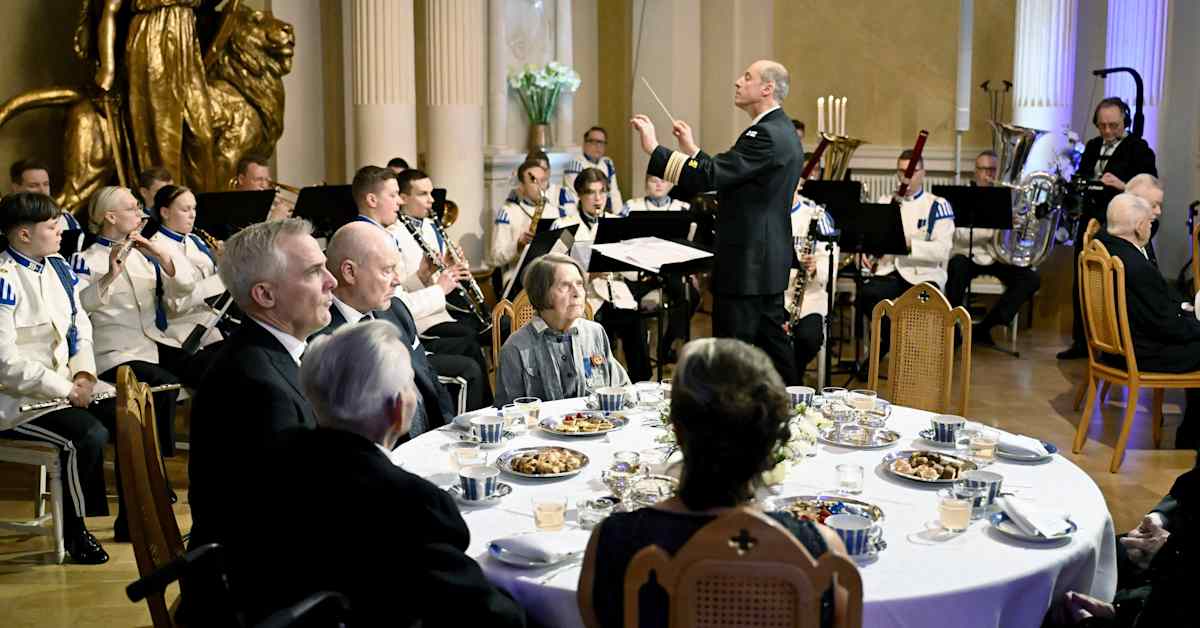
As Finland marks Independence Day, the country’s wartime generation is increasingly at the centre of national reflection and appreciation — even as their numbers diminish with each passing year.
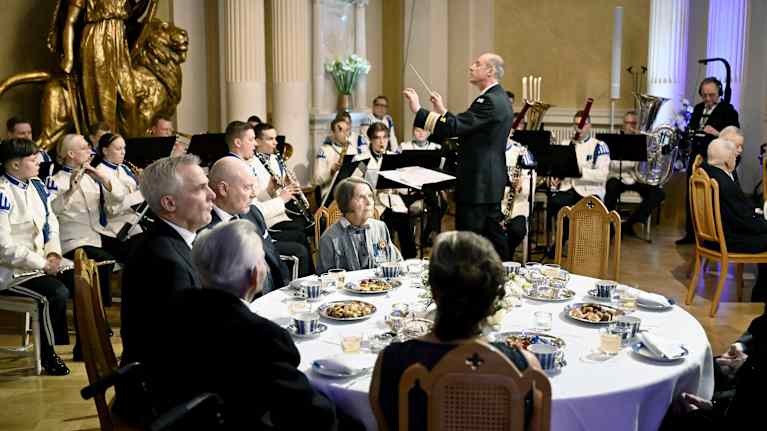
Open image viewer
Veterans and members of Lotta Svärd, a voluntary auxiliary paramilitary organisation for women, are celebrating Finnish independence on Tuesday at the Presidential Palace. Image: Roni Rekomaa / Lehtikuva
Independence Day in Finland is a mostly sombre affair.
Hietaniemi Cemetery in Helsinki, usually bordered by crowds on the nearby beach during the summer, takes on a far more solemn atmosphere in early December.
Gravestones are freshly cleaned, memorials are tended, and officials gather to commemorate those who fought for Finland in the Winter War, Continuation War and Lapland War.
The ones who survived the three conflicts make up Finland’s revered but ever dwindling pool of war veterans — and every year that heroic generation seems to slip further away.
Finnish President Alexander Stubb made the decision last year to not invite the veterans to the Independence Day gala — but instead to a separate, quieter event designed specifically for Finland’s oldest surviving soldiers.
Although a controversial decision at the time, Sakari Martimo of the Tammenlehvän Perinneliitto veterans’ heritage organisation notes that the change reflects practical considerations.
“These are 100-year-old people who have to travel even from the northern part of Finland,” he told the podcast All Points North, adding that the new arrangement allows the president to devote his “full attention to the veterans for two whole hours”.
Around 20 veterans were able to attend the ceremony this year. By 2035, the last of Finland’s wartime veterans will likely have passed away.
All Points North’s latest episode examines the legacy of Finland’s dwindling war generation.
Listen to the episode via this embedded player, on Yle Areena, via Apple, Spotify or wherever you get your podcasts.
Finland’s last remaining war veterans

All Points North takes a look at Finland’s diminishing population of war veterans and hears about how they impacted Finnish society as well as efforts to preserve their history. Changing ways to remember
Commemorative traditions for veterans and members of Lotta Svärd, a voluntary auxiliary paramilitary organisation for women during the wars, have adapted over time.
Historian Olli Kleemola from the University of Turku tells APN that veterans were not always a prominent part of the Independence Day reception.
“It is really only after the end of the Cold War,” he said, pointing to President Mauno Koivisto’s decision to invite veterans in 1989 on the 50th anniversary of the Winter War.
During the Cold War, openly commemorating the wars risked irritating the Soviet Union, whose influence shaped much of Finnish political life.
Only after the collapse of the Soviet Union did public appreciation of veterans expand, as retired servicemen had more time to publish books, participate in organisations and shape collective memory.
Preserving history
With the wartime generation now more than a century old, much of their history is shifting from lived experience to recorded research.
American historian and YouTuber Ian McCollum, who has worked with the Military Museum of Finland on a forthcoming book titled Forged in Snow, said Finland’s experience remains a powerful example of national resistance.
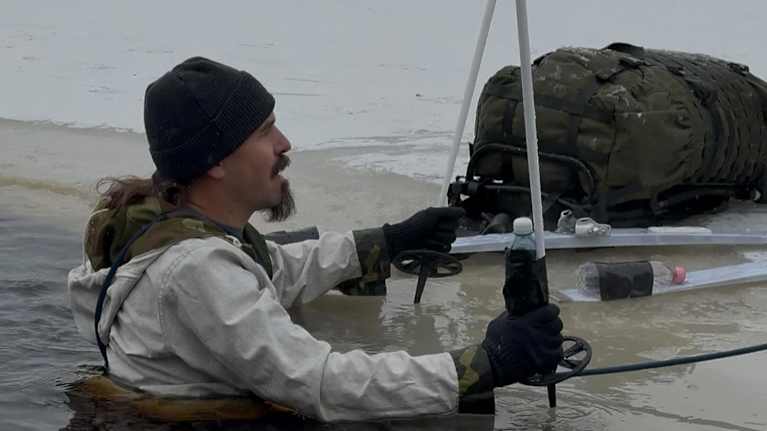
Open image viewer
Ian McCollum has made a few trips to Finland and is currently in the final stages of a reference book on independent Finland’s small arms. Image: Ian McCollum Instagram
“I think especially compared to the United States, Finland has a really important firsthand experience of why it can be worth going to war,” McCollum told the All Points North podcast.
McCollum added that Finland’s history of small arms reflects a small country that made the best with what it could acquire to defend itself. McCollum’s new book details every single small arm manufactured and modified since Finland became independent in 1917.
“Being willing to take that fight on is what kept Finland a sovereign country,” he said.
“There’s a really important firsthand lesson in that.”