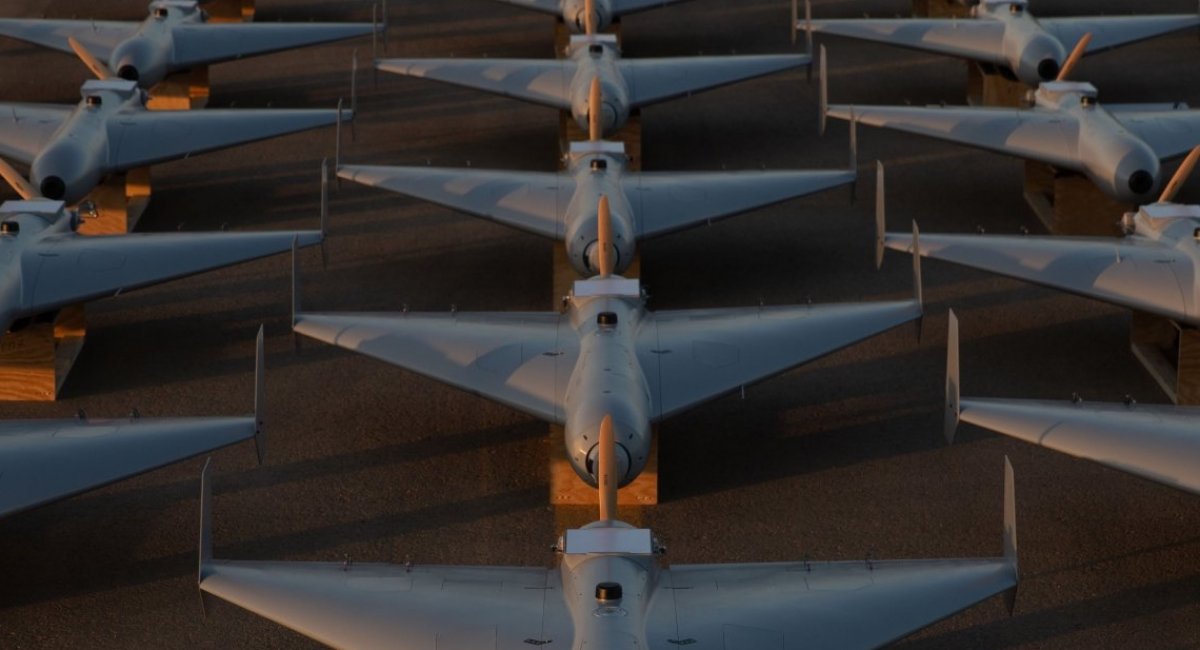
U.S. Army’s Central Command CENTCOM, whose area of responsibility is the Middle East, announced the creation of a new Task Force Scorpion Strike (TFSS). This group has already created a squadron of Low-cost Unmanned Combat Attack System (LUCAS) drones.
Obviously, in the Middle East, the targets of the new squadron will be iran itself and forces it supports. And here emerges a quite interesting situation when the U.S. Army is essentially threatening Iran with copies of their own Shahed-131, which LUCAS is.
Read more: Northrop Grumman’s Second Chance New Talon “Loyal Wingman” Targets CCA Comeback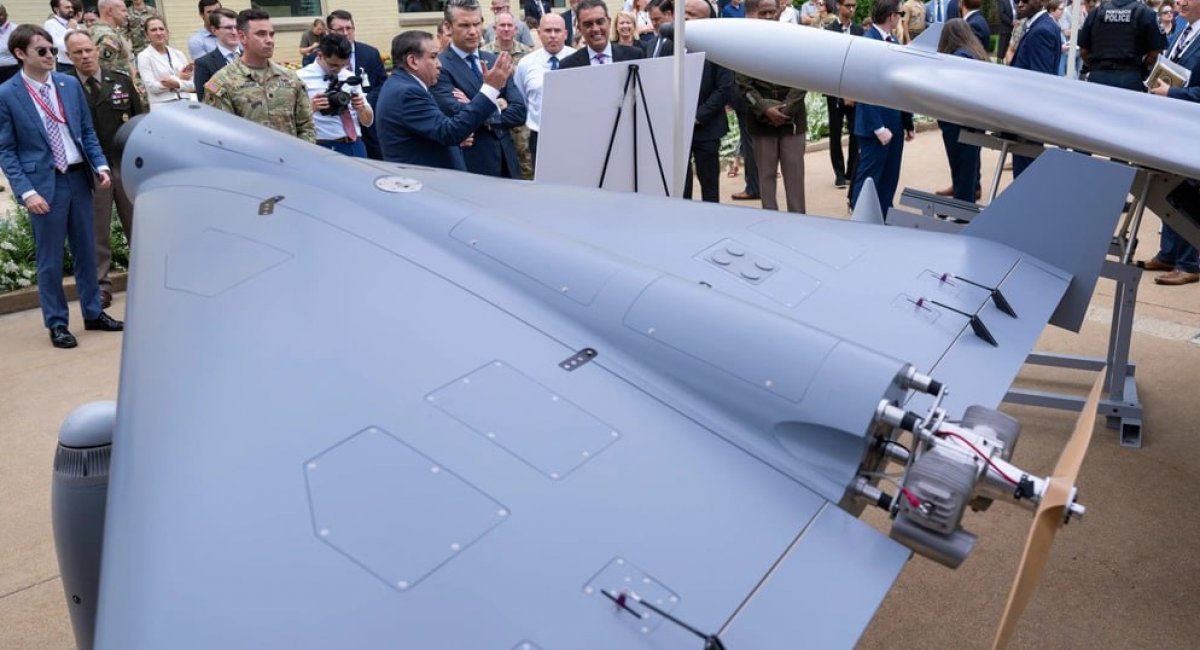 LUCAS UAV from SpektreWorks at exhibition this summer / Photo credit: U.S. Departament of War
And the Americans openly state that LUCAS is precisely a copy of Shahed-131. Moreover, they say they managed to obtain a complete specimen of the iranian drone, after which they conducted reverse engineering.
However, calling it a pure copy is difficult, because they only share some structural elements and external appearance. The fact is that from the very beginning, LUCAS was not only a kamikaze drone, but rather a multi-purpose unmanned aircraft, as it has a fully modular design.
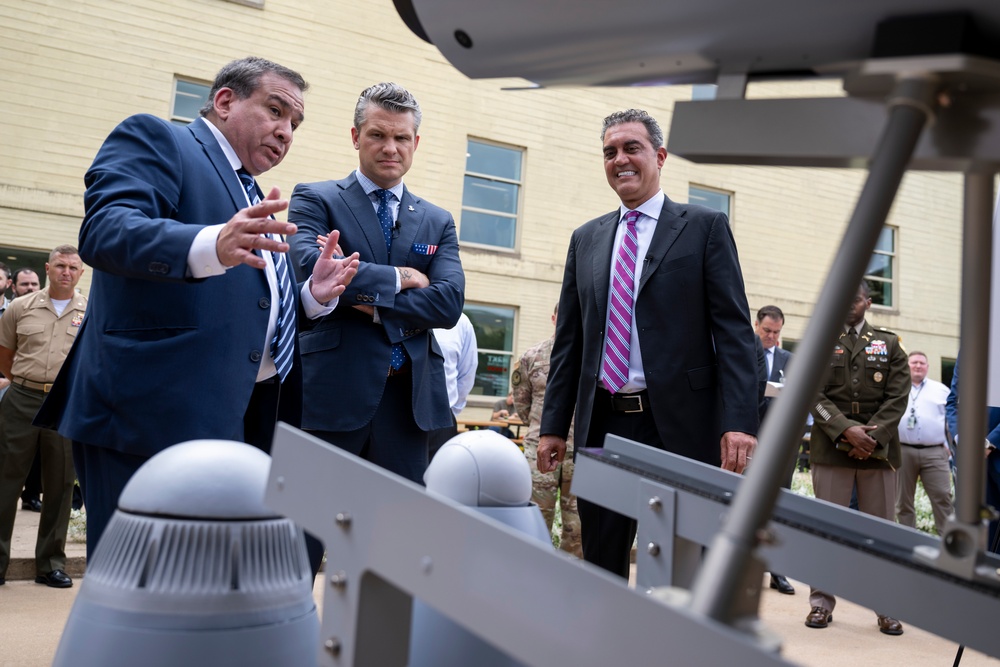 LUCAS UAV from SpektreWorks at exhibition this summer / Photo credit: U.S. Departament of War
Thanks to this, it can be not only a means of destruction, but can also carry means for communication and reconnaissance. LUCAS was developed by SpektreWorks based on the FLM 131 platform and was first presented this year in July. Exact characteristics and capabilities are currently unknown.
Along with the announcement of LUCAS deployment, new interesting photos of this unmanned aircraft in TFSS possession were also published. From them, one can notice that the drone received a certain box near the engine, which most likely is a satellite communication antenna.
If this is indeed the case, then LUCAS essentially copies the concept of Ukrainian FP-1/2 drones (with camera), Rubak, and others. They are also equipped with a camera and satellite communication antenna, thanks to which they can be controlled in real time and accurately hit targets at unlimited distance beyond radio horizon.
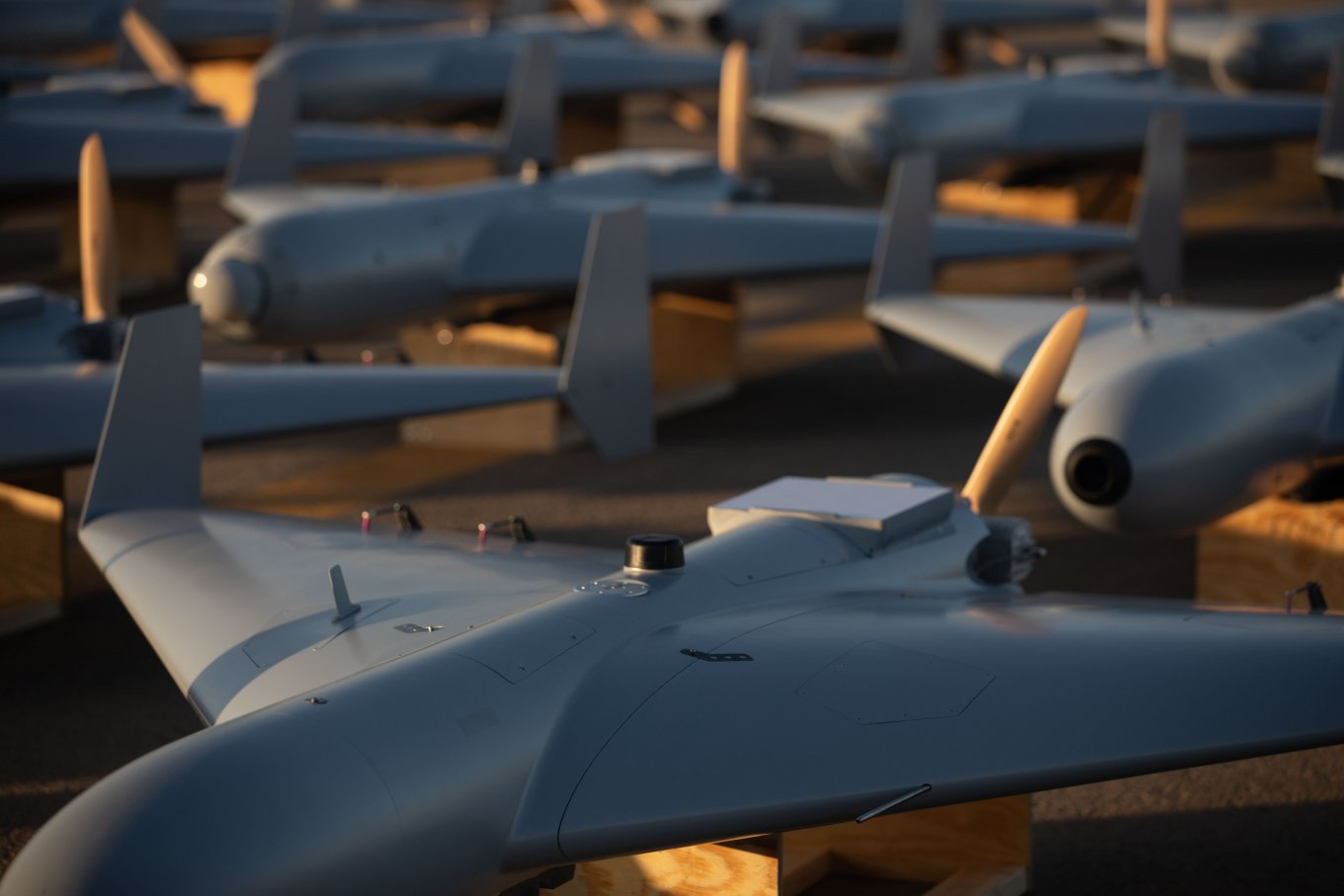 LUCAS drone with “box” near engine, which most likely is satellite communication antenna / Photo credit: U.S. Central Command (CENTCOM)
Particularly thanks to them, Ukraine’s Defense Forces arranged a real massacre of air defense systems, radars, and other equipment in Crimea, and now the geography of such strikes is gradually expanding, and recently even managed to hunt down a Mi-8 helicopter in flight in Rostov region.
Read more: Germany Delivers First Boxer IFVs to Qatar as Ukraine’s PzH 2000 Exchange Begins