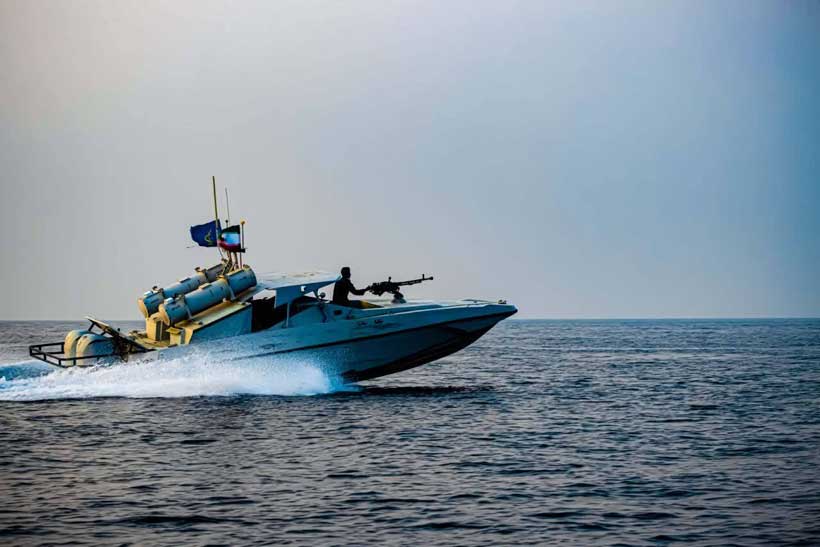
As global geopolitical attention is fixated on the wars in Gaza and Ukraine, Iran has chosen to optimize its strategic position in the most advantageous area, the Strait of Hormuz. The detention of the tanker St. Nikolas by Iran’s rapid response forces from a helicopter in January 2024 (BBC News, 2025) was not the first incident, and almost certainly not the last. It is the latest symptom of a chronic pattern in which Tehran exploits the world’s dependence on this vital waterway as strategic leverage. This leverage is based on an undeniable economic reality: 20-21% of oil supplies and 25% of global LNG trade rely on the smooth flow through this strait (International Energy Agency [IEA], 2025). Consequently, any disruption here has the potential to shake global energy markets. Iran claims this latest action as retaliation against US sanctions, but analysis from the International Crisis Group (2024) indicates that using the Strait of Hormuz as a trigger point and a tool of coercive diplomacy has become part of Iran’s broader strategic playbook. Therefore, this incident raises an urgent question: are we witnessing a mere isolated retaliation or a calculated move in Iran’s high-stakes gamble to negotiate from a stronger position amid international isolation?
To answer this question, we need to dissect the competing narratives behind the incident and view it within the broader pattern of Iran’s actions. On one hand, Iran constructs a simple legal and retributive narrative. The Islamic Revolutionary Guard Corps (IRGC) explicitly stated the detention of the St. Nikolas vessel as retaliation for the seizure of Iranian oil by the US a year earlier, while also framing its action as a correction against the theft of its oil at sea (Associated Press, 2024). This narrative is designed to provide domestic legitimacy and international legal justification. On the other hand, Washington and its allies reject this framing. The United States government condemned the action as piracy on the high seas, while the UK described it as an illegal act disrupting maritime security (Associated Press, 2024). However, if we stop at this exchange of narratives, we would miss the crux of the matter.
However, beyond this exchange of claims and curses, a deeper and more worrying pattern emerges. Viewing it merely as a bilateral revenge incident is a dangerous simplification. The January 2024 incident is not an isolated event; it adds to a long list of at least five foreign vessels still detained by Iran in recent years (Associated Press, 2024). This pattern reveals a deliberate foreign policy instrument. As analysed by the United States. Energy Information Administration (EIA, 2023), the Strait of Hormuz is the world’s most vital oil chokepoint, and Iran has a history of using a range of options, including maritime incidents, to send messages about its ability to disrupt energy markets. Therefore, the main thesis of this opinion is: despite the rhetoric of retaliation, Iran’s actions in the Strait of Hormuz constitute a measured show of force. Its purpose is more than mere revenge; it serves as a tangible reminder to the world that Tehran holds the most valuable geopolitical asset to pressure the global economy when feeling cornered by sanctions or military threats.
Iran’s asymmetric advantage is rooted in a combination of geography and strategic investment in specialized maritime capabilities. Although its military budget is far below that of superpowers, Tehran has developed highly effective area denial capabilities for narrow waters such as the Strait of Hormuz (International Institute for Strategic Studies [IISS], 2019). Fast boat fleets, naval minefields, coastal missile batteries, and swarm tactics involving small vessels serve as inexpensive yet impactful force multipliers. With these tools, Iran routinely carries out calibrated provocations on the high seas (Better World Campaign, 2023), violating freedom of navigation under UNCLOS, such as in the recent detention of an Eswatini-flagged tanker (Middle East Eye, 2023), to demonstrate control and project power with minimal financial risk. A single ship detention is not merely a legal incident but a vivid display of the ability to disrupt 20% of global oil supplies, providing political leverage disproportionate to its military size.
This offensive action at sea must be understood as part of Iran’s resilience psychology amid extreme economic pressure and diplomatic isolation. The deadlock in the nuclear negotiations (JCPOA) and the US maximum sanctions regime have crippled Iran’s economy, creating a need for the regime to demonstrate strength and agency, rather than weakness (Arms Control Center, 2023). By disrupting the Strait of Hormuz, Iran effectively reverses the logic of pressure; sanctions intended to restrain are met with threats to global energy stability. This is a measured coercive message to Washington and its allies: the cost of maintaining the diplomatic deadlock or tightening sanctions can be drastically increased through a crisis in the most vital trade route. In other words, the detained tanker is a maritime bargaining chip, serving as a reminder that the stalemate at the Vienna negotiation table can easily turn into turmoil in the world oil market.
This strategic motive is reinforced by domestic political calculus. The widely broadcast military actions in the Strait of Hormuz serve as a show of force for internal consumption, stirring nationalist sentiment and diverting attention from economic difficulties. However, the use of this coercive instrument also carries risks. Each escalation increases the potential for open conflict with the US or its allies, which could significantly harm Iran. Therefore, the pattern observed of intermittent yet recurring incidents, contested legal claims, and controlled escalation indicates a deliberate strategy. Iran is not seeking war but rather exploiting global systemic vulnerabilities to enhance its bargaining position. In this calculus, the Strait of Hormuz is not merely a waterway but a geopolitical chessboard where Tehran plays the only card capable of counterbalancing the superior conventional pressure of its adversaries, risking global economic stability as its guarantee.
The cycle of provocation and response in the Strait of Hormuz has created a condition where the risk of miscalculation becomes extremely acute. As analyzed by the International Crisis Group (2024), the dynamics of action and reaction in these narrow waters can easily exceed the scenarios planned by both parties. A minor incident, such as contact between Iranian fast boats and allied warships, or an accidental shot, can quickly escalate into an open military crisis involving casualties. Historical patterns, from the “Tanker War” of the 1980s to drone attacks and ship detentions in 2019, have repeatedly demonstrated how fragile peace is in this region (Mangu, 2025). The operational dilemma further exacerbates the situation, with the logistical task of escorting the dozens of tankers passing through daily being impossible for the United States Navy and its allies, thus creating a permanent vulnerability that can be exploited by non-state actors or utilized by Iran for limited actions.
This deadlock demands a fundamental recalibration of Western policy, particularly that of the United States. Evidence shows that the maximum pressure policy, when not accompanied by a clear diplomatic offer, is in fact counterproductive. As criticized by analysts at the Carnegie Endowment (2025), this one-dimensional approach removes any incentive for Iran to exercise restraint and instead encourages the regime in Tehran to play the only card they have: disruption in the Strait of Hormuz. A more holistic and effective strategy must offer a credible diplomatic off-ramp, explicitly linking measured reductions in economic sanctions with limitations on Iran’s nuclear program and a commitment to cease maritime provocations. Without such an offer, the cycle of coercion will continue to spin, with the risk of escalating tensions rising each time new sanctions are imposed or new incidents occur.
Given the significant global interest, sustainable solutions cannot be left solely to the United States (and its allies) and Iran. Major users of the Strait of Hormuz, such as China, India, Japan, South Korea, and ASEAN countries like Indonesia, must shift from being passive affected parties to active diplomatic actors ensuring stability. Their substantial energy dependence, as reflected in oil imports from the Gulf (Mangu, 2025), provides them with unique economic leverage and political responsibility. China has begun to lead the way by promoting a multilateral security framework and inclusive dialogue in the region as a counterbalance to exclusive dependence on the US military presence (Carnegie Endowment, 2023). Other user countries can form a maritime stakeholder coalition that utilizes economic ties and diplomatic networks with all parties, namely Iran, Gulf states, the United States, and Europe, to promote de-escalation mechanisms, crisis mediation, and, most importantly, stronger enforcement of UNCLOS norms to prevent the normalization of state piracy on the high seas. The stability of the Strait of Hormuz is a global public good, and its safeguarding requires contributions from the entire international community of stakeholders.
Thus, the incident involving the detention of the St. Nikolas tanker is merely a surface symptom of a deeper ailment: the total geopolitical deadlock and endless economic war between Iran and the United States. As long as the root of the problem—maximum sanctions unaccompanied by diplomatic channels and maritime coercion strategies as the sole solution—remains unaddressed, the Strait of Hormuz will continue to be a ticking time bomb at the heart of the global economy. Each new incident is not a surprise but a predictable reminder of this systemic fragility. The critical question is no longer whether there will be another conflict, but when, and more importantly, whether the international community has learned anything to respond more wisely, beyond the cycle of curses and threats that have proven ineffective in easing tensions.