Facebook
Twitter
LinkedIn
Pinterest
Reddit
Email
Print
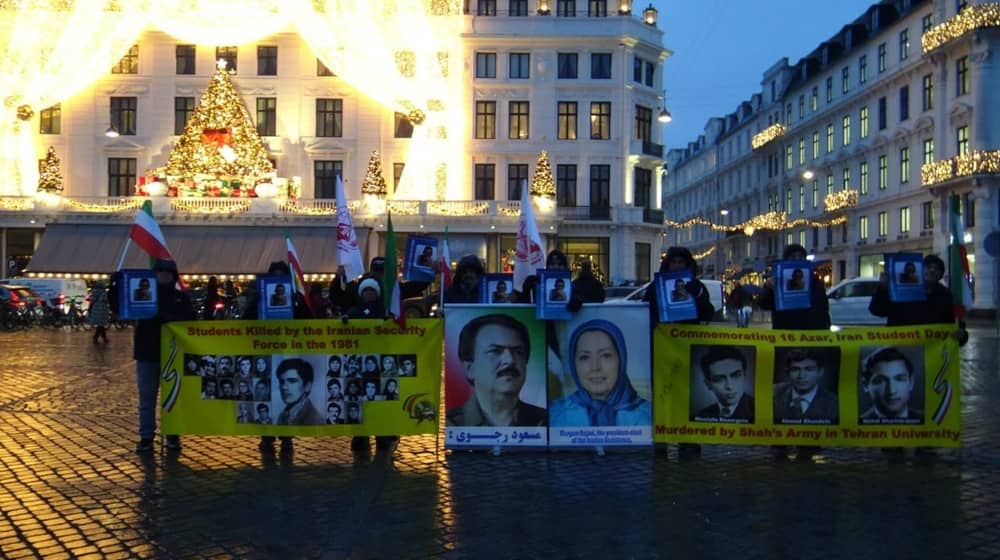 Copenhagen, Denmark – NCRI supporters held a rally in very cold and rainy weather to mark Student Day. 5 December 2025
THIS PAGE WILL BE UPDATED WITH THE LATEST NEWS
UPDATE: 10:00 AM CET
PMOI Resistance Units Vow to Turn Iran’s Universities Into ‘Centers of Rebellion’
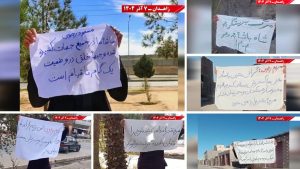
On the cusp of Student Day, celebrated annually on December 7, Resistance Units, the network of the People’s Mojahedin Organization of Iran (PMOI/MEK) inside the country, has launched a nationwide campaign of anti-regime activities. These Resistance Units are reaffirming the student movement’s historic commitment to freedom and sending a clear message: the struggle to overthrow the clerical regime is intensifying, with universities at the very forefront of the battle for a democratic Iran.
The significance of Student Day is rooted in the murder of three student activists by the Shah’s regime at Tehran University on December 7, 1953. That event, which occurred just months after a coup against the democratically elected government of Mohammad Mossadegh, became an enduring symbol of resistance.
Iran’s Digital Apartheid: How The Regime Profits from the Very Censorship It Imposes

A recent transparency feature on the social media platform X has inadvertently torn the mask off the Iranian regime’s two-faced internet policy, exposing a system of “digital apartheid” that grants the ruling elite unrestricted access to a free and open internet while the Iranian people are suppressed behind a wall of censorship. This hypocrisy, however, is merely the public face of a much larger criminal enterprise. Internet censorship in Iran is not just a tool for political repression; it is a deliberately engineered, multi-billion-rial black market controlled by the Islamic Revolutionary Guard Corps (IRGC) and institutions under the direct command of Supreme Leader Ali Khamenei.
The scandal revolves around “White SIM cards,” exclusive cards that grant users unrestricted access to the global internet, bypassing all state-imposed censors. While ordinary Iranians struggle with a heavily censored internet, these SIM cards are provided to regime officials and insiders. Marketed at exorbitant prices ranging from 100 million to 900 million rials, they are a symbol of the deep chasm between the rulers and the ruled.
Rana Faraj Oghli, 24, A Child Marriage Victim, Executed in the Central Prison of Tabriz

Rana Faraj Oghli, 24 years old Turk woman and victim of child marriage, was executed at dawn on Wednesday, December 3, 2025, in the Central Prison of Tabriz.
Rana Faraj Oghli was arrested two years ago on charges of allegedly killing her husband and was sentenced to death following a judicial process that lacked basic guarantees of a fair trial, according to Iran’s judicial system’s own records.
Forced into marriage at the age of 16 to a man 19 years her senior under family pressure, she endured years of domestic violence and relentless coercion.
55% of Child Abuse Cases in Iran Involve Young Girls
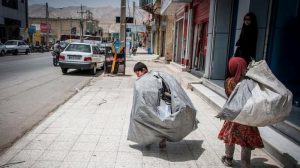
A largely overlooked aspect of systemic violence in Iran is the growing trend of child abuse, especially against young girls.
Available reports show that child abuse is rapidly increasing in Iran and now ranks among the most urgent social crises. Even the regime’s own media and officials at the Welfare Organization (Behzisti) admitted in 2024 and 2025 that the trend is rising at an alarming pace.
Hassan Mousavi Chalak, deputy head of the Welfare Organization, acknowledged in an interview with Khabar Online that public sensitivity and reaction to social harms, particularly child abuse, have risen sharply. His admission highlights how the real scale of these crimes far exceeds what the misogynistic clerical regime hides in its official statistics.
Iran’s Expanding Wave of Public Protests in November: A Nation Pushed to the Brink by Crisis and Repression

As economic collapse deepens and social despair spreads, protests across Iran surge, reflecting a society increasingly unwilling to tolerate the regime’s failures.
Amid an escalating political crisis at the top of the Iranian regime and the total paralysis of its governing structures, public protests have entered a new phase of intensity. As the regime’s president Masoud Pezeshkian begins the second year of his presidency, the pillars of Iran’s economy have nearly ground to a halt.
Poverty, unemployment, and hunger continue to rise, eroding the social fabric and fueling a nationwide movement of defiance. The regime, aware of the depth of the crisis, is visibly preparing for what it fears will be an inevitable confrontation with the public. Against this backdrop, the streets of Iran saw a remarkable surge in collective action throughout November.
Goli Kouhkan: A Child Bride Turned Domestic Violence Survivor Now Facing Execution in Iran

Goli Kouhkan was born into the scorching and neglected lands of Baluchistan—one of the poorest and most marginalized regions under the Iranian regime. She entered the world with no birth certificate, no legal identity, and no protection. Before she could read or write, the machinery of injustice had already consumed her life. At just 12 years old, when most children are still holding crayons, Goli was forced into marriage with a cousin significantly older than her. No one asked her consent. No one cared for her childhood dreams. The State that should have protected her did not even acknowledge her existence.
By 13, she gave birth alone in a mud house, without medical care or emotional support. Violence became the only constant in her life—beatings, humiliation, and the daily terror of living with an abusive husband. Goli was illiterate, undocumented, and trapped.
Iran Regime Launches New Wave of Crackdown to Restore Mandatory Hijab
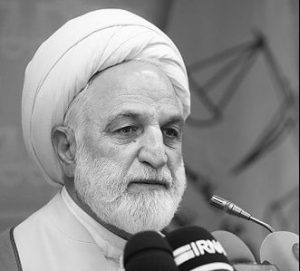
Amid deepening public resistance led by Iranian women, the regime has activated a coordinated security and political campaign to reimpose compulsory hijab through intensified policing, closures, and expanded surveillance.
The sustained resistance of Iranian women to compulsory hijab, especially since the uprising of autumn 2022, has become one of the most enduring social movements of the past four decades.
This ongoing defiance has now triggered a fresh phase of repression as senior officials of the Iranian regime signal a coordinated effort to restore the same coercive machinery that briefly retreated under public pressure.
In a speech in Yazd on December 4, Judiciary Chief Gholam-Hossein Mohseni-Ejei delivered his most explicit remarks in months, insisting that existing laws allow authorities to “control up to 75 percent of violations” and declaring that the current social atmosphere on the streets “must not continue.”
US Stresses Need to Curb Iranian Regime-Backed Militias in Iraq
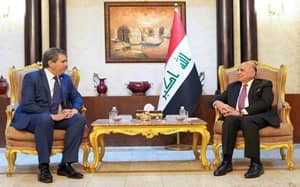
Following talks between Michael Rigas, the U.S. Deputy Secretary of State, and Fuad Hussein, Iraq’s foreign minister, Washington once again emphasized the necessity of dismantling militias affiliated with Iran’s regime in Iraq.
The Persian-language account of the U.S. State Department published images of the meeting and referred to earlier remarks by U.S. Secretary of State Marco Rubio, writing that the United States “will continue to speak clearly about the need to dismantle Iran-backed militias that undermine Iraq’s sovereignty, threaten Americans and Iraqis, and loot Iraq’s resources for Iran.”
These positions are being reiterated at a time when Iraq’s political developments and broader regional security concerns carry significant implications for the future of the Baghdad government and the balance of power in the Middle East. A few weeks ago, on November 11, Iraq held its parliamentary elections, but various factions have still not reached an agreement on forming the next government.
Rising Number of Incarcerated Women for Financial Debt in Iran
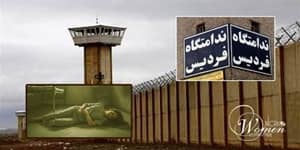
Recent data from prisons across Iran offers a stark picture of the unprecedented rise in women imprisoned for financial debt; women detained not for committing crimes but due to overwhelming economic pressure and the erosion of financial security. Reports indicate that this growing wave of debt; related incarceration, especially among mothers and female heads of household, has reached an alarming level with profound consequences for thousands of families across Iran.
Findings show that in recent years—amid soaring inflation, the sharp devaluation of the national currency, and a widespread employment crisis; the number of women imprisoned for failing to repay small personal debts has steadily increased. These debts typically include guarantees undertaken for relatives, medical expenses, rent, or minor loans. However, in the current economic collapse, such small obligations have rapidly turned into unmanageable liabilities.
New Memoir by Massoumeh Raouf Basharidoust Chronicles Daring Escape from Iranian Prison
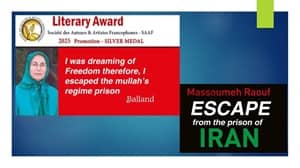
A powerful new memoir by former Iranian political prisoner and journalist Massoumeh Raouf Basharidoust has been released, detailing her 1982 incarceration and dramatic escape from a high-security prison in northern Iran. Escape from the Prison of Iran offers a firsthand account of her months inside Rasht prison, where she was held under the supervision of Revolutionary Guard forces.
Raouf, a sympathizer of the People’s Mojahedin Organization of Iran (PMOI/MEK), describes the harsh conditions she endured and the personal losses she suffered during the political turmoil of the early 1980s. In the book, she reflects on the psychological toll of imprisonment and the fate of many fellow detainees who did not survive.
Born in 1961, Raouf was arrested in 1981 and sentenced to 20 years in prison but managed to escape after eight months. Her memoir also addresses the 1988 mass executions of political prisoners in Iran, during which her younger brother was killed. Since then, she has dedicated her life in exile to documenting abuses against political prisoners and advocating for justice for the victims of the 1988 events.