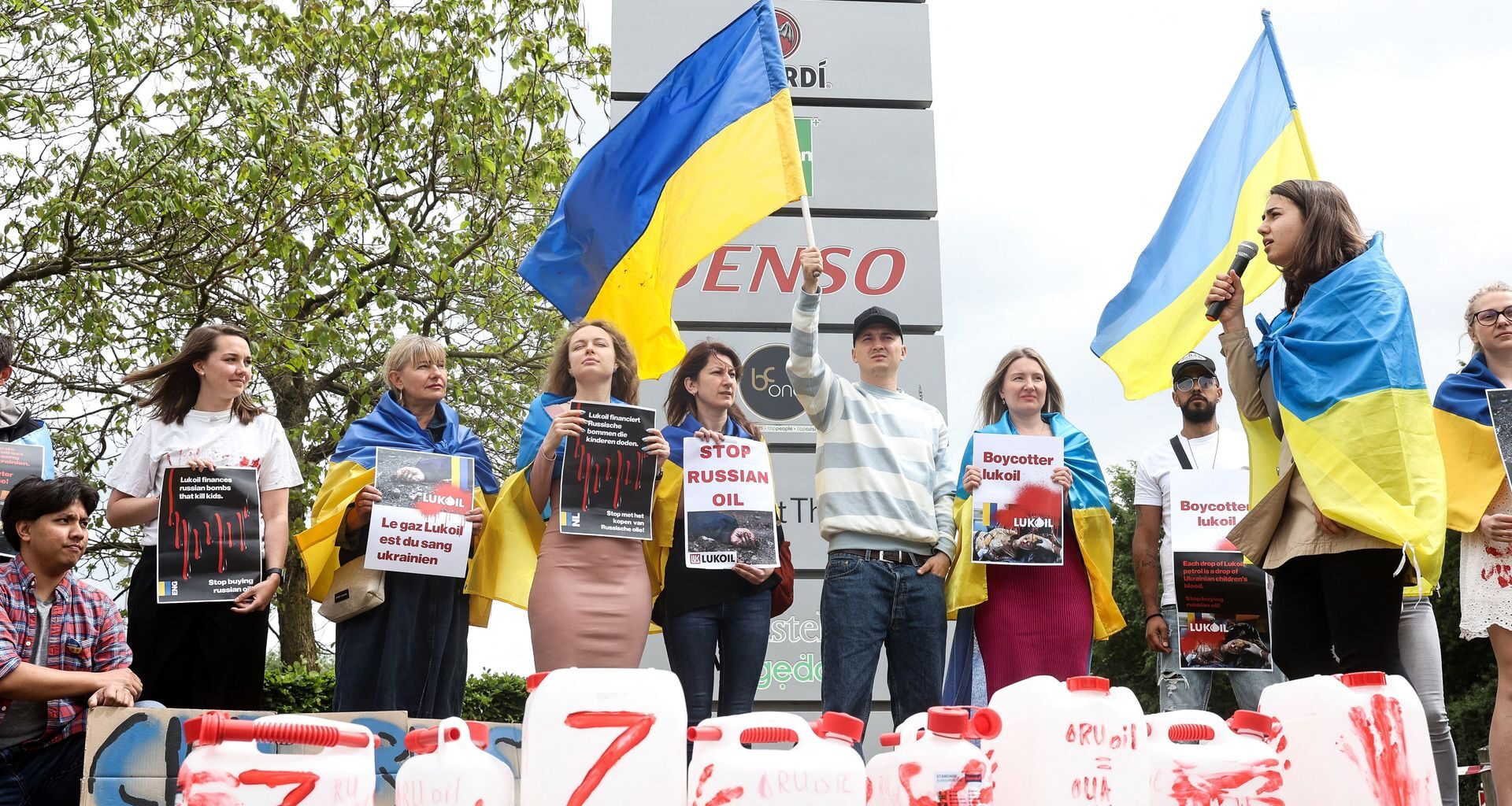
The G7 and EU are mulling replacing the Russian oil price cap with a ban on maritime services for Russian oil exports to hit Moscow’s war machine, Reuters reported on Dec. 6, citing six sources close to the matter.
But the move will do little to hinder Russia’s oil economy, other than create additional hurdles for Russian exporters, John Gawthrop, an editor at Argus Eurasia Energy, told the Kyiv Independent. Like the initial oil price cap, Russian companies will find ways around Western restrictions, he added.
“It’s a grand gesture that sounds good, and it will no doubt be an extra layer of hassle for Russia. But it won’t kill Russian exports,” he said.
The oil price cap, imposed in 2022 following Russia’s full-scale invasion, means third countries can buy Russian crude using Western services – like insurance, tankers, and brokers – but only if the oil is below a set price. Since September, the EU, Canada, and U.K., set the price cap at $47.6 per barrel, down from $60 per barrel.
The ban currently being discussed would mean that Western countries can no longer provide those services. Roughly a third of Russian oil exports use European tankers, mainly from Greece, Malta, and Cyprus. Since 2022, Russia has rerouted its oil exports to Asia, particularly China and India.
Reuters reports that the ban could be included in the next European sanctions package, believed to be planned for early next year. Before including it in the package, Brussels wants to approve the ban alongside a more expansive G7 agreement, two of Reuters’ sources said.
Consequently, if the ban goes through, Russia would likely have to expand its shadow fleet – old vessels with opaque ownership and no Western insurance – to transport the crude instead. Around two-thirds of Russian crude is exported on these vessels, which are often subject to Western sanctions.
The shadow fleet has kept Russia’s oil revenue afloat. While the price cap was initially applauded, Russian companies and their affiliates kept the oil trade flowing above the cap thanks to the shadow fleet.
“When prices are below the price cap level, it gives Russian exporters more flexibility with access to a wider range of service providers. But if that access is blocked, they’ve already shown that they can get by without it,” Gawthrop said.
Russia’s growing shadow fleet sends a dangerous signal, expert warns