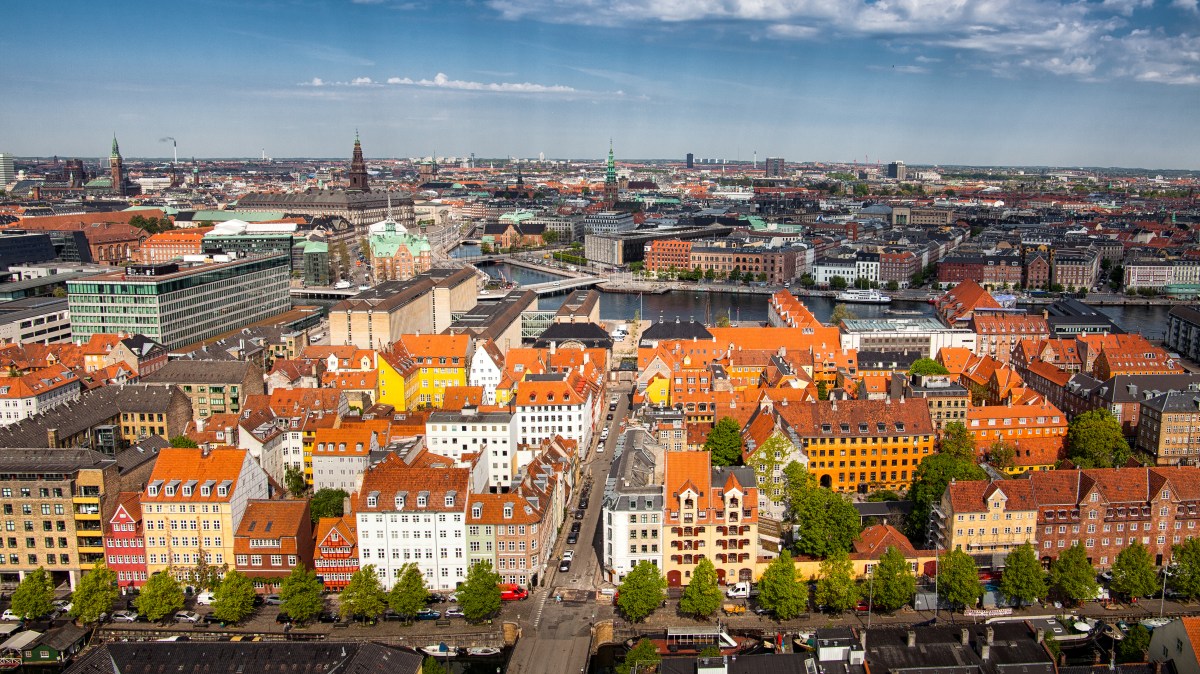
On a crisp November morning, the light hits Copenhagen with a kind of Nordic clarity — bright and low, giving the panoramic view across the city an almost metallic sheen. Outside a neighbourhood café in Osterbro, a neat line of prams is parked beneath the awning, each holding a sleeping baby while their parents sit inside catching up with friends.
Bicycles are stacked, unchained on pavements. What can look utopian to visitors is, for Danes, simply normal. Trust is the default.
“Denmark is probably the most trust-based country in the world,” said Rasmus Busk, the Danish founder of Flatpay, a financial technology company.
That trust runs through Danish working life, too, shaping a labour culture that has become a point of fascination for policymakers abroad. The Danish labour system, also known as “flexicurity”, is built on the same logic that lets parents leave their prams unattended: that a society works best when the people within it trust both the system and one another.

Rasmus Busk, centre, with his Flatpay co-founders Sander Janca-Jensen, left, and Peter Luth
FLATPAY
Flexicurity — a portmanteau of flexibility and security — blends two principles often treated as opposites. Employers have the broad freedom to hire and fire as they see fit, with comparatively few constraints, allowing them to adjust staffing levels as market conditions change.
At the same time, flexicurity guarantees workers a safety net if they lose their jobs, with unemployment insurance, active job-search assistance, retraining programmes and social support that help keep people afloat until they find new roles.
It is a model that contrasts with Britain, where Labour is pushing through the Employment Rights Bill to reshape workers’ protections in ways that have sparked fierce debate. Supporters hail the bill as an overdue shift towards greater rights: better sick pay, protections for zero-hours workers, greater access to flexible working and more consistent parental leave.
Critics, however, warn that the bill could choke business flexibility and curb the ability of firms to adapt quickly to the market.

Denmark has one of the most trust-based economies in the world
FRÉDÉRIC SOLTAN/CORBIS VIA GETTY IMAGES
• Sacked workers to get unlimited payouts for unfair dismissal
Yet Denmark’s relaxed approach has led to a resilient labour market. The country’s unemployment rate stood at 2.6 per cent in October this year, compared to 5 per cent in the UK, 6.3 per cent in Germany and 7.7 per cent in France. Meanwhile, Denmark recently raised its economic forecasts; it now expects gross domestic product (GDP) growth of 2.6 per cent.
Little wonder, then, that economists are looking at the Danes with envy.
The roots of the flexicurity system stretch back over a century, shaped through decades of negotiations between trade unions and employer groups. Denmark has no statutory national minimum wage; pay and conditions are instead set through collective bargaining agreements that cover most of the workforce — from warehouse, construction and factory workers to staff in retail, finance and education.
Central to these negotiations is Dansk Erhverv, the Danish Chamber of Commerce, which negotiates these contracts on behalf of its 18,000 members. They govern everything from wages to pension schemes, holidays, maternity leave and notice periods. The latter can range from a day’s notice in the case of a warehouse worker who has been in their job for less than 12 months, up to six months for certain white collar roles.
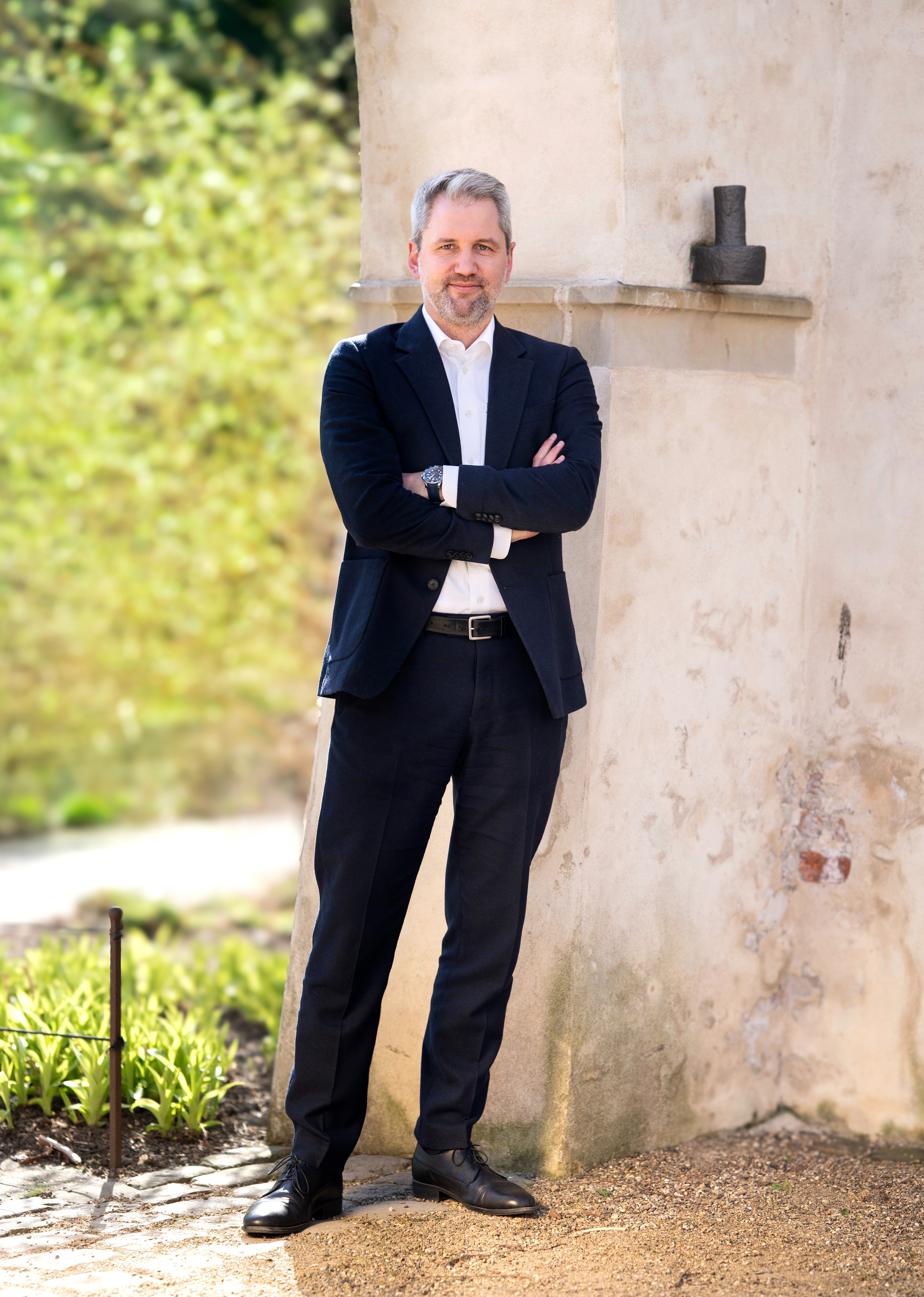
Jesper Ostergaard Bocianski of the Danish Chamber of Commerce
DANSK ERHVERV
Jesper Ostergaard Bocianski, who oversees these negotiations, describes them as calm but exacting, sometimes running to days rather than hours. The longest talks that he remembers started on a Monday morning and finished on a Tuesday evening. The flashpoints vary depending on the wider macroeconomic environment. “One year it can be longer paid maternity leave, another year it can be pensions. In 2023, it was wages. That was a very expensive year.”
For employers, this model creates predictability. For workers, it means wages are not set by parliament but by unions with real clout. The state plays a supporting role, funding welfare, retraining and active labour-market policies that help people move quickly into new roles. Job mobility is treated as a normal, even healthy, aspect of modern work, rather than a misfortune to be avoided at all costs.
Majbritt Skov, chief economist and partner in the Danish arm of the professional services firm Deloitte, argues that employee churn is “both good for employees and employers, but also for the development of economies as a whole”.
She adds: “There’s this sense that you can always come back and there will be no hard feelings.”
The ease of dismissal, softened by benefits, also changes the behaviour of employers: they are more willing to take a chance on groups seen as riskier, such as young and inexperienced workers, career-switchers or ex-offenders. Hiring is a risk they can afford to take.
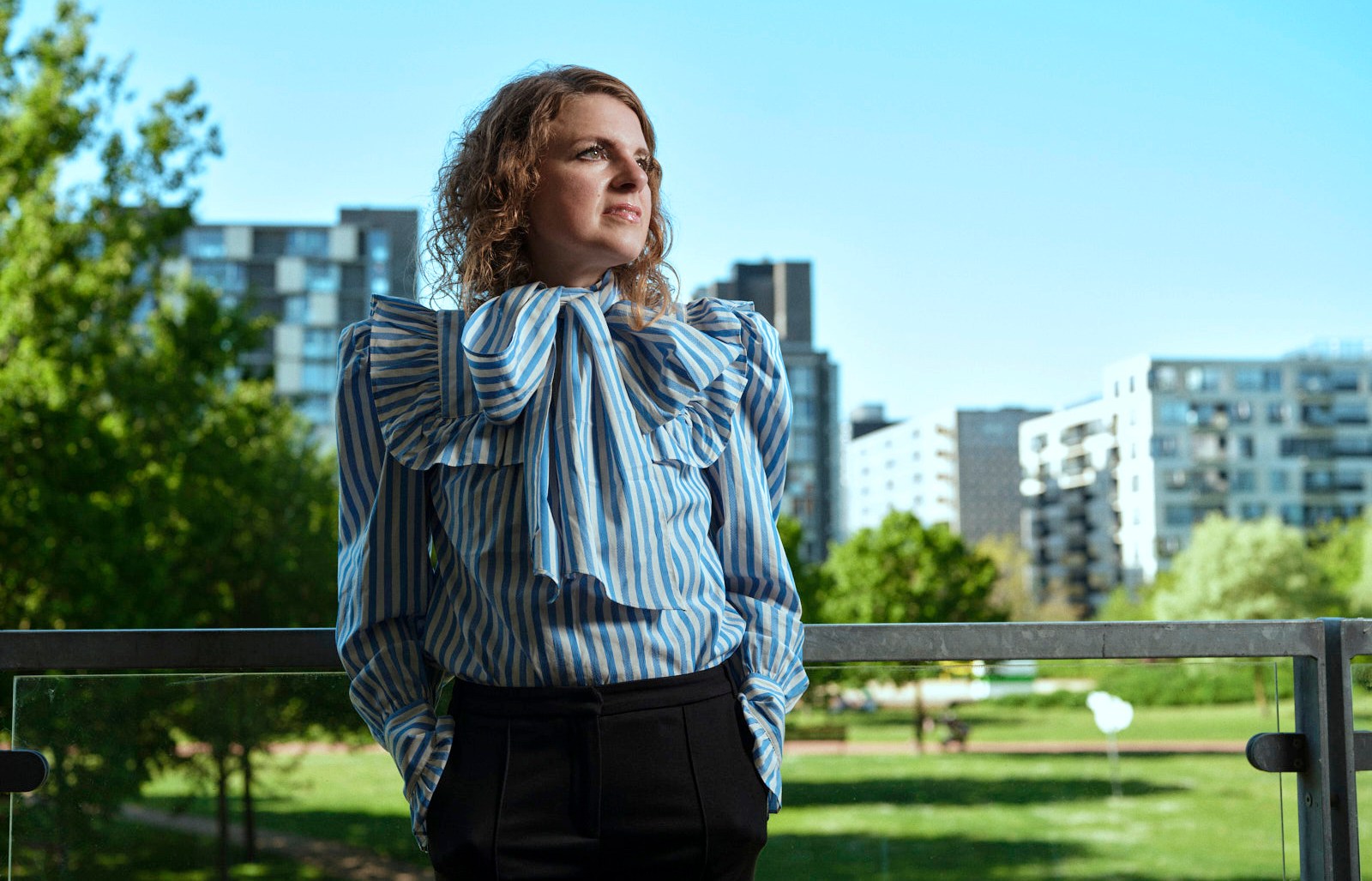
Majbritt Skov says the Danish system can be “good for employees and employers, but also for the development of economies as a whole”
FOTOGRAF ESBEN ZØLLNER OLESEN
Yet the critical question is whether the Danish model can travel. Can a system that works for a population of six million be scaled up to bigger countries? France’s President Macron used it as inspiration for his labour and welfare reforms after he took office in 2017, but was met with fierce resistance.
• France’s unions tamed at last by Macron reforms
Meanwhile, the Labour government in Britain might have scrapped the most controversial part of the Employment Rights Bill — giving workers rights from day one — but staff still look set to gain greater protection against dismissal.
On paper, others could learn from the Danes. A country could introduce unemployment insurance, invest more heavily in retraining, and streamline hiring and firing rules so that companies are less fearful of taking on staff. Flexicurity could encourage unions and employer groups to negotiate wages and conditions collectively.
But Denmark’s model rests on deeper foundations: high social trust, strong union membership and longstanding co-operation between labour and business. These are not easily replicated.
The ease with which employers can adjust their workforces in Denmark rests on the belief of workers that the system will not abandon them. Community spirit and a sense of shared endeavour are also key, said Nico Blier-Silvestri, a French former human resources executive who is now a partner in Dreamcraft Ventures, a venture capital firm in Copenhagen.
“In other countries, there’s this massive distrust in politics and in the system more broadly. There’s a lot of anger because people feel cheated. It’s not the case here. There is trust in institutions and in politics. There is a sense that the people in charge really have the best interests of Denmark at heart.”
William Bullock, a British data scientist who moved to Copenhagen to study for his master’s degree in 2016, and never returned to the UK, echoed Blier-Silvestri’s sentiments: “If you move to Denmark and you want to succeed here, you have to accept the social contract is that we belong in a more communal society where trust is high and your priorities are shared with the group, more than the individual.”
This flows through to the way in which Denmark’s leaders run organisations, said Busk of Flatpay. “The Danish leadership philosophy is that you empower people, you trust people, you treat people with dignity and respect, and you listen to their opinion.”
This is in stark contrast to other economies, he added. “This approach is shocking for the average Italian employee … They’re used to being in a very hierarchical system where the boss makes all the decisions.”
Flatpay, a provider of payment technology to small companies and Denmark’s most recently minted “unicorn” — a start-up with a valuation of more than $1 billion — employs 1,500 people across six European markets. Busk said the differences in employment law are stark: “In Italy or France, it is basically impossible to lay people off based on performance … and even then you run a significant legal risk.”
It’s no surprise, therefore, that he thinks the Danish model is “superior … The Danish system is a hack that enables you to get the best of both worlds: you can grow, you can lean in and take the risk on hiring — but if you need to, you can get rid of people, and there’s a social security net that picks them up.”

The old Nyhavn harbour in Copenhagen
DAVID IONUT/GETTY IMAGES
If trust is one cornerstone of Denmark’s model, another is transparency. The HR director of a large Danish company said: “The attitude of going in, thinking that you are both looking for the best possible outcome — that’s a really good start. It feels like a bit of a game in the UK … whereas [in Denmark] all the cards are out on the table from the start.”
None of this is to say that flexicurity is flawless. Critics note that the ease of dismissal, while softened by benefits, can still create anxiety, particularly among older employees. Some workers fall through the gaps if they opt out of unions or unemployment insurance.
Other critics say frequent job-switching can undermine long-term skill development, and that the system is expensive to run. The extra admin can also weigh on smaller companies.
The HR director added that the model, ironic given its name, “does miss a bit of flexibility. If you look at how parental leave works here, it’s incredibly complicated.”
There are also a few storm clouds on the horizon — in the shape of potential clashes with EU laws. In November, Denmark challenged the EU’s Minimum Wage Directive in the European Court of Justice, arguing that the Danes wished to retain autonomy and set their own minimum wages as part of the collective bargaining model. Denmark won, but the case highlighted fundamental tensions between the EU’s push for common standards and the country’s desire to play by its own rules.
Still, the Danish model remains one of Europe’s most admired. Whether Britain could adopt anything similar seems unlikely, yet the underlying insight — that flexibility and security can reinforce one another, rather than compete — provides a valuable lesson.