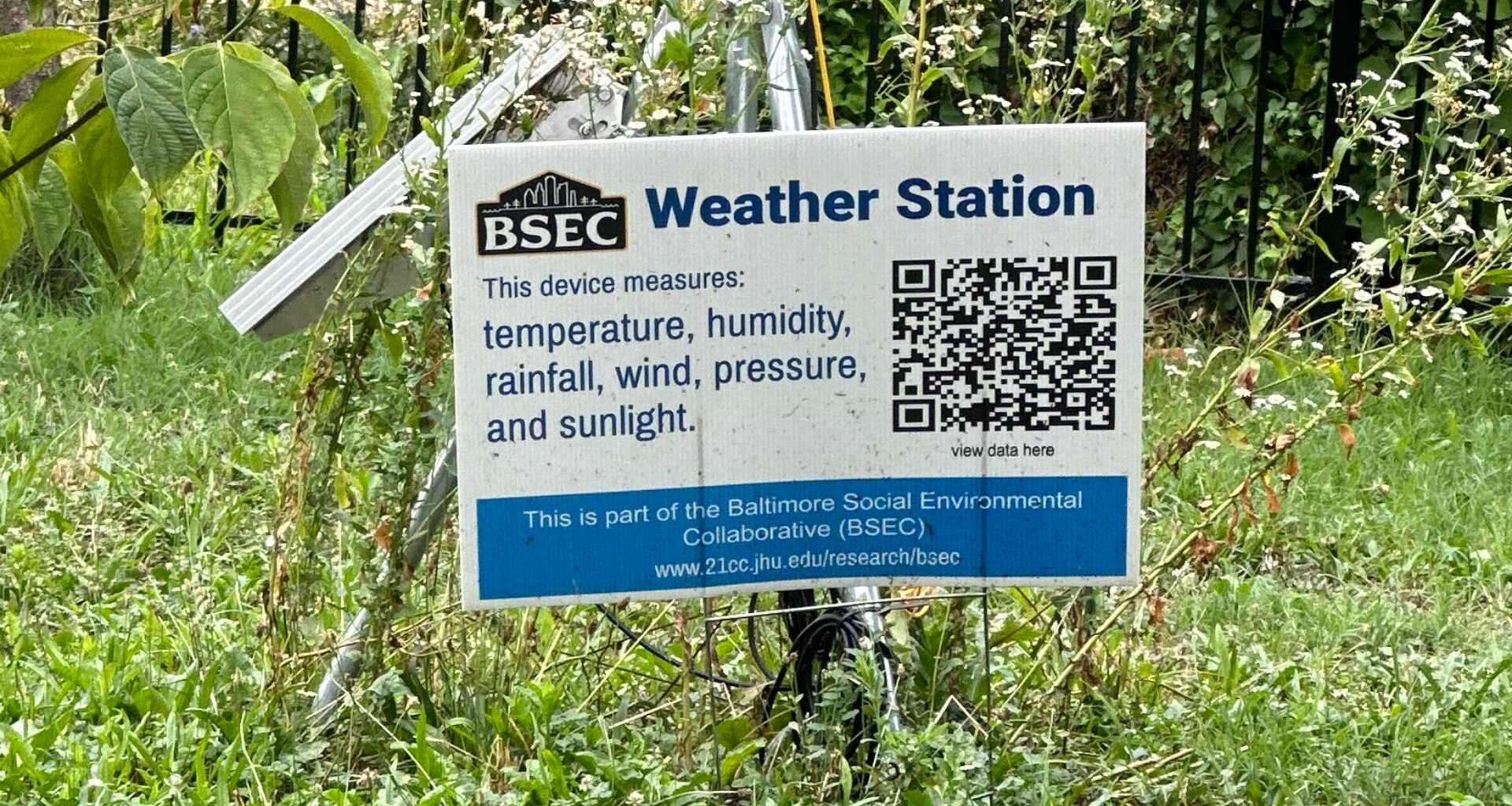
By Victoria Mejicanos
AFRO Staff Writer
vmejicanos@afro.com
The Baltimore Social Environmental Collaborative (BSEC) is a citywide climate research initiative, training residents to collect data that will shape the area’s understanding of the impact of heat, air quality and flooding. Morgan State University is one of 21 organizations and institutions participating in the BSEC.
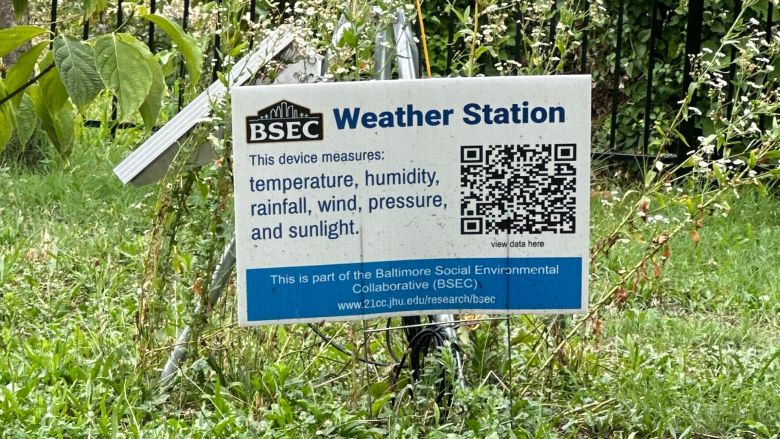 Baltimore residents are helping scientists track local climate impacts by collecting data from newly installed Morgan State–supported weather stations placed in neighborhoods across the city. The project aims to empower communities that often face environmental injustices by giving them ownership of climate data and a role in shaping research.
Credit: All photos courtesy of Morgan State University.
Through the program, residents are helping to collect data from the weather stations for the collaborative, instead of being detached from the research taking place in their neighborhoods.
Khaliah Young, the community engagement coordinator for the collaborative and a graduate of Morgan State, said that the communities within Baltimore that experience climate injustices like higher rates of pollution and asthma, are often left out of climate research, making the project all the more impactful.
“The greatest outcome of the project is hearing that it’s working, and community members are feeling empowered and receiving the education, and included in the research because that’s the point of it,” said Young.
Tori Burns, a resident of Ashburton, works with veterans in her community as a part of the research. She became involved after previously partnering with veterans to plant trees in the neighborhood. One of the project’s weather stations now sits at Mt. Zion, a local church.
She said the veterans’ participation has empowered them outside of their military service. Their prior experience and survival skills combined with collaborative workshops from scientists allowed the veterans to study the climate in the area.
“It felt like a very natural migration to think about putting a weather station in Ashburton,” Burns said. “I love this idea of passing the torch so that our neighbors really do feel empowered over what the situation looks like for us and how that compares to other neighborhoods. It feels really good to be part of this and to be able to carry on the work with the support of BSEC.”
One of the researchers that trains communities on how the weather stations work and how to interpret the data they collect is Dr. Shamara Collins.
“These weather stations are enthusiast grade weather stations, meaning that they’re off the shelf,” said Collins. “They work really straightforward to work with our technology and Wi-Fi to transmit the data.”
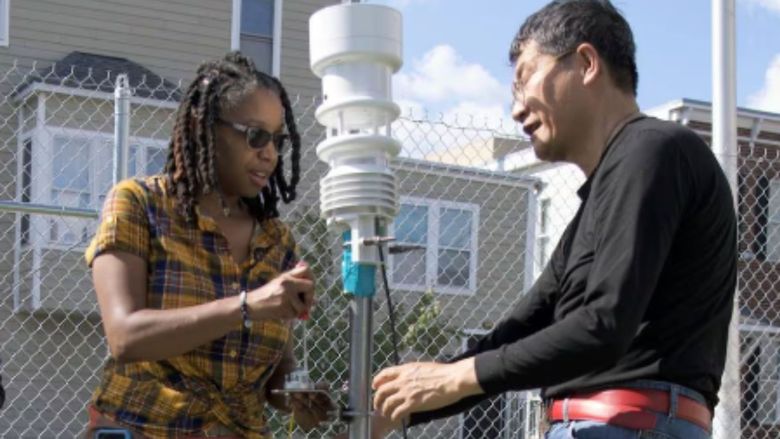 A new Morgan State weather station project is helping Baltimore City residents track climate change. Shown here, Dr. Shamara Collins (left) and Lei Hao, an engineer from Johns Hopkins University, as they work to install weather stations in community-centered areas such as churches, outdoor learning centers and urban farms.
Credit: All photos courtesy of Morgan State University.
The data is publicly available, and the researchers download and analyze it for forecasting models, but the goal is for communities to eventually become stewards of the data themselves.
She said the team is preparing a “champion training” as a part of what researchers call a “just transition.” Stations originally handled by researchers shift into community hands, with residents maintaining the equipment and interpreting the data.
“Being a data steward is very pivotal right now, given the changing climate,” said Collins. “It’s really important that we log and keep track of that information because data is valuable.”
Sophie Poirier, an environmental education manager at Parks and People, a non-profit organization that cultivates green spaces in the area, works with high school students in Druid Hill as a part of an internship where they can interact with the machines.
“I think this project has made science very attainable and tangible for Baltimore City, and I think that there should be more programs like this nationwide,” said Poirier.