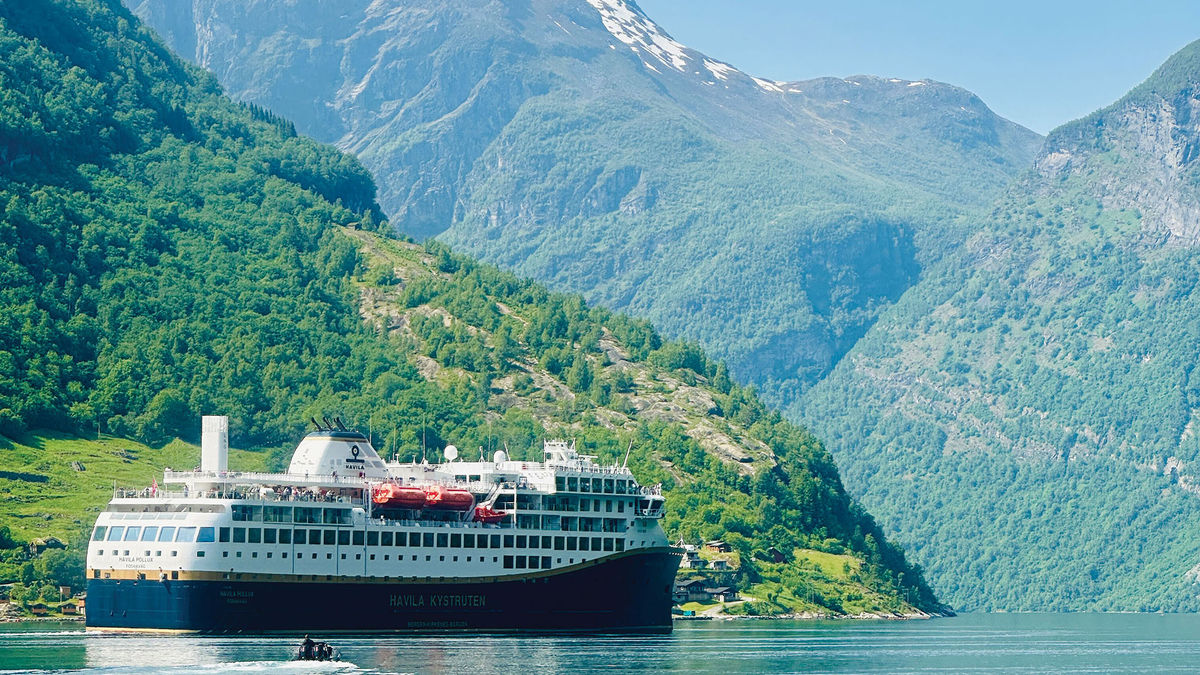
A splash of Arctic ice down my back and a hug from a hairy Norse sea god confirmed my initiation into the Arctic Explorer’s Club after our Havila Voyages ship crossed the Arctic Circle.
For seasoned sailors, the crossing is a milestone. For my fellow passengers aboard the Pollux off Norway’s coast, it was a lively deck party that ended with a sailor’s rum drink known as black magic, a concoction that warms the soul and energizes the spirit.
The Arctic Circle crossing was just one highlight of my seven-day June voyage through Norway’s glorious fjords, from Bergen to Kirkenes near the Russian border.
Other memorable moments included feasting on local seafood, gliding silently on battery power and savoring the spectacular scenery beneath the glow of the midnight sun. Also, some adventurous ship tours introduced us to puffins, reindeer and Norway’s Indigenous Sami people.
Many cruise lines list Norway on their itineraries, but Havila’s four ships stand apart in that they sail only to Norwegian ports, and each vessel carries no more than 640 passengers. That’s small enough to navigate the country’s 1,000 fjords and 320,000 islands.
The Nature and Biodiversity Conservation Union, Germany’s oldest environmental association, ranks Havila’s ships among the world’s most environmentally friendly vessels. A combination of liquefied natural gas and battery energy powers its ships, resulting in a 35% reduction in carbon emissions.
Havila is a family-owned company that began sailing in 2021 after Norway opened the coastal route to competition, ending Hurtigruten’s long domination there.
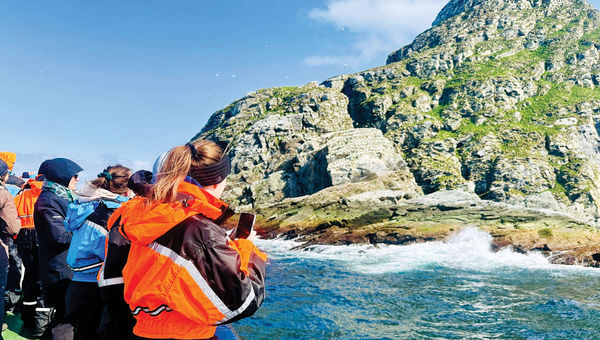
Passengers on Havila Voyages’ Pollux get a close look at one of Norway’s largest bird sanctuaries, in the North Cape. Photo Credit: Barbara Redding
Simple pleasures
A Havila voyage feels part ferry ride, part expedition cruise. The ships follow a century-old coastal route, docking year-round at more than 30 ports to deliver mail, goods and people. Travelers can hop on or off for shorter segments or book the 13-day round trip between Bergen and Kirkenes.
Havila’s appeal lies in simplicity: Nature delivers the drama. There are no casinos, Broadway shows or theme nights. Passengers wave at passing fishing boats and fill deck chairs to gaze at mountains that erupt straight out of the sea.
My sister and I boarded the Pollux in Bergen, the gateway to the fjords. The ship’s sleek Nordic design immediately impressed. Interior spaces are tasteful and comfortable, featuring muted gray and blue tones that reflect the sea and sky. Norwegian art adds warmth and color.

Norwegian salmon with capers and lemon. Photo Credit: Barbara Redding
Life onboard is relaxed and casual. Meals feature locally sourced cuisine served a la carte. The only buffet appears at breakfast, where guests can also order from the kitchen. I loved everything seafood, from fresh salmon and cod to broiled scallops and open-faced shrimp sandwiches.
Most of the crew members are Norwegian but fluent in English and German and eager to share their country’s traditions.
Although only about a dozen of the 300 passengers on our ship were from the U.S., interest from North Americans is growing. The share of passengers from the U.S. and Canada has increased from 3% in 2022 to 12% in 2025, according to Lasse Vangstein, Havila’s chief communications and sustainability officer.
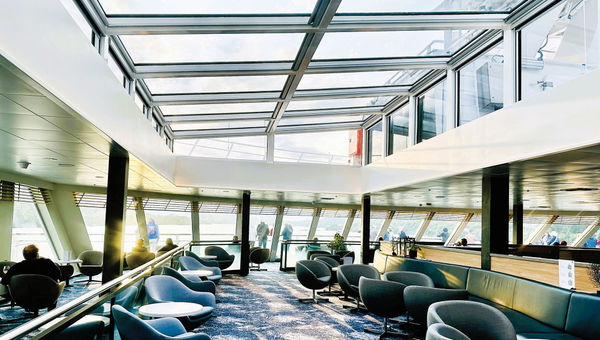
Large windows and a glass ceiling in the lounge of Havila Voyages’ Pollux showcase views of the fjords. Photo Credit: Barbara Redding
My sister and I quickly recognized the appeal. By sailing close to shore, Havila’s ships provide an intimate view of Norway’s rugged coastline. From the deck or through the lounge’s floor-to-ceiling windows, we marveled at the changing panorama of steep cliffs, fishing villages and ornate lighthouses.
Equally impressive is Havila’s respect for the environment. The Pollux switched to battery mode as we entered the fragile Geiranger Fjord. Silently and emission-free, we cruised into the narrow Unesco-designated fjord, listening to the sounds of Seven Sisters Falls crashing into the sea.
Our seaview superior cabin was compact but thoughtfully designed, featuring windows large enough to enjoy fjord views. Blackout curtains helped us sleep despite the endless daylight after we crossed the Arctic Circle. Parts of northern Norway enjoy 24 hours of sunlight from mid-June until August.
More than half of the Pollux’s 179 cabins have sea views and queen or twin beds; 24 suites offer extra space, balconies and fireplaces, and two of them come with private whirlpool baths on the balcony. Most cabins accommodate up to four guests.
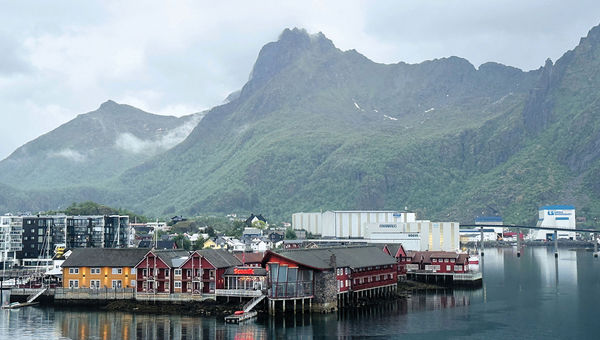
In port at Svolvaer in the Lofoten islands. Photo Credit: Barbara Redding
Going ashore
Some port calls lasted only 10 minutes, just long enough to drop off or pick up freight. Others stretched for hours, enabling time to explore independently or join guided excursions. My sister and I toured Trondheim and Tromso on our own but joined tours to more remote sites.
Expedition director Magne Skjerdal enriched our journey with daily briefings highlighting port stops and excursions, Viking legends and lessons in the Norwegian language.
One of our favorite tours took us deep into the magnificent Geiranger Fjord, where we visited a cultural center to learn how glaciers carved the fjord. Then we descended 327 steps beside a thundering waterfall before a bus delivered us to a cliff-top overlook.
On another excursion, we learned how cod fishing around the Lofoten islands built the nation. Our tour of the Lofoten Museum included exhibits recounting the harsh conditions faced by those who once braved Arctic storms in open vessels.
A bouncy boat ride took us to the North Cape Bird Sanctuary, one of Norway’s largest seabird colonies. Puffins, sea eagles and seals crowded the rocky outcropping in the icy Barents Sea.
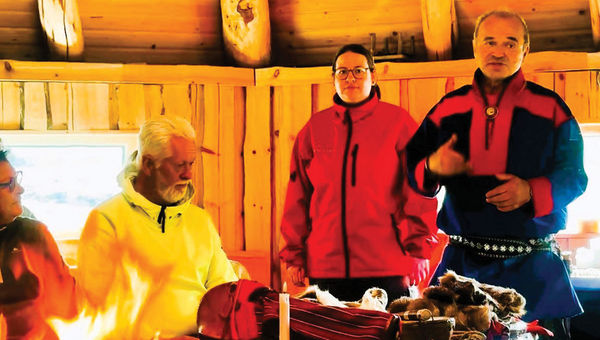
A Sami elder and an interpreter share customs of the Indigenous people. Photo Credit: Barbara Redding
Spotting reindeer roaming the tundra during our Sami Cultural Tour was equally thrilling. Around a fire in a traditional turf hut, an elder from the Davvi Siida village shared stories about the nomadic life of the Sami. He sang a haunting joik — a traditional folk song that lingered after our visit.
Excursions vary by season and weather. Summer outings include hiking, biking and cultural visits; winter is the time for northern lights, dog sledding and snowmobiling.
In addition to offering daily briefings onboard, Skjerdal also introduced us to Njord, the Norse god of the sea, during our Arctic Circle deck party.
Njord, actually a crew member disguised in a heavy beard and wrapped in a cape, baptized first-timers to the Arctic Circle with the aforementioned ladle of ice down our backs. Part myth and part mischief, the celebration marked our entry to the top of the world.
By the time we reached Kirkenes, I regretted not signing up for the round trip. My Havila cruise immersed me in the timeless beauty, flavors and legends of coastal Norway. But I know there is much more to discover.