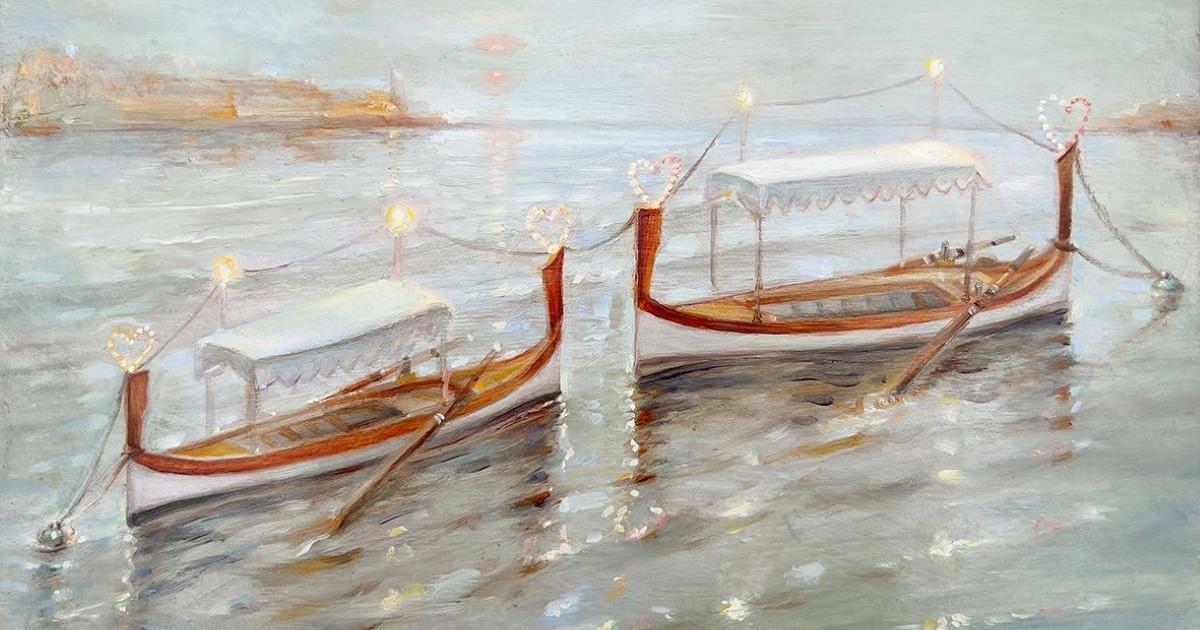
Dominique Ciancio’s latest exhibition, ĊAFĊIF, takes its title from a Maltese word that describes the simple act of splashing in water. The term carries the cadence of the sea, and the exhibition places that sea at the centre of a conversation about identity, history and place.
Hosted at Il-Kamra ta’ Fuq between today, December 7, and December 21, and curated by Melanie Erixon, the show offers a concentrated look at what the sea represents for an island shaped by it in physical and cultural terms.
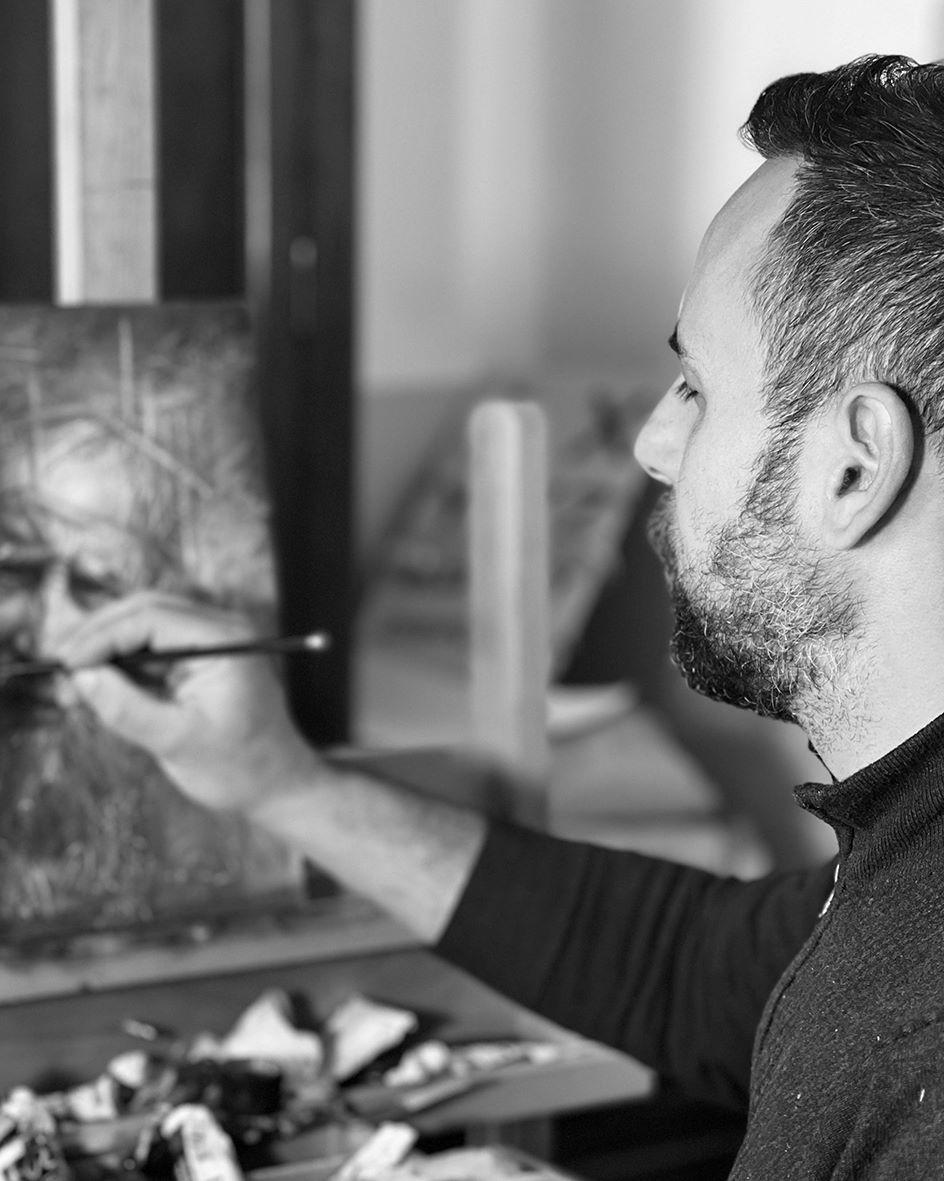 Dominique Ciancio
Ciancio treats the sea not as something to depict but as something to speak to. The premise is direct. If the sea could articulate its memories, what would it reveal about the island it surrounds? What stories would rise from a surface that has both protected and isolated Malta through centuries of movement, conflict and trade? This reflective premise drives the exhibition, with the sea functioning as a mirror through which Ciancio searches for traces of memory and belonging.
Reflection governs the works’ visual language. Ciancio uses water’s surface as a metaphor for introspection and change. His brushwork is playful and loose yet attentive to motion. The paintings shift between figuration and atmosphere, encouraging viewers to notice the constant balance between clarity and blur. Figures inhabit this fluid space not as decorative details but as participants in a quiet conversation with the sea.
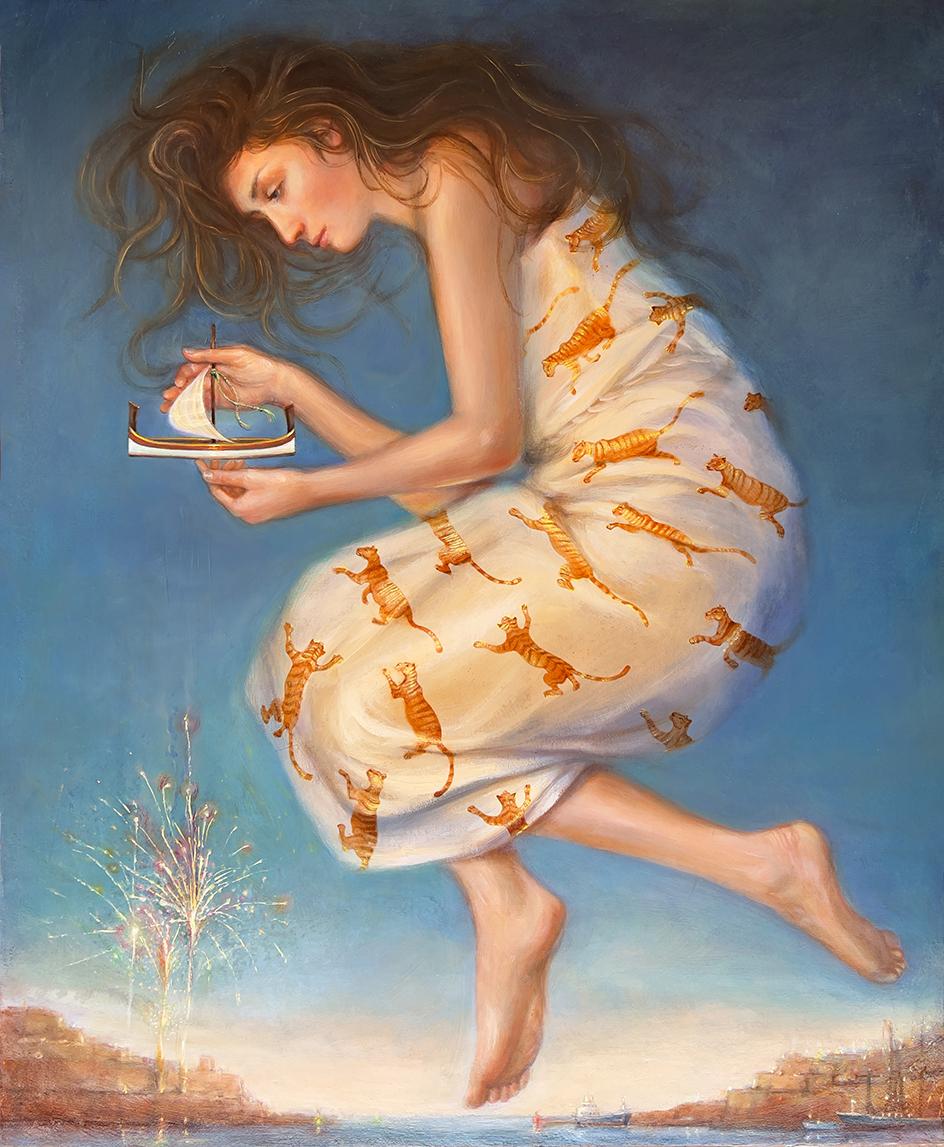 Fuq Wiċċ l-Ilma
Swimmers recur throughout the series. They introduce themes of longing, heritage and the need to immerse oneself in a wider narrative. A swimmer becomes a seeker, someone attempting to approach identity through contact with place. The imagery avoids sentimentality and instead portrays swimmers negotiating their relationship with the natural world, sometimes calmly, sometimes with visible effort.
Traditional Maltese boats appear as counterpoints. They carry historical weight and evoke craftsmanship and cultural continuity. Their forms are recognisable but Ciancio renders them with the same sensitivity he applies to his figures. The boats hold memory, yet they also occupy a space that feels both familiar and slightly detached from everyday life. They anchor the exhibition in the routines and histories of coastal Malta.
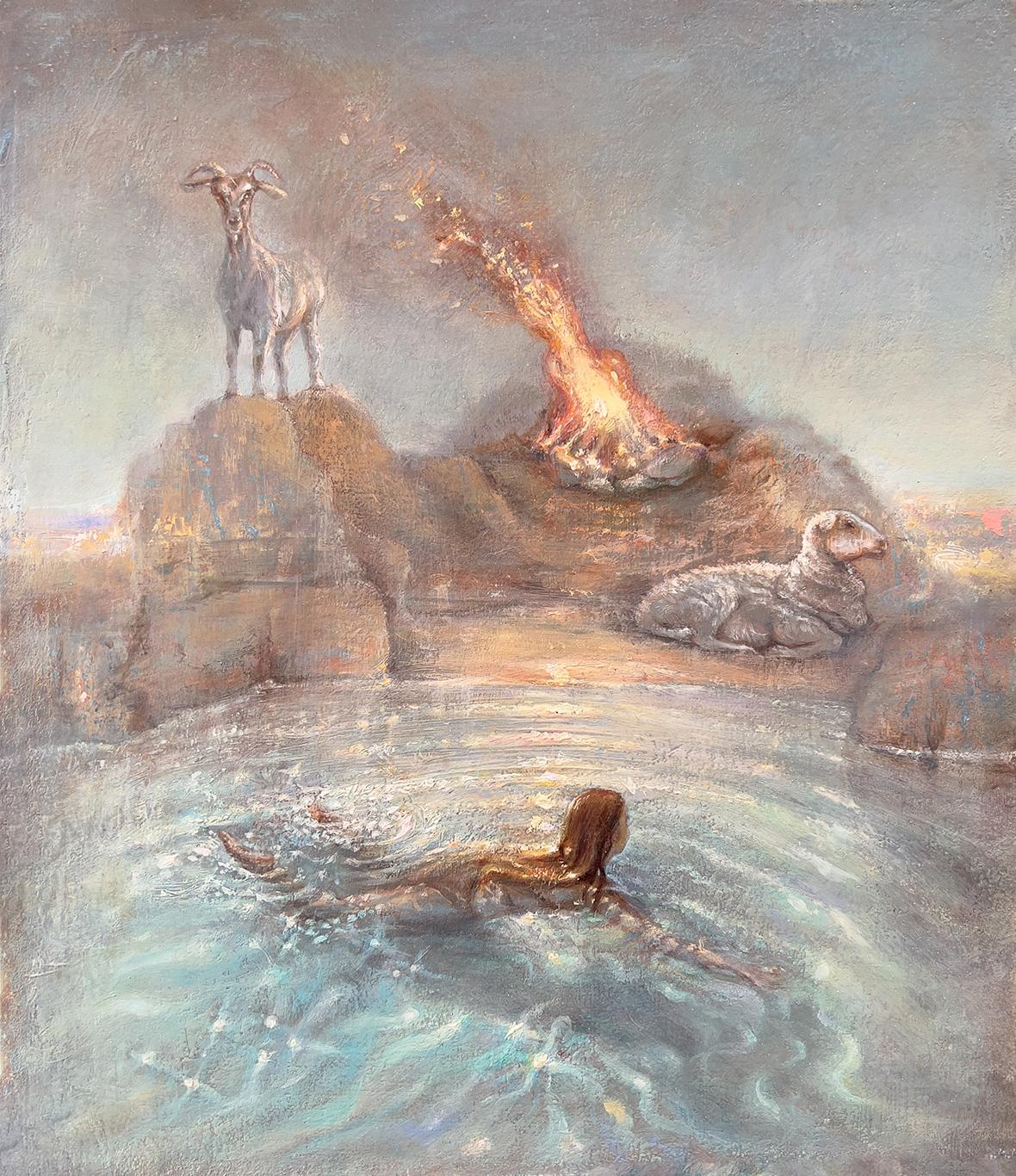 Il-Ä ebel ta’ Xalura
The sea itself operates as both boundary and connector. It positions Malta in relation to what lies beyond it and at the same time shapes how identity is formed within its perimeter. Ciancio acknowledges this dual role, using it to guide the emotional tone of the works. The sea protects but it also exposes. It links but it also separates.
For Ciancio, an island’s identity is not static. It shifts with memory, tradition and collective experience. His paintings do not attempt to capture a fixed idea of Maltese identity. Instead, they underline its fluidity and its reliance on the dialogue between people and place. Themes of vulnerability, struggle and belonging emerge with restraint.
Born in 1983, Ciancio brings a multidisciplinary background to his practice, with training in restoration, scenography and film. He describes each work as a handmade image, reflecting a process-driven approach that values precision and craftsmanship. His career includes exhibitions and projects in Malta, Norway and elsewhere, each reinforcing his interest in visual storytelling.
ĊAFĊIF marks Ciancio’s 10th solo exhibition and strengthens his ongoing exploration of place and identity. By treating the sea as both subject and guide, he presents an exhibition that is focused, reflective and firmly rooted in Maltese experience.
ĊAFĊIF is showing at Il-Kamra ta’ Fuq, Mqabba, until December 21.
Â
Â