2.5 million countries accept 1 million refugees and win at the UN \n Stories of war heard from hostel refugees every night\n Traces of communist countries meeting in Kissinau, the capital \n Traces of 120 km winery in the world’s largest wine town of Krikova\n Transnistria Tiraspol
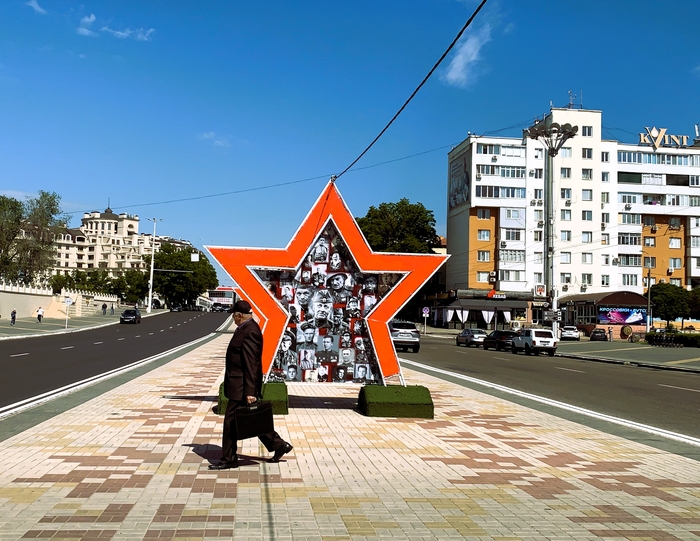 사진 확대
사진 확대 ‘Suborov Square’, a central square in the city centre of Tiraspol, Transnistria, Moldova
Moldova? It’s a hard place to think of right away. Moldova, one of the neighboring countries that frequently rose to the media in the early days of the Russia-Ukraine war. Moldova, which has a small land area as large as Gyeongsang-do, is a unique tourist destination far from a famous tourist destination. Starting with the capital, Kissinau, I toured the world’s largest wine town, Cricova, and Transnistria Tiraspol, which became independent from Moldova but was not recognized for its existence.
Capital of Moldova | Kissinau
War, refugees, and Soviet traces
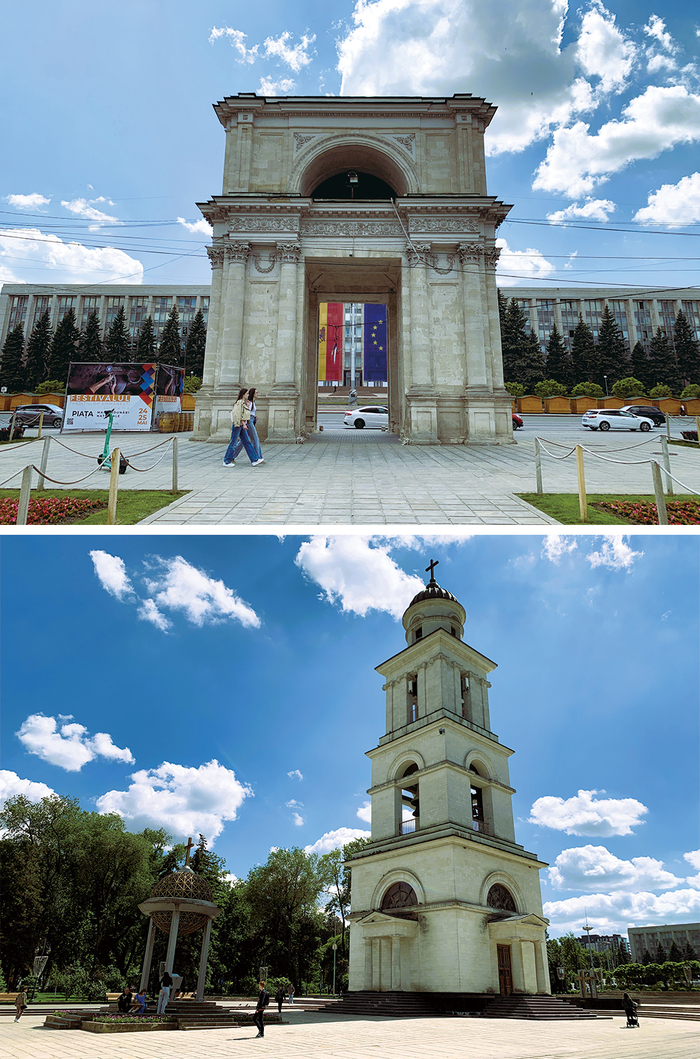 사진 확대
사진 확대 (above) The Arc de Triomphe (below) The Cathedral of Birth, the church representing Kissinau in Kissinau’s National Parliament Square
I think we should be the first to explain Moldova’s location on the map. The Maldives is an island country on the Indian Ocean in southwest Sri Lanka and is popular as a honeymoon destination. In fact, I actually had a few misconceptions during my trip to Moldova. People around me, who were surprised that I went to a luxurious honeymoon destination all of a sudden, have an anecdote that accurately grasped the existence and location of Moldova.
Moldova is a landlocked country geographically located in eastern Europe, bordering Romania and Ukraine. The land area is only as small as Gyeongsang-do. Outside the capital, Chisinau, most of them are rural areas where development has stopped, and as is common in developing countries, the gap between the rich and the poor is quite serious.
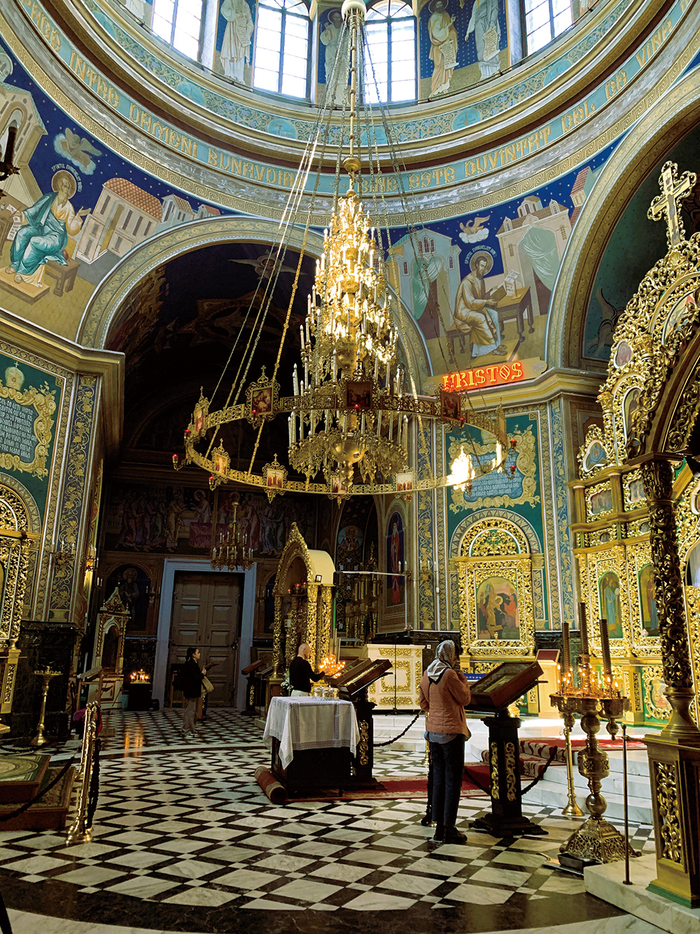 사진 확대
사진 확대 a chapel inside the Birth Cathedral
Moldova, which borders Ukraine to the east, is a neighboring country, and the aftermath of the war is evident. The most prominent point is Moldova’s refugee inclusion policy. Moldova, with a total population of only 2.5 million, has seen more than 1 million people cross the border from Ukraine since the outbreak of the full-fledged war in February 2022, with over 100,000 refugees staying across Moldova, mainly in Kissinau as of 2025.
Moldovan people’s collective efforts to welcome refugees from the highest levels of the government to ordinary citizens will receive honorary commendations at the UNHCR Nansen Refugee Award ceremony in 2024. For example, the proportion of Ukrainian refugees staying there for a long time was significantly higher than the number of travelers in the hostel where they stayed in Kissinau. The war heard through refugees, and the story of Ukraine filled the hostel’s common space every night.
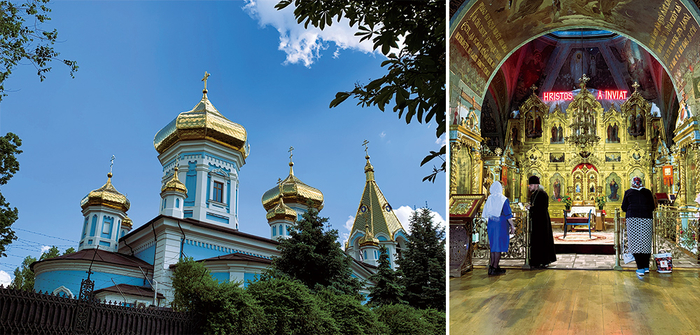 사진 확대
사진 확대 Chiuplea Monastery, representing the (left) Moldovan Orthodox Church (right) Chiuplea Monastery’s inner chapel
In addition to keywords such as ‘war’ and ‘refugee’, ‘Soviet’ is followed by the closeness between Russia and Ukraine and Moldova. All three countries are socialist republics belonging to the Soviet Union, and since the collapse of the Soviet Union and Moldova’s independence in 1991, Kishinau has put forward urban values where modern diversity coexists with the traces of the Soviet Union.
Many streets in Kishinau were renamed after historical figures and places or events, a major change in the name from a communist theme to a national one. In addition, there are still many buildings that can give a glimpse of the traces of the former Soviet Union in the architectural style of the city, and modern buildings made of steel, concrete, and glass are also located throughout the city.
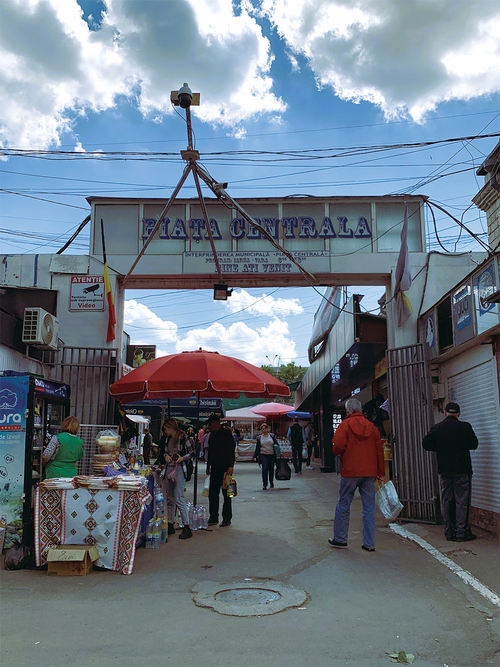 사진 확대
사진 확대 Central Market Entrance to Open in the Mid-19th Century
Key landmarks in the city center of Kissinau are concentrated in Cathedral Park and its area. In the middle of the park is the church ‘Birth Cathedral’, representing Kissinau, and at the entrance of the park is a monument honoring Stefan III, who gained European fame for resisting the invasion of Turkiye in the 15th century. The Arc de Triomphe, built in 1841, is located in the southwest public parliament square, and the Kisinau City Hall building, a historical and architectural monument built in Italian Gothic style, is located nearby.
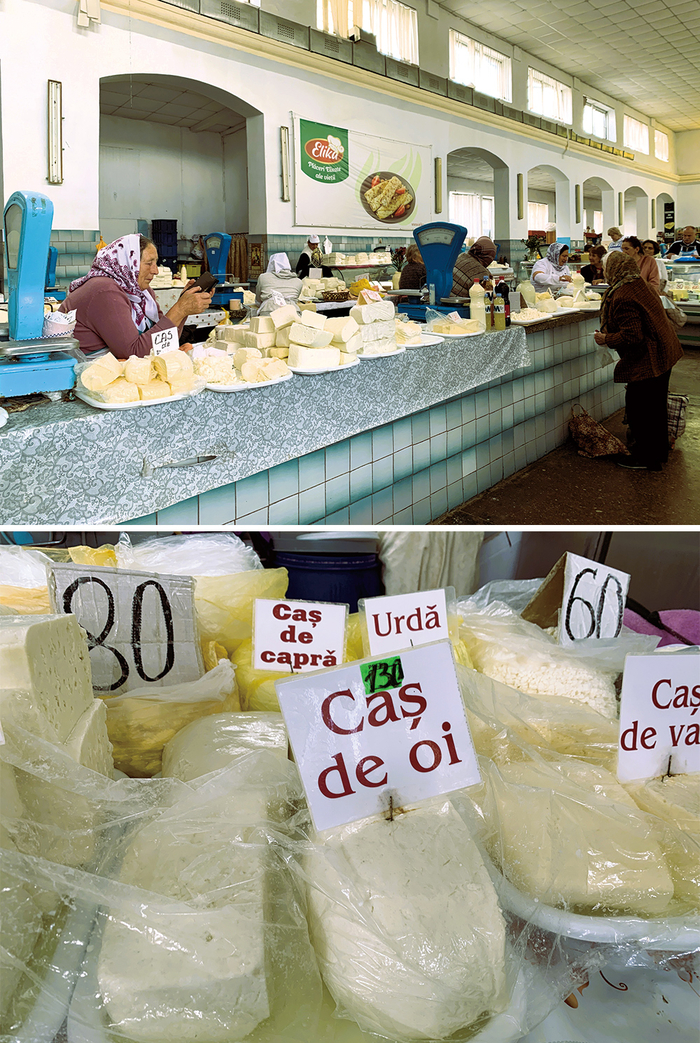 사진 확대
사진 확대 View of the Cheese Stand Inside the Central Market
If you walk south along the main road after passing through the city hall building, you will see the central market. The central market, which opened in the mid-19th century, is recognized as the commercial center of the city in the past and now. However, rather than being modern, the scenery is filled with sensibility as if it had returned to the Soviet era. Inside the market building, spaces are divided according to each item, such as cheese, grains, vegetables, and miscellaneous goods, and in particular, the space that sells cheese is beyond imagination with the unique salty and sour taste of cheese that pokes your nose even before entering the entrance.
However, unlike the stinking scent, the problem is that once you taste it, you will automatically open your wallet to the fresh taste of cheese. If you put a lot of cheese on freshly baked bread and taste it, your tongue will first notice that Moldova belongs to continental Europe. I regret not being able to eat more, harder cheese during my stay in Kissinau.
the town of wine | Cricova
a huge wine cellar in an underground tunnel
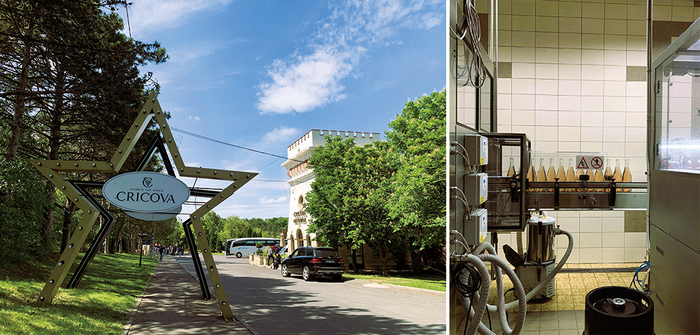 사진 확대
사진 확대 (left) Outside view of the Krykova Winery (right) Sparkling Wine Production Facility of the Krykova Winery
When it comes to Moldova, wine is indispensable. Moldova, which has a long wine-making history of over 5,000 years, grew its wine industry under the influence of Greece and Rome. In the Middle Ages, Moldova’s winemaking was considered one of the major producers in continental Europe and formed close trade relations with Europe as well as Middle Eastern countries.
Moldova’s increasingly prosperous wine industry suffered significant damage to vineyards and winemakers in the 20th century due to two world wars. The reconstruction of the destroyed vineyard began in the 1950s during Soviet rule, and Moldova had a reputation as the largest producer of wine in the Soviet Union, with a system based on mass production that prioritized quantity over quality under Soviet rule. At that time, it supplied about 60-70% of wine consumed in the Soviet Union.
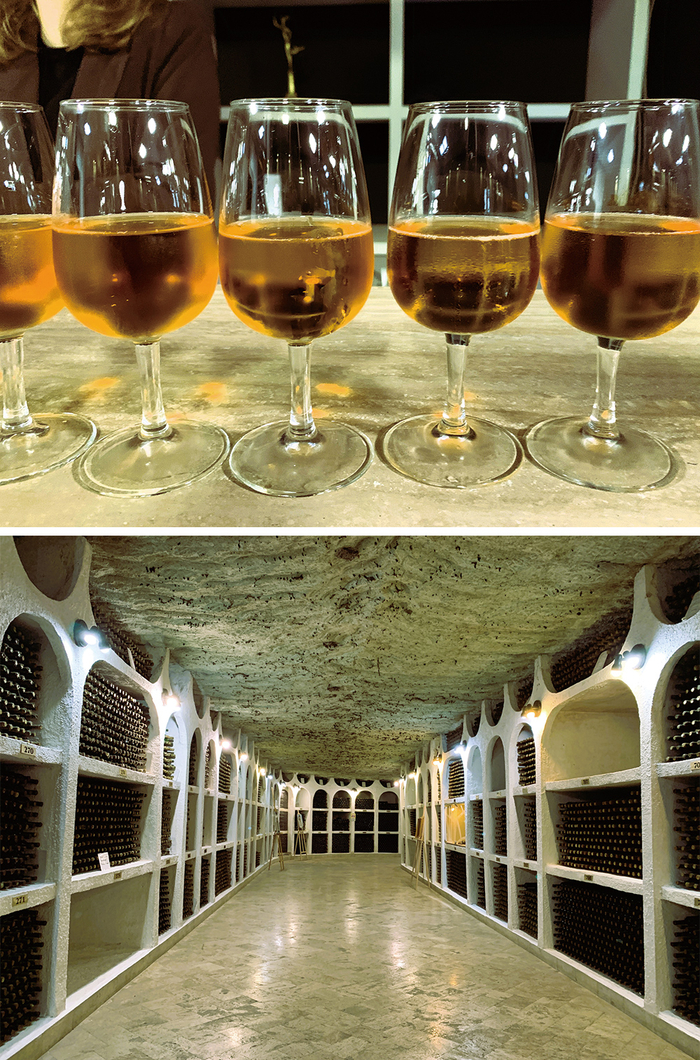 사진 확대
사진 확대 Cricova, the first winery in Moldova that produces sparkling wine in the traditional French way, has a vintage wine cellar that is more than 100 years old.
However, combined with the dissolution of the Soviet Union in 1991, Moldova’s wine production entered a decline. Moreover, diplomatic conflicts with Russia in the early 2000s led to an embargo, and Moldova’s wine industry, which lost the Russian market, declined. As a result, this conflict with Russia became an important turning point in modernization that valued quality over quantity, and also served as a background for major changes in the Moldovan wine industry against European countries. It has regained its reputation as a high-quality wine producer historically harbored by Moldovan wines and is actively pursuing exports to Western European markets and other regions.
As a result, 60-70% of wines produced at 260 wineries located across the country in Moldova are exported to EU countries. In the past and today, wine is Moldova’s pride and symbolizes the country’s growth and success.
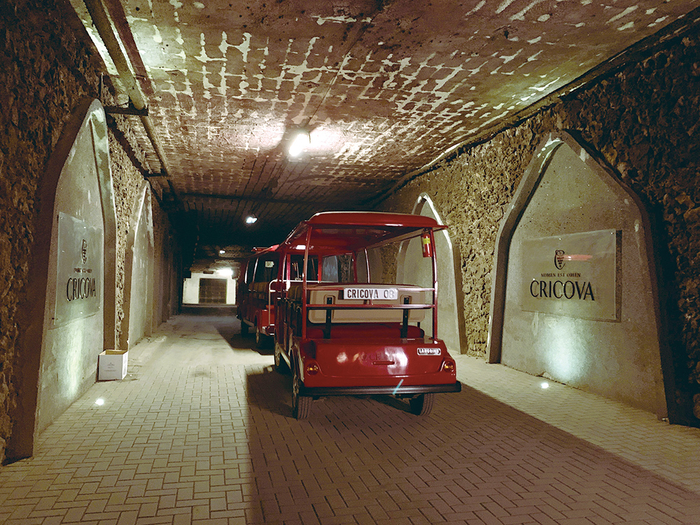 사진 확대
사진 확대 A total of 120 km of the winery’s inner walkway. Among them, I traveled by train for about 4 to 5 kilometers.
Found a winery located in the village of Krikova, about 15 km north of Kissinau. Called the Cricova winery after the village, it is a place widely known for its high-quality wine production as well as its unique wine cellar that is maze-like in the vast underworld. The wine cellar here is the second largest in Moldova. Tunnels have existed in the village of krikova since the mining of limestone for the construction of quisinau in the 15th century, some of which were converted into underground wine cellars in the winery here in the 1950s to the present day.
There is a maze-like road 60 to 100m underground, a total of 120km, and it is quite fun to travel by train. Every time a train runs, the cold air of the underworld, which wraps around the skin, quickly turns the summer weather outside into winter. It is not cool enough to need a coat, so there is a cold energy, and the tip of the nose spreads the sourness of the strong wine scent. It creates the illusion of being out of reality and entering another world, and it is more like a fantasy play that transcends time and space than a winery tour.
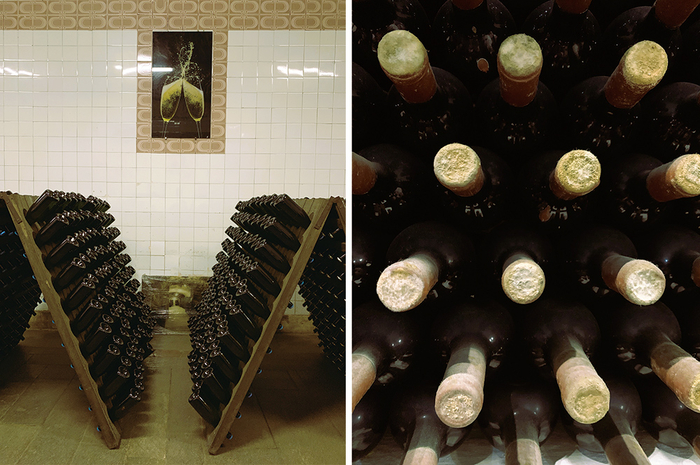 사진 확대
사진 확대 (left) Sparkling Wine Aging Space (right) Vintage Wine Cork Cover Fungi
Cricova Winery, where wine production began in 1952, is also famous for preserving Moldova’s oldest wine-making tradition. In particular, it is the first winery in Moldova to produce sparkling wine according to Méthode Traditionnele, a method of famous monk Pierre Perignon. The key to taste is to age for at least three years after secondary fermentation after bottling.
The total production of classic sparkling wine here exceeds 1 million per year. It is said that it is an iron rule to go through a long, slow production process to create the taste of traditional sparkling wine, and most manual production processes at a depth of 90m underground keep the pride of taste. The sparkling wine here, which I tasted in the underworld, is one of the best moments to remember a trip to Moldova.
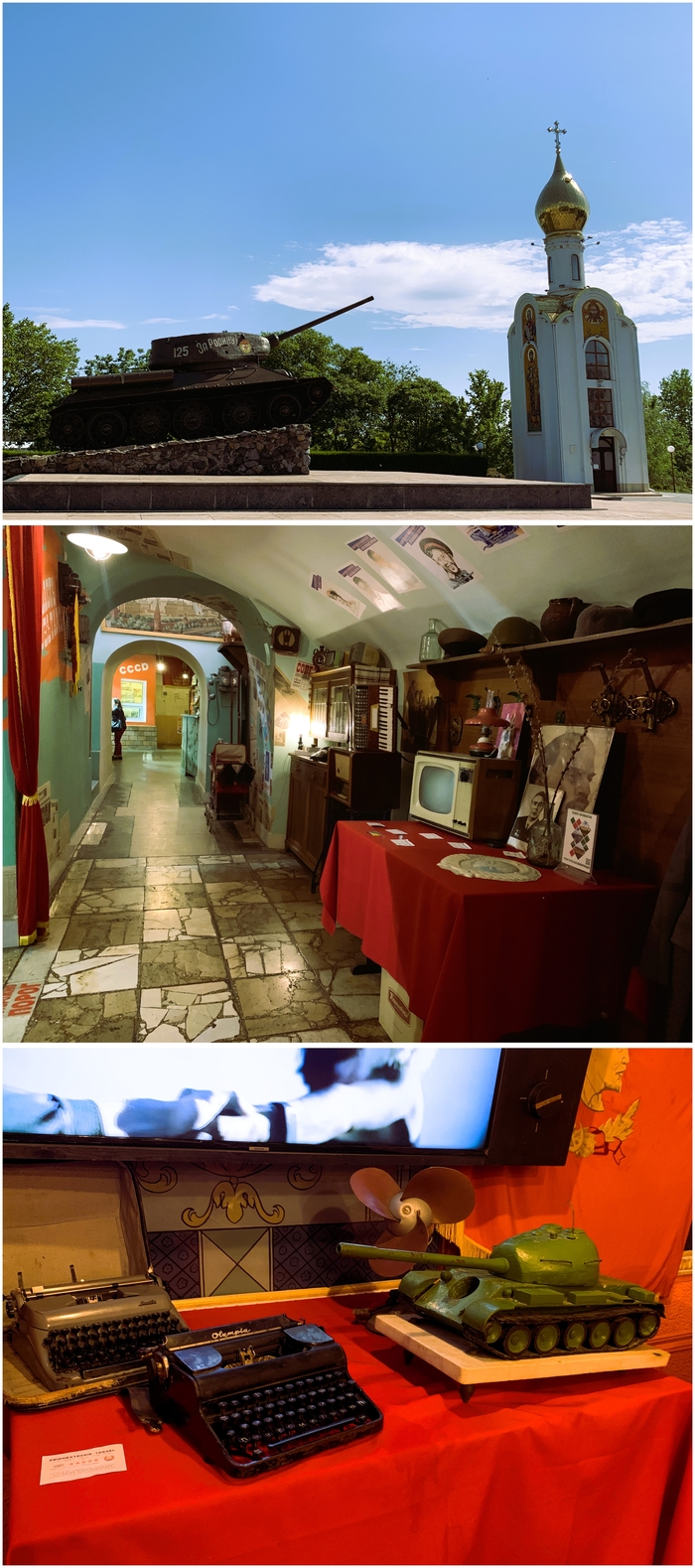 사진 확대
사진 확대 (from above) View of the Soviet T-34 tanks used in World War II, the representative restaurant of Tiraspol decorated with vintage Soviet memorabilia, ‘Cantina Urs’ on display outside the glorious memorial
The Other World | Transnistria Tiraspol
the face of a non-existent communist state
Like Moldova, it is not Moldova, it is a country like Moldova, Transnistria. Although de facto independence from Moldova since the collapse of the Soviet Union in 1991, the Moldovan government has not officially recognized the independence of Transnistria. For this reason, Transnistria is recognized as an ‘unapproved country’ because it still belongs to Moldova’s territory under Moldovan law and is not recognized as an independent country internationally.
From the Kissinau city centre bus terminal, minivans travel to and from Tiraspol, the capital and largest city of Transnistria, operate at all times. Apart from the situation of the two countries in a bitter relationship, the movement between cities is far from dangerous or crowded with several armored vehicles.
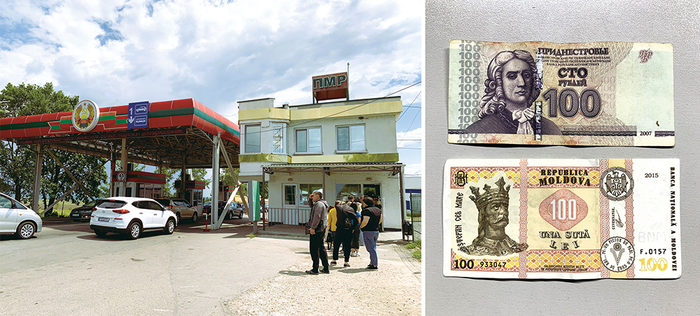 사진 확대
사진 확대 (left) Transnistria Border Checkpoint (right) Transnistria Currency (upper) Moldova Currency
However, as expected, when they arrived at the Transnistria border, passport inspections were conducted by soldiers guarding the checkpoint, and simple interviews such as the purpose of the visit were conducted, creating a somewhat tense atmosphere.
It arrived about 70km from Kissinau to Tiraspol and about two hours in a minivan, which, contrary to expectations, welcomed travelers to a completely different country and a different world from Moldova. First of all, the national currency is also different. The official name of the Transnistrian currency is Friednestrovia ruble, abbreviated as ‘ruble’. In addition, when using restaurants, stores, and marts, I was informed that payment can only be made with cards issued in Transnistria. It was a day trip, but I took the first step, starting with a visit to the currency exchange.
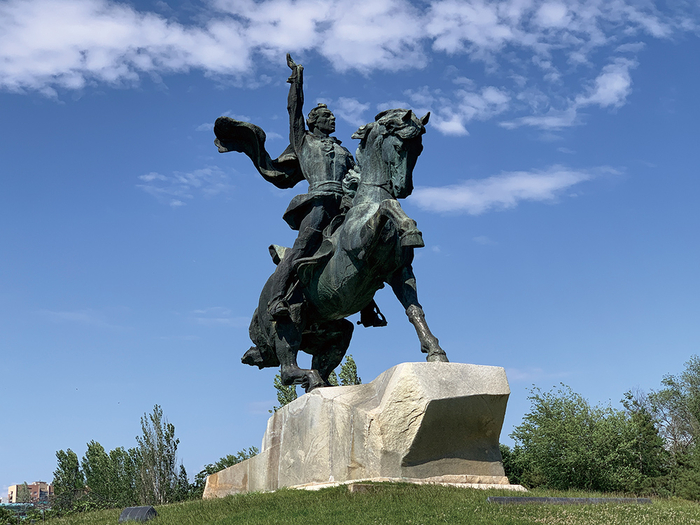 사진 확대
사진 확대 The statue of Aleksandr Suvorov, who built the Tiraspol, is located in the city square.
I’ve been to remote areas in many countries around the world, but Tiraspol has gone beyond the concept of remote areas and made me feel like I’ve returned to a point in the past 100 years ago. Since I have no experience living in that era, it is a very special and rare experience to see the communist era unfold right in front of me, as seen on TV or in movies.
One of the few “non-existent countries” that retain the charm of the era 100 years ago even in modern times, is Transnistria’s specialty as a tourist destination.
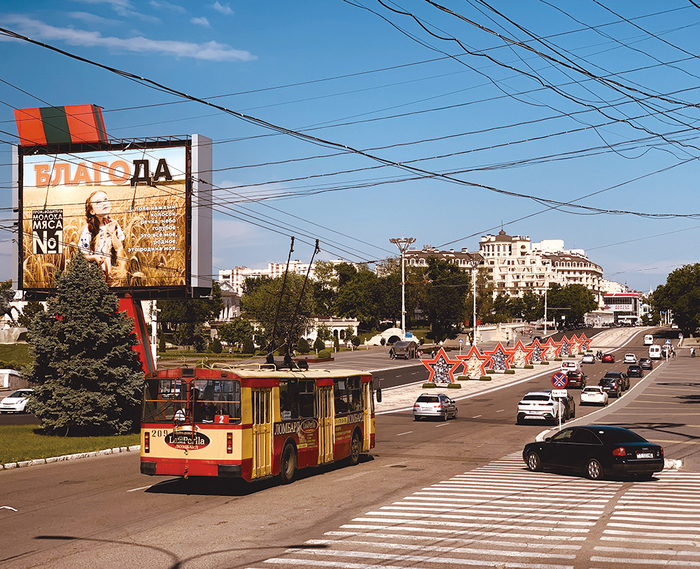 사진 확대
사진 확대 ‘Suborov Square’, the central square in the city center of Tiraspol
Among them, ‘Suborov Square’, the central square in the city center of Tiraspol, attracts attention because the remnants of the communist era remain intact. The square is named after Aleksandr Suborov, who founded Tiraspol, and a monument to glory, the building of the Supreme Council of Transnistria, the palace, and the church surround the square.
Also located around here, the Glorious Memorial, like many former Soviet cities, displays tanks, which are said to represent Soviet power and an expression of pride in stopping the expansion of the Ottoman Empire.
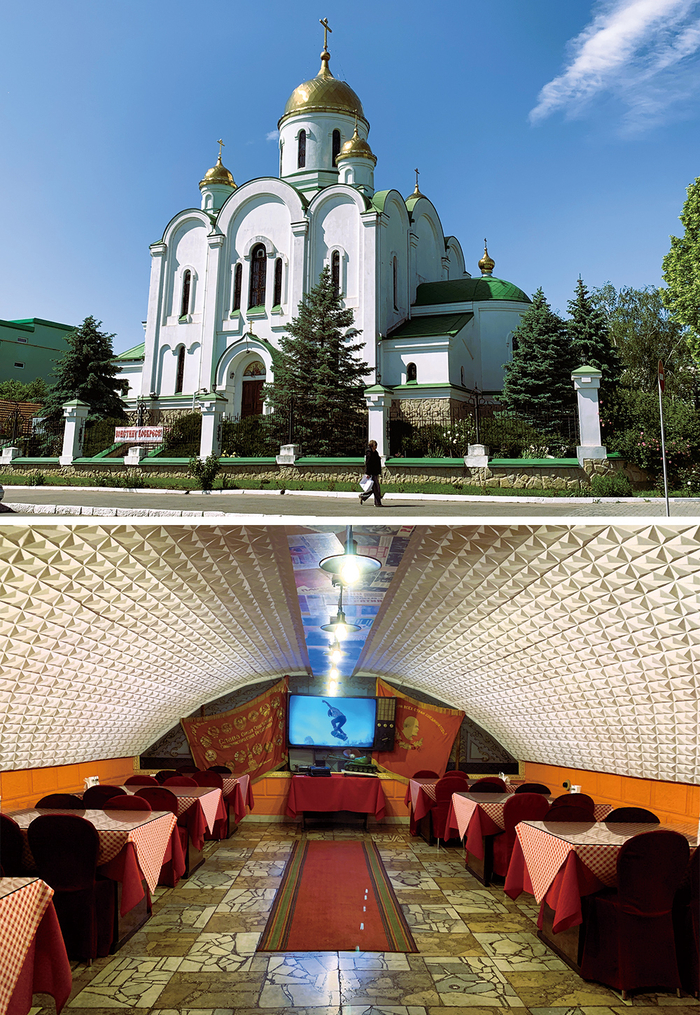 사진 확대
사진 확대 (top) Christmas Cathedral (bottom) Tiraspol’s flagship restaurant, Cantina Urs, decorated with vintage Soviet memorabilia
Most of Tiraspol’s attractions appear one by one as you walk along Lenin Street. After passing through the square and looking around the Russian Orthodox cathedral, Christmas Cathedral, I took a long walk around the river toward the Dnieper River. Have you ever shuddered at such a profound devastation in the largest city of a country, not in a desert or a mountainous region, and in such isolation at its heart.
The feeling of facing an independent country with no airport or port, an independent country with no foreign embassy, and an independent country cut off from the outside world weighed heavily on the steps of the walk. I hope that living will exist soon, and that the tomorrow of an independent country will exist without isolation.
[Writing and photographing Chu Hyojung (travel writer)]
[This article is about Mail Business City Life No. 1005 (25.11.18)]