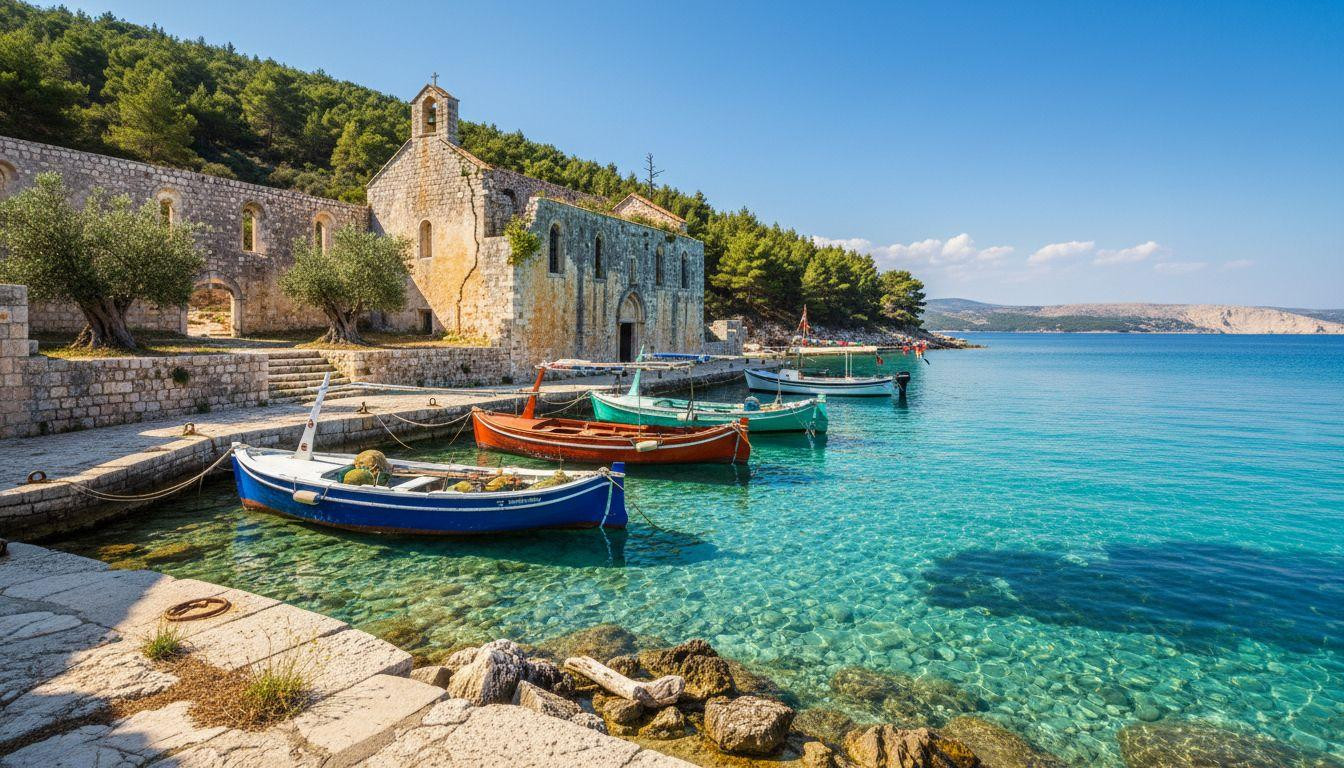
The water taxi cuts through Adriatic swells toward a limestone outline on the horizon. Only 4 permanent residents call this Croatian island home year-round. Šćedro Island preserves what neighboring Hvar lost decades ago: authentic fishing village life where monastery bells mark dawn departures, not tourist schedules.
Just 1.7 miles from Zavala on Hvar’s southern coast, this protected nature park spans 2 square miles of indented coastline. No cars disturb pine-scented trails. No electricity grid powers harbor lights.
Where fishermen still outnumber tourists
Three fishing families maintain year-round residence on Šćedro. Summer population swells to 21 people maximum. Compare this to Hvar Town’s 11,000 residents and daily tourist floods exceeding 12,000 visitors during peak season.
Water taxis from Zavala operate May through October for $17 one-way. Private charters cost $130 for half-day trips. Winter access drops to weekend service only, preserving authentic isolation that commercial islands abandoned.
Solar panels provide limited 12-volt power for lighting and phone charging. Rainwater collection supplies drinking needs. The nearest grocery store requires a 45-minute boat journey to Hvar Town.
The monastery bay that time forgot
Medieval ruins meet fishing boats
Dominican monks built St. Mary of Mercy monastery in 1465 at Mostir Bay. Stone walls remain largely intact after 560 years. Church foundations date to the 11th century, making this one of Croatia’s oldest continuously sacred sites.
Pirate threats forced monastic abandonment in the early 1900s. Local fishermen still moor wooden boats at medieval stone quays. Monastery olive trees produce small harvests that families press into golden oil.
Traditional fishing rhythms continue unchanged
Fishermen depart at 5:30 AM checking nets placed the previous evening. Traditional hand nets capture squid, scorpion fish, and sea bass from crystal-clear waters averaging 50-65 foot visibility.
Fresh catch sells directly from boats for $12-17 per pound, significantly below mainland Croatian prices. Transactions occur through cash only, often with simple hand gestures replacing formal commerce.
Why fishermen choose Šćedro over commercialized Hvar
Empty coves protect morning fishing
Seven major bays indent Šćedro’s 11-mile coastline. Mostir Bay accommodates 15 small fishing vessels at traditional mooring buoys. Lovišće Bay offers better storm protection with four natural arms.
Mediterranean pine forests cover 65% of the island. Hiking trails connect secluded beaches like Borova Lučica and Porteruša in 90 minutes walking time. Water temperature reaches 75°F by July, perfect for swimming without crowds.
Authentic maritime culture survives tourism pressure
Two seasonal restaurants serve caught-that-morning fish May through September. Meals cost $30-40 per person including local wine and olive oil. Compare this to Maine lobster fishing communities where similar authenticity attracts discerning travelers.
No marina crowds disturb traditional sailing patterns. Wind-powered techniques remain standard practice among local fishermen who’ve perfected Adriatic navigation across generations.
When fishing paradise feels most timeless
December transforms Šćedro into Europe’s edge. Only weekend water taxi service operates. Bora winds sweep empty bays 3-5 days weekly, creating 46-54°F temperatures that test authentic island commitment.
Dawn reveals glassy water reflecting monastery stones in amber light. Similar to untouched Indonesian islands, Šćedro offers genuine solitude increasingly rare in Mediterranean destinations.
Evening silence descends by 8:00 PM, broken only by wave sounds and distant goat bells from family herds. Pine resin scents mix with sea salt creating distinctive island aromatherapy.
Your questions about this tiny fisherman’s paradise answered
How do I reach Šćedro from the United States?
Fly into Split Airport from major US cities ($600-1,200 round-trip). Take 2-hour ferry to Hvar Town ($25-30). Bus to Zavala village costs $8. Water taxi completes the 15-20 minute journey to Mostir Bay for $17.
Can visitors stay overnight on the island?
One family-run farmhouse offers 3 rooms at $70-160 nightly including breakfast. Most visitors stay aboard private boats. Seasonal restaurants operate June through September, serving fresh fish platters for $30-40 per meal.
How does Šćedro compare to popular Hvar destinations?
Hvar Town hotel rooms average $240 nightly versus Šćedro’s $115. Restaurant fish dishes cost $50 in Hvar versus $32 on Šćedro. Most importantly: Hvar beaches average 1.2 people per square meter while Šćedro maintains 0.03 people per square meter even during peak season.
Morning mist rises from Mostir Bay as fishermen return with silver catches. Monastery ruins catch first sunlight while pine forests whisper ancient secrets. This is Croatia’s last authentic fishing paradise, preserved through isolation and stubborn dedication to maritime traditions that refuse to become tourist performances.