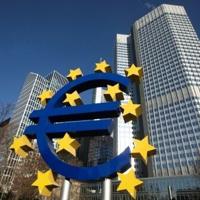
A landmark blue and yellow euro sculpture in the German financial capital Frankfurt, created to mark the single currency’s introduction, has been saved after a deal was struck, officials said Monday.
Weighing 50 tonnes and measuring 14 metres (46 feet), the sculpture in Frankfurt, home to the European Central Bank headquarters, is beloved by residents and popular with tourists.
But the future of the work — a giant blue euro symbol surrounded by 12 yellow stars — looked uncertain as maintenance costs mounted and potential sponsors drifted away.
But a deal struck between the ECB, city authorities and pro-EU group Europa Union Frankfurt (EUF) will ensure the work is preserved, city official Eileen O’Sullivan announced.
The agreement provides for a 50,000 ($58,000) annual budget, with city authorities contributing 30,000 euros and the ECB — the central bank for the 20 countries that use the euro — giving the rest.
EUF will officially take over ownership of the sculpture, by German artist Ottmar Hoerl, and ensure its upkeep.
In true European style, the sculpture’s future had been guaranteed after “years of discussions”, she added.
The cash will be used to cover costs such as maintenance and insurance of the work, which sits in Willy-Brandt-Platz in downtown Frankfurt.
The upkeep is not cheap. Replacing one of the sculpture’s stars — some of which have in the past been kicked to pieces by vandals — can cost up to 15,000 euros, according to officials.
The sculpture had already come close to disappearing in 2014 — as the eurozone was recovering from a debt crisis — when the ECB decamped from its old building on Willy-Brandt-Platz to a new site in the east of Frankfurt.
Its last major refurbishment, the addition of more than 2,000 LED bulbs, dates back to 2015.
It was unveiled in 2001, shortly before euro notes and coins came into circulation on 1 January 2002.
jpl-vbw/sr/yad