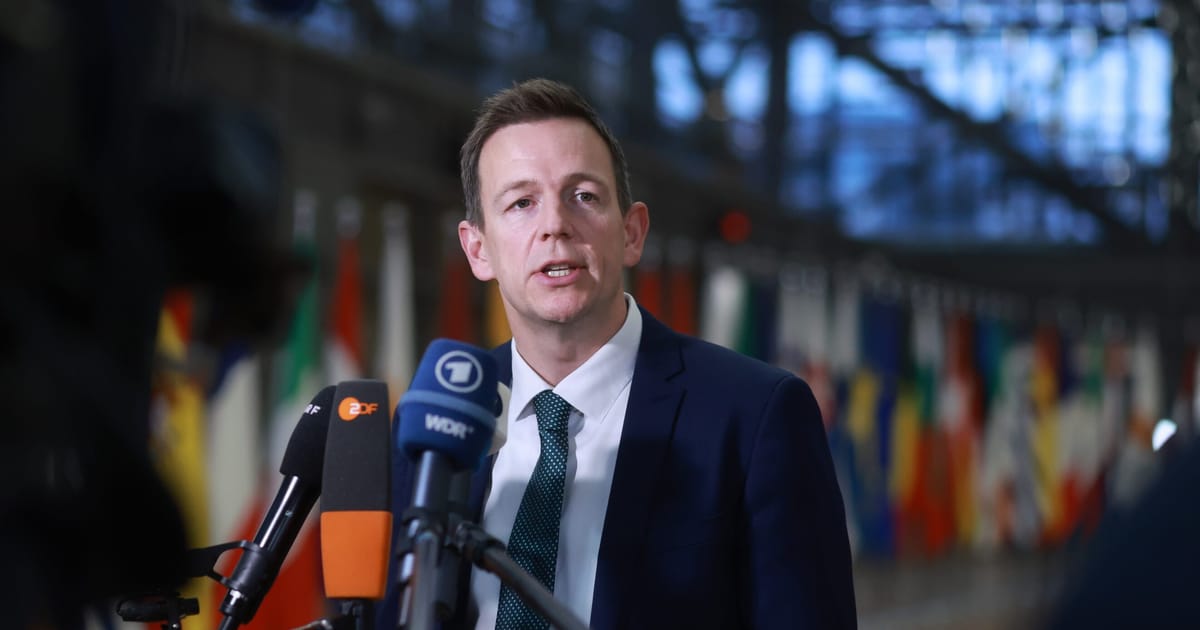
Stoklund told POLITICO that when he first started working on the migration brief a decade ago in the Danish parliament, his fellow left-wingers around the bloc viewed his government’s position as so egregious that “other social democrats wouldn’t meet with me.” Over the last few years, “there’s been a huge change in perception,” Stoklund said.
When the deal was done Monday, the “sigh of relief” from ministers and their aides was palpable, with people embracing one another and heaping praise on both the Danish brokers and Ursula von der Leyen’s European Commission that put forward the initial proposal, according to a diplomat who was in the room.
Sweden’s Migration Minister Johan Forssell, a member of the conservative Moderate party, told POLITICO Monday’s deal was vital “to preserve, like, any public trust at all in the migration system today … we need to show that the system is working.”
Stockholm, which has in the past prided itself on taking a liberal approach to migration, has recently undergone a Damascene conversion to the Danish model, implementing tough measures to limit family reunification, tightening rules around obtaining Swedish citizenship, and limiting social benefits for new arrivals.
Forssell said the deal was important because “many people” around Europe criticize the EU over inaction on migration “because they cannot do themselves what [should be done] on the national basis.” The issue, he said, is a prime example of “why there must be a strong European Union.”
Sealing the deal
Monday’s deal — whose impact will “hopefully be quite dramatic,” Stoklund said — comes two years after the EU signed off on a new law governing asylum and migration, which must be implemented by June.