From reproductive rights to climate change to Big Tech, The Independent is on the ground when the story is developing. Whether it’s investigating the financials of Elon Musk’s pro-Trump PAC or producing our latest documentary, ‘The A Word’, which shines a light on the American women fighting for reproductive rights, we know how important it is to parse out the facts from the messaging.
At such a critical moment in US history, we need reporters on the ground. Your donation allows us to keep sending journalists to speak to both sides of the story.
The Independent is trusted by Americans across the entire political spectrum. And unlike many other quality news outlets, we choose not to lock Americans out of our reporting and analysis with paywalls. We believe quality journalism should be available to everyone, paid for by those who can afford it.
Your support makes all the difference.
Read more
Japan’s weather agency has issued its highest-level warning that a megaquake could follow Monday’s 7.5-magnitude tremor.
Authorities urged anyone living near the Pacific coast to remain vigilant throughout the coming week and to prepare evacuation plans in case they need to flee their homes.
The warning covers approximately 800 miles (1,300 kilometres), stretching from Japan’s northeastern coast from Chiba, just east of Tokyo, to Hokkaido.
According to government estimates, an offshore megaquake could cause up to a 30-meter (98-foot) tsunami in the region, kill as many as 199,000 people, destroy up to 220,000 houses and buildings, and cause estimated economic damages of up to 31 trillion yen ($198 billion).
Monday night’s earthquake injured at least 34 people and produced widespread tsunami warnings, with waves up to 70cm seen in several coastal communities.
All tsunami alerts have now been lifted, but nuclear power plants in the northeastern region are carrying out urgent checks for impacts from the quake, which struck at about 11.15pm in the Pacific Ocean around 50 miles off the coast of Aomori.
Tuesday’s notice was the first time this top-tier alert has been issued since the warning system was launched in 2022.
Japan’s weather agency has issued a megaquake warning, the highest level of earthquake alert, hours after a 7.5 magnitude tremor struck the country.
Residents living near the Pacific coast have been urged by authorities to remain vigilant throughout the coming week and prepare evacuation plans in case they need to flee their homes.
At least 33 people were injured in the earthquake on Monday night, with waves reaching up to 70cm seen in several coastal communities.
But what actually is a megaquake? Read more here…
Alex Croft9 December 2025 20:00
Smaller aftershocks continued today in northern and central Japan, hours after the 7.5-magnitude earthquake on Monday night.
According to the US Geological Survey, a magnitude 6.6 aftershock struck within hours of the initial earthquake, followed by another measuring magnitude 5.1.
In the less than 24 hours since the earthquake, at least 10 aftershocks of magnitude 1.5 or higher have been recorded in Japan.
Aftershocks were felt across a wide area of northern and central Japan, according to NHK Japan.
Alex Croft9 December 2025 19:31
In the aftermath of the powerful late-night quake, residents across northeastern Japan recounted moments of fear as they rushed to safety in cold conditions.
Many were jolted awake by the violent shaking, including a man in his 40s from Hachinohe, Aomori Prefecture.
He told Japan’s Mainichi: “I was asleep when shaking began as if I suddenly got hit from beneath. After that, shaking continued both vertically and laterally for a long time.”
In nearby Kamaishi, Iwate Prefecture, a 75-year-old woman preparing for bed fled to higher ground in a car driven by her daughter.
“I debated whether I should leave. I was afraid of a bear popping up, my husband needs care and we have a cat.”

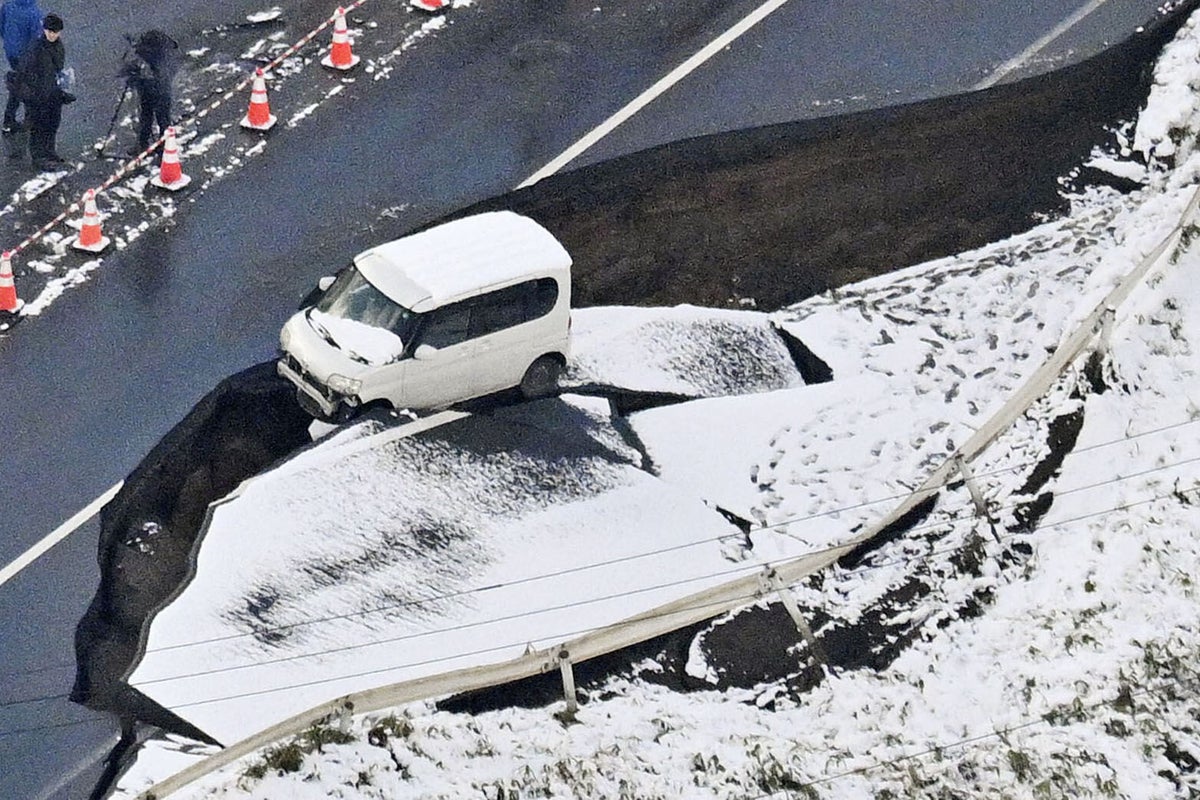
A man clears the debris from a powerful earthquake at a commercial facility in Hachinohe, Aomori prefecture, northern Japan, Tuesday, 9 December 2025 (AP)
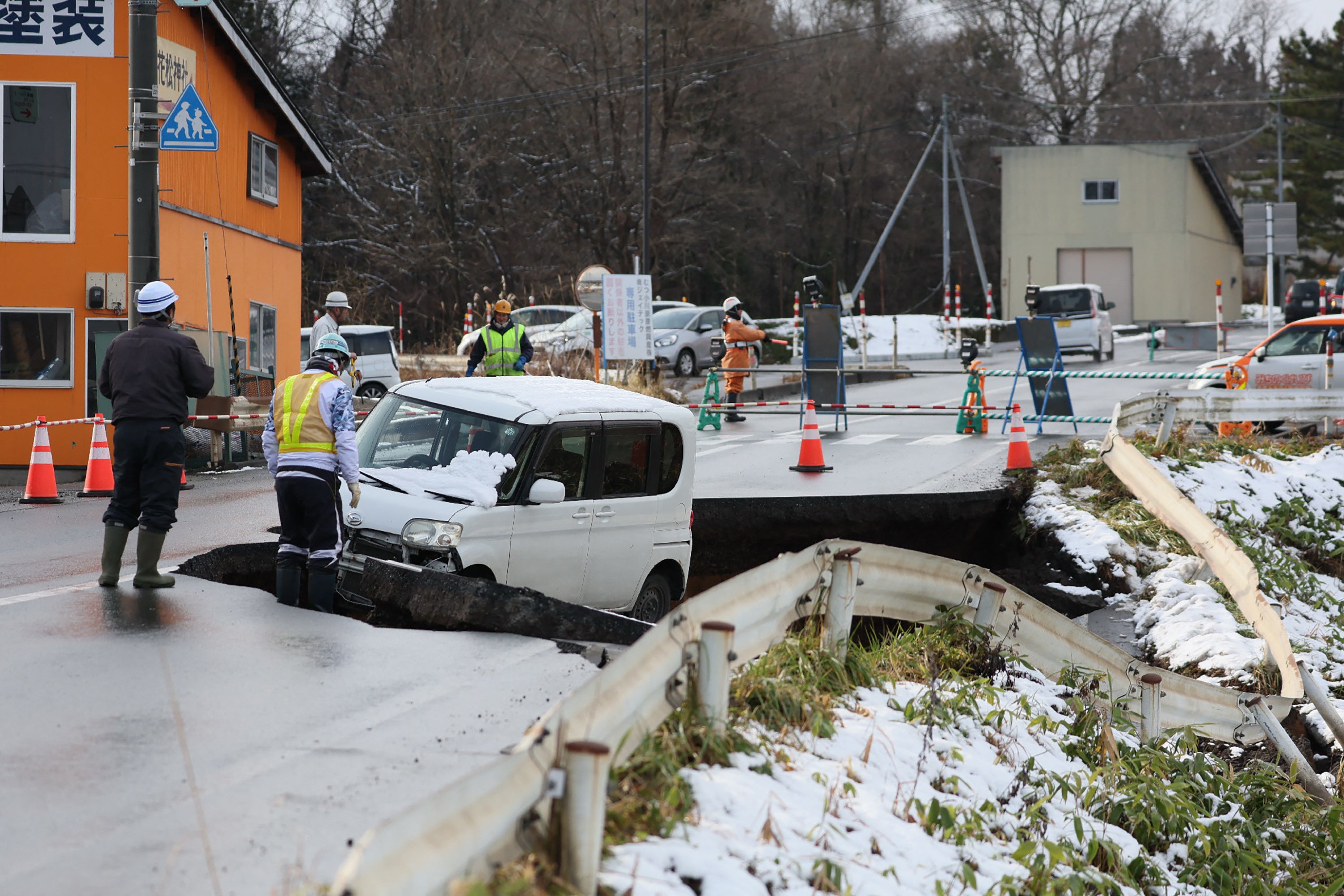
A vehicle is seen on a collapsed road in Tohoku town in Aomori Prefecture on 9 December 2025, following a 7.5 magnitude earthquake off northern Japan (JIJI Press/AFP via Getty Images)
Alex Croft9 December 2025 19:00
Chief cabinet secretary Kihara Minoru has urged the public to rely on official government sources and trusted media outlets for updates on earthquakes.
He told reporters that misinformation often spreads quickly during times of crisis, creating confusion among people.
In response to the current situation, the Japanese government has activated a task force at the crisis management centre in the Prime Minister’s Office.
Japan witnessed more than 10 aftershocks in the hours following the massive earthquake late on Monday night.
Authorities have urged people to stay vigilant for the possibility of a megaquake in the next seven days.
Alex Croft9 December 2025 18:29
Japanese government estimates have laid bare the scale of damage which a megaquake could cause in Japan.
Another offshore megaquake in the Hokkaido-Sanriku area could cause up to a 30-meter (98-foot) tsunami in the region, kill as many as 199,000 people, destroy up to 220,000 houses and buildings, and cause estimated economic damages of up to 31 trillion yen ($198 billion).
The government says as many as 42,000 people could suffer from hypothermia in the winter.
The areas covered by the advisory extend across 182 municipalities from Hokkaido to Chiba Prefecture.
Japan’s separate advisory for an even more damaging megaquake stemming from the Nankai Trough, which affects the southern half of Japan’s Pacific coast, was activated for the first time last August after a magnitude 7.1 quake occurred off the eastern coast of Miyazaki.
In a 2013 damage estimate for a possible Nankai Trough megaquake, the government said a magnitude 9.1 quake could generate a tsunami exceeding 10 meters (33 feet) within minutes, killing as many as 323,000 people, destroying more than 2 million buildings and causing economic damage exceeding 200 trillion yen ($1.28 trillion) in the region.
Alex Croft9 December 2025 18:00
Alex Croft9 December 2025 17:29
The Japan Meteorological Agency says Monday’s powerful quake temporarily increased potential risks in the regions of Hokkaido and the Sanriku coast.
That’s where the Pacific Plate beneath Japan forms the two trenches — the Japan Trench and Chishima Trench — that have caused many large quakes in the past.
Experts say the deadly quake and tsunami in 2011 was caused by movement associated with the Japan Trench. It spans from off the eastern coast of Chiba to Aomori, and the Chishima Trench goes from the eastern coast of Hokkaido to the northern islands and the Kurils.
In explaining the advisory, the JMA said the magnitude 9.0 quake on 11 March 2011, that devastated large swaths of Japan’s northern coast occurred two days after a magnitude 7.3 temblor that occurred at the Japan Trench off the eastern coast of Iwate, one of the hardest-hit areas in that disaster as well as in Monday’s quake.
The 2011 quake caused a tsunami that battered northern coastal towns in Iwate, Miyagi and Fukushima prefectures.
The tsunami, which topped 15 meters (50 feet) in some areas, slammed into and destroyed the Fukushima Daiichi nuclear power plant. That created deep fears of radiation that linger to this day.
Alex Croft9 December 2025 17:01
Following Monday’s magnitude 7.5 earthquake off the eastern coast of Aomori Prefecture, the Japan Meteorological Agency (JMA) issued its first special advisory for potential follow-up earthquakes and tsunamis in the Hokkaido and Sanriku coastal areas.
According to local media outlets, the government recommends that people remain on alert for about a week.
The risk of additional quakes and tsunamis is highest immediately after the initial major quake and gradually decreases over time.
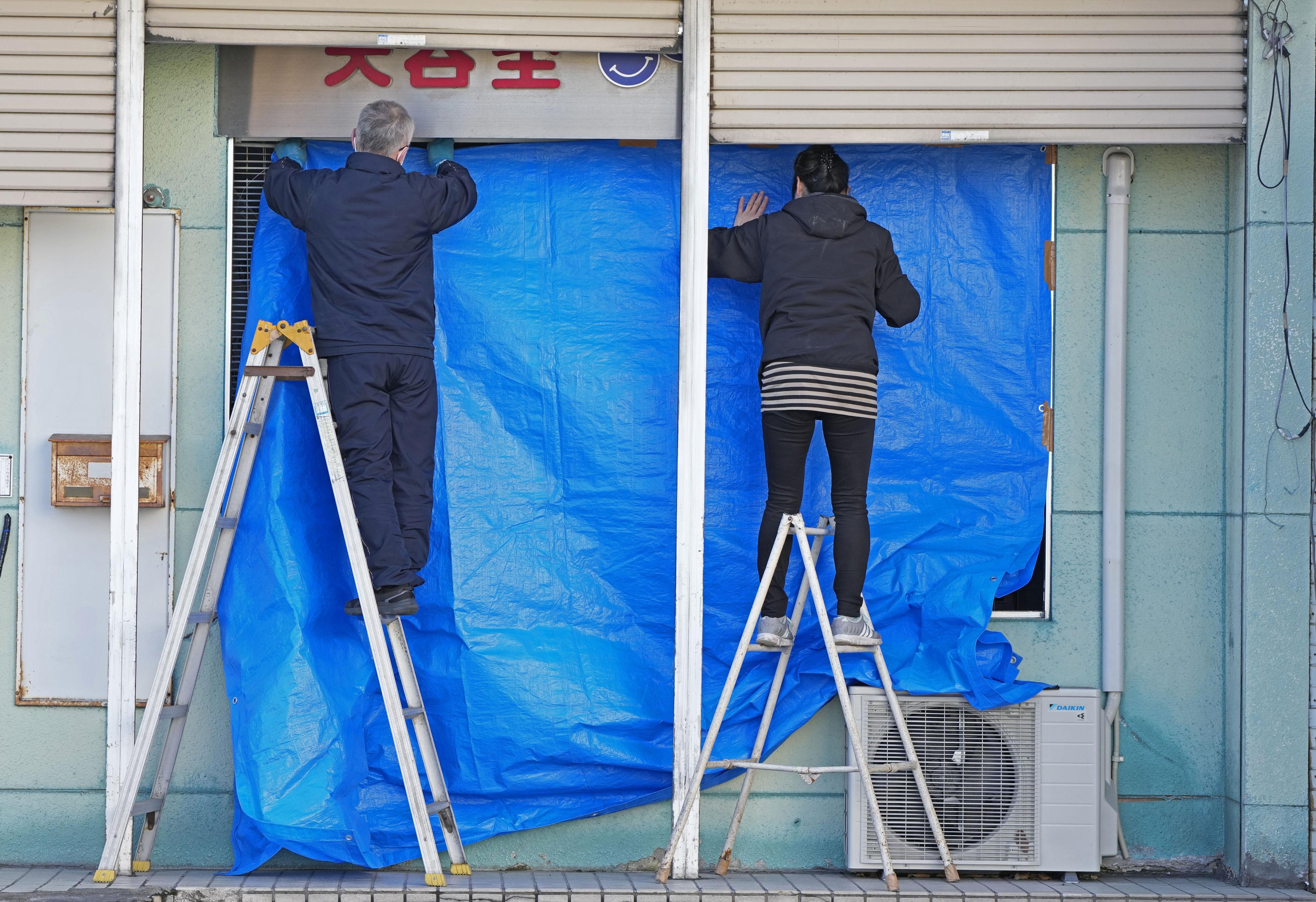
People cover the broken glasses with a blue sheet at a beauty salon in Hachinohe, Aomori prefecture, northern Japan Tuesday, 9 December 2025, following a powerful earthquake on late Monday
While the one-week period is not based on precise scientific data, it serves as a guideline for heightened vigilance, The Japan Times noted.
Authorities have said that there is no need to stop daily activities, but residents should double-check their usual earthquake preparations during this period.
The advisory is officially called the “Off the Coast of Hokkaido and Sanriku Subsequent Earthquake Advisory”.
Maroosha Muzaffar9 December 2025 16:30
Despite the strong earthquake, officials reported no major damage to infrastructure, and Japan’s network of nuclear power stations showed no signs of irregularities after the quake.
The International Atomic Energy Agency added reassurance in a post on X, noting that Tokyo had informed the agency that all nuclear facilities – including the Fukushima Daiichi site – were operating normally.
As an added safety step, the plant temporarily paused its release of treated wastewater, but the IAEA said this was a precautionary measure rather than a response to any detected problem.
Maroosha Muzaffar9 December 2025 15:58
The earthquake on Monday struck at around 11.15pm local time and generated tremors strong enough to produce what are known as long-period ground motions (LPGMs), slow, powerful seismic waves that are amplified over long distances.
LPGMs can be particularly dangerous because they resonate with tall buildings, causing them to sway violently.
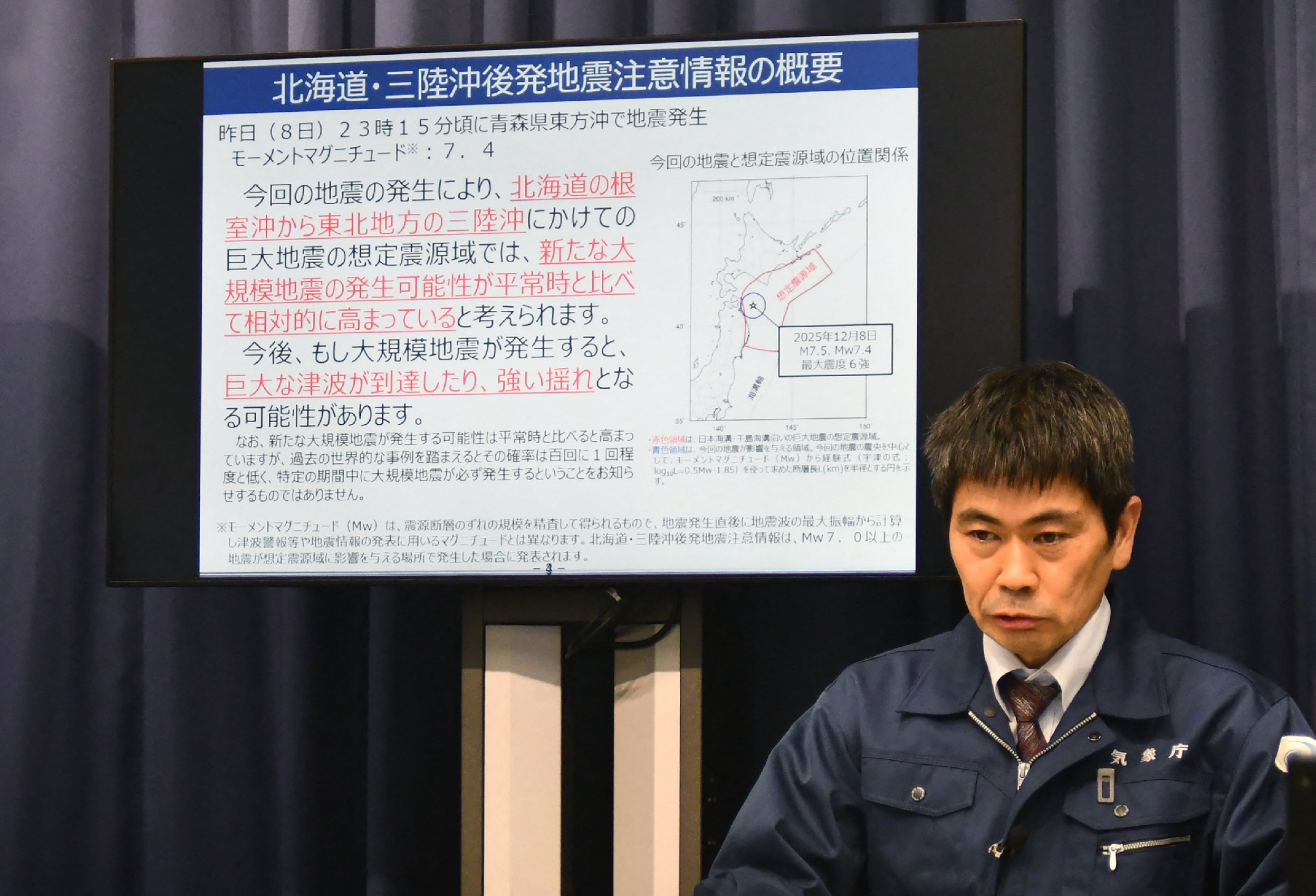
Director of Earthquake and Volcanic Engineering Affairs Division at the Japan Meteorological Agency, Satoshi Harada holds a press conference in Tokyo on 9 December 2025, after the magnitude 7.5 quake struck off Misawa on Japan’s Pacific coast (JIJI Press/AFP via Getty Images)
In some areas of Aomori Prefecture, the shaking was strong enough that it became difficult for people in tall buildings to remain standing.
Authorities initially issued tsunami warnings for Iwate Prefecture and parts of Hokkaido and Aomori, which were later downgraded to advisories.
All advisories were lifted by 6.20am today.
Maroosha Muzaffar9 December 2025 15:32